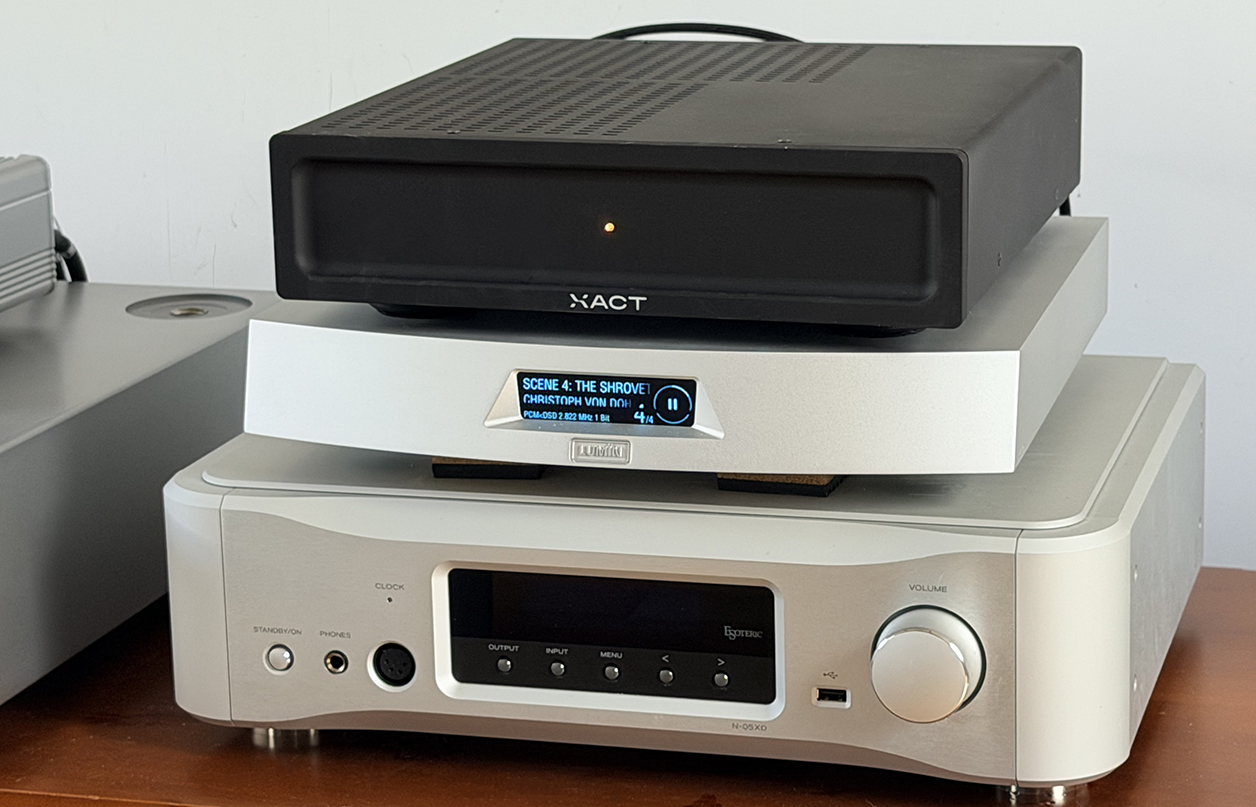
 I was able to test the XACT N1 both as a replacement for my own LHY SW10 switch and by cascading to it. This seemed the most precise way to assess the contribution of the N1 as a single switch or additional link in my current system. Whether in the first or second configuration, the qualities and contribution of the N1 remained generally the same. But as is often the case with switches, there is added value in cascading them to go even further. And unfortunately for my purse, the result of series-slaved switches brings real far from marginal gains. On Mahler's 7th Symphony performed by the Düsseldorf Symphony under the baton of Adam Fischer, the first movement "Langsam Allegro risoluto, ma non troppo" establishes a mysterious almost lugubrious atmosphere thanks to its chords and heavy rhythm. Having connected the N1 switch to my router via RJ45, I then used my DELA SFP C1-D20 fibre-optic link to the Lumin U2X reader. The contribution of the N1 over my resident LHY SW10 synchronized with my Cybershaft OP21A clock was immediate. The soundstage gained depth and air. This was undoubtedly not retreat of the stereo image as can sometimes happen but an expansion of three-dimensional space. On symphonica especially with Mahler, this gain is most appreciated. After the languor of the first movement follows the "Allegro" whose main theme is based on stacks of fourths intervals. The monumental coda ends in a major key. It is with this final movement that we really appreciate the N1 gains which exceeded farther depth and led to greater physicality and authority of the coda.
 Listening to Con silencio vibrante by Taller Sonoro on the Ibs Classical label, greater depth of field confirmed again. Each instrument in this contemporary ensemble occupied a distinct position in three-dimensional space. The strings were less acidic so also seemed less incisive at first. They were simply silkier, more consistent with natural concert sound where their timbres are not as harsh. Conversely, percussion and piano seemed slightly more dynamic as if less compressed so freed from some sort of digital shackles. This also provided more treble information with more harmonics highlighting the beauty of natural timbres. On "Labdanum", a composition by Aurelio de la Vega, the flute was even more energetic without any detriment to perceived naturalness. And yet, this flute and viol often made me jump with their almost supranatural intervention.
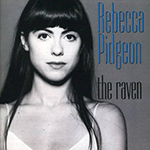 The N1 also created an unprecedented softness which did not attenuate dynamics or transients. It simply worked better than my 4½ times cheaper LHY switch. Attacks were more precise, vibraphone fades longer. Everything magnified. In "Composition a 5 instrumentos" by Gonzalo de Olavide, the separation between players really impressed. What realism! I had the feeling that the N1/U2X combo reached the qualitative level I had previously achieved with the €16K XACT S1 Evo. This was quite something when said player remains one of my very best memories of digital playback. On "Spanish Harlem" by Rebecca Pidgeon, her voice felt strikingly realistic, the voice and double bass interplay astonishingly natural, the piano background chords crisp yet delicate. It was precisely this mix of softness and 3D definition that made the contribution of this switch so exceptional. It's an uncommon mix of qualities from one device yet the gains observed with Rebecca's singing alone would justify the expense. It is very difficult to obtain this much emotion from a voice and some will spend small fortunes on turntables or open-reel decks to achieve this type of sonic nirvana. Marcin Ostapowicz gives us the key to the gates of vocal paradise by pursuing digital side alleys which on our own we might never have considered taking.










 The N1 almost made me rediscover each recording I used for this review. On Transatlantic by the Cincinnati Symphony Orchestra led by Louis Langrée, the 1922 version of "Americas" by Edgar Varese moved from being very analytical to ultra-realistic sounding. Even the timpani crashes suffered no perceptible mistiming at high volumes. Everything felt ideally controlled, fortes and pianissimi traded with devilish precision. Then came the coherence of the soundstage extending without apparent breaks, giving me a bit of a sense of listening to ultra-dynamic electrostatic panels not dynamic Vivid speakers. The second movement of Weinberg's "Fantasy for cello and orchestra opus 52" with the Gothenburg Symphony on Chandos acquired quite exceptional tonal richness in the low midrange. Each player was better embodied and more organic. The vibrato of the double basses and celli were more expressive as though the volume of air around the bows had suddenly increased. Here again the separation of instruments improved significantly over my LHY switch. There was more depth and each musical phrase coexisted more harmoniously with the large orchestral mass. How good it felt to listen to a digital system from which we draw substantive marrow. This was all the more ironic for a device whose purpose is not to read but simply route the signal.
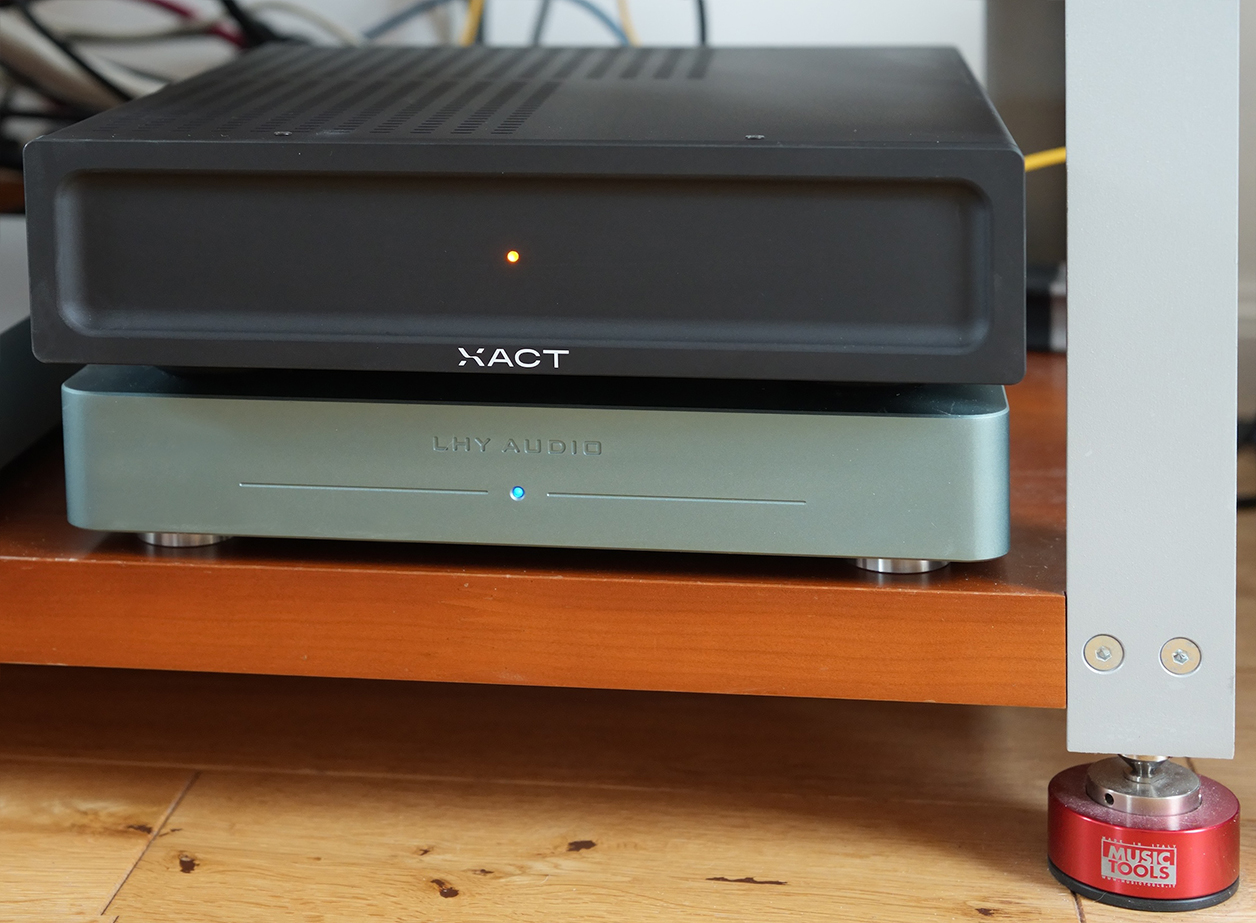
 Next I swapped cables using the RJ45 link isolated by the switch to connect to the Lumin U2X digital transport, then the SFP port for my router. The result was still good but less precise than using my fibre-optic cable between switch and transport. The use of this excellent SFP cable seemed to get the most from the XACT N1 with greater precision and clarity. The N1 manages a very high level of detail without getting analytical or clinical, due to its richness in the midrange and lower midrange giving the illusion of listening to a completely analogue system. On a Christoph von Dohnanyi album conducting the Vienna Philharmonic, published by Decca and performing Stravinsky's Petrushka, the N1 over my LHY SW10/Cybershaft clock combo produced a true festival of colours as well as a more lively restitution all while appearing less tiring. The orchestra unfurled superbly in three-dimensional space, with each instrumental group easily located and clearly mapped. The transients were very clear and dynamic contrasts well materialized without being exaggerated. With the N1 I felt immersed in listening conditions very close to realistic live volumes as though in a concert hall's tenth row. Everything is very naturally defined without trying artifacts and homogeneous across the bandwidth. For my part I found the sounds of flutes, piccolo flutes and clarinets a little green without being acidic as I am used to at concerts.