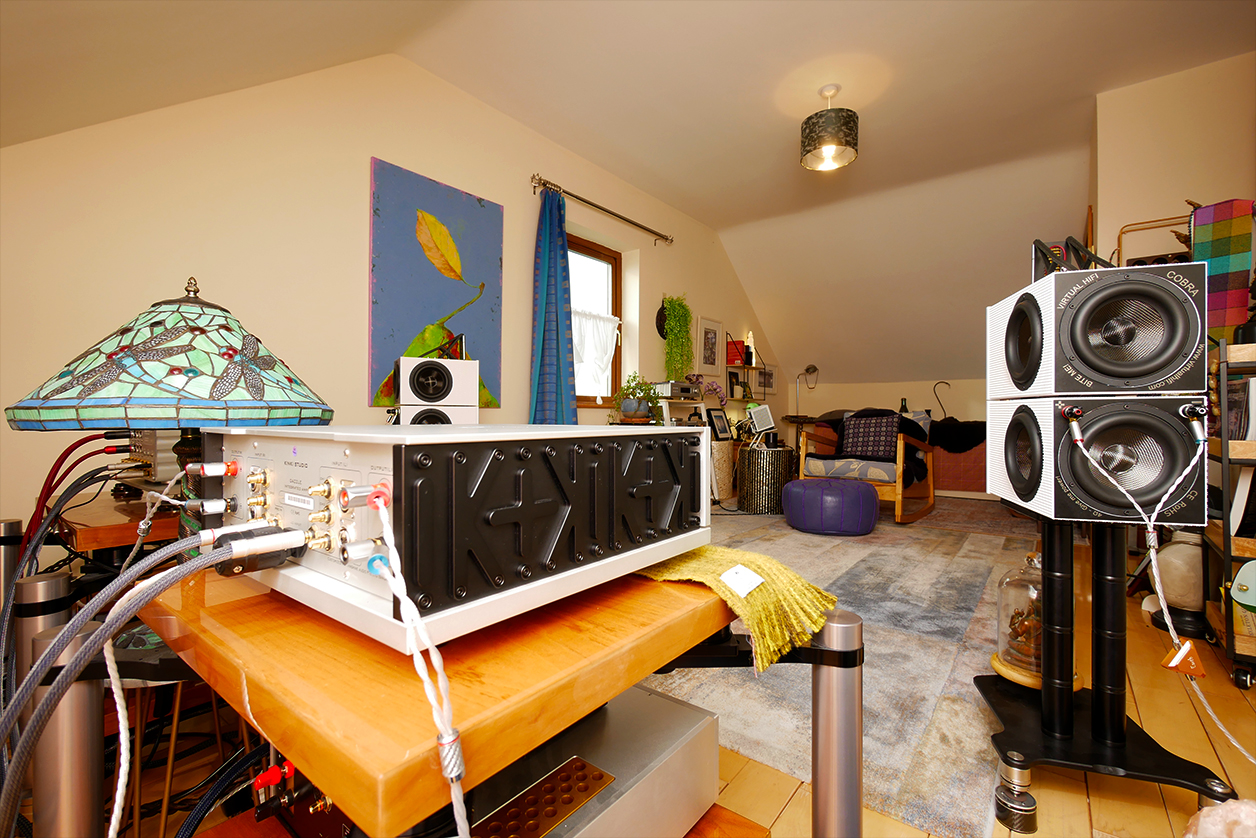
With its duplicate K+K lateral detailing, the Dazzle on my Grande Inquistor's rack expressed more industrial than Dubai chic whilst its ideally weighted and actuated rotary controls added that bespoke feel of luxury. In short, it's a finely judged balance between obvious quality and understated longevity. More high-styled or opulent creations tend to age poorly. They quickly fall out of fashion and betray their era like a bad haircut. Despite its heavy on-board iron, Dazzle exhibited zero mechanical or electrical hum so acted like the proverbial church mouse though in this weighty instance was more of an enormous very muscular alley tom chasing that twitchy rodent like a noiseless shadow during sermon. Here we see the amp looking at the twinned 7" rear-aimed passive radiators of Cobra and off in the distance, my Ikea listening rocker. Hitting 'play' had instant proof of life. It's one benefit of purely analogue kit. We're not held hostage by WiFi networks to join, forgotten passwords to enter or software incompatibilities to sort out.
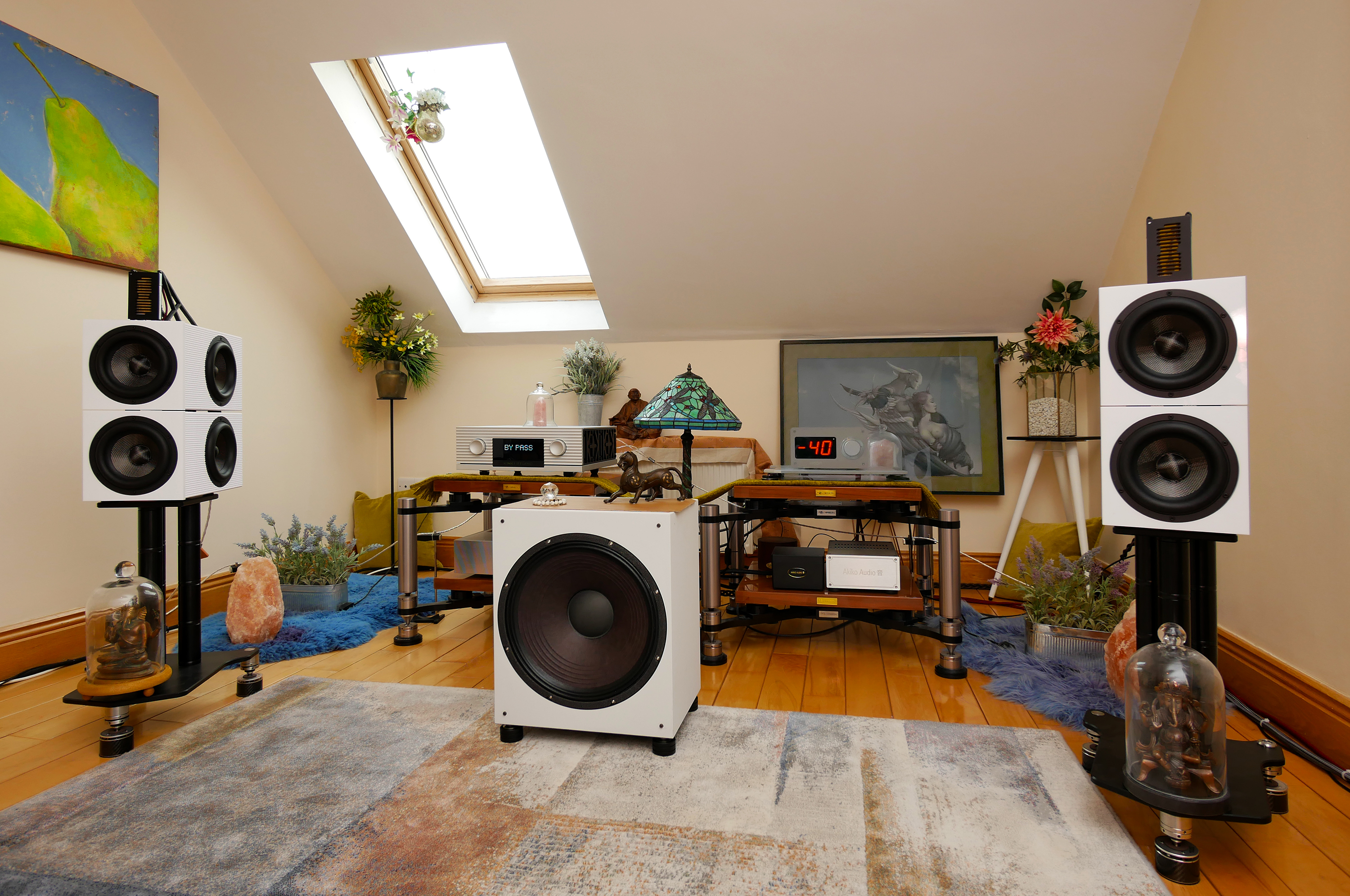
Because my contrast agent was the same stable's stereo amp preceded by an autoformer passive volume control with fixed 40Hz/4th-order crossover to seamlessly integrate a sub, I likewise used Dazzle in power-amp mode. Alas, not only did Cobra's own very deliberately shaped tuning overlay too much, it proved more advantageous to the leaner pure stereo amp. To fully get Dazzle's own measure, I had to either change speakers or rooms. With everything in my crib really locked in just then, I opted to change rooms. Dazzle would front my Qualio IQ speakers in the main system. That setup very quickly raised the two-fingered Churchill salute for a victory of vividity.
This became most interesting because…








 … to my ears, whenever sound gets thicker, heavier and chunkier than it was, it virtually always sacrifices reflexes, top-end transparency and overall speed. Not this time. To be on the same page, here's Google's AI on vividity: "Intensely clear, bright, powerful or lifelike, applying to strong colours, sharp memories or graphic descriptions that create a strong impression on the senses or mind, essentially the state of vividness. It's used for anything strikingly real, detailed or full of energy, from a bright hue to a memorable dream." Without meaning to be a dic, this dictionary description said it all. The end. But can I conclude a review with "like they said" when that's an anonymous bunch of syntax slavers or algorithm? Dazzle's atypical constellation of qualities took the intensely clear, bright colours and sharpness of sonic imagery and embedded them undiminished in more substantial mass than my EX-B7 generate. I think of my ideal sound as frisson, "a powerful thrill triggered by emotionally moving stimuli stemming from the brain's dopamine release. It's a physical manifestation of intense emotional connection where the body reacts to something deeply beautiful or exciting, creating a momentary rush that feels like a blend of awe and exhilaration."
Dazzle maintained the suchness—directness, immediacy, clarity—which thrills me with my current hardware. Then it added more beauty from extra body. My inner audiophile beancounter is a quite cantankerous fella. He gets ever harder to please as the years go by. For once even he hailed this something for nothing: a personal gain without trading for it anything I consider more important.
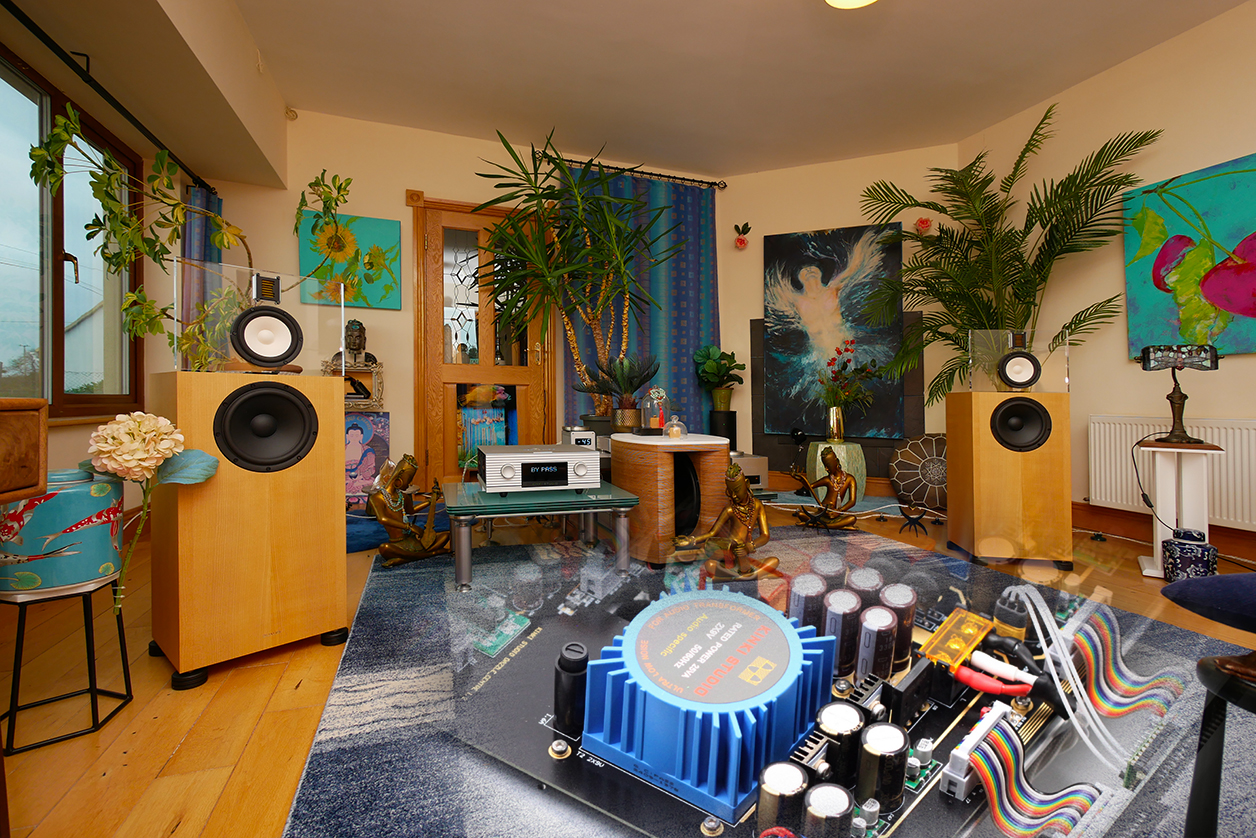
 That's because as a main-system tuning which in 2025 I'd want to live with for the long haul, I prioritize directness over opulence, speed over romance. Yet when romance doesn't step on the brakes; when opulence doesn't insert cotton taffy between me and in-room presence; when cloudless skies don't overcast – I'll happily imbibe enhanced body. My inner sound inspector wanted to understand how Dazzle manages this selfless trade. That answer proved surprisingly easy. With Dazzle, Ivan Liu's proven recipe of capacitor-free high-speed circuits without phase shift at the extremes lets truly superior tweeters like my dipole Mundorf AMT celebrate. A personal favourite of those qualities is textural gloss from fully teased-out upper harmonics. Whilst Dazzle's balance of attributes wasn't as airy as its EX-B7 mates, it lost no overtone density. Think scintillating quivers of an Arabian qanun portraying clear oscillations. Hear barely stroked violin strings raising the amplitude of flickering harmonics in flageolet. See triangle flares rising to full height above darker surrounding thicket. Notice high muted trumpet exhibiting bluish bite, a Jazz or Klezmer clarinet on a light reed allowing its upper registers under full vibrato to get shrill. Those tone modulations shouldn't neuter to appease the aged apostles of inoffensiveness. They didn't grow up on and around acoustic instruments. They don't appreciate just how much harmonic energy they release at the few metres most speakers sit from domestic listening chairs. In short, Dazzle didn't prematurely eject from upper bandwidth to pursue its gains of tone mass.