The first time I chanced upon the concept of decompressing a midrange driver was with Franck Tchang. That French auteur of acoustic resonator fame used tiny bores just a few millimetre wide in his Tango R model. I've since seen it with Acoustic Energy and Davis Acoustic. Their review samples ran what looked like ports for their midranges but weren't classic resonant tubes to add gain, just vents to let their drivers breathe without seeing the full internal back-of-cone pressurization which typical sealed alignments cause. Now the Vox5's widebander gained Martin's own decompression wrinkle. Whilst not identical to an open-back dipole, it should split the difference between that and generic box-talk effects. Another takeaway we might draw is the non-conformity of sound|kaos speakers with textbook solutions. Unlike most garage tinkerers with a bandsaw, Martin avails himself of advanced interdisciplinary modelling expertise to track viability, progress and iterative refinements. To execute those in solid wood involves a professional wheelwright of rare talent, not a standard cabinet shop.
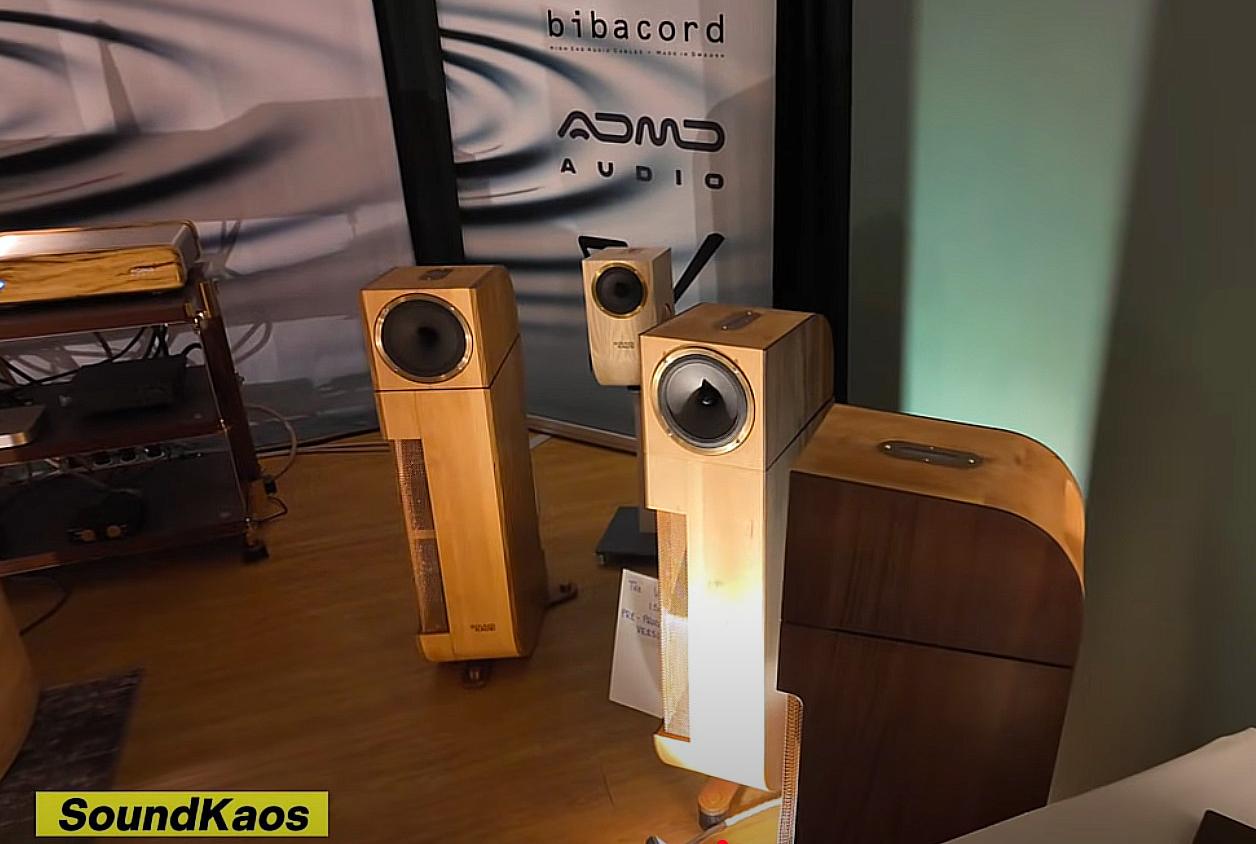
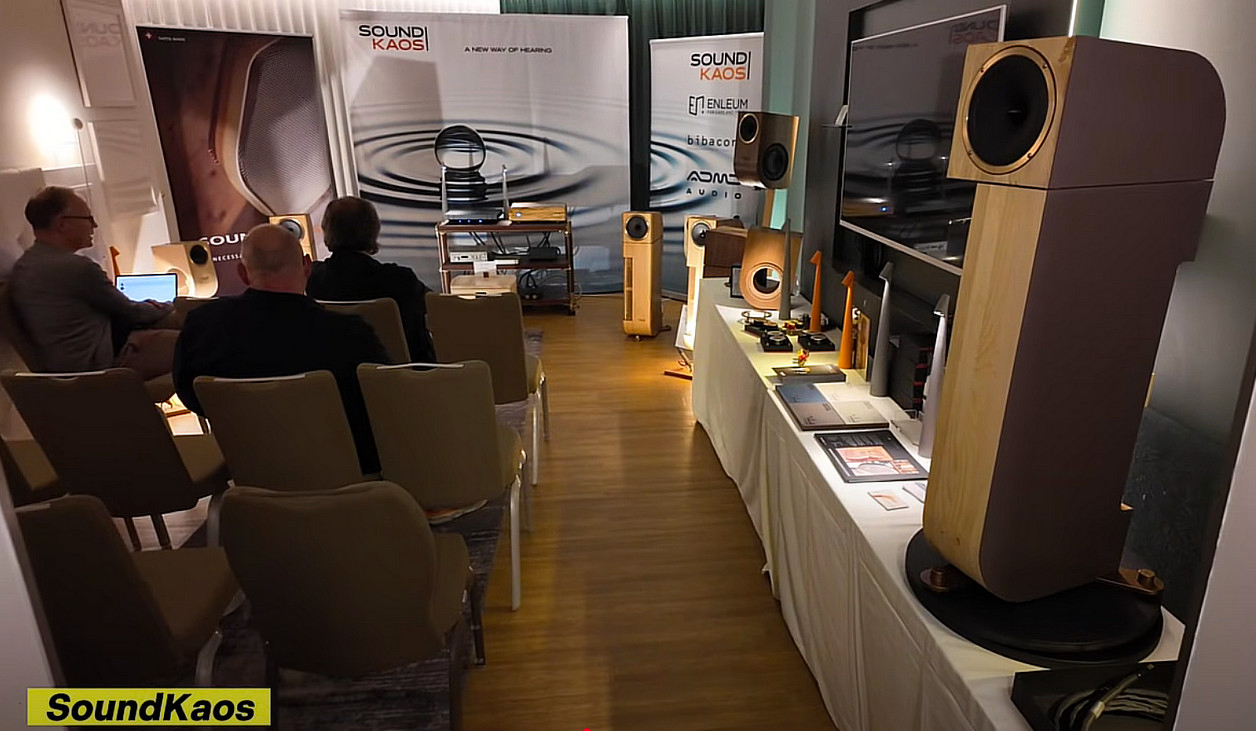 Two screen captures from this video showing pre-production samples.
This is a far cry from how our average profit-driven speaker house operates. It's why sound|kaos is no mainstream brand but an artisanal boutique of passion projects. They really do think different. Once the Munich show closed, further specs opened. In-room bandwidth is a claimed 28Hz-35kHz. Dimensions of the solid tone-wood spruce enclosure are 22 x 34 x 92cm WxDxH. With the isolated outriggers those increase to 36 x 40 x 96cm respectively. The widebander trim ring is cast bell bronze, the other metal bits are bronze-anodized aluminium. For a virtually full-range speaker, this really is a quite foxy affair. Fox5 then?










October 14th: "Just back from a Brussels dealer weekend with some great visitor feedback. Most encouraging was confirmation that our brand-new 160mm/6.3" Enviée really is the best and most detailed driver over the Vox3's 100mm and Liberation's 200mm versions. This driver upgraded to a larger AlNiCo magnet which eliminated a lower midrange dip. Then I decided to go to an active 2nd-order low-pass filter and dual-mono 250-watt class D drive for the bass system. This allows for better room integration, user adjustments and it frees the owner to use a lower-power amp like an Enleum AMP-23 on top which wouldn't have been possible with dual 12" passive dipole woofers. I'm still awaiting the new cast-bronze baskets for the Enviée. Those took much longer to fabricate than anticipated. This concept clearly needs more education and explaining as a number of people in Brussels were scratching their heads asking why we didn't have major room-mode issues without any kind of room treatment."
"With a new German partner Nortus Audiotronic we have a pending Vox3 review by Jochen Reinecke for fairaudio [since syndicated here – Ed.]. It is a great little piece and pinpoints the market segment very accurately. I have also done first versions of a new Gravitas D12 along the lines of your D15 in the stacked ply construction and will finally be able to offer a mono version of the active filter/D-class amp. It is a simpler affair with just a low-pass on the sub but integrates nicely with the Vox3. It is getting its first public showing at this weekend's Toronto Audiofest with our new Canadian partner Hearken Audio. It will partner with a pair of Illumnia Magister speakers, hence the matching Ply construction. He too eagerly awaits the Vox5."
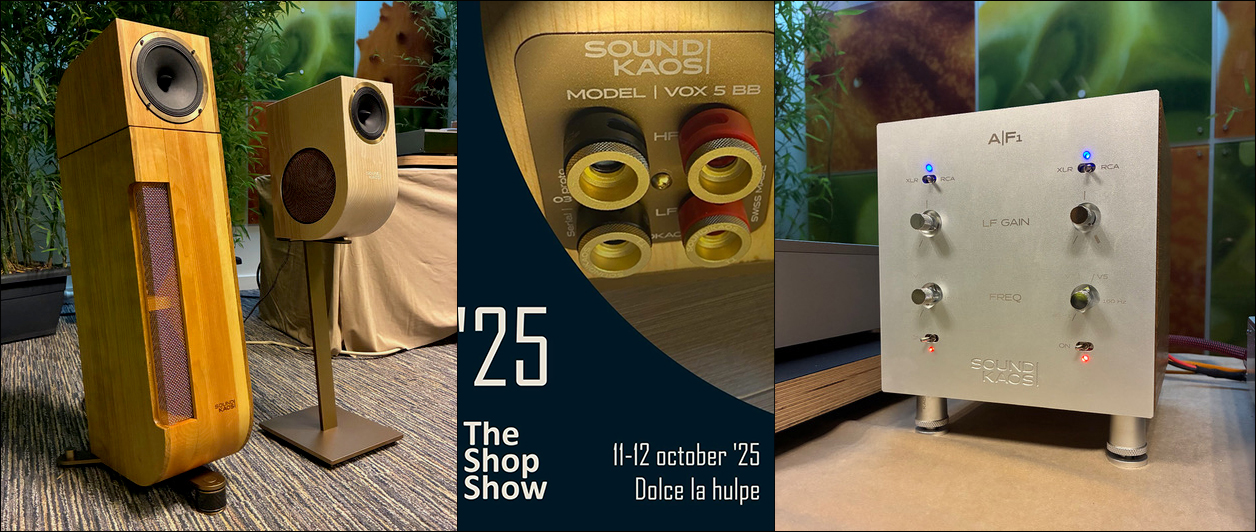
So did regular Warsaw contributor Dawid Grzyb on the review list because he considers the Vox3 his favourite speaker – minus the bottom octave which the Vox5—or one or two D12—will obviously add.
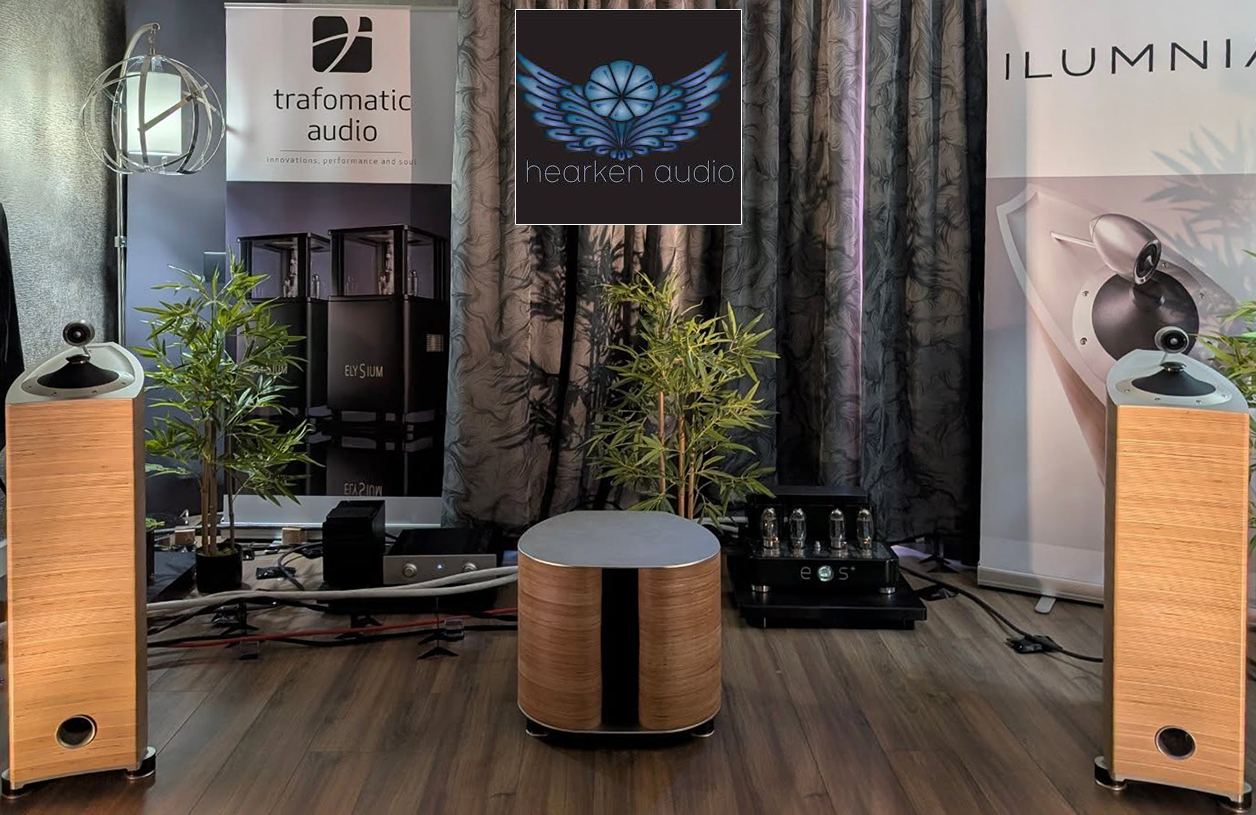
Having overcome my own D15's passive status with two Ncore-500 monos preceded by an spl Crossover Mk² active analog crossover, I was happy to see that sound|kaos clients now have an in-house solution to add the necessary drive and filter electronics to one or two purist passive Martin Gateley subs.
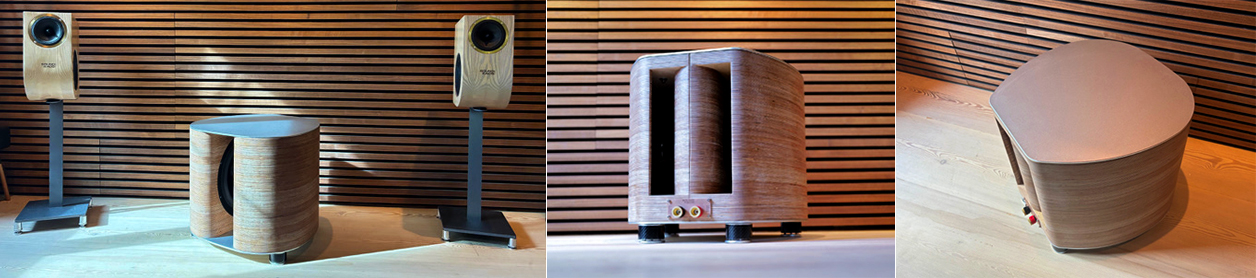
Of course the Vox5 builds them in; one D12 per side into a speaker rather narrower than the standalone sub. It's why earlier I called it a Gold Star of a sardine-can packing job.