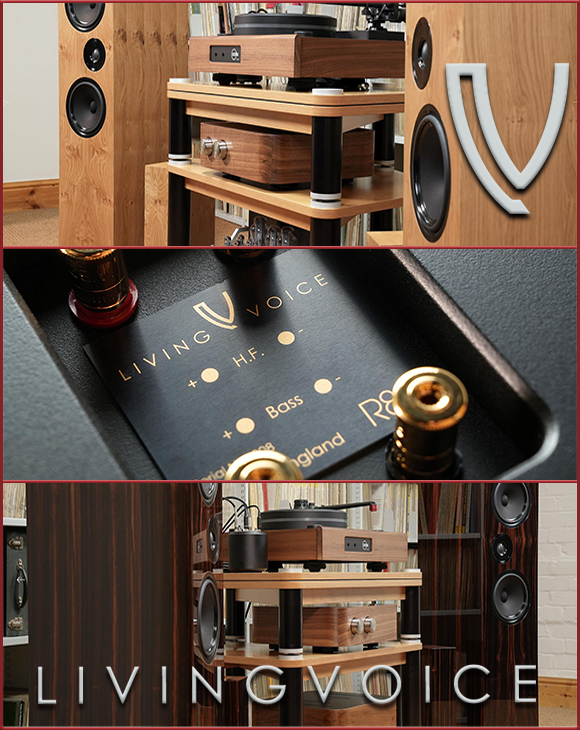
May 13th. "Finally getting you more info on the Vox5 development. Simon was under a lot of pressure to get things done for Munich so it was a mad rush to put all elements together. Even with his skills this project tested his limits and it took 3 days of solid programming alone and quite a few phone calls to the software support team to get things running in his CNC.
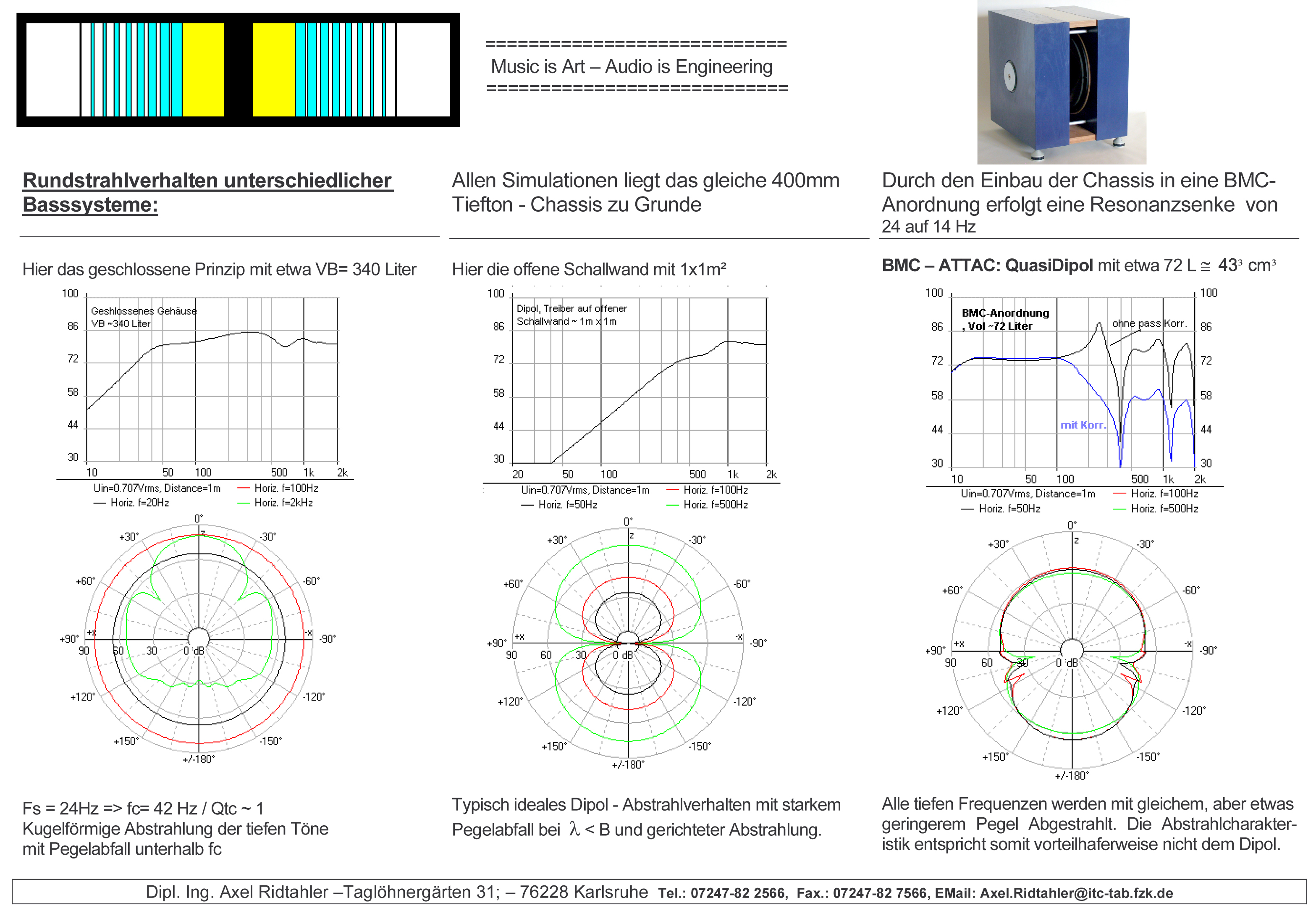 From the original German Axel Ridthaler RiPol patent.
"Chris had already done his part in February in both Comsol and Akabak to get to grips with my crazy idea of using twin 12" woofers for LF duty. He's known me long enough to not question my demands until he has proof positive of what's feasible and what's not. It became apparent very quickly that the 110mm Vox3 widebander would be no match for dual woofers so we decided to go with the 180mm/7" widebander instead. Its designer Armin Galm considers it the best driver of his Enviée range and that's also been borne out by auditions. The fine detail, resolution and range are staggering compared to the 110mm even 210mm versions."
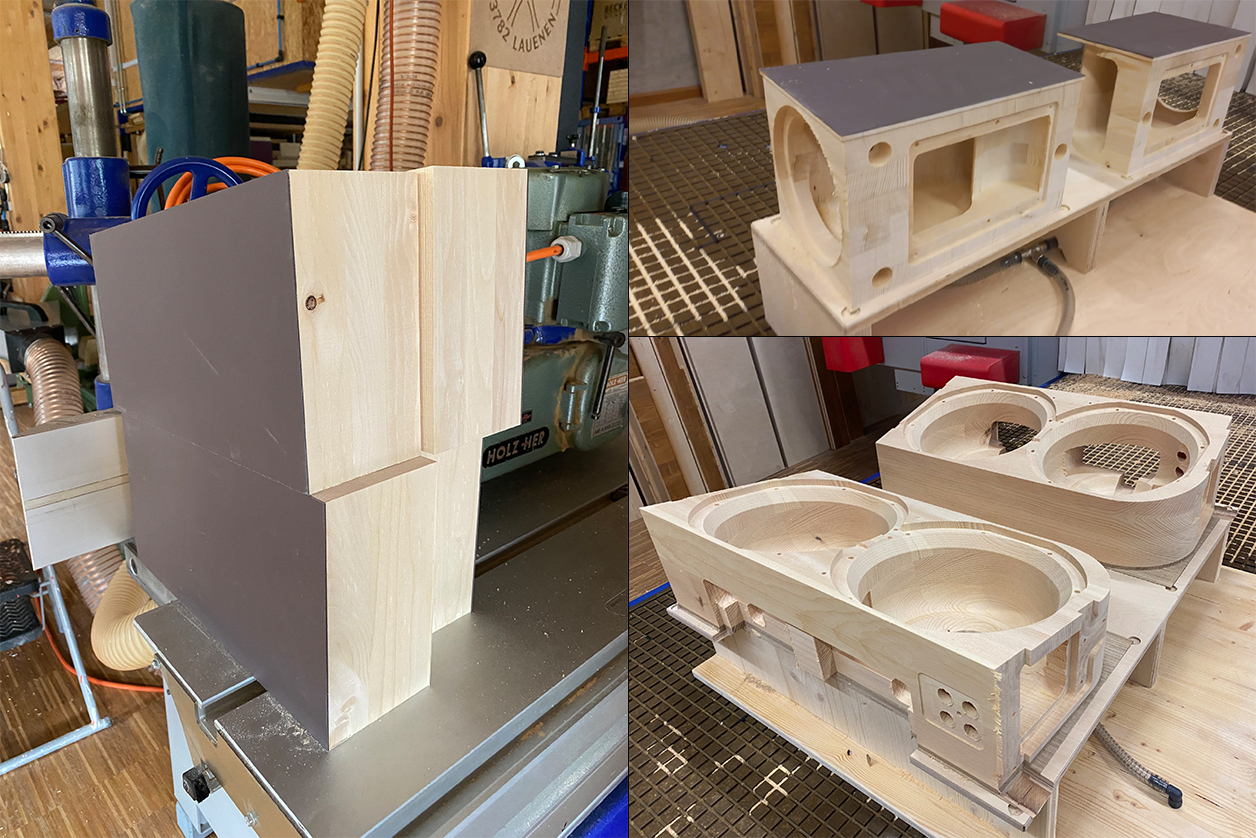 Raw starting blocks of solid wood | two head units with retainers for the isolator modules | two bigger halves of the bass array








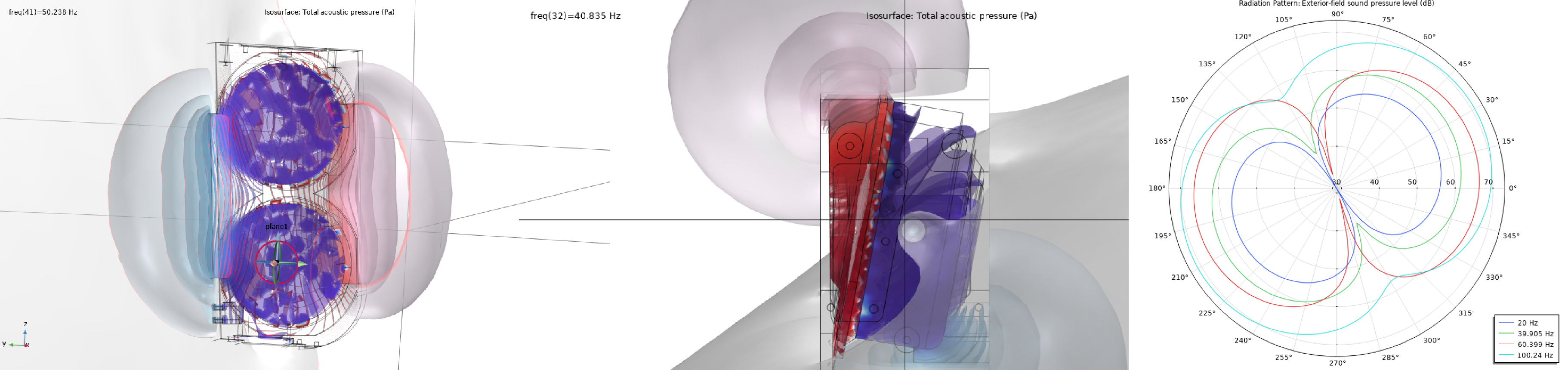
"The Vox5 also departs from the opposed RiPol geometry of our subs to work as a pure dipole 20-80Hz. It starts to let go of this radiation pattern above 100Hz. I wanted to keep this box-less openness going so for the Enviée Chris modelled four iterations of closed, ported and our original 'scooped horn' geometry from my Wave 40 days. We'd learnt at the time that the softer horn port put much less back pressure on the light membrane of the widebanders. I'm really pleased that we went for this semi-open system as it brings that airiness I love so much into the midrange. The Raal ribbon of course is the same as in the Vox3 so sealed. In the LF Chris was really surprised that by creating a diagonal channel across the body of the speaker, we could give the bass direction. It's generally accepted that LF below 80Hz radiate omni and that this directivity can't really be influenced. In the polar plot you clearly see that the dipole pattern exits at around 20º from the 0-180º axis. By mirroring the left/right speakers, it creates a sort of LF bubble between the speakers which is a neat feature of this design.
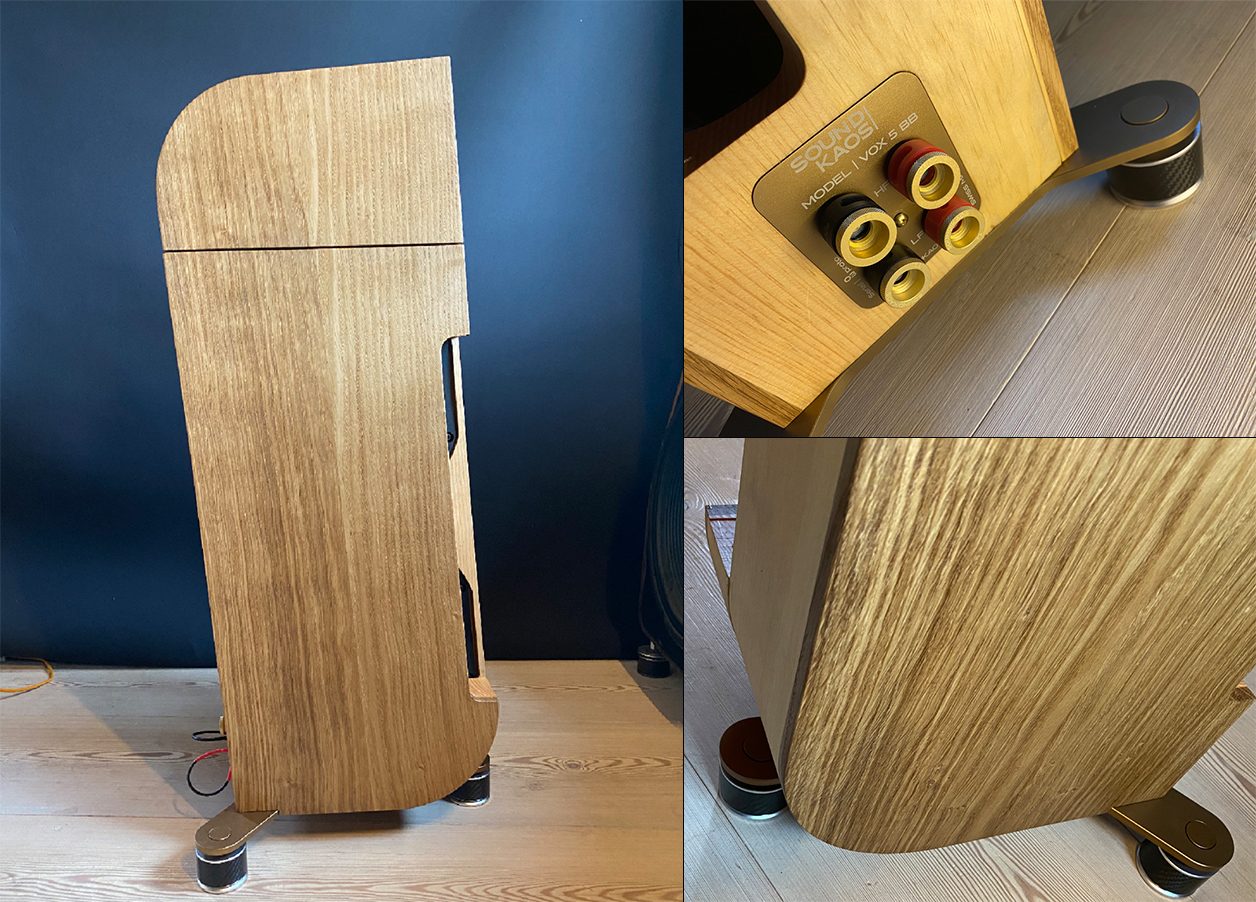
"We also had to deal with the usual ~250Hz standing wave which afflicts RiPol and other folded-baffle bass. Whilst we thought that it derives from the close proximity of two woofers, it's actually their front-to-back distance. With an open dipole woofer there's usually only the membrane thickness or at most baffle thickness to contend with. By turning our woofers sideways, this distance grows to ~35cm. That creates a resonance. So we cross to our bass system below 200Hz to put the resonance out of band. Attached are first images of various parts and some Comsol screen shots. I will send some more images once done. Let's see what the visitors think in Munich."