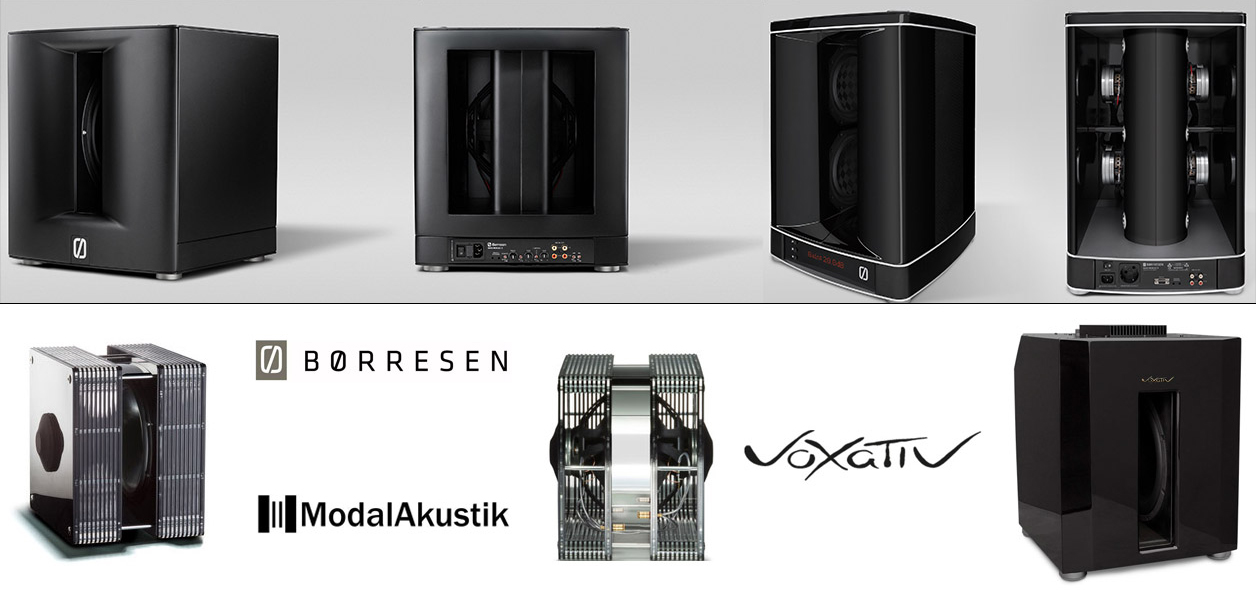
A shopper of due diligence has probably just three folded-dipole alternatives. Børresen of Denmark offer a flat-black 2×10" and gloss-black 4×8" RiPol HDF sub, both with Pascal class D and analog xover. The bigger model adds a display, front-panel adjustments and remote control. Modalakustik of Germany have a passive 2×12" version of vertical acrylic slices in black/translucent or white/translucent finish; plus two outboard filter/amp options from the pro sector. Voxativ of Germany do 1×12" and 2×12" gloss-black MDF/steel versions with proprietary class D aboard. Only the Danish catalogue includes roller-ball floor isolators to have an answer for the D12's included wire-suspension isolators. With the German subs you'd shop elsewhere for equivalents if you consider the avoidance of structural coupling important. I subsequently learnt of Mavis AV Lab of Vietnam who have a RiPol sub with outboard tube-hybrid 600W class AB amplifier and crossover.
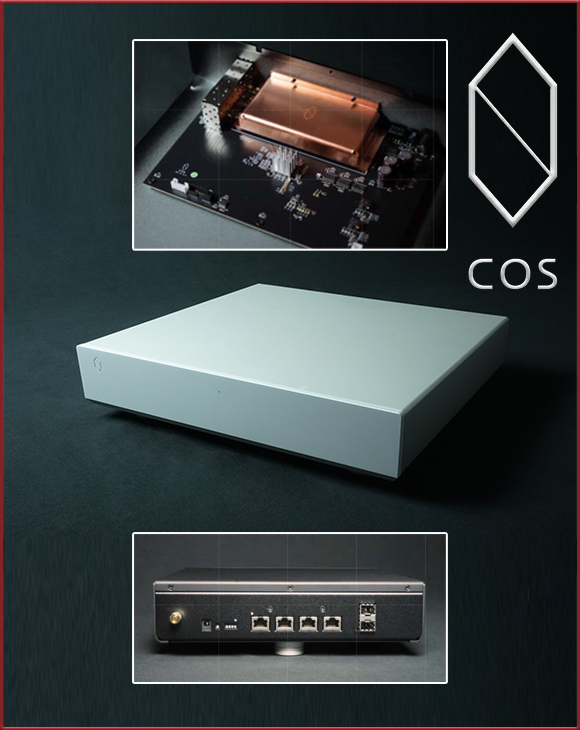
 Whilst inventories last, with sound|kaos we have a choice of solid-wood enclosures before my stacked Ply version turns default; silver aluminium or white Corian end plates; and the external filter/amp in mono or dual-mono executions. In August of 2026, that was the lay of RiPol sublandia as I knew it; still very niche but mature enough to offer the discerning client different cosmetics, finishes, features and price points.
Not Schrödinger's cat. No meow; just a snarly hiss. A 4x6x2.5m room of 60m³ volume will have its Schroeder frequency at ~140-200Hz. The Schroeder frequency is where a room's acoustic behaviour changes from its modal zone below to the diffuse/reverberant zone above. In the modal zone, low frequencies create those distinct standing-wave peaks we call boom, bloom or ringing. Their frequencies are based on our example's primary 4m, 6m and 2.5m room dimensions, their diagonals and other interactions. Diminishing the amount of reflective acoustic energy we sink into the modal zone acts like partial room treatment. We mustn't absorb excess LF with voluminous bass traps if we don't generate so much ricocheting bass in the first place.
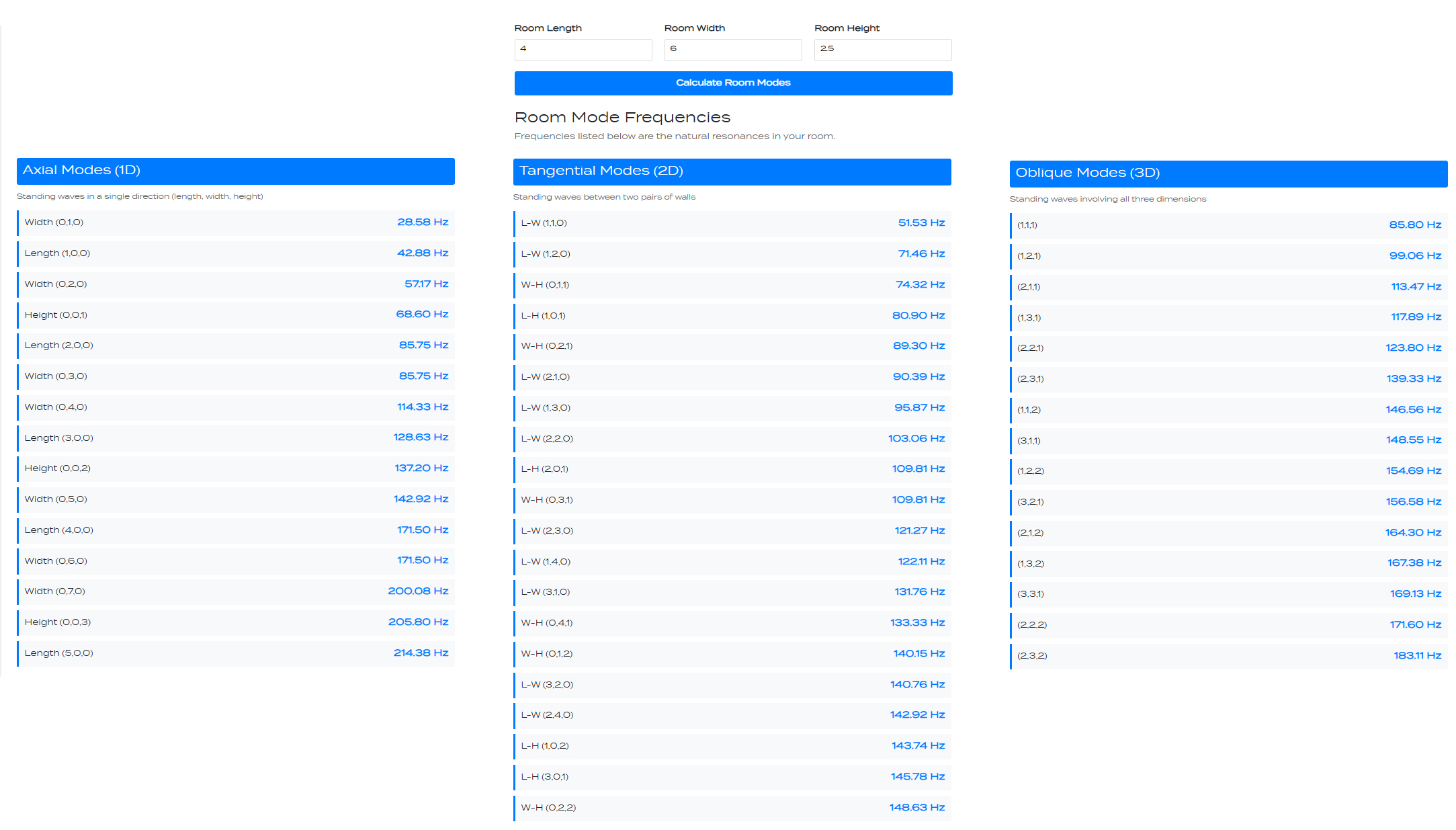
This is the signature benefit of dipole bass and its RiPol variants; and why exploiting the D12 across larger bandwidth than my sealed sub would be advantageous. For a closer look at the modal mess speakers make below the Schroeder frequency, jhbrandt can spit out details after we enter our three primary dimensions into its room-mode calculator shown next. Note how pretty much all of it falls below 200Hz. Without getting into acoustic weeds I couldn't cut, the takeaway is simple. If we can minimize this room-reactive mess, our sound will be better. We'll have fewer amplitude hot spots; and a cleaner time domain. Click on chart to open a full-size window.
Because of its open nature, folded-dipole bass also shrinks internal energy storage. Without a box to capture all or much of the rearward energy like sealed or ported alignments must, a RiPol bass generator causes less time confusion also in its actual structure. This is separate from its in-room propagation behaviour. It's back at Raal's original open-baffle SR1a ribbon headphone vs sealed even open-backed designs with classic earcups. The SR1a couldn't store energy because its output dissipated fully. Ubiquitous enclosure-based headphones trap air. This air gets pressurized to cause reflections, air turbulence and ringing. It's clean leanness without afterglow aka bloom/boom versus blurrier looser fattiness.
For an alternate power source for these D12 woofers to stand in for owners of external crossovers who won't need Martin's XO¹ or XO², I had my EX-M7 to match my Kinki monos in a stereo-amp version; and a pair of classic NC500 monos from Nord Acoustics. That choice would be between high-bandwidth DC-coupled class AB; and stiff-feedback high-power class D. Whilst writing this paragraph, I learnt of TotalDAC's low-latency digital crossover/DAC with 6/12/18dB/oct. hi/lo-pass slopes, flexible frequencies and adjustable bass gain. It's another purist albeit pricey option in the niche sector of active crossovers¹ for ambitious home hifi.
_____________________
¹ In pole position to add cost-effective alternatives would be Jason Stoddardt of Schiit; and Arek Kallas of Hattor/Khozmo. Given the tiny percentage of users who want to high-pass their mains in the already very limited stereo 2.1/2.2 space, it's crystal why established makers don't volunteer with their own active analogue filter options. Insufficient demand. With Lifesaver Audio no longer making my Gradient Box—likewise for Bryston and Pass—this limits us to JL/Garmin, Marchand, spl and Sublime whilst Accuphase, German Physik, Magico and Wilson have pricier alternatives. Perhaps Børresen might eventually see enough of a market to repackage their existing active-filter circuit into a standalone box? In the pro sector brands like Behringer and DBX have very cost-effective solutions.









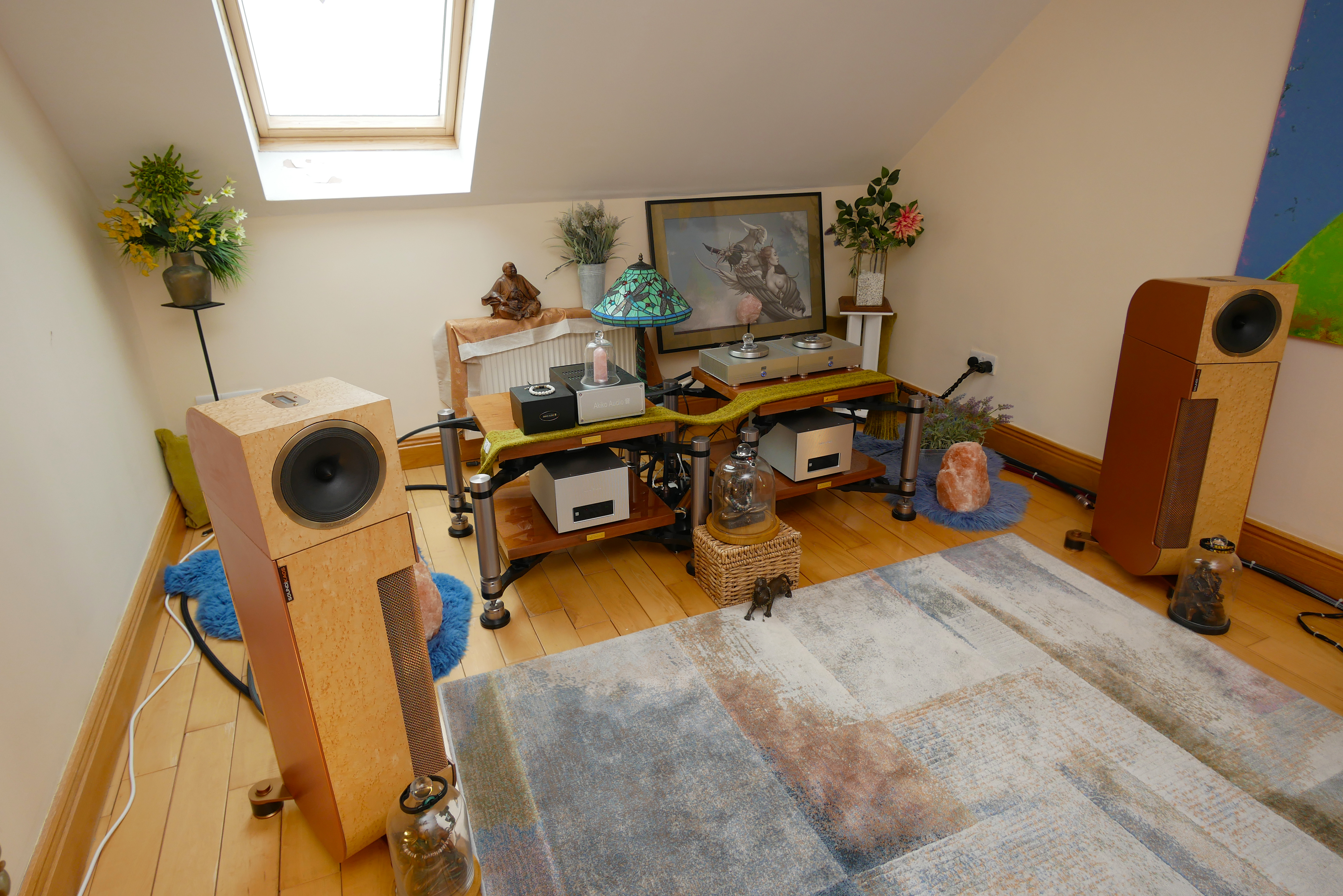
 D.emphasis. Further experiments with the Vox5 bass systems determined that, no real surprise, two class D monos of 700W/4Ω had the edge over my class AB stereo amp. With my active xover's +3dB/+6dB@20Hz analog EQ option building in a linear <80Hz lift, extra power and current were assets. Above shows that temporary setup.
Just then it awaited sound|kaos designer Martin Gateley's visit. He wanted to hear his latest creations plus earlier Vox3 in two of my rooms and with different hardware options to add data points vs how his speakers perform in his own home.
Doing tradeshows for exposure and visitor feedback is one thing, auditioning more permanent client installs another. Reviewers too benefit from visitors of keen ears. This became a mutually beneficial mini workshop of joint auditions and shared observations. It also triggered a 7th Moon YouTube podcast with Martin as guest.
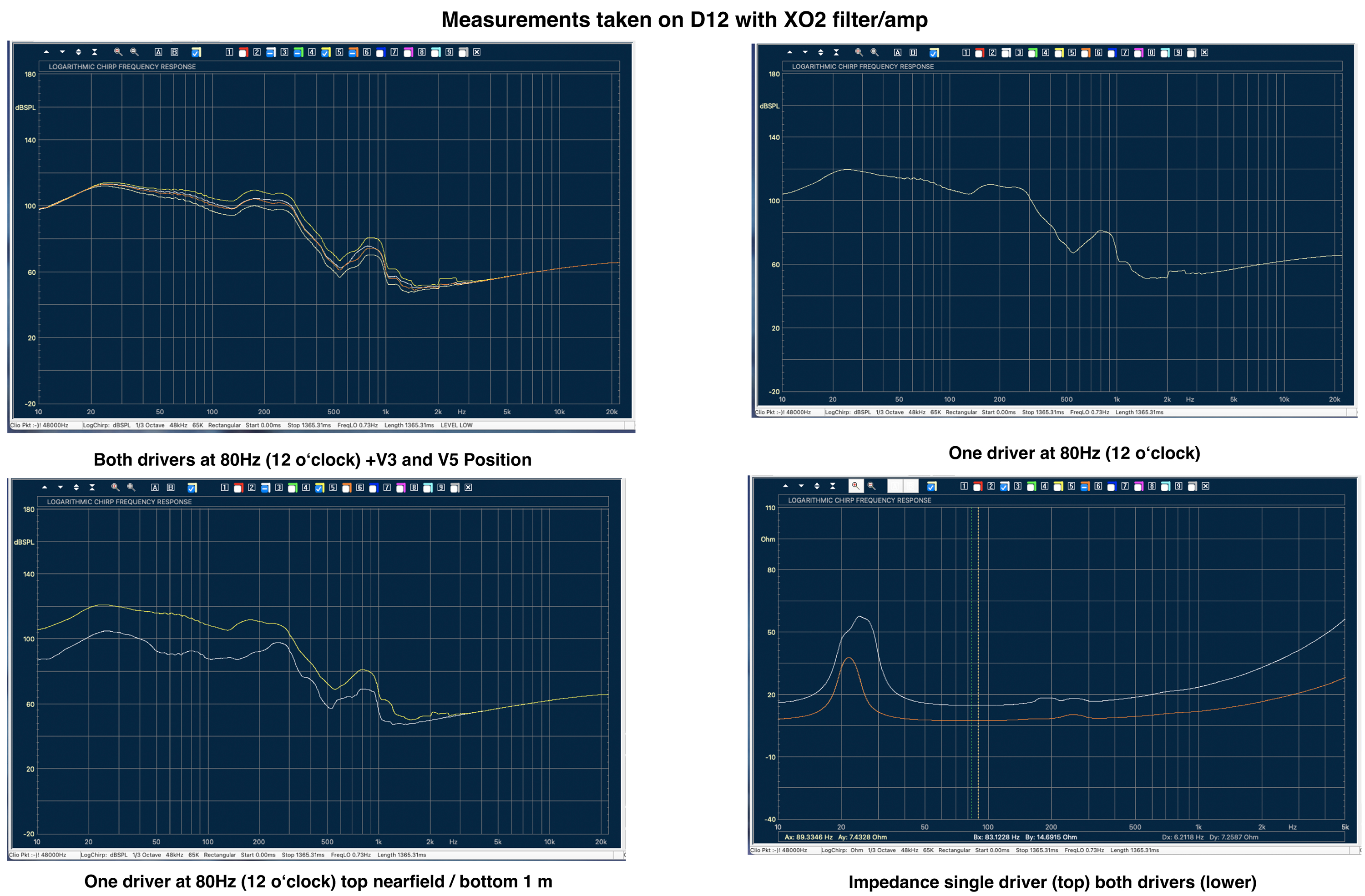
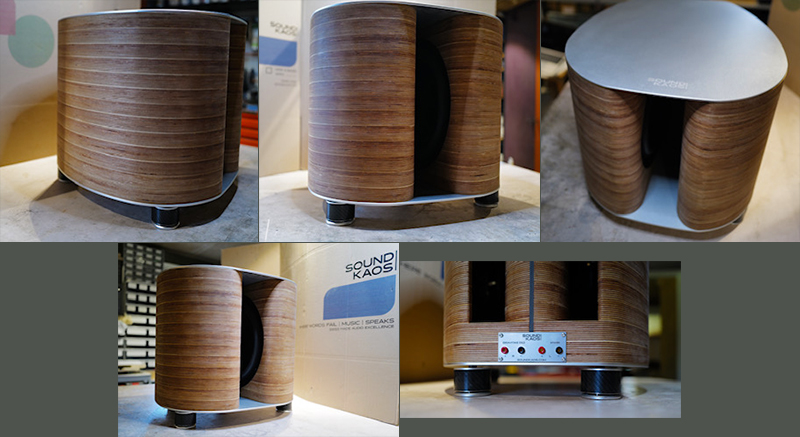
When a tracker announced arrival of his Swiss freight at my local Shannon airport depot, the sub's 34kg net spec caused stairclimbing concerns. But when I watched my 28-year old FedEx man carry the carton, self preservation for the image in the mirror mandated that I do the same. I then unpacked in the upper room. By separate email Martin had forwarded photos of my build; and its measurements. The impedance plot shows the ~25Hz resonant frequency of these dipole-optimized woofers. The linearly rising response from 120Hz down to 20Hz across where I'd use it was impressive, too.