Red panty night? If electronic parts get you hot under the collar, perhaps sighting two large Mundorf capacitors will lift your wig?
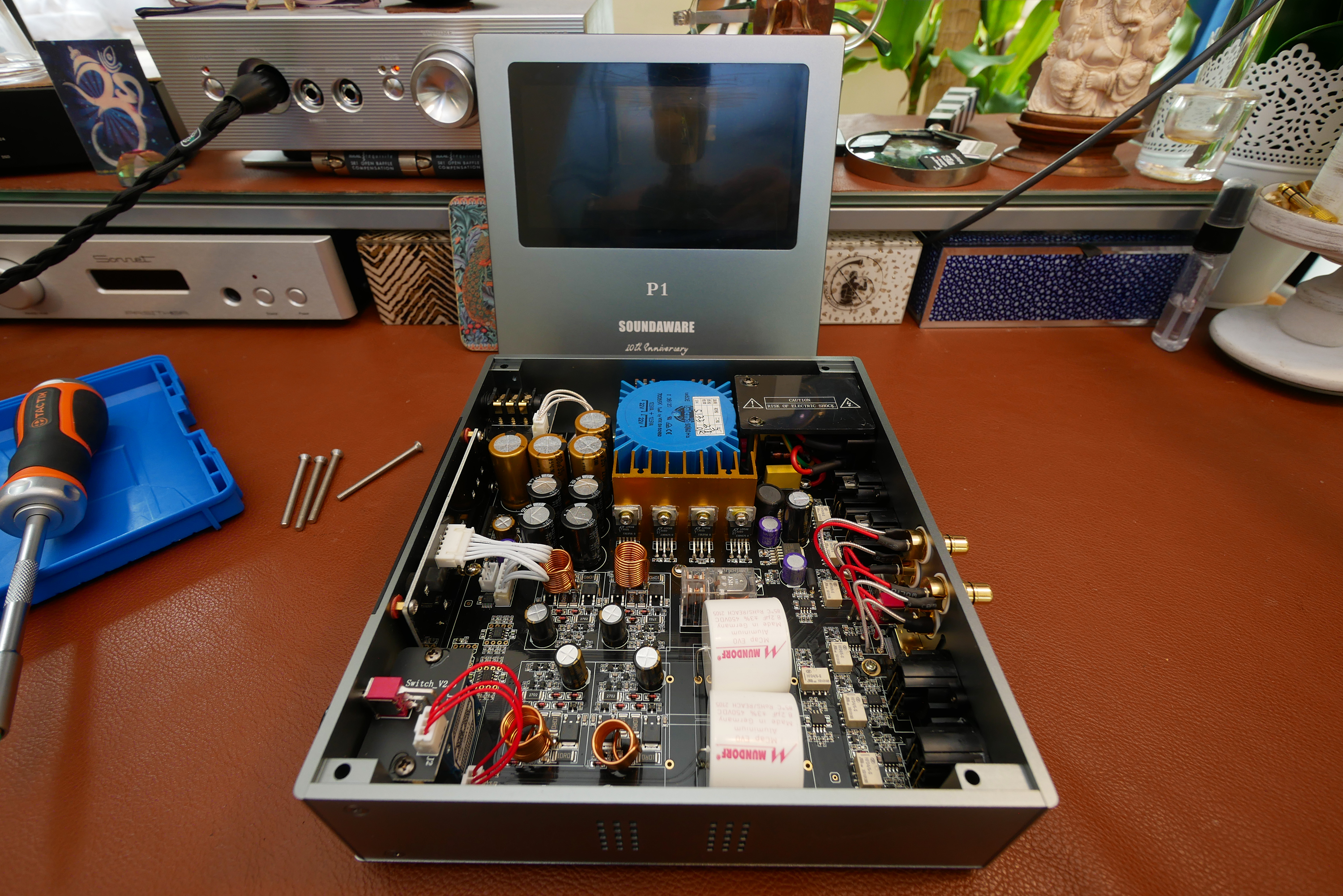 With the modern trend of going 'screwless' to hide fasteners on the belly or rear, two fat screw heads on the front of each cheek play counter trend.
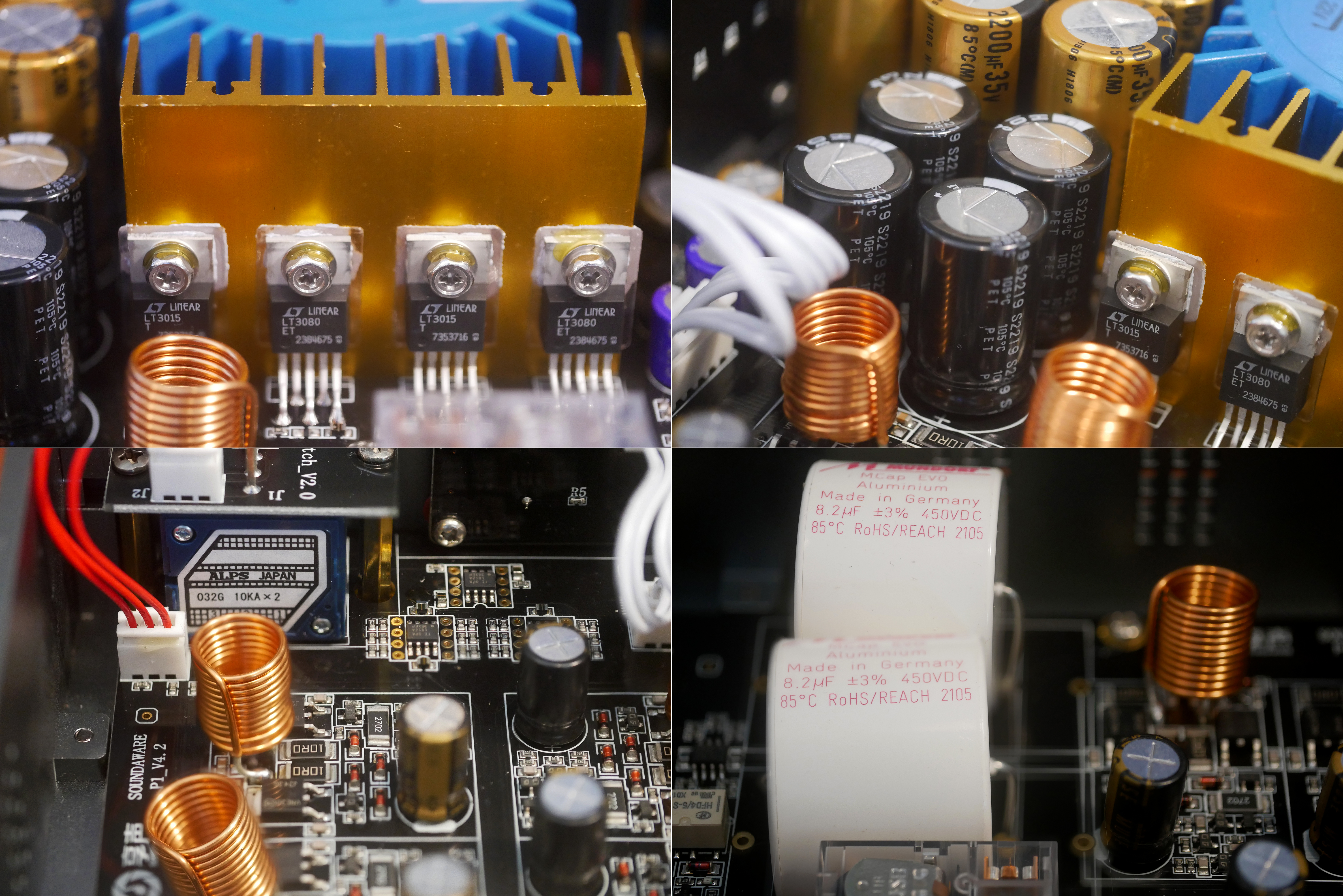
How about Linear Tech's voltage regulators mounted to this gold-anodized heat sink? Or the quality Alps potentiometer?










Without internal valves hoping to spill fireplace romance or some radically clean Ron Sutherland layout waiting to show off, I'm not on board with the dark plastic window that doesn't even do a proper job of being a clear window. Time to close the bonnet and park the P1x in its reserved slot beneath my computer monitor.
Et voilà. Its half-width low-rider profile suits the desktop perfectly. With the sour cherry well past my gullet by now, time for the cream on top by way of a sound that would forget all about the lesser looks and featurization?
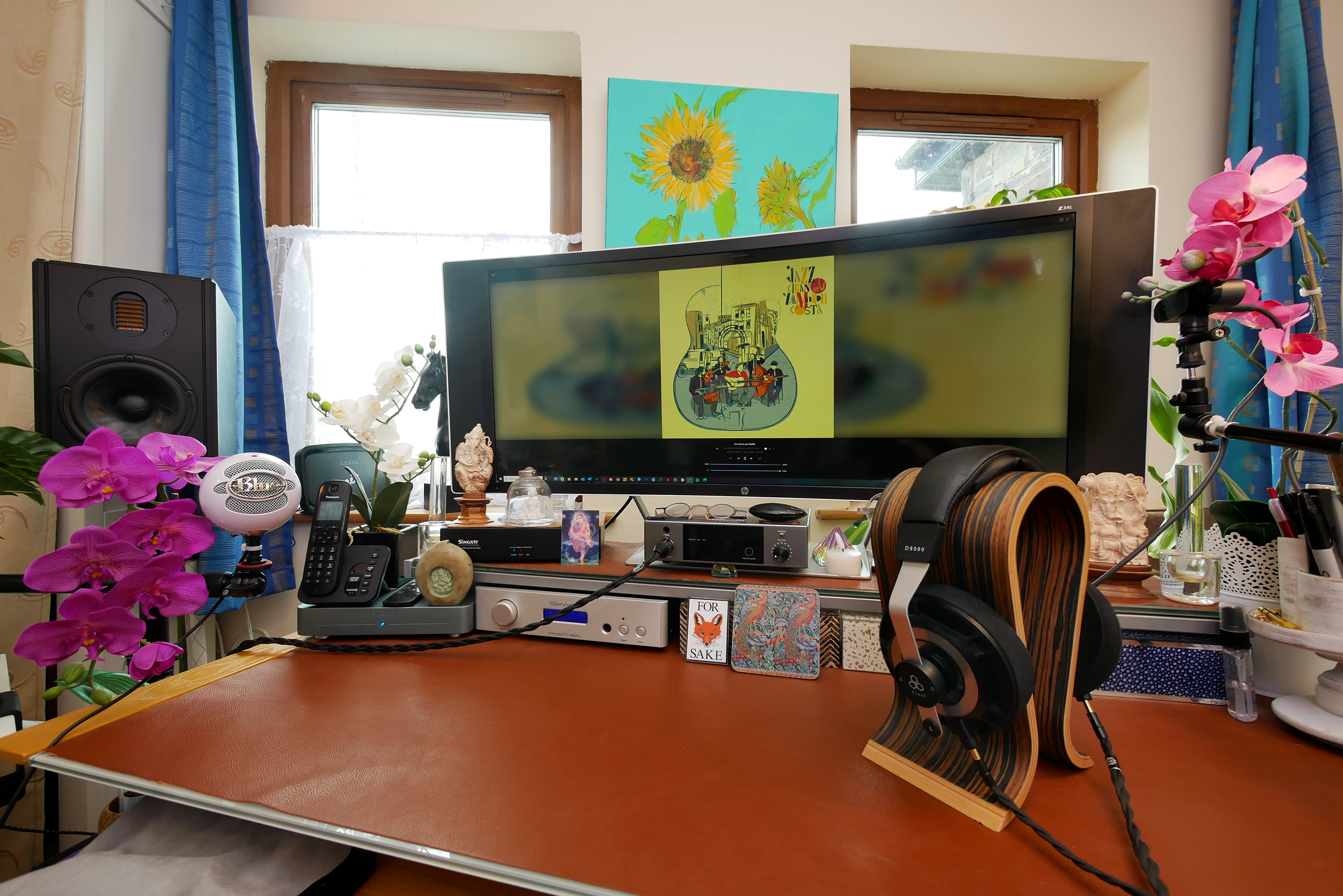
Taking the initial measure was my trusty Final D8000 with new pads and Beautiful Audio's comfort wrap from New Zealand. Reaching over my big screen to get at the power mains by the IEC whilst being connected via XLR to my Sonnet Pasithea DAC, I had instant sound and zero noise even with the Alps pot fully open. Even in low gain my SPL couldn't get past 9:00 but the gain switch only had a very marginal effect. After playing for about an hour, the chassis was warm to the touch but not more. Letting it run overnight for 12 hours straight didn't change that. Clearly this casing is proportioned properly to dissipate operational heat very effectively. To track sonic punch, my ammunition then scaled up beyond the Final to HifiMan's Susvara then Raal 1995's triple-ribbon Immanis. Equivalent SPL merely advanced the volume rotary to 10:30. As it says on the tin, the P1x is a real bruiser. By the same token, leaving ~60% of the smooth pot's range out of bounds is wasteful. A rather shallower taper would create a more gradual gradient with more useful increments. The present solution arguably comes on too fast even on bully loads never mind gushers of high even normal efficiency. Another sour cherry swallowed whole. Onto the main course now that the table is set.