
Country of Origin

Reviewer: Srajan Ebaen
Financial interests: click here
Main system: Sources: Retina 5K 27" iMac (i5, 256GB SSD, 40GB RAM, Sonoma 14), 4TB external SSD with Thunderbolt 3, Audirvana Studio, Qobuz Sublime, Singxer SU-6 USB bridge, LHY Audio SW-8 & SW-6 switch, Laiv Audio Harmony; Active filter: Lifesaver Audio Gradient Box 2; Power amplifiers: Kinki Studio EX-B7 monos & Gold Note monos on subwoofer; Headamp: Enleum AMP-23R; Phones: Raal 1995 Immanis; Loudspeakers: Qualio IQ [on loan] Cables: Kinki Studio Earth, Furutech; Power delivery: Vibex Granada/Alhambra on all source components, Vibex One 11R on amps, Furutech DPS-4.1 between wall and conditioners; Equipment rack: Artesanía Audio Exoteryc double-wide 3-tier with optional glass shelves, Exoteryc amp stands; Sundry accessories: Acoustic System resonators, LessLoss Firewall for loudspeakers, Furutech NCF Signal Boosters; Room: 6 x 8m with open door behind listening seat; Room treatment: 2 x PSI Audio AVAA C214 active bass traps
2nd system: Source: FiiO R7 into Soundaware D300Ref SD transport to COS Engineering D1; Preamp/filter: Lifesaver Audio Gradient Box 2; Amplifier: Kinki Studio EX-M7; Loudspeakers: MonAcoustic SuperMon Mini + Dynaudio S18 sub; Power delivery: Furutech GTO 2D NCF, Akiko Audio Corelli; Equipment rack: Hifistay Mythology Transform X-Frame [on extended loan]; Sundry accessories: Audioquest Fog Lifters; Furutech NFC Clear Lines; Room: ~3.5 x 8m
2nd headfi system: DAC: Cen.Grand DSDAC 1.0 Deluxe; Headamp: Cen.Grand Silver Fox; Headphones: Raal 1995 Immanis
Desktop system: Source: HP Z230 work station Win10/64; USB bridge: Singxer SU-2; DAC: Sonnet Audio Pasithea; Head amp: Kinki Studio THR-1; Speaker amp: Crayon CFA-1.2; Speakers: Acelec Model One Headphones: Final D-8000, Audio-Technica ATH-A990Z
Upstairs headfi system: FiiO R7; Headphones: Meze 109 Pro, Fiio FT3, Raal 1995 Magna, HifiMan Susvara
2-channel video system: Source: Oppo BDP-105; All-in-One: Gold Note IS-1000 Deluxe; Loudspeakers: Zu Soul VI; Subwoofer: Zu Submission; Power delivery: Furutech eTP-8, Room: ~6x4m
Review component retail: €1'500/pr, +€750/pr for matching stands
 Use mouse-over loupe to enlarge or open in new tab to view at full size.
M for muchas mojo? Uncork the mojitos? It just might be time with Scansonic HD's new M so point.2 range. That sports bigger mid/woofers and never-before 5"x9" oval passive radiators on the rears. The three models in this family are today's 2-way monitor, then a 2½-way and 3-way floorstander all with the firm's signature planarmagnetic so not ribbon tweeter. The 3-way combines the brand's familiar 4.5" mid/woofer now as a dedicated midrange augmented by dual 6.5" woofers. The smaller tower gets dual 5¼" units instead, the monitor applies a single 6½" to midrange/bass duty on one carbon-fibre cone. Pricing per pair is €1.5K, €2.6K and €3.5K respectively. Finish options are white and black as shown. According to Scansonic, this is the biggest downward technology transfer from their upscale Raidho series yet.
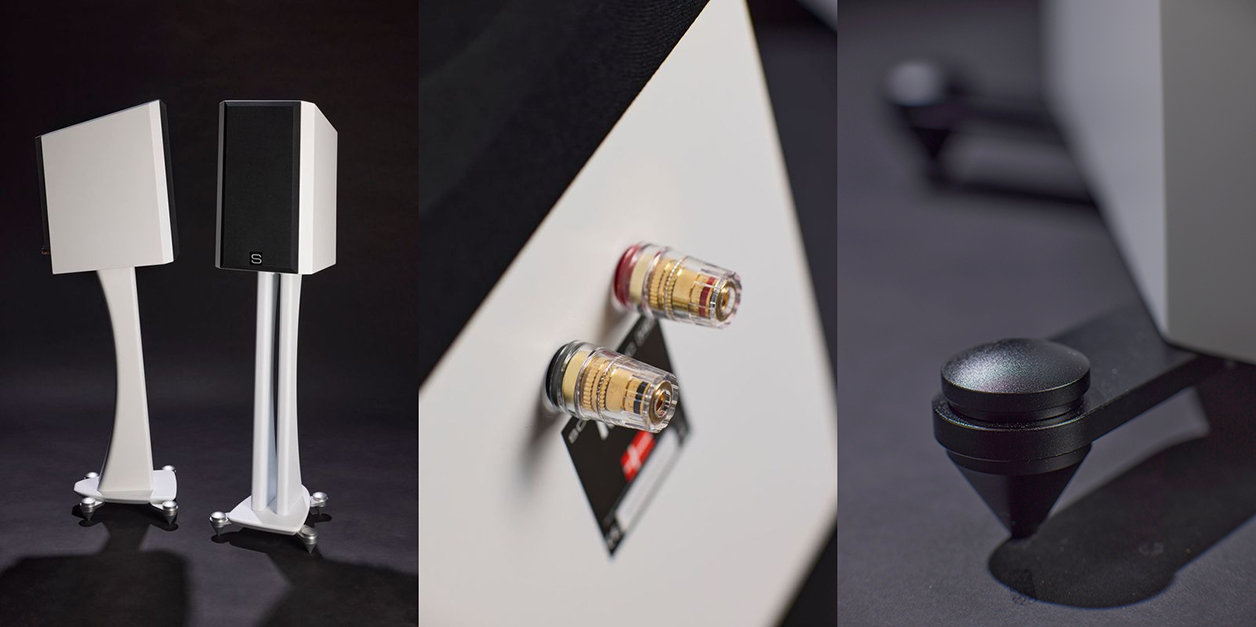
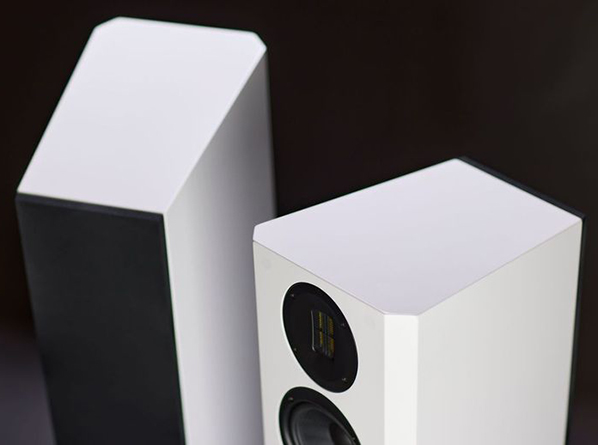 As we already saw, the front and back baffles sport removable grills to go full Monty, fully clothed or two ways in-between. The race-track-shaped auxiliary bass radiators are rather narrower than they're tall. This enables the rear-slimming cross sections of all M models. It also avoids potentially deleterious room reactivity of traditional rear ports. Despite happy pricing, we're not dealing with crass squared-out boxes. Even the tops slope severely. The rationale most cited for non-parallel walls is the avoidance of internal standing waves.
Wiring is by single binding posts so no biwire silliness. Whilst the dynamic drivers on the front are classically round, their trim rings are slightly ovoid to suggest egghead country.
If so, the Raidho connection pretty much promised good eggs out of the gate. Having reviewed a few Raidho models, that had personal pull. So I eagerly volunteered for this gig.
Given illustrious design DNA, these dynamic drivers exploit quad-lam cones to layer up rigidity with self damping. The thin-film planar tweeter with its serpentine voice coil but no transformer as an ultra-low-Ω aluminium ribbon would need sports negligible moving mass for superior reflexes and break-up modes far farther out of band than ubiquitous metal dome tweeters.
The two finishes are in satin gloss. That downplays the finger-print magnet and reflective nightmare effects of shiny piano gloss. Now we have the basics for the new M models from the land of Hamlet and hygge. And no, hygge isn't Dansk for hygiene but their form of German Gemütlichkeit. More than a lame word game, it struck me as fitting when unlike Raidho's metal-based drivers with ceramic skins, these Scansonic versions go after softer materials. Experience suggested that sonics wouldn't be quite as aspirated and lit up as the Danes' top crop so a bit more of a hygge hug. But only listening could say whether that blew smoke or was a well-educated guess.










Digging into our review subject, we get to dims of 24 x 32 x 40cm WxHxD and 10kg/ea. -6dB response publishes as 40Hz-30kHz, nominal impedance as 8Ω not dipping below 4Ω. The 2nd-order Linkwitz-Riley filter sits at 3'200Hz, sensitivity is 87dB. The cab uses 25mm MDF for the front, 18mm for all other panels. The final filter caps from Spirit "are above what's typically used in a speaker at this price and exceed the prototype's lower-spec electrolytic caps. It's remarkable what a difference this made even in this more affordable line." That was my man Morten at the factory sharing specifics. My FedEx tracker added a total ship weight of 22kg and dims of 60x49x41cm so no stands. Whilst a 50% tariff off the actual speaker price could seem tall for mere stands, it's their matching paint, finely finished metal parts and roller-ball isolators which pile on. Anyone disagreeing with said math is obviously welcome to roll their own. Of course Scansonic's stand builds in the intended rake for the speaker whose baffle is supposed to lean back at a precise angle as shown above. As to hygge and ABR—auxiliary bass radiator—the country has precedents with Buchardt Audio, Mårten Design and Radiant. Beyond its borders, GoldenEar might be one of the best-known brands to use them in lieu of classic ports. In Germany, the recently reviewed Klangheim Gloria does them with a custom wrinkle. It installs them inverted. That allow the clients access to change diaphragm weights, alter the resonant frequency and shift the in-room bass tuning. At €13.8K/pr, that speaker costs nearly 10 x more than our small Dane. Today's gambit is a different sand box altogether. How much performance could Raidho's engineers pack into a compact 2-way that aims at a far greater audience than their elite fare? Here experience is the intangible. We're being charged for parts and labour but really, it's experience which knows how to combine it all for best results. With Raidho's TD range, this speaker house has established its ideas of uncompromised sonics. With the M15.2, the same ideas are being funnelled through a far narrower bill of materials. What does that sound like?
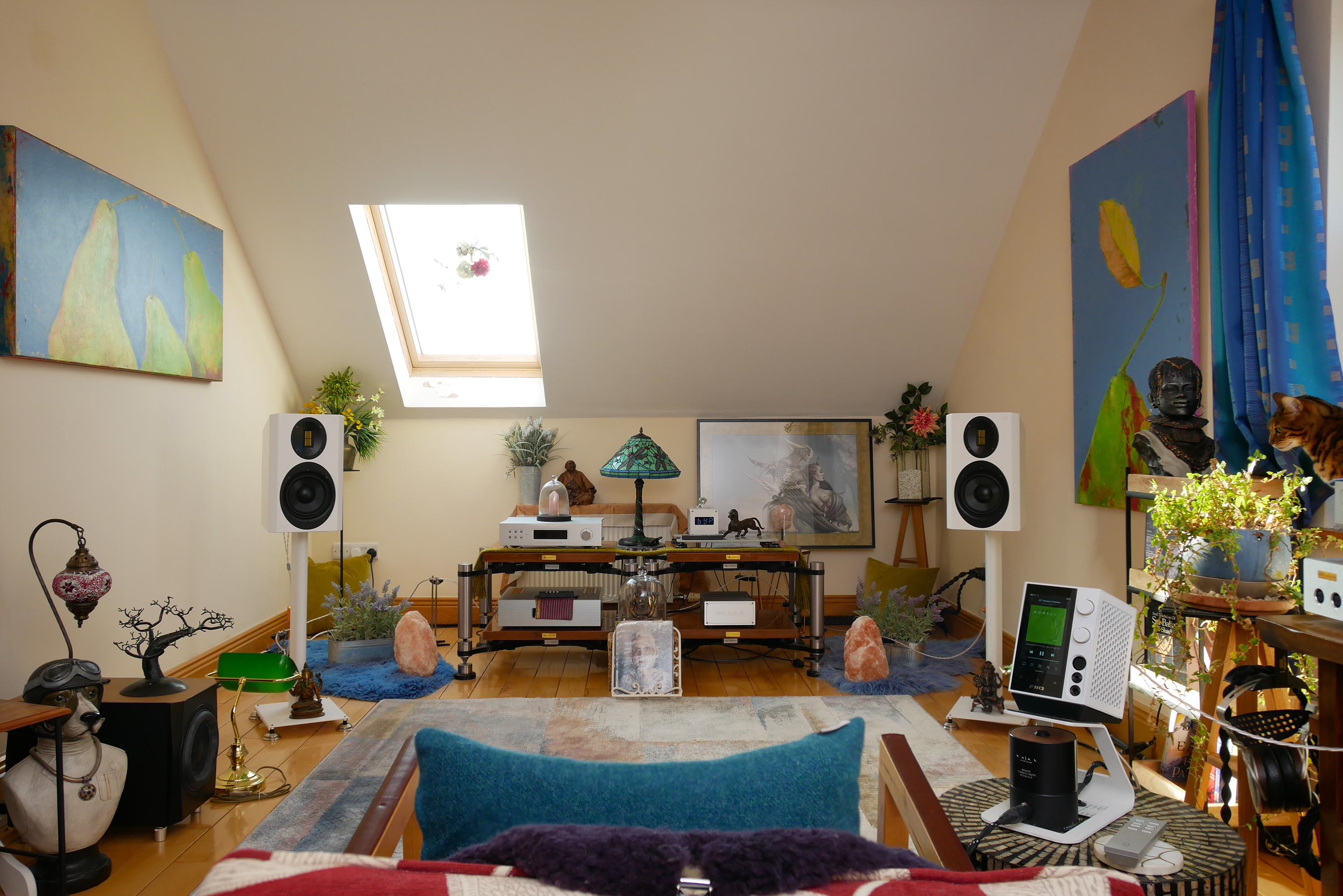 On full-metal Q Acoustic stands with Hifistay isolators.
First a few more words on the build. With its slimming toward the rear and seriously tapering its top, the internal air displaced by the 6½" mid/woofer compresses towards the passive radiator since in that direction the internal volume shrinks. What's more, the chamfered front edges strengthen the build over conventional 90° angles. Given the €1.5K ask, that's a lot of box sophistication on tab. Ditto for chucking the ubiquitous 1" silk-dome tweeter in favour of a more extended lower-mass thin-film planar. My one minor nit about the cosmetics of my samples? The embedded front-baffle magnets telegraphed through the white skin as darkish circles.