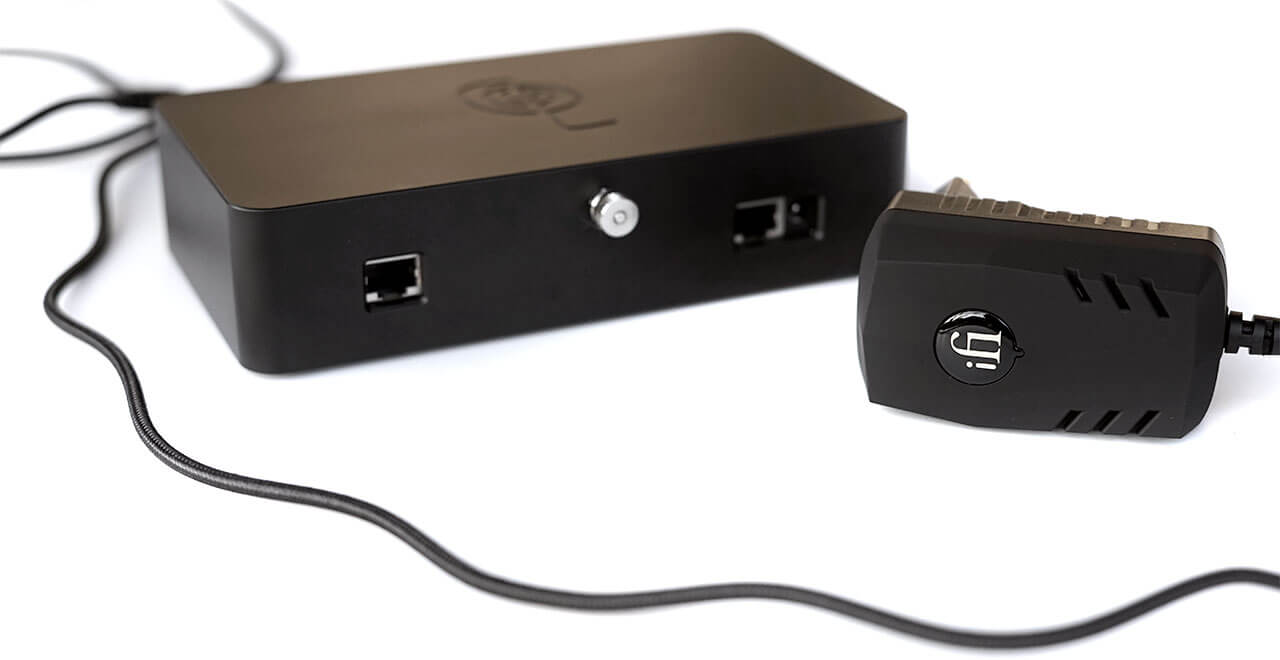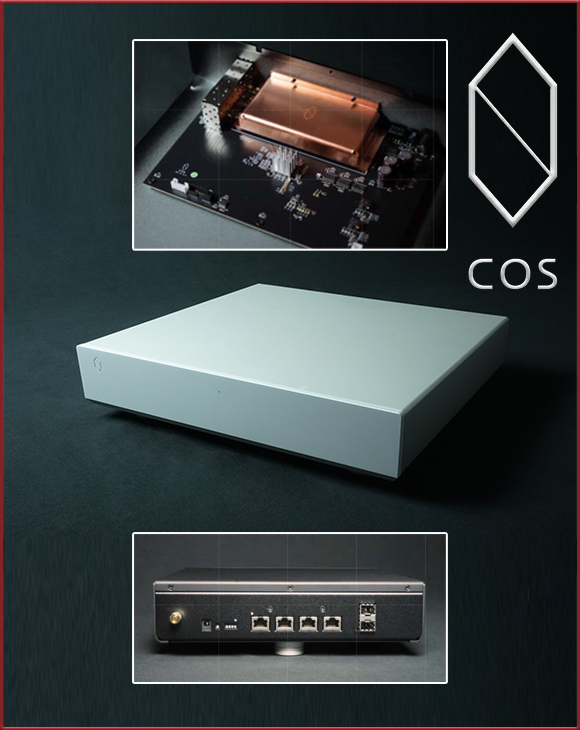
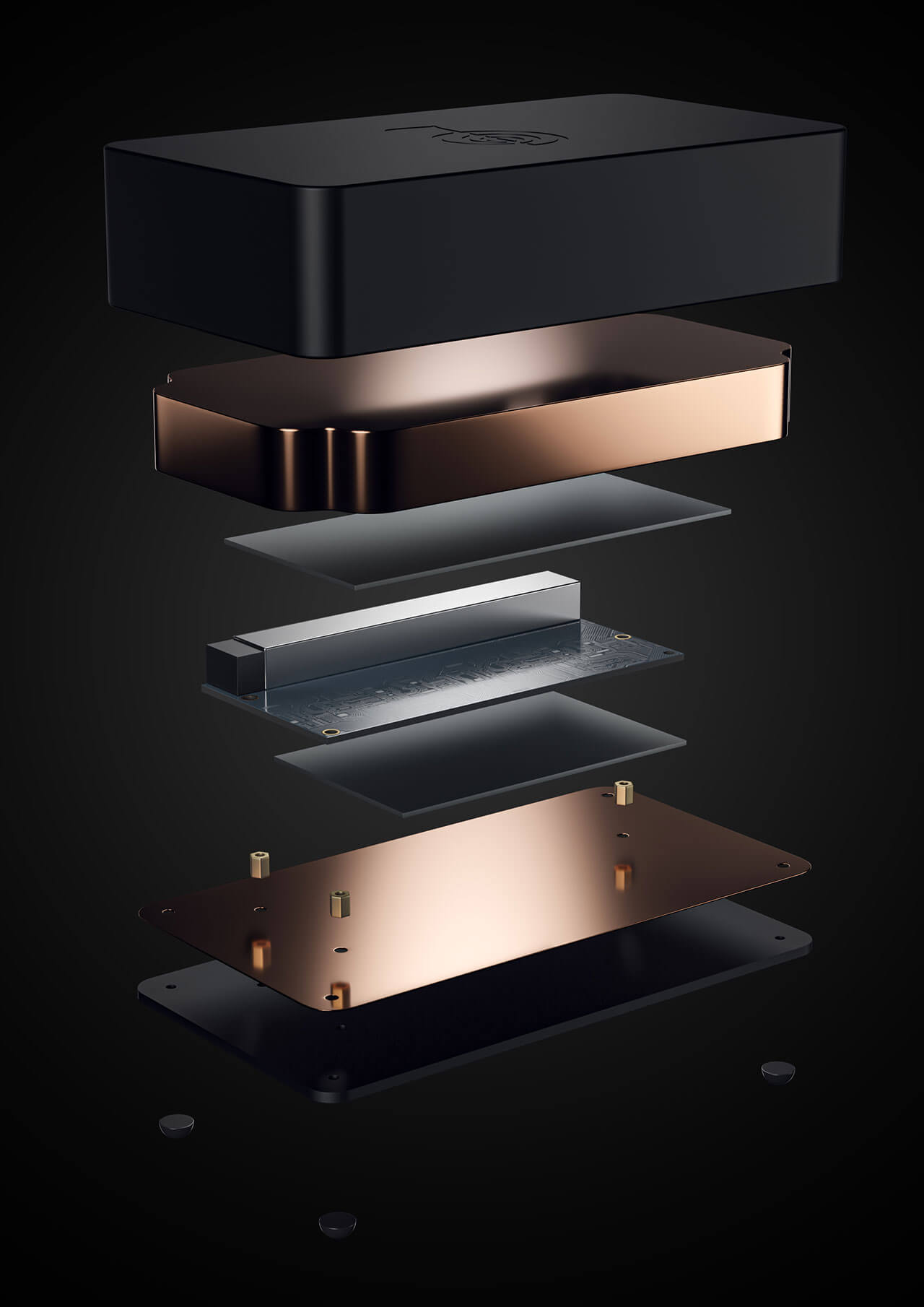
The standard version of the Reiki switch comes with an iFi iPower switching supply. If you want to upgrade, you can stay loyal to the Bell of the ball and order a Reiki Audio PRO linear PSU weighing almost 3kg, an upgrade more expensive than the switch itself so another €2'500. Incidentally, there is more to Reiki than just a switch and power supply. There's an OpticalBridge which converts an electrical Ethernet signal to light and back again after the transmission path; a DC power cable; and a higher-order network cable. However, my test is exclusively about the Reiki Audio SuperSwitch Master. So off to the listening room with it. The first setup placed it in front of my Antipodes K22 G4 and downstream of the largely unpimped Fritzbox router. Okay, I couldn't help myself but change a few settings on said router, give it an SBooster linear supply and a very decent fis-Audio LAN cable. You don't have to do three dozen A/Bs to find out what happens when the Reiki is on the job. The step is quite clear in almost all sound parameters except for tonal balance. There it doesn't really matter whether you have the Reiki in the signal path or not.
 As expected with any 'tuning' in the digital audio path, the general resolution and accuracy of the spatial presentation increase. Not only does the SuperSwitch Master illuminate the stage more deeply to give it more profile—clearly noticeable in "Tessellate" by Alt-J's An awesome wave—it also outlines individual voices and instruments more precisely. In addition, this is where better detail excavation and stage presentation meet: recorded venue
  reverberation appears more clearly traced and the decays of instruments elongate so quiet signal data in particular benefit from the British Reiki Master.
But that's not all. There are also dynamic gains and that surprised me a little. Okay, I'm not talking about macrodynamic miracles. That domain remains pretty similar. Yet individual impulses arrived with more tension as though the whole system played more in the pocket or on point. This worked with plucked strings à la McCalla's "Little Sparrow" from A day for the hunter, a day for the prey but also with drums such as those at the beginning of "Green Chimneys" by A NYC Tribute feat. Jimmy Cobb & Randy Brecker from the album Monk. Without the Reiki in front of the streamer, individual beats weren't quite as real and authentic as though there was a thin cloth over the skin. Also the body of the drums modeled less clearly without the Reiki. It's not just about a simple increase in detail although that's true, too. It also seemed more rhythmically accurate. It's why I found it easier to get drawn into the music when the SuperSwitch laid its healing hands on it.








 My second setup compared the Reiki switch with the Silent Angel Bonn N8 whose current €500 ask makes it significantly cheaper than the SuperSwitch from the UK. The first not very surprising find: the extent of difference described above shrunk but in principle remained the same although now I couldn't really make out the pace, rhythm 'n' timing aspect. The main differences now were in the area of resolution of quiet detail, spatial gradation and image quality. Whether you consider this relevant depends of course on your system, listening style and taste in music. It doesn't have to be this polished for just 1990's grunge but if you have excellently produced audiophile recordings on your menu, things could be different.
I once again listened to Stille Klage by Griet de Geyter and the Baroque music ensemble Il Gardellino because I had heard it when I reviewed the Innuos PhoenixNET. Well, the way the Reiki presented it to me is actually how I always wanted to hear it but where the Silent Angel falls simply short. Resolution, textures, venue illumination, reverb tails… all of this came across that crucial bit more realistic with the Brit to romance my inner audiophile. Now you might wonder whether there was a third test, namely a comparison with the aforementioned Innuos. Unfortunately not because I didn't have the PhoenixNET to hand. With this type device in particular you should always make a direct comparison. After all, we are talking subtle tuning shifts. What I can say however is that my comparisons of the Innuos with the Silent Angel at the time pointed in a very similar direction.