
Country of Origin

 This review first appeared in January 2025 on fairaudio.de. By permission of the author, it is hereby syndicated from the German original to reach a broader English audience. Ed.
Reviewer: Ralph Werner
Analogue sources: SME Model 15 & 309, Denon DL-103R, Dynavector DV-20X2H, Transrotor Figaro, Shelter 201, Flux-Hifi needle cleaner, VPI HW/16.5 record easher
Digital sources: Rockna Wavelightm Antipodes K22 G4, Pink Faun LAN isolator
Preamplifier: Electrocompaniet EC 4.8MkII, Pass XP-12, BMC Audio MCCI Signature ULN phono
Power amplifiers: Electrocompaniet AW 800M, Pass Labs X250.8
Speakers: Acapella BassoNobile MkII
Cables: Dyrholm Audio Phoenix, fis Audio Studioline, Boaacoustic Blueberry Signal, Vovox, Audioquest Cinnamon and Vodka 48, Boaacoustic Silver Digital Xeno USB, fis Audio Magic LAN, Wireworld Series 7 Starlight Gold coax, fis Audio Blackmagic and Studioline
Rack: Creaktiv Trend 3 on bFly Audio b.DISC spike mounts, Stack Audio Auva EQ isolators
Accessories: Audes ST-3000 Power Conditioner (isolation transformer)
Listening room: 40m² with 2.45m ceiling
Review component retail: €2'100
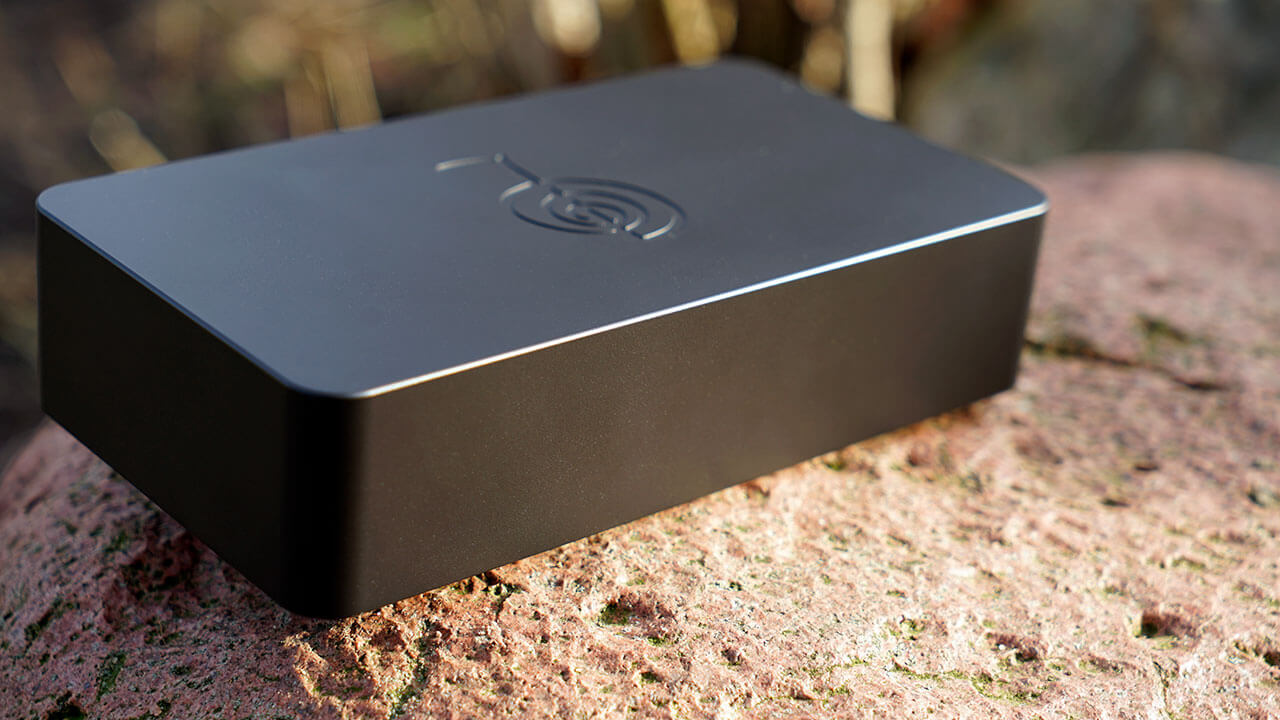
Sonic healing by laying on hands? Sorry, anyone who calls themselves Reiki Audio must embrace mocking comments. Yet Nigel Bell, founder of this young UK company, seems anything but esoteric. Whilst an audiophile, he has decades of solid IT background. By his own admission in fact, he was super skeptical about the 'rumor' that a network switch could make a sonic difference; until he tried it for himself. He was so surprised that he thoroughly investigated the matter then founded a company to now delight our hifi scene with premium audiophile switches aka network distributors. You never heard of network massages? That's how I felt until Wolfgang Linhard of My Sound drew my attention to this British specialist. Or rather, he couldn't stop raving about the switch and ended our short but engaging phone call with "you must hear it, I'm sending you one now!" Since Linhard has certain audiophile nostrils like a truffle dog and years of experience with upscale streaming, I didn't resist. Now you can read of my experiences with the Reiki Audio SuperSwitch Master.
In 2019, Nigel Bell had his first experiences with cheap off-the-shelf switches in front of a streamer then launched Reiki Audio by 2022. In-between passed a few years of R&D, critical listening and swaps all under one guiding question. How can what I'm hearing actually be? His answers are sometimes a little different than his competitors'. For example, Bell believes that the issue of jitter in front of a streamer is utterly irrelevant hence upstream super clocks aren't useful. Nigel explains this at length on his website. The short version of his argument is this: the streamer always receives its data packets in the correct order from a buffer. While the timing of processing the data packets into the bitstream for the D/A converter is crucial, it's absolutely not when filling the buffer on the streamer's receiver side. That's why a good but standard 25MHz clock as he uses in his SuperSwitch Master is more than sufficient. In principle, at that juncture the sound cannot be improved.








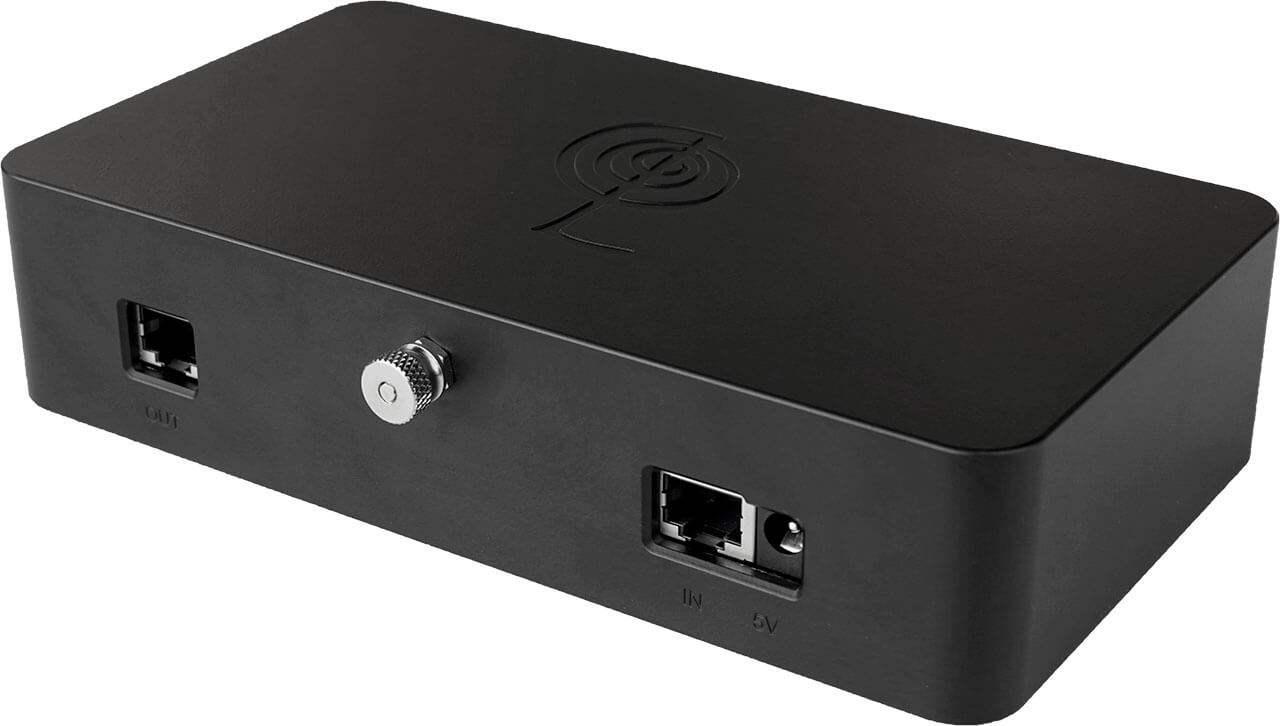
He also realized early on that the actual circuit of the switch has a relatively small influence. Since a switch always creates a certain galvanic isolation of the data signal already, inexpensive models can usually achieve a sonic improvement. His experiments with supposedly advanced switchboards/circuits from certain manufacturers did not result in any really relevant improvements. As a starting point for the SuperSwitch Master, Reiki Audio therefore use a "good low-noise board" albeit heavily modified. Then the packaging of the lot becomes key. According to Nigel, what really matters in a switch with audiophile aspirations is low noise. Other providers claim similar things but you have to give Bell credit for implementing the theme consistently if arguably somewhat obsessively. The first thing that stands out is that his SuperSwitch doesn't actually look like a switch which usually has eight LAN ports, sometimes more. The Reiki has two – one Ethernet input from our router, one Ethernet output to our streamer. Bell says that distributing and routing data is an essential feature of a generic network switch but not in a classic audiophile environment. Which high-end system has several network streamers in play simultaneously? Connecting unused ports to peripherals like printers, PCs or TVs would be a very bad idea as it feeds their HF noise spectrum into our music system. But Bell also hates unused ports because they require recesses in the housing through which high-frequency interference can creep into the switch which nobody wants; especially not Bell.
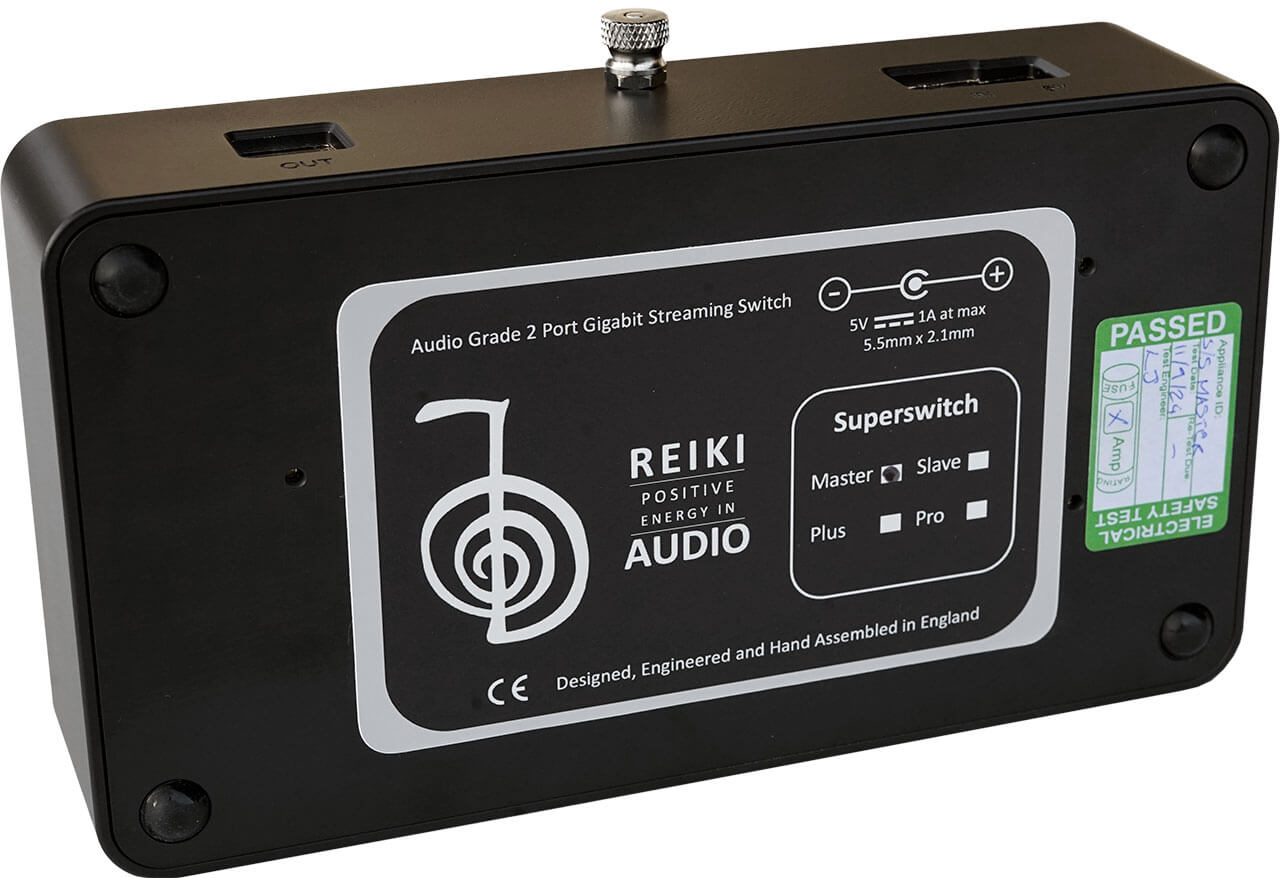
His obsession with noise isolation goes further. The SuperSwitch Master has no light-emitting diodes to indicate status because said LED would require a small hole in the housing to allow ingress of RFI. And LED already make their own noise to have no place in an audiophile switch. I've heard similar before. The Innuos designers argue likewise for their €3'599 so significantly costlier PhoenixNET. However, the Portuguese switch has four not two RJ45 sockets, a high-precision OCXO clock and a few vent slots in the housing that Bell would probably shake his head at. To ensure that his shielding is as perfect as possible, the SuperSwitch Master comes in a milled, hermetically sealed aluminium casing of 5mm thick walls. What the aluminum doesn't keep out in high-frequency garbage is attacked by special EMI absorption material from 3M then lining the casing's inner walls in copper. It's logical that this philosophy forbids an internal power supply so Reiki Audio use an external power supply as another difference to the aforementioned Innuos PhoenixNET.