 Through the Star-12, the first thing noticed was an expansion of scenery in all directions, with the lateral one being most apparent. This was no uniform inflation of musical information as the violin maintained intact proportions which were fully fleshed out centre stage even vertically correct. The result was better contrast between perceived direct and reflected sound and in turn a stronger presence factor. Tonal balance was very similar to Star-8, perhaps with a touch of additional brilliance not brightness on top perceived as more venue air than a different voicing of the violin. Moving to a more crowded recording, I chose the "RV 565 Concerto" from Vivaldi's Estro Armonico played by the French ensemble Café Zimmermann, another masterful recording where spatial reconstruction elevates listening to active performance participation. The Star-12 made for an even more immersive experience, taking instrumental separation and three-dimensional layering to levels I never experienced before with headphones. Stringed tone was organic and compact with both crispness and body, the continuo section's propulsive force illuminated by relentless attacks and decays throughout the score.
 Although Partricia Barber recordings always exhibit a highly curated production, for my tastes there is sometimes some excess spice on top of her beautiful voice. Gear that tends to highlight treble energy can now be bothersome and as mentioned before, some silver cables I tried in the past did just that. With the Star-12 I had no complaints listening to Modern Cool's version of "Light My Fire" even at higher volume than I am used to. The sibilants didn't mask or roll off but didn't sharpen either. The reverb used during mastering presented with all its intention realized and pushed just to the point of personal tolerance without degrading into vexation. Compared to the Star-8 there was an audible reduction of treble grain and general feeling of higher resolution. The contrast between very close-mic'd vocals and remainder of the band was starker with increased depth. However, the most notable difference between Star-8 and 12 on this track was the rendition of the very heavy double bass whose weight and tone depth Star-12 kept more intact while adding articulation and snap. The effect was of a more impactful yet tuneful bass which added pulsating energy.












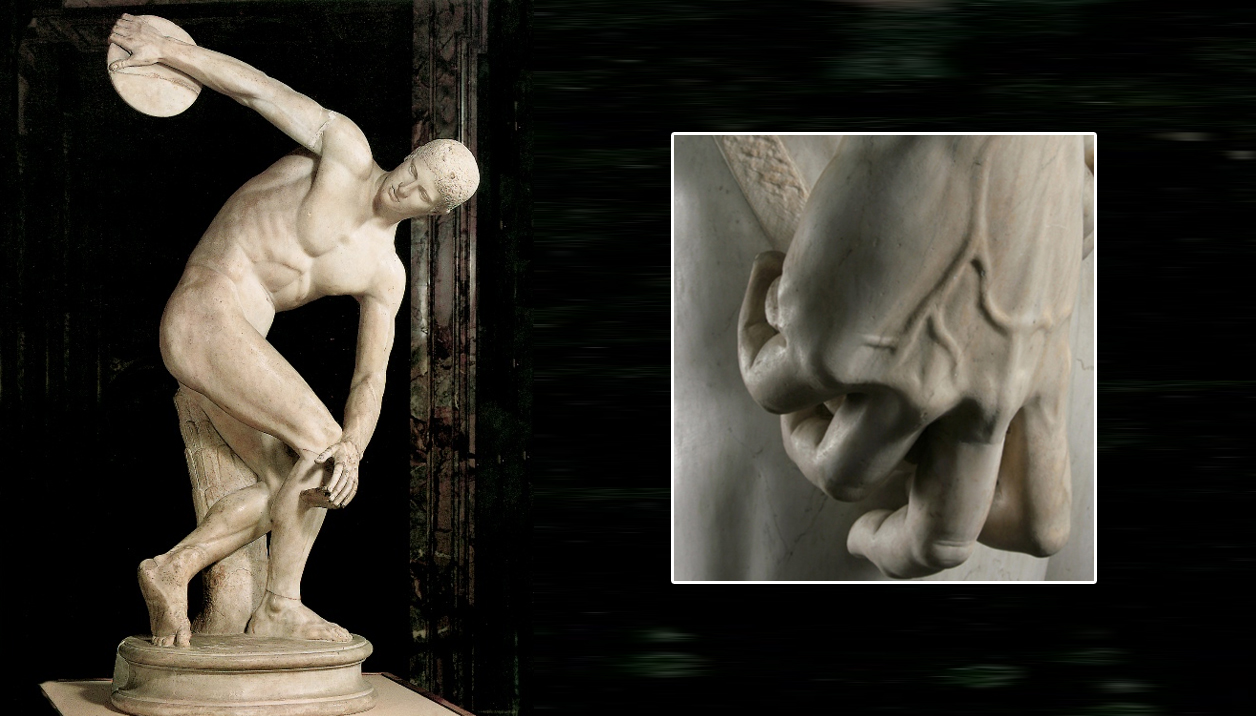
At this point I felt ready to add the silver RCDI where my first impression was of a further increase in transparency and soundstage expansion. Music seemed to develop within a calmer background, every minute sound or noise emerged from silence in a more distinct way which in turn made the absence of sound more like a real active part of the musical discourse. I'm unsure whether this can be used as a definition of the 'blacker background' audiophile cliché but I was positively more engaged and attentive in my listening than before. A perceptibly larger bandwidth was a side effect, translating into a feeling of deeper sub-bass reach on one end and a sense of extra openness on the other. While the Star-12 seemed to add density and weight to the midrange, the RCDI acted on definition and dimensionality like a sculptor finishing his oeuvre with a fine scalpel to maximize the effect of light and shade on the textured surface to the point of having marble come alive.
 The other change I noticed was about speed and dynamics both micro and macro. While the former was still in line with the resolution and contrast increase, the latter made a spectacular display with big orchestral crescendos where the massive voltage swings from many instruments playing together presented with more authority and control. Sharp variations of loudness, be they on vocals, guitar plucks, a high-hat hit or the final hammer blows of Mahler's 6th Symphony were even more breathtaking than before. And that's the point. Both the Star-12 and silver RCDI create a further improvement on what the Raal 1995 Immanis already did very well and to my knowledge, better than any other headphone. It is no attempt to fix a specific flaw, never mind alter the overall voicing. The silver kit gives a strong impression of being the product of a relentless engineer with a very clear inner picture of the sound he wants to obtain, who has come close with his currently best transducer systems then explored every option, with no limitations on cost or practicality, to get even closer to the same ideal of perfection. The Star-12 and silver RCDI are for those who already love Immanis and want to elevate it to the next level, cost being no object.
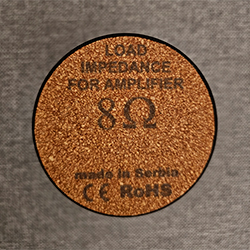 As a final test I tried the combination of Star-12 and copper RCDI to further isolate the effect of the silver interface. The sound immediately dropped down a size especially laterally and became denser and fuzzier by direct contrast. The leading edge of bass notes felt less defined as though some energy absorbed in damping. Spatial cues that characterized the nature of the venue and localizations of the musicians were less obvious to cause a feeling of reduced scale and layering. This configuration was a tad warmer and more relaxed but after having just listened to the same material with the silver RCDI, it registered as information loss, be it textural detail, microdynamic mobility or clarity of articulation. It translated into a diminished sense of engagement especially on recordings of excellent technical execution.
The silver kit made Immanis sound even more like itself: larger, more articulate, more open. Separation and layering went up another nice step beyond the already impressive presentation with the copper RCDI and Star-8 MkII. Clarity and extension at both ends of the frequency spectrum and overall vividness improved as well. The fact that this didn't come at the expense of body, weight and organicity—rather the contrary—is a remarkable achievement. To my ears, every single aspect of the Immanis presentation improved with no downsides apart from the rather uncompromising nature of this headphone becoming even starker. For some it could be too much of a good thing. For those who love the core personality of Immanis, I see no other option to inspire it to such extreme levels while keeping authentic to the designer's intent. The cost of the upgrade is over 50% of the headphones themselves and the amount of improvement, while easily audible, is obviously not of the same magnitude as is typical for the law of diminishing returns. Auditioning prior to committing oneself seems a sensible thing to do. Having done exactly that, after experiencing Immanis scaled up with the silver upgrade kit, for me there is no going back.