The acquisition of Immanis was the culmination of my audiophile journey as a headfi-only user. It was February 2024 as I travelled to the fascinating city of Belgrade just to have the privilege of meeting Aleksandar Radisavljevic in person. I meant to listen to his then new creation in a makeshift demo space, my hotel room. This predictably led to a few extra kilos for my return flight by way of a shiny aluminium case enshrining a little wonder of headphones engineering. The deal was done and I had the honour of being the first customer in the world to own a pair of Immanis. Once home, it became immediately clear that I needed to invest time to maximize their potential, i.e. make them sound as good as possible for my tastes. These are the most revealing transducer I ever owned or tried. As all audiophiles know first-hand, that can be a good and bad thing at the same time. Following the nature of their creator, they are extremely straightforward, direct and focused on an unbending search for sonic truth. Once found, this verity exposes naked in bare light, all details in full view so visually and tacitly evident. The energy in music delivers with athleticism. We can see the muscles of it tensing and releasing at speed without hesitation. The setting wherein this aural information presents is large, open, virtually theatrical. These qualities make the listening experience exciting and engaging. We are called upon to participate actively, all our senses alert to diverse stimulations which challenge our capability to keep up. This experience took me by storm especially on musical material most suitable for it so from electronica to large-scale concerts and live performances in grand settings. Even small ensembles enthralled by how easy it was to place musicians in space, detect previously unheard details like nails hitting an upright's body, a slight spray of saliva projected by a singer's tongue, a faint sound of the drummer's backside adjusting on his stool.
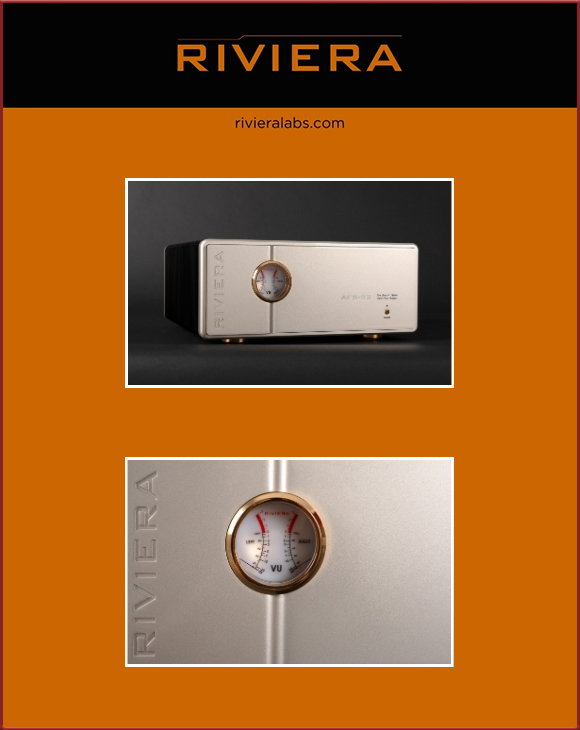
All of it was extremely cool and rewarding but I still had to bring my emotional involvement on par with the technical acrobatics. Don't get me wrong, the emotional connection already was very good but as it plays the major role in my 50-year+ psycho-physical musical therapy, I needed it at the same outstanding level as the brilliant delivery of sonic facts. After playing with the digital settings of my dCS Rossini, rotating cables, parametric EQ settings and tube rolling my Riviera Labs AIC-10 amplifier, I finally achieved my type of sound with the LampizatOr Horizon tube DAC. 1½ years later I haven't looked back and still enjoy every Immanis session with a combination of relaxed excitement and hedonistic pleasure which I know in advance will be an immersion in musical landscapes full of surprises and old friends. When I learnt of the availability of a silver-wired Immanis interface, I was at once intrigued and concerned since I had mixed experiences with silver conductors. I'm overly sensitive to brightness in the sibilance area and given listening sessions often several hours long, shun any and all attributes causing listening fatigue. With some silver kit I tried, the effect was a sharpening, dehydration and leanness, none of it appropriate for Immanis. On the other hand, with the best silver components from Audio Note, DHC Cables, Shunyata and Crystal Cable I had very satisfactory results whose increase in clarity and purity did not diminish body and timbral richness. Trusting Alex, I had high hopes that his bold move of releasing a complete rather expensive silver upgrade would situate on the most successful side of my spectrum.












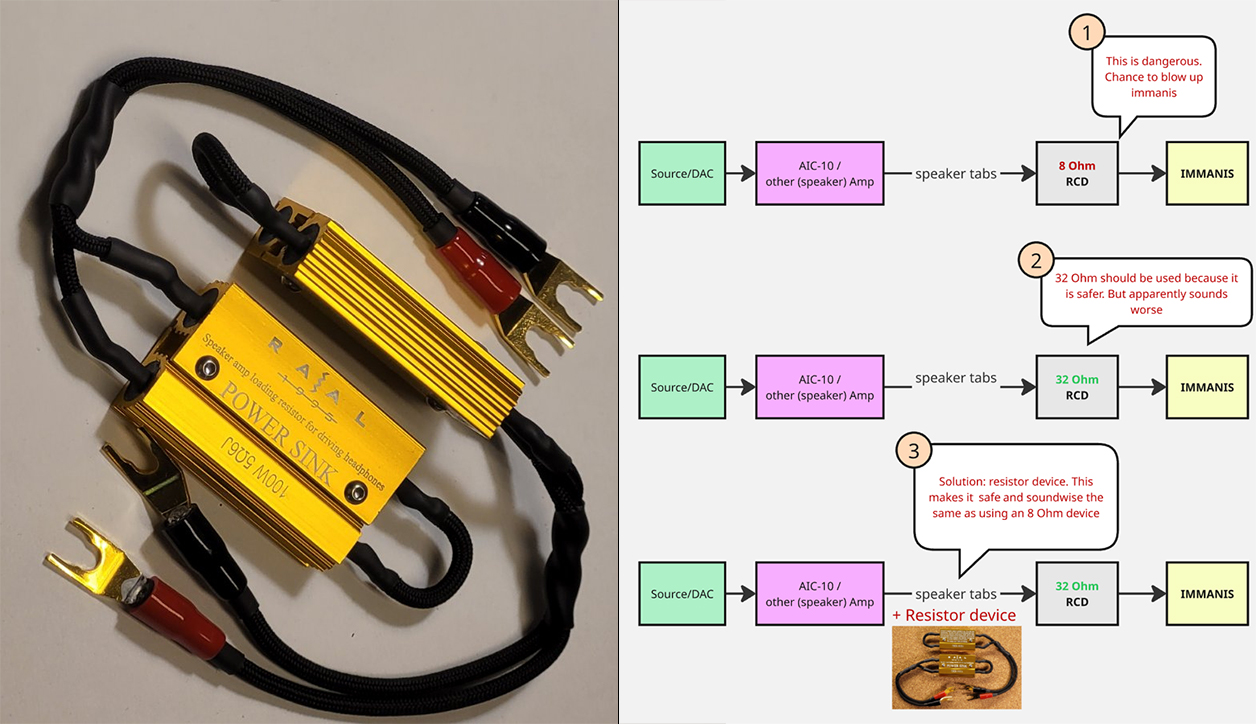
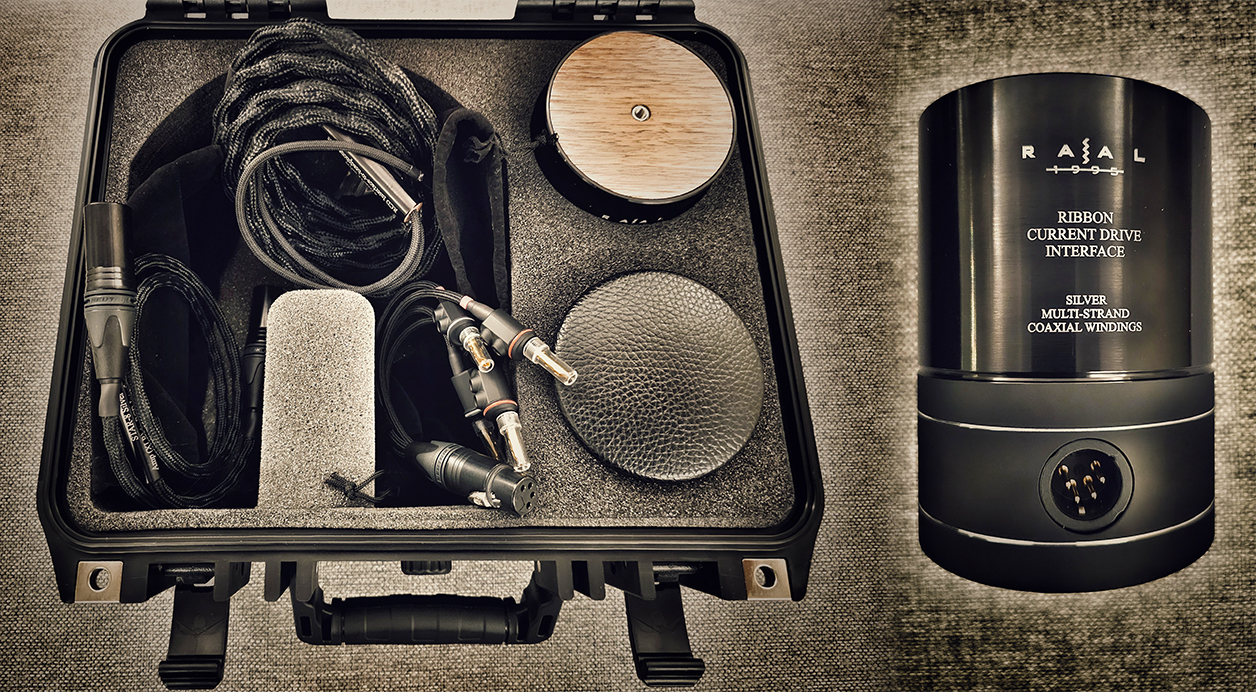
The silver kit arrived in a nice Pelican-style case comprised of a Star-12 headphone cable, 8Ω transformer, short XLR Star-8 cable to connect amp to transformer and an XLR-to-spade adapter. Alex sent an 8Ω not standard 32Ω RCDI as best option for a Solaja Master 300b amplifier I was reviewing at the time. As I usually drive Immanis off the speaker taps of my AIC-10, 8Ω too are the expected load though the AIC-10 can easily output more than twice the power of the Master 300b, requiring me to be careful on the throttle to not overdrive the ribbons. Immanis is happy to see ~3wpc/3A and can withstand occasional 6-watt peaks but anything more can likely damage the ribbons and our ears. The original 8Ω transformer for Immanis or Magna anticipated low-power SET speaker amps. Then Alex noticed a trend among his clients for high-power speaker amplifiers so discontinued the 8Ω interface in favour of the new Power Sink below, an 11.2Ω load resistor in series with the 32Ω RCDI which our amp now sees as 8Ω. It mitigates the risk of driver failure and allows a speaker amp to function at its intended operating load point. Since I'm no high-volume listener and neither is my musical diet the most demanding of sub bass where excessive power is most likely to overdrive the ribbons, I simply was careful to not accidentally over-rotate my volume knob. Visually the Silver RCDI looks like the copper version except for the silver-ring detailing around its base. Like the copper version, it can double as headphone stand with the leather mushroom cap installed.
 As we learnt from Srajan's intro, the Star-12 cable project began as an attempt to design a longer cable than the 1.8m Star-8 whilst maintaining its strict resistance and inductance specs. With my long overdue return to speakers about 12 months ago, I had to rearrange my room's layout such that the stock 1.8m long Star-8 MkII was too short to bridge my couch about 2.5m away. The new 2.9m Star-12 perfectly solves this. Whilst I love its visually more satisfying thicker all-black jacket, it is also far heavier and stiffer. This poses no personal issues but should be considered as a potential ergonomic trade-off. As the Star-12 is an optional upgrade of Star-8 separate from the silver RCDI, I started my evaluation by plugging the longer silver leash into my copper interface. A track I often use for tonality assessment from midrange to mid treble is the "Chaconne" of Bach's 2nd Violin Partita BWV 1004 from the Delmoni Bach – Kreisler – Ysaye album on Water Lily Acoustics, one of the most realistic renditions of violin sound I have ever heard on record. The fact that engineers like Tim de Paravicini were involved must have something to do with this. For us music lovers it means a tangible, fully incarnated violin firmly placed in the room, almost using the venue acoustics as an integral part of the instrument. Delmoni's interpretation is serious almost solemn, with only minor concessions to legato and occasionally a discrete vibrato to infuse shades of warmth never sentimental or self-indulgent. In his hands the 1780 Guadagnini violin has a full rich tone and the harmonic layers it produces fill the acoustics of the Christ the King Chapel in Santa Barbara in ominously convincing fashion.