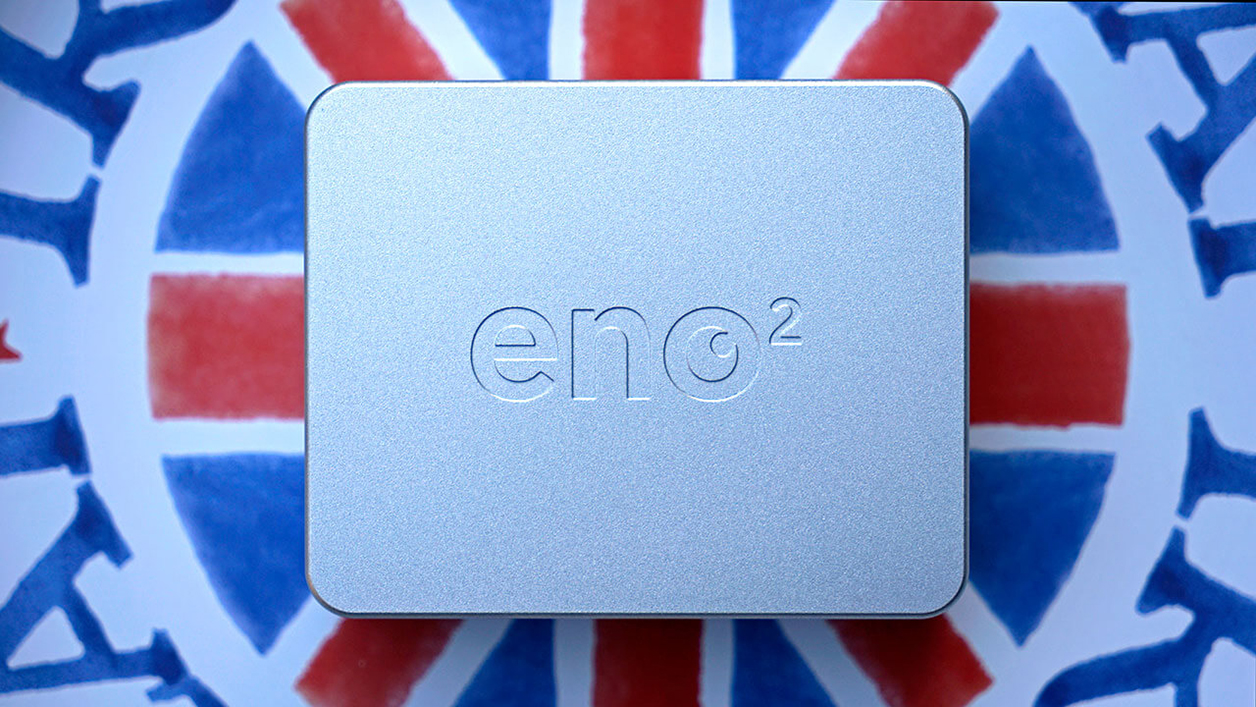
I actually thought I already had such a filter: the Pink Faun LAN Isolator plugged into the Ethernet input of my Antipodes server. It uses four transformers to galvanically isolate the twisted pairs of a wired Ethernet copper line and I think does a good job especially considering its very reasonable ~€180 ask. All well and good sez Rob Osbourn of Network Acoustics. Any extra switch looped between router and streamer/server provides galvanic isolation. The problem is, that alone isn't enough. While DC components and relatively low-frequency interference can be reduced more or less successfully, RFI noise close to the naturally high Ethernet signal cannot. That requires other tech; exactly what the Network Acoustics Eno2 relies on. It's not more galvanic isolation.
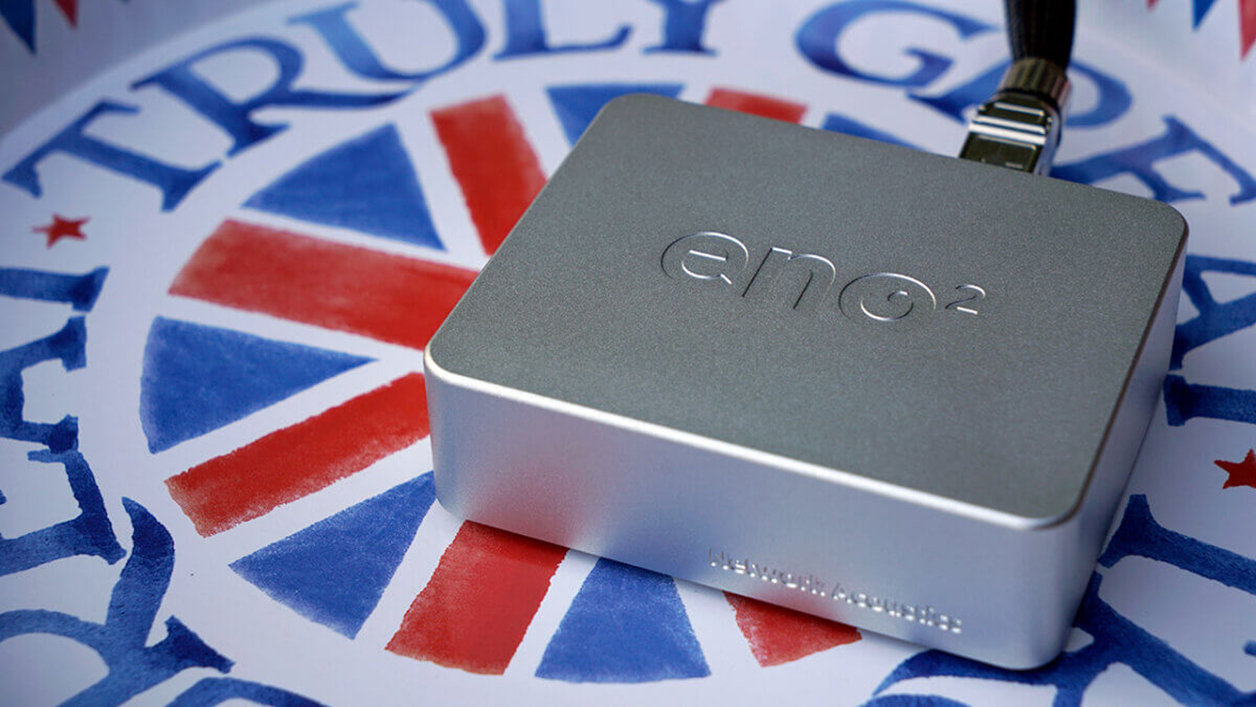
It would of course be swell to know exactly what the Eno2 does but here Osbourn gets far more tight-lipped, pointing out how much effort went into their proprietary tech which they are therefore protective of. I did learn of specially tuned narrow-band filters; and a separate filter on each of Ethernet's eight leads, a significant change over the first Eno. Also, R&D showed that ultimately, all parts of an Ethernet filter shape its performance. So they experimented with various parts, aluminium housings of varying thickness, solder types, cables, circuit board layouts and much more, all measured and tested in critical listening sessions to achieve the best possible result. The included Eno2 Ethernet cable is expressly part of the concept. As the British say, the proof of the pudding is in the eating. So let's get ears on.








Before we do, let's briefly revisit my streaming setup. It basically looks like this: FritzBox ⇒ LAN cable ⇒ Silent Angle Bonn N8 switch ⇒ LAN cable ⇒ Pink Faun LAN Isolator ⇒ Antipodes K22 G4 music server. Behind it an Audioquest Vodka 48 cable connects I²S to a Rockna Wavelight DAC. Following Network Acoustics' recommendation, I threaded in Eno2 behind the switch. After that, the Pink Faun LAN Isolator was no longer really needed. In fact I preferred Eno2 connected directly to Antipode's LAN port. In a direct comparison of the two, the Brit clearly has the edge. Motivated to simplify my streaming path, I next removed the Silent Angle switch. Maybe it too was no longer needed? Well, I quickly put it back in. It sounded better with the switch plus Ethernet filter than with just either. If in doubt, I'd go for Eno2 as its sound improvement is more noticeable assuming money is no object. The Silent Angle Bonn N8 costs a third of the Eno2.
 What happened sonically?
There's usually not much tonal change with such devices. Their sonic gains happen elsewhere. Here however, I immediately had the impression of a bit more energy in the upper bass and fundamental ranges. After listening longer, I had to revise my opinion. What increased were dynamics and contours, not sheer mass. At first glance it simply seemed that way because there was more shove. Not only did bass drums sound more impulsive, harder of attack and better placed, with less soft fade at the edges; the same was true for the double bass or a keyboard's left half.
Those were the first gains: dynamics, contours and impulse reproduction. The latter included the midrange as the synth attacks at the beginning of "Salt Lake Heart" by PVT [New Spirit] made clear with more edge.