To my ears, DSD in general presents as softer, sweeter, spatially more reverb-laden so with more connective tissue and half shadows. For that it's less separated, articulated or resolved and on top not fully elucidated or airy. PCM is crisper, sharper, more damped, more brilliant in the treble, more micro resolved and as such, more layer-specific in the depth domain. I also hear DSD as more fluid, relaxed and matte, PCM as more energetic, exciting and shiny. At least on the DSDAC 1.0 Deluxe, prior tests showed how pushing its resampling algorithm to 256 then 512 opens up the air and brilliance regions. That restores the treble to more PCM likeness though still doesn't achieve perfect parity. The shift from 512⇒1'024 is far more minor than that from 256⇒512. Cen.Grand in fact don't allow us to listen to native DSD64 at all. Against the performance gains from their upsampler, the implied message seems to be that they don't view playback of raw non-upsampled DSD64 as competitive. In today's rounds, the r8brain algo was far more similar to what both converters did on their own than the SoX version. That clearly opened up both their top ends. When each DAC reformatted 16/44.1 PCM to DSD on its own, the Swiss sounded—and here I'm answering my own earlier question—just a bit more vintage, the Chinese more modern.
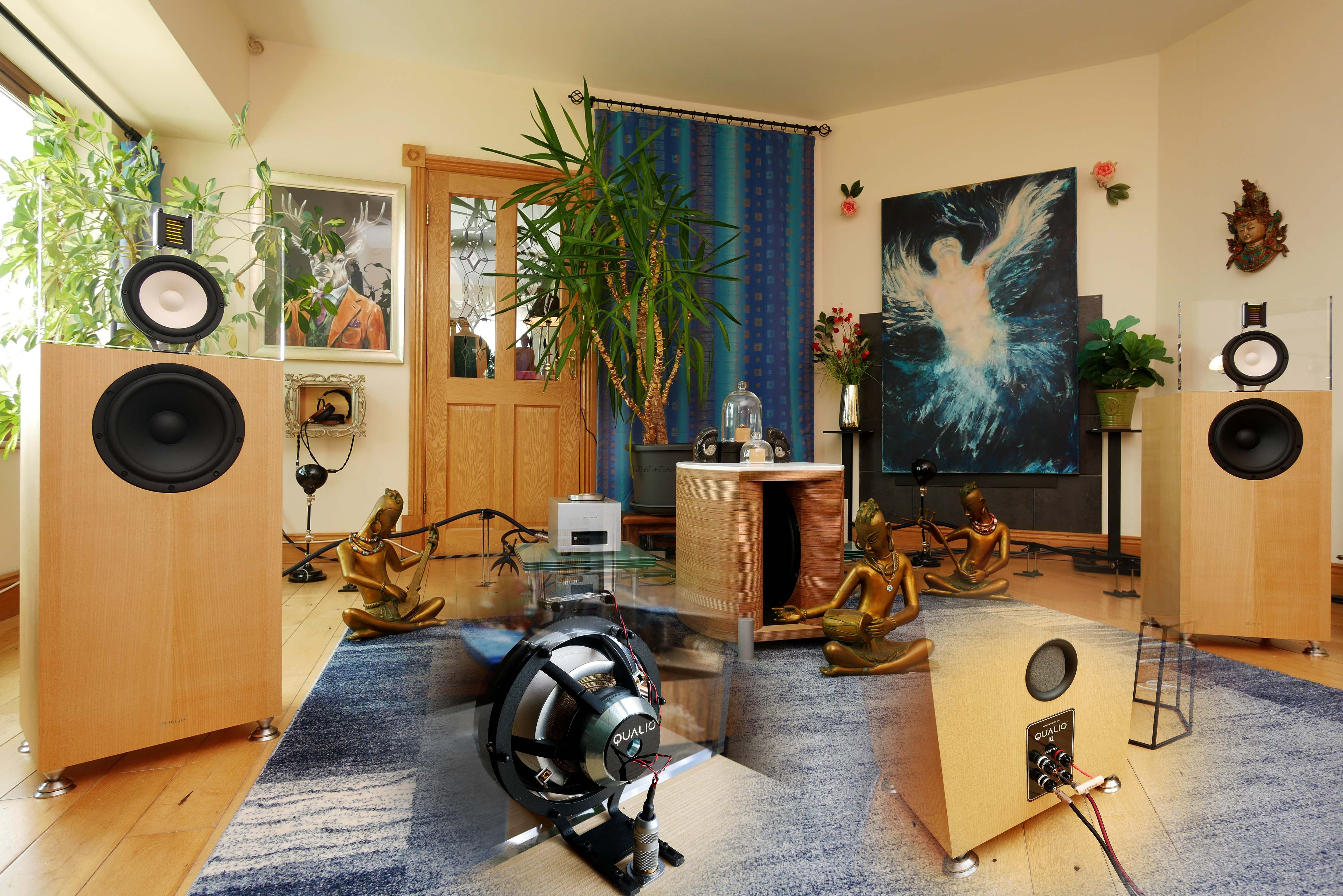
Atop that baseline, SoX shifted their relative treble balance alike. The difference between decks held but both behaved more lit up. Cen.Grand + r8brain versus Nagra + SoX narrowed but didn't close the gap. To invoke another generalization, Cen.Grand's FPGA code leaned more toward transistor virtues, Nagra's more toward tubes. That felt rather predictive. What surprised was being able to shift the DAC II's 300B-type treble honey to more 45-kind airiness and shine when feeding it PCM resampled to DSD128 in the SoX algo. That influenced my perception of overall resolution and image separation. The takeaway of all this futzing around is a small footnote. If your streamer/server includes its own PCM⇒DSD resampler even multiple options, they could offer voicing leeway. What you prefer is intensely personal as it always is. But it's certainly sensible to evaluate all possible flavour permutations we might have on hand. If I owned the Classic DAC II for our main room for example, I'd set Audirvana's SoX algorithm to DSD128 to focus exclusively on USB. The combination of dipole Mundorf AMT and SB Acoustic papyrus-cone Satori midrange working up to 15kHz of our Qualio IQ speakers really knows how to make that extra treble illumination and air sparkle.







With that established via earspeakers, my next rounds reverted to loudspeakers and my usual signal path whereby a Singxer USB bridge receives the iMac stream as shown next [use loupe function for the details]. Here my preference is for Audirvana to upsample all PCM to 176.4/192kHz. PCM in a classic CD library is the likely greatest usage scenario which potential buyers of the Classic DAC II will face rather than reformatting all to DSD128 on their end. So this struck me as most representative. Now we're ready to inspect Classic DAC II sonics on their own merit. From Matthieu: "Regarding the converter board upgrade of the DAC II, our focus was on power-supply noise reduction; superior more precise and silent clocks; a next-gen USB transceiver of proprietary execution; and a revised signal path and PCB layout. Getting DSD256 compliance meant new FPGA code but that's not what impacted the sound the most."
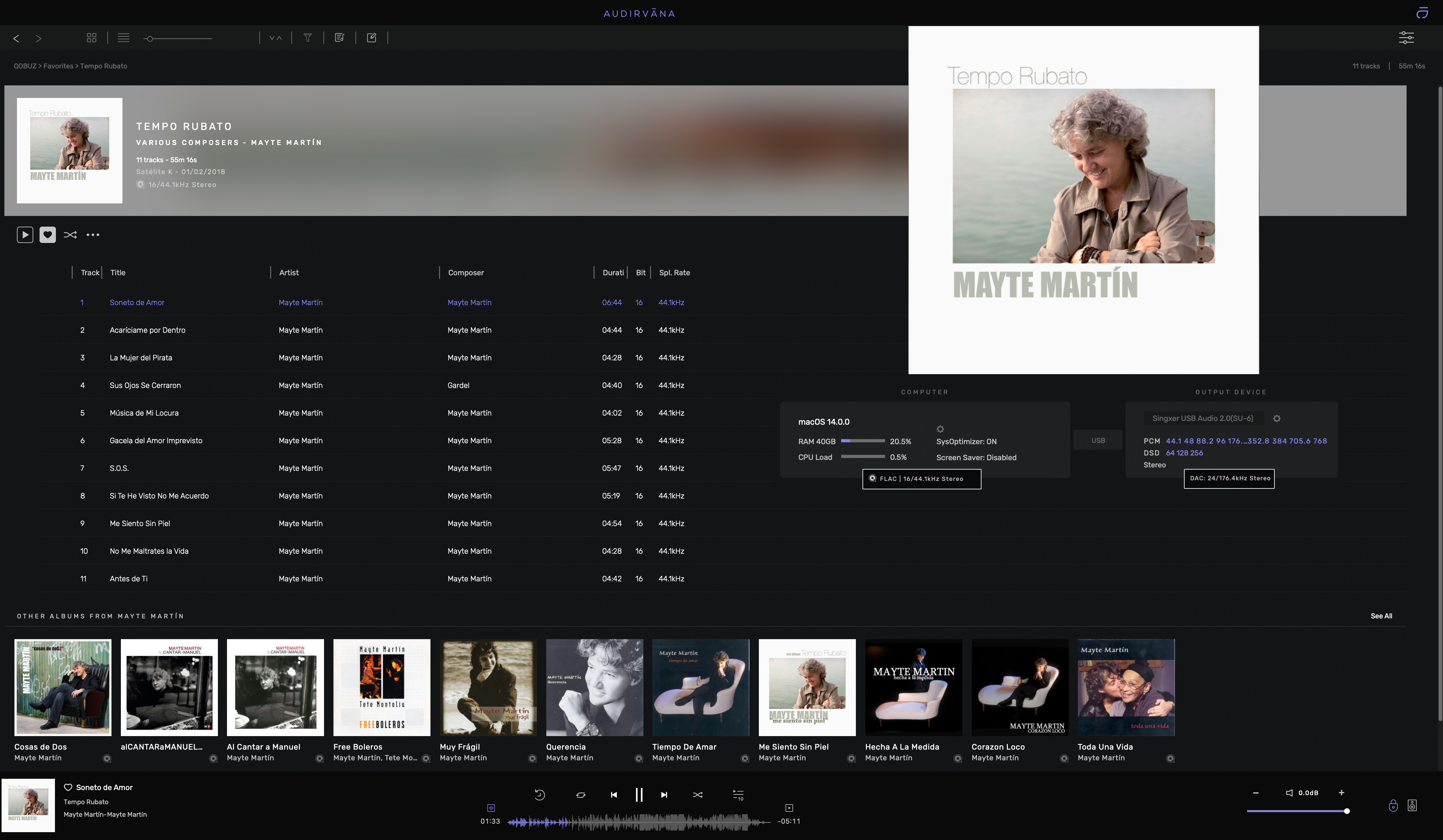 The lower fish-spine graph shows proper recorded dynamic range, not the usual compressed 'redacted' solid bar which renders everything maximally loud all the time. See also the minimum CPU load of 0.5% with SysOptimizer on.
To keep me honest, the Classic DAC II wired in parallel into our Lifesaver Audio Gradient Box II smart active analog crossover with precision PGA volume and input switching. When needed, I could switch between the two DSD converters from the seat.
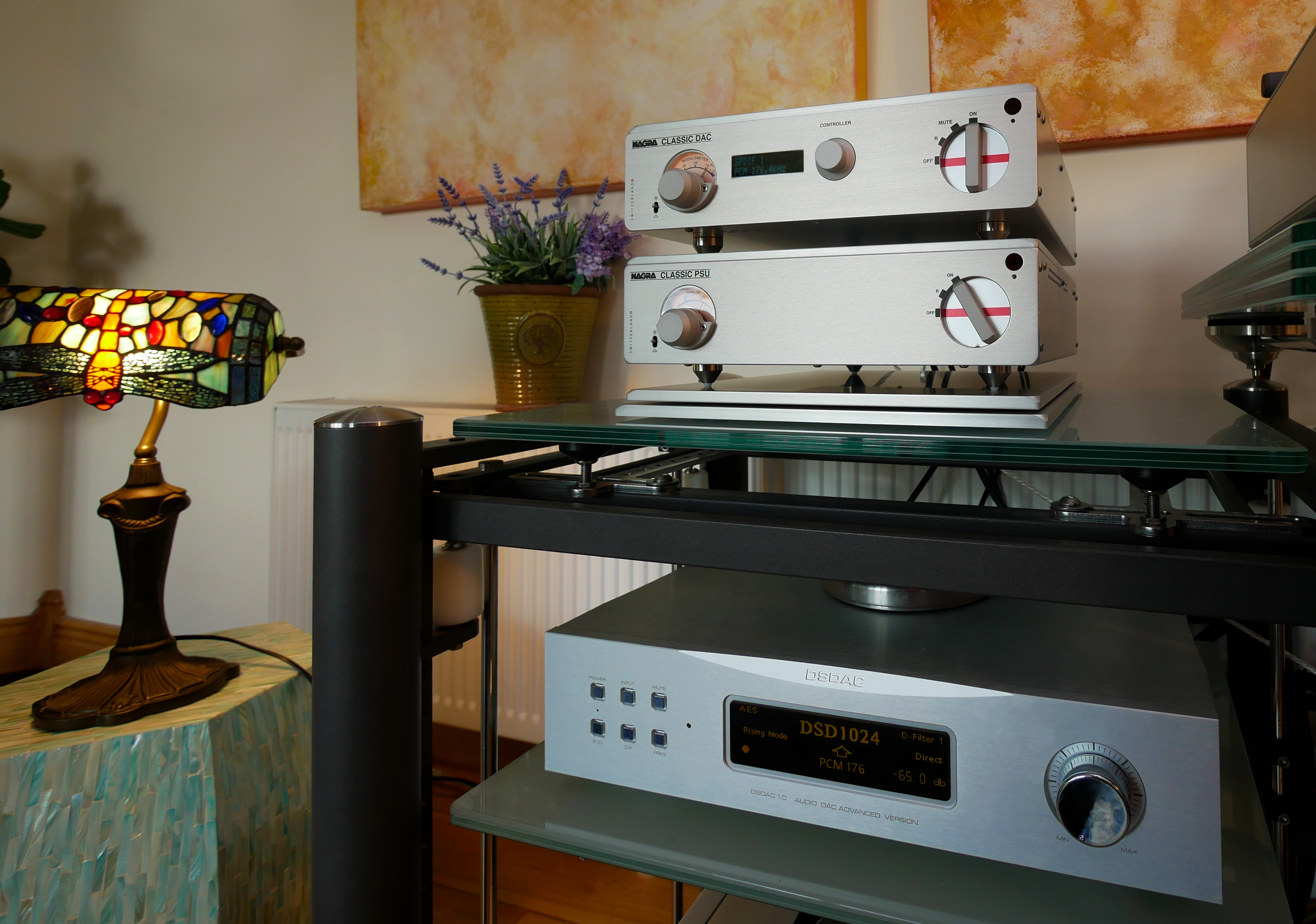
A final comment on any DSD/PCM 'gulf'. You may wonder whether FPGA-based reformatting on the fly makes standard PCM files sound exactly like native DSD. Without having .flac/.dff versions from the same recording/mastering batch to match, we're not comparing equals. All I can say on the topic is that my classic DSD64 folders from Aaron Neville to Diana Krall and Earth, Wind & Fire exhibit more of what I consider to be the tell-tale DSD signature than assorted Redbook to 24/96 PCM subsequently reformatted. Likewise for Matthieu's analog-recorded DSD128 files. They don't sound like standard PCM.