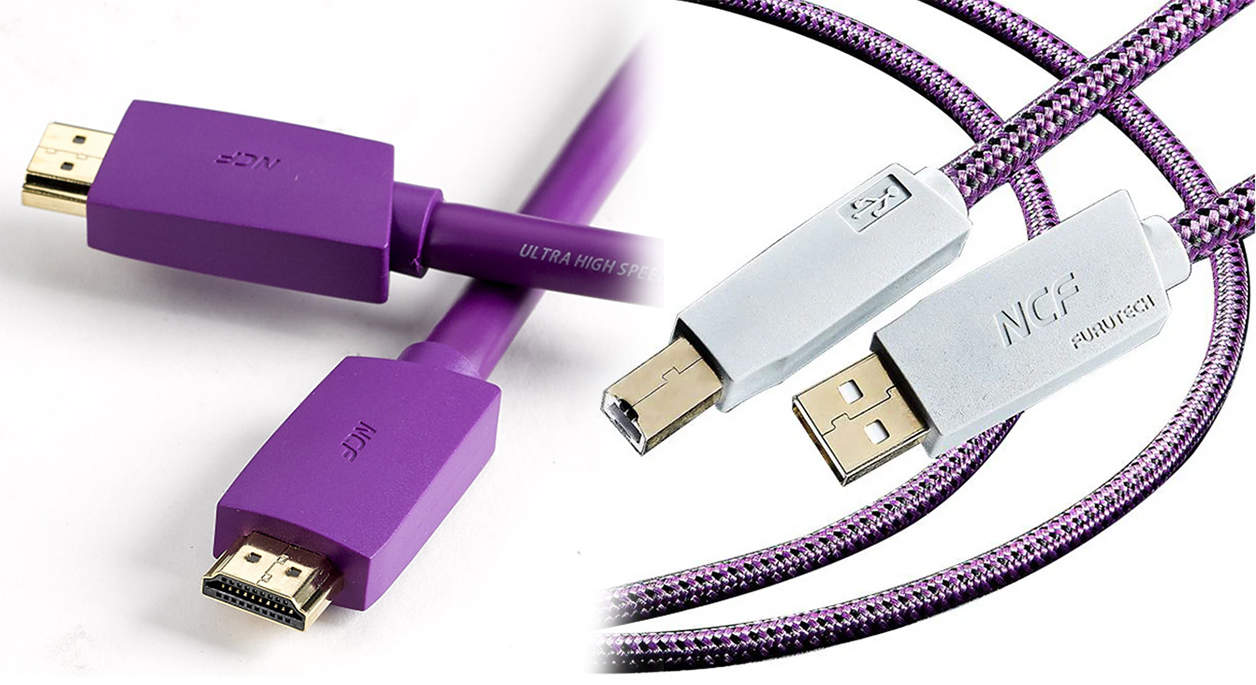
By April 13th Tambaqui had been a resident for a few months and it was high time to wrap up this review with final impressions. That was after my system's performance had been boosted with an injection of Furutech's best cable and noise-reduction tech documented here. Tambaqui benefitted from a major power cord/distributor upgrade as well as more revealing USB, HDMI and analog interconnects. Although that didn't alter its personality, it certainly allowed its strengths in resolution and soundstaging to become still more evident. Tambaqui is not a component to dazzle with fireworks or exaggerated theatrics. It doesn't over-emphasize the leading edge of transients to create an artificial sense of detail. It doesn't blur decays to provide faux warmth. This DAC aims solely at sounding as faithful as possible to what live instruments would sound like. If that sense of realism was captured during the recording and preserved during processing, Tambaqui will give it back to us to the fullest I know of. If it's not there, it will show us that as well, again without emphasis but no filter either. This brings up probably the only caveat I would put in my otherwise unconditional endorsement. If your music collection primarily comprises older recordings with compromised dynamics and tonal shifts; or if you still favour early CD pressings before digital technology was fully understood and refined – this DAC may not be your best option as it won't hide the shortcomings of those recordings at all. Here Linear Tube Audio's Aero would be a better choice in my view by providing a more forgiving balance while offering still excellent resolution.
For readers interested who have a Tidal subscription, I created a public playlist with over 7 hours worth of tracks I use for gear assessment. The majority of those I actually enjoy although some are just obligatory audiophile showcases with limited artistic value. The playlist is extremely eclectic, ranging from medieval music to electronica, opera to blues, world music to jazz. It includes tracks that are superbly recorded and some that are less so but hold huge emotional impact nonetheless. Schubert's Erlkönig is probably his most gut-wrenching lied. It's the story of a father riding as fast as he can in the dead of a winter's night, carrying his sick child trying to comfort him as they fend off death only to find the child expired when he finally gets home. It brings tears to my eyes each time. Nobody embodies this music better than the legendary German baritone Dietrich Fisher-Dieskau. Tambaqui materialized him in full size and might, centre right of stage. If I close my eyes, I can almost believe he's in the room. Although the version in the playlist is far more recent that the YouTube video linked here, it dates back to the years when Deutsche Gramophone favoured intelligibility over tonal richness to not do our aging singer any favours. If that's the kind of nuance you want to hear, Tambaqui is brilliant. If you want the music to sound consistently pleasant, it can at times be too honest. The playlist also includes a more approachable version for solo piano as masterfully played by Evgeny Kissin, challenging your system's dynamic and transient capabilities like few piano recordings can. The music should fill you room with no doubt about the piano being a percussive instrument as Kissin's powerful hands chisel each note cleanly. Fisher-Dieskau will make you cry, Kissin will sucker-punch you in the gut and Tambaqui plays no favourite between the two.










Ray Lamontagne's I was born to love you at the intersection of Soul and Country is another track to combine superb recording quality, engineering and deep emotions. All instruments localize precisely in a soundstage that will go as wide and deep as your room allows while his closely miked voice is intensely present yet velvety. Maybe other DACs can render this song better but the realism achieved by Tambaqui does suspend disbelief. Parasol Blanc pt2 by the Hadouk Trio is another masterful recording with superb interplay between trumpet, modern and traditional Mediterranean instruments. Percussions light up the soundstage, the electric guitar will startle and fill the room while the trumpet tears through and rises above all other instruments with palpable texture. None of the other DACs on hand, even the Holo Cyan2 which I regard highly, could tease out the trumpet's texture and tone from the instrumental mass like Tambaqui. With the Holo there was a trumpet blended into an ensemble. With Tambaqui, the trumpet rose above the group and took on startling dimensionality and realism. Tambaqui also reminds us that a real trumpet is a forceful instrument with transient bite that can at times pierce. Let's wrap with a guilty pleasure, Pachelbel's Canon in D major, just not your over-abused syrupy elevator version that has turned this small Baroque jewel into a parody of itself. Instead let's enjoy the more bare-knuckle 1995 interpretation by Musica Antiqua Köln. It's fun, fast, beautifully recorded and features period instruments that are fresh, lively and easy to hear the tonal differences of including their inherent rawness. As should be expected with Tambaqui, the recorded soundstage renders superbly, fills the room wall to wall and allows the acoustics of the venue to overlay. It should be quite obvious by now that Mola Mola's Tambaqui made a deep and lasting impression. Its ability to surround me with music that sounded alive was a significant step beyond other DACs I know, including Chord's Dave in the same price range that to my ears has more digital artefacts which vinyl aficionados love to hate on. I won't say Tambaqui is devoid of them but it does take a huge forward step in eradicating those irritating traits from its sound signature.
 Four-in-one is shorthand for DAC, preamp, headphone amp and streamer.
Its sound quality alone would make the asking price understandable but Tambaqui is also a very solid headphone amplifier that should easily satisfy all but bleeding-edge denizens of on-ear playback. With a variable output to drive amplifiers direct without a preamp, it can even serve as Roon endpoint to allow users to operate without a separate streamer and turn Tambaqui into a 4-in-1 worth every dollar asked. Being in the non-Roon camp myself, I'd much prefer if Tambaqui included a functional streamer like the dCS Lina but even without that it offers a lot of functionality for the ask. Ultimately though and despite being over four years old—a veritable eternity in consumer electronics—Tambaqui's ability to recreate music with intimacy and utmost realism is what stood out in my time with it to earn it a belated but fully deserved award!