Old school. It's not just the operational ease of hook up and play. It's the strict absence of WiFi's perpetual UHF noise and its microwave radiation. It's the cancellation of USB helpers, network switches, external reclockers and all the other paraphernalia high-end networked listeners apply like sonic lip balm and UV protection. Without any of it—just a few hours of electrons doing what they do when circuits go live—my desktop sound with the DST as music butler had that tell-tale gestalt of relaxed ease that can be so hard for digital to achieve. It's when all subliminal needling, pixilation and 'crispies' exit stage right. It's when any remnants of embedded rust, nerviness and etch evaporate. In my book premium Redbook performance of physical media remains a very high standard. To equal it with networked audio involves a lot of extra care. It can be done. It simply must be armed with the old-school standard to know what one is up against. Otherwise streaming conveniences overshadow the conversation. Now beliefs of sonic arrival can be deluded because they remain safely unchecked. Add the number's wars of hi-rez files beyond Redbook. To the average consumer growing up in the CD's golden years, perception offers little incentive to investigate polycarbonate drink coasters. Should they get popped into a laptop's DVD drive if such a floppy ejector can even be found still, building that house on a shaky foundation isn't the same. Just because something works doesn't mean it's any optimal representation. Ruminations to that effect flashed like lightning through my mental clouds. With CD, enjoying Métronome's relaxed musical fluidity was so easy. Without any experience, everyone can achieve it. It's baked in. I bagged it without Singxer's USB bridge, iFi's 3.0 USB cable, their inline filter then my Audirvana Studio license set to exclusive hog mode and 4 x upsampling with the SoX algorithm. Using the same music and DAC, all of that streaming fuss still came in second not really on objective sonics but certainly subjective feel.
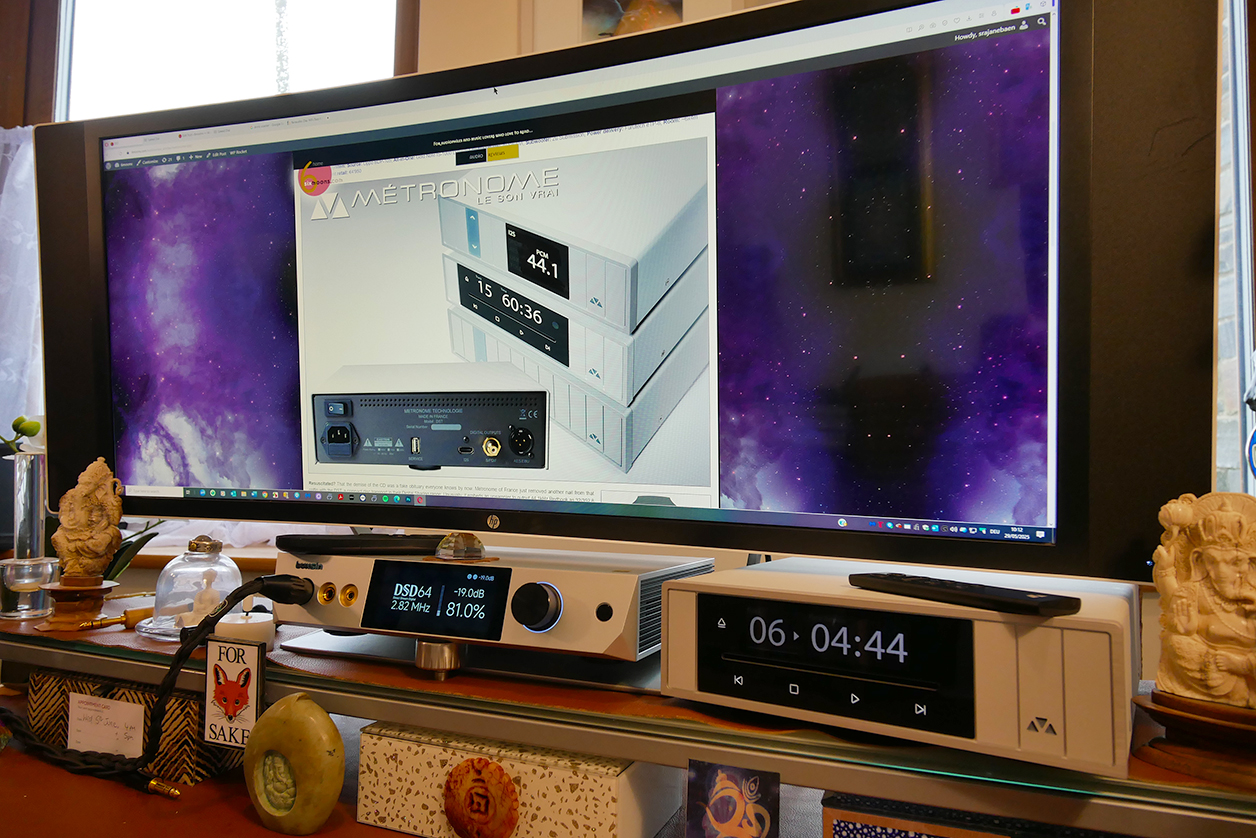 Resampling to DSD64 over coax.
As I see it, that's a proviso. If we're desensitized to how playback affects our body not just ears, we might be oblivious to this difference? I couldn't say for certain. I am sensitive. I'm forced to imagine the opposite as a purely intellectual exercise. I'm also sensitive to WiFi when the vast majority isn't. That's personally bizarre when it's so blatantly obvious. Yet I don't see auras, nature spirits or angels but know others to whom they are as visible as my own hands are to my eyes. It's a useful reminder. Perceptions differ to very profoundly shape our personal reality. Being depressed at a wedding, our sentiment colours an occasion that's joyous to others. Same reality, opposite interpretation. I actually surprised myself by finding the DST signature so big and easy to read. I was just as easily conscious that the very verbal measurement brigade in sundry chatrooms is virulently triggered by beyond-measurement notions like feel, gestalt or milieu in music playback. It leaves me wonder to whom the DST difference will speak; and who won't perceive it at all to question what our kind is up to. I can tell you what this singular sort was up to on his humble desktop: indulging absolutely fantastic sound! He also loved the compact dims to fit under his computer monitor; the silver/grey finish; the big crisp display; the touch controls; the well-executed remote. It segues into an obvious intermission before my show relocates to the big system. When this difference lived in a subjective gap of flow-state feel not those hard basics of treble, mid and bass, how to tabulate value? So often value weighs quantity. How much more can we buy without spending more? Here it was about quality; not more or less quality but a qualitatively different type. If that happens to be what we found really hard to nail, value instantly escalates like a vigorous argument heats up. If we're immune to the type, a €50 Asus ZenDrive at 1% the ask destroys any notion of DST value. Those blessed or cursed by such immunity should look at those who aren't as having no choice in the matter. Suffering a shellfish, peanut or other food allergy can be bloody annoying particularly socially. No matter, it's well known how their symptoms are far from imaginary and in extreme cases lethal. Thankfully nobody has died of the wrong type sound yet. But if it stifles the fun of listening, it could kill the habit and have us do something else instead. If that turned into an epidemic, I'd be out of a job. That point now made, let's move on.











In my main system I pamper the LAN with two Ethernet switches in series separated by passive SOtM filters and industrial CAT7a cabling. Local files sit on a 4TB SSD. Once files of either origin hit my dedicated music iMac, Audirvana Studio controls signal routing in extreme hog mod then applies 4 x upsampling in its SoX algorithm. Once output over USB via a Furutech NCF cable, the still digital signal hits a Singxer ultra-cap powered USB bridge. That outputs I²S to my headphone rig's Laiv Harmony DAC, AES/EBU to the speakers' Sonnet Pasithea DAC, another R2R design. The double trouble of twinned LAN distributors was my response to local files sounding better than cloud files when my Ethernet feed entered the iMac directly off the router. Now my local and Qobuz Sublime files have parity. The DST in this context first replaced the Singxer's HDMI-cabled feed into the Laiv converter, then compared coax.
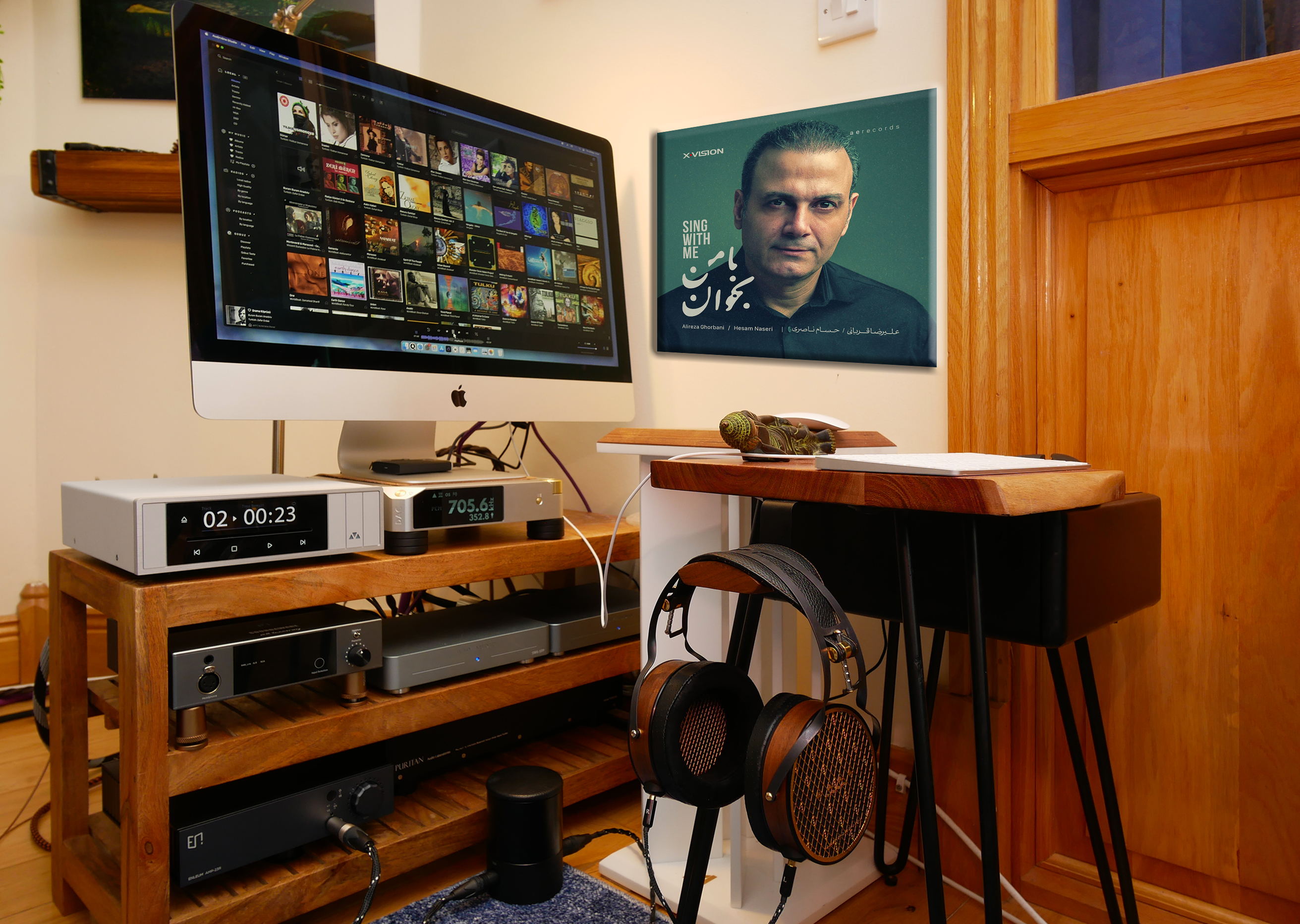 352.8kHz upsampled Redbook signal over I²S via HDMI. Alternately I used DSD256.
Métronome's upsampler works on the fly. Changes confirmed instantly on Laiv's display. Sound interrupted just momentarily until it relocked at the new sample rate. We can shuttle at will, survey the scene then settle on our favourite format and figure. As I already knew and had confirmed again, unless there's 'network neon' to nix¹ where DSD's sweeter softer fuzzier gestalt can help, I'm a PCM perp. I hear more focus, depth and contrast ratio. The first of those aspects also factored between I²S and coax. I²S had cleaner transients which subtly but surely improved clarity and with it, image focus. I personally hear upsampling benefits times four but loose track beyond. Whilst DSD256 improved over the opaque and dull DSD64, it still didn't match livelier more dimensional PCM. If your mileage varies, having the DSD option is key. Dweebs now want to know how my streaming compared. Sonically I thought it perfectly on the level though making it so was far more multi-box complex with twin network distributors, twin passive LAN filters, an annual Audirvana Studio subscription with embedded Qobuz Sublime and a Singxer SU-6 USB bridge. As to "the feels" and if squeezed real hard—like my morning grapefruits in a motorized stainless Sage press perhaps— I might give the Métronome a subliminal lack of edge. This gets very subtle. Just so, it strikes me that not creating noise² in the first place must be better than filtering it afterwards even if 100% efficient. The Internet is a far noisier far more interconnected so enormous world than the tiny province of isolated CD spinners. Incidentally, mentioning grapefruit had another reason. The word I love best to capture the DST's sonic action is fruity. And yes, I'm first to admit that once my 15-17 tracks per CD ended, I missed my iMac's keyboard and mouse to cue up the next album or personalized playlist. Less convenience is the old-school currency. But listening for up to 80 minutes without interruption is quite the stretch. Taking a little break if we're in the mood for another CD is actually not bad. And what a foreign concept it might be to this generation to listen to one CD beginning to end, in the exact sequence the artist curated. On that score, skipping around from track to track is a different thing. On my score between office and main systems, the first's lesser LAN optimization gave the DST the clear lead. My big rig's heavily tweaked LAN and post-PC treatment equalized the sound but involved far greater complexity. Do the math.
_________________________
¹ There's something about neon lighting with its bluish tint that's very disagreeable compared to sun light. Those sensitive to the difference can appreciate the connection to poor digital sound. It might illuminate perfectly like neon light and measure well but also lack something fundamentally natural or organic. Where that is the case even a bit with cloud streaming, what I hear as reduced resolution from the soft-filter effect of DSD conversion can behave like effective sun-screen lotion that softens the ultraviolet bite. It makes the embedded network noise or how it modulates the signal less bothersome. Your experience could well diverge but at least you understand where I'm coming from.
² It's no secret that digital conversion is sensitive to high-frequency out-of-band noise. All manner of external noise filters/traps and internal circuit modules or executions addressing such noise make the difference between a Walkman that works without skipping and a fully tweaked DAC. Critical network listeners know how even signal-routing software impacts the sound. Audirvana, HQPlayer, Roon & Co. all do the same menial task of traffic cop. They route network signal to our hifi. Yet they certainly don't sound the same. Even different upsampler algorithms can make a difference. The DST simplifies this lot by staying off the LAN and its noise, then building in a few easy adjustments for the tweaks amongst us. Yet those tweaks even your granny could make with the legacy infrared remote, no smartphone or IP password required.