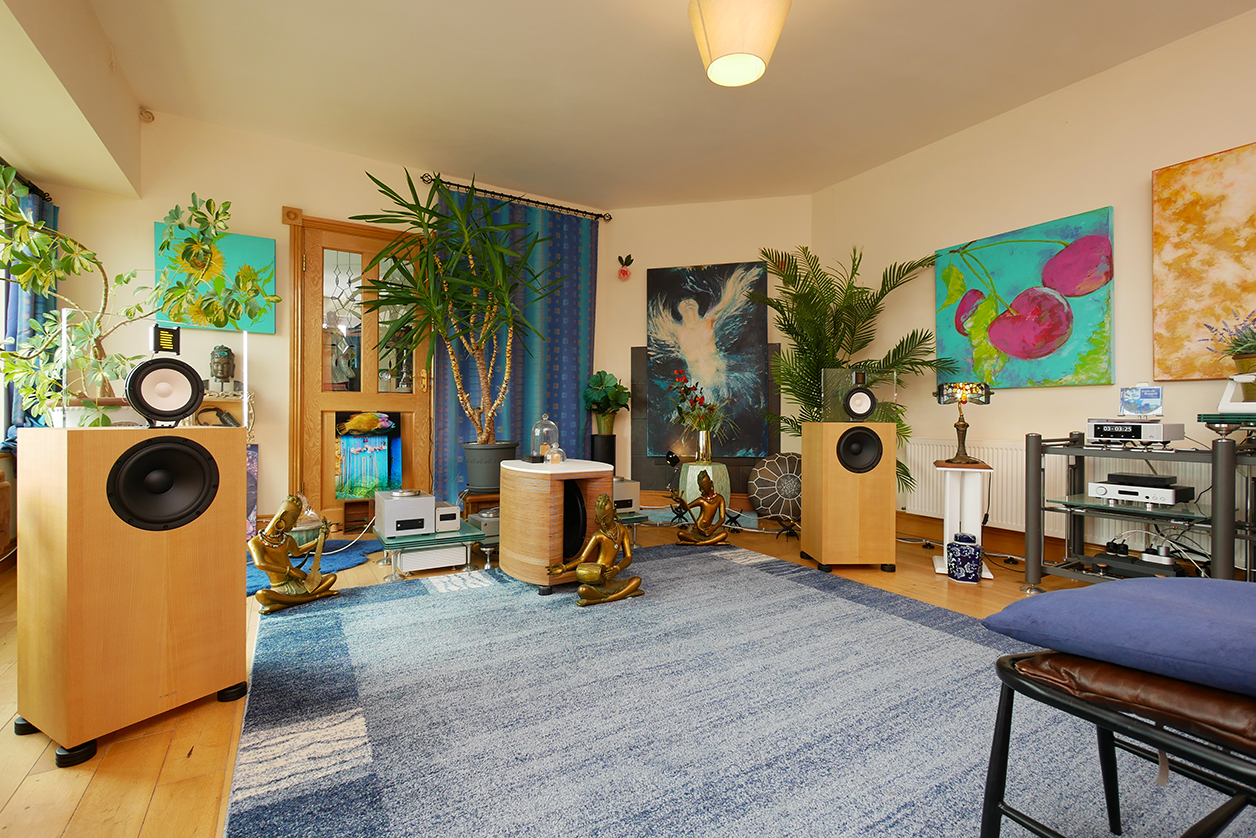
Fronting my Qualio IQ speakers and sound|kaos Gravitas 15 subwoofer, the DST reminded me of Nagra's petite Streamer still in house. In the ongoing review of the Swiss I invoke a particular relaxed feel which has naught in common with obscuration, blur, weak focus or subdued energetics. To me Nagra's action doesn't suggest DSD or tube-reminiscent bloom nor does it remind me of the mellower ways of cellulose drivers. My best guess at the enabler of that relaxed feel is superior timing and from it, less wetware interpolation by my brain. Playback which chips away at the otherness against real sounds that haven't undergone recording, mixing, mastering then the passage through our hifi hardware – such playback creates less subliminal fatigue. Our hearing must perform less 'overlooking' or 'correcting' to overcome the otherness. It's mere personal theory based on, again, not just paying attention to what my ears report. I also check into my psychological mood. Such subjective inquiry and commentary alienates people who think that listening is merely an ear thing; and that anything about that thing is measurable and understood. That there's more we already know from the voicing process whereby hifi designers, after having locked in precise parts values by measurement, compare various same-measuring parts from sundry vendors for their final decision. That decision is based on purely subjective opinion about what sounds best to that design team. And if things that measure the same sound different, how about all else we cannot as yet measure? Remember the era before jitter was understood? MQA's divisive notion of temporal blur is more evidence. So is Mark Levinson the man's C-Wave algorithm and its associated claims. Though it's worked since the first CD dropped, digital isn't done. It continues improving to work better. Compared to networked digital, CD playback is rather more mature. Add a specialist company like Métronome who have worked this field for decades. It shouldn't surprise that given good recordings then highly engineered hardware, this format could know a thing or two that's news to the cloud crowd?
 The DST display is kind even to aged eyes over distance.
It's the old song 'n' dance. For every thousand CD-is-dead prophets, there's one hair-shirt anachrophile who touts its superiority over most (all?) streaming. If you no longer own physical media, the whole discussion is academic. If you contrast a Grimm-level streamer to an Asus ZenDrive twirling a CD, it also might be. It's when we compare a DST-level transport with premium DAC and proper digital cable to a carefully curated yet far from crazy-coin streaming solution that it could be time to go back to the academy for a refresher course. All this by way of confessing that Métronome's DST had me attend such a one. Having divested myself of 5'000-some CD during our last move to County Clare to keep just a few for gigs like today's, I'd not been back to that school. Now that I have, I'm certainly not about to start collecting silver discs again. That ship had its Viking burial on the river Shannon fronting my office. It's no cautionary tale either. Streaming very close to—some might say indistinguishable from—prime CD playback is certainly possible. It just takes nerdiness, more money and a proper CD reference to pull off and be sure. If simple does it and you demand guaranteed not maybe results, starting your digital chain with Métronome's DST would be a brilliant idea. With the DST reference now living in the brand's Montans HQ, we should expect a virtual stand-in for their upcoming nearly lookalike DSAS streamer. That'll be for the dematerialized amongst us to hopefully give our ghostly kind equivalent sound. So back the DST goes to France. In September or thereabouts, I hope to welcome the matching Audirvana-powered streamer and take its temperature.








For now I'll leave you with more ruminations on "the feels" to undermine anyone nursing golden-eared or voodoo assumptions about them. So-called PRat short for pace, rhythm & timing is all about a particular performance feel. Do we have correlating measurements? A speaker's impulse response might suggest a good place to look. But when a different source component affects our system's PRaT, something other than the loudspeaker is responsible. It's a strange situation that in our hobby, many don't trust their experience to require measured confirmation. They worry that their senses might trick them into enjoying something that's objectively faulty or wrong. C'est étrange. In such matters, perception is king and reality. In a chicken broth, what's the correct amount of salt? The one your tongue calls right. Meanwhile a person one chair over might reach for the salt shaker to add more. Once we wrap confidence around our ear/brain being the final arbiter in hifi matters, we gain independence from external validation. Our path to bliss could be short and simple; or ongoing. Much depends on our sensory sensitivities. Also, just what triggers our personal 'rightness' or 'better'? For example, we'd expect a drummer like Stereophile reviewer Ken Micallef to have sensitized different triggers than my classical clarinet past has for me. Inquiring into what makes us tick can quickly move us past basics of frequency response and soundstaging. Very soon it could be all about how listening makes us feel; how different hardware even player software alters playback's feel. We could focus on timbre, timing/phrasing, dynamics, immediacy – anything that for us adds depth. Simultaneously we would try to eliminate anything which even subtly takes us out of said depth. We needn't justify ourselves to any external authority, not even accepted reasons. We might develop personal theories to communicate our journey; or not. As a professional reviewer, I'm in the communicating biz. It just doesn't mean that my theories on subtler playback aspects are anything other than well-meaning attempts to share personal observations. The latter are real. My ideas on what causes them might miss.
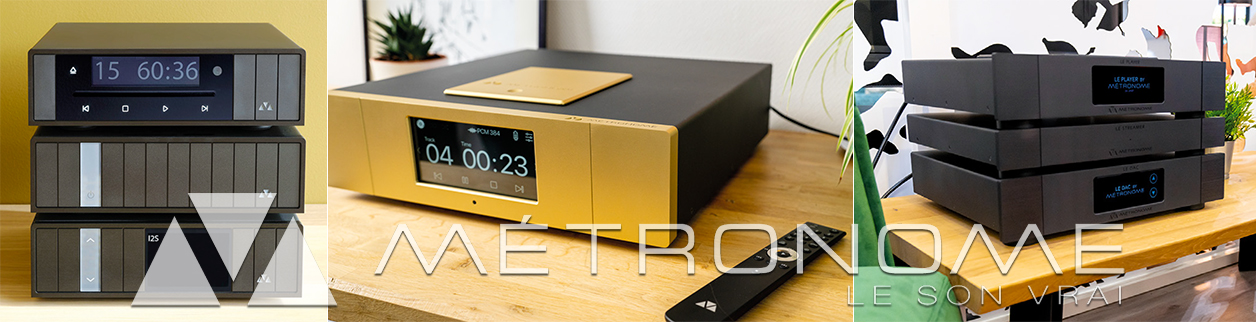
To conclude, Métronome's apparently archaic DST—an expensive deck that in this multi-tasking era does just one thing; and then one which most people no longer do—created an unexpected personal op. Many years after my original transition to PCfi, I once more compared USB streaming to physical CD playback. I still clocked differences not objectively sonic in nature. Yet I found them meaningful to my subjective experience; and to favour the outdated method. Fruity. Juicy. Organic. Fluid. Sentiments to that effect point at the difference but don't really explain it. It seems to me its enabler was about what the DST didn't do, inject UHF noise and how that very subtly undermines timing. Cen.Grand's JianHui Deng seems to work similar notions. His new GLD1.0 Deluxe streamer replaces USB data transmission with an already patented synchronous high-speed PCie interface with fibre-optics for audio, BNC for clock data which allows for even high-rate multi-channel DSD transmission. Back to the DST, it gave me the feels; fabulous feels whose flavour or effect I attempted to point at. Hopefully that conveyed as intended because for the right kind of listener, this minimalist box will be quite the treasure chest!
Postscript: A few days after publication, reader Ron asked whether the DST does gapless. Oui. I checked a CD that without any decrescendos or crossfade flows from one track to the next. Some file player software will artificially insert track breaks which aren't on the disc/file. The DST did not. Its toothy grin is all Hollywood; without gaps. Say cheese.