Velocity? When qualified as speed for valves, not speed period, that strikes me as a relevant and true statement even if Velo's godfather really was the velocycle for Dave Berning's love of man-powered two-wheeled transportation. You might recall the bicyclist on the circuit board? This quicker-for-tubes aspect was particularly true for the linear power supply. That shrunk the remaining transistor/tube difference for the aspects of grip and related robustness. This was contrary to assumptions which conflate high-frequency switching of SMPS with faster, the 50/60Hz AC frequency of linear supplies with slower. Looking for possible pointers, the switching brick's input rates as 100-240V @ 1.3A whilst the mains fuse of the LPS is a 4A/250V type. Meanwhile the SMPS's output is 12V/6.7A whilst the current output of the LPS isn't published. Because it's far too easy for me to end in the weeds on spec-ulations, I'll merely reiterate that the $600 optional power supply injected more transistor aspects of transient hustle. If images were people greeting us in an endless parade, those with the LPS+ also put more muscular squeeze into their handshakes. Think military cadets not slackers. It's my visual for grippier. In preamp mode, that had my vote especially on more complex material where Velo's subtle decay action compounded. Rooms are environs with far longer decay times than headphone chambers. In the interest of clarity from stiller waters to hear into greater depths; vis-à-vis my normal DAC-direct mode whose variable reference voltage on its R2R ladders creates lossless variable gain; and vis-à-vis my British autoformer passive – I preferred Velo on the optional LPS+. In headfi mode my hand didn't feel equally forced. I could just as easily live with the stock MeanWell brick. It was the more resonant speaker reality for which I clearly fancied linear power more because it sublimated parallel tube aspects. That LPS became my virtual salt shaker to add just a bit more 'friction' or 'bite'.
 FiiO R7 ⇒ Soundaware D300Ref ⇒ Sonnet Pasithea ⇒ Velo ⇒ Lifesaver Gradient Box II ⇒ high-pass Kinki EX-M7 ⇒ MonAcoustics SuperMon Mini ⇒ low-pass Dynaudio S18 sub.
Now sitting a good distance from Velo, its volume display really did the biz. The only function it didn't account for yet was 'mute'. Triggering that briefly lights up the LED below the current volume setting and does so again for 'unmute'. But there's no remaining visual indication that let's us know 'mute' status at a glance. For that a firmware update could still extinguish or flash either the input or power LED. Now another person entering the room with tubes lit and volume LED bright would instantly understand why there's no sound.







Strategies. The amp/speaker/room trinity is El Jefe on the overall sonic impact of any hifi variable. Modern digital sources prioritize raw resolution for minimal personality. To build some aural character, a preamp is an excellent choice. The least character probably comes from the actively buffered sort sans voltage gain like Wyred4Sound's flagship of yore. Virtually in the same breath but with the added boon of converting ever more voltage to current as we attenuate, I'll mention the rare autoformer passive-magnetic à la Pál Nagy and Max Townshend. If we want greater dynamic range and tone body, solid-state preamps like from Pass Labs can be ideal. If we want to move the centre of the attack/decay axis to alter the feel of music's temporal motion into more fluidity, tubes are great tools. If we want a merely subtle shift in this domain, Velo is ideal. Our choice of its power supply still impacts how much we move this needle and in which direction. Tube rolling should be its very own chapter whose pages I'll leave blank for want of glassy inventory. Now that we've mapped the city of Velo with its main tourist attractions, it's time for a full moon of six music examples back against the Kinki head amp.
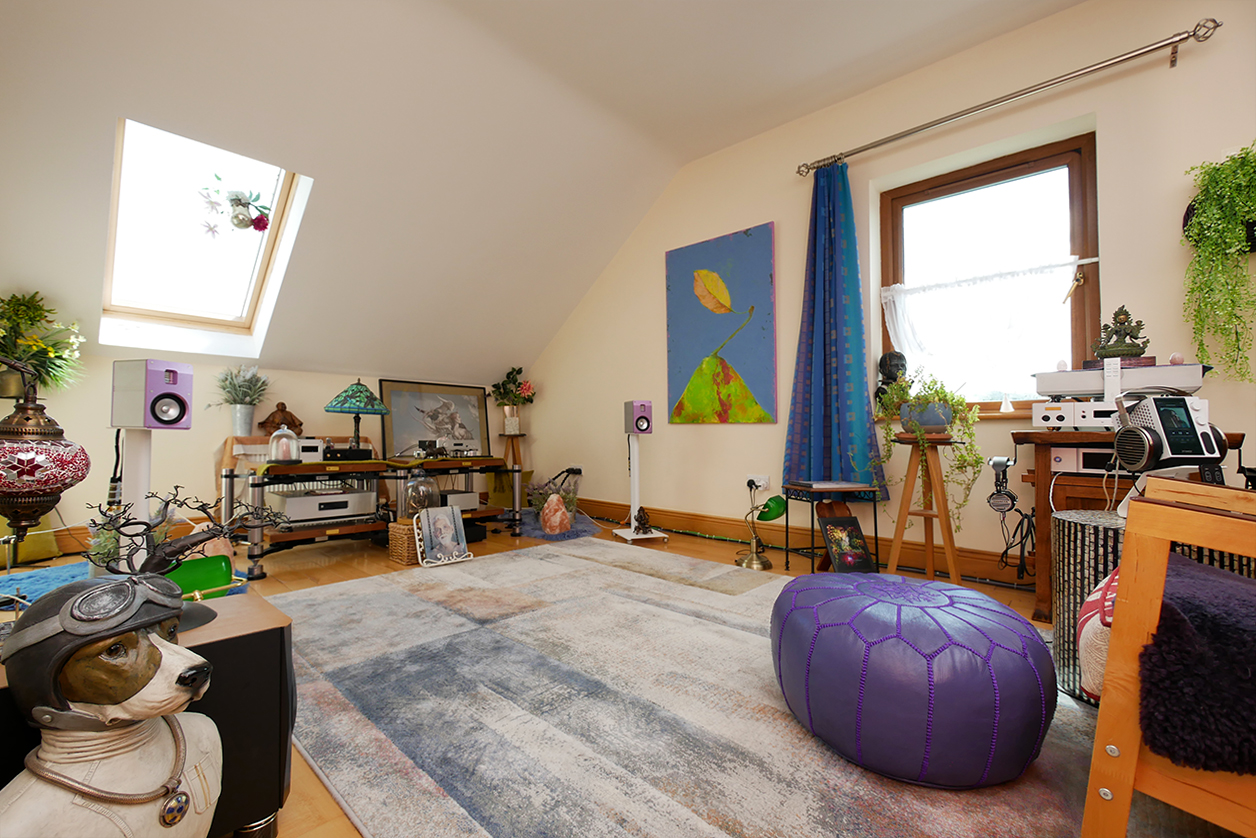
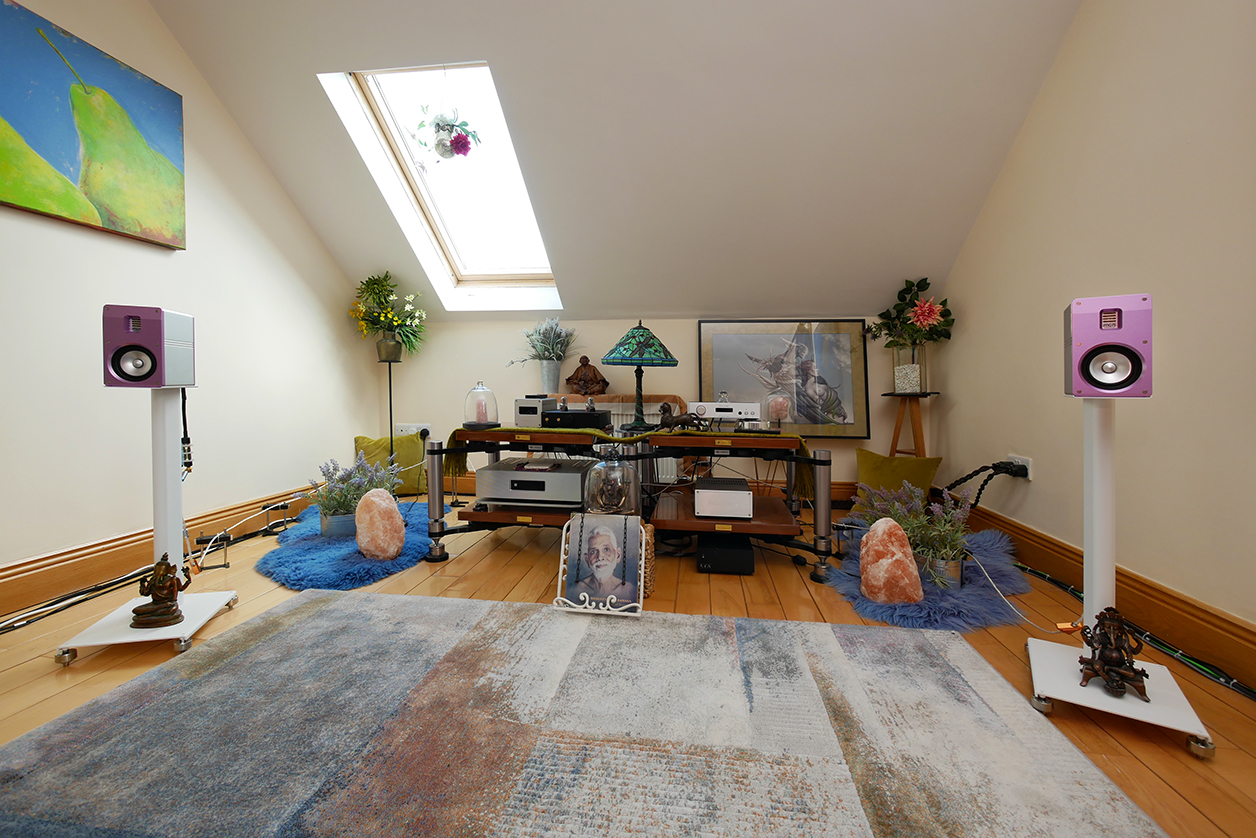 Q Acoustics speaker stands with Carbide Audio Micro isolators.
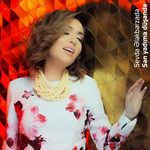
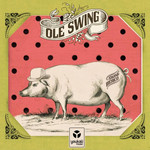 Take "Sen Yadima Düsende", an older single from the occasionally Jazz-inflected Azerbaijani singer Sevda Alekperzadeh with reverberant piano, bass, mellow percussion and layered strings. Her lower register embeds strongly and some could wish for a bit more mix level to better peel out. Here the THR-1's stronger separation played intelligibility assist. Meanwhile Velo had the strings and right-handed piano lusher, the high vocals silkier where the transistors applied more shine. On raw resolution, the latter had a small edge. As the formation's name Ole Swing predicts, Swing Ibérico on the Youkali label is a mashup of Manouche Jazz and Flamenco. On "Te Lo Juro Yo", Eva Durán contributes vocals which range from the coquettish to the saucy. A Musette violin adds colour behind Django-ish guitars and a walking upright. Velo managed virtually the same tell-tale string blister as the Exicon Mosfets on wiry twangy guitar passages and didn't buff out the occasional metallic glitter in the emoting Flamenco voice. When the upright solos, Velo was just a bit plumper where the THR-1 had minor snarl. This was like rose fanciers comparing fragrances between cross breeds. They all look and smell like roses but still carry unique fragrances.
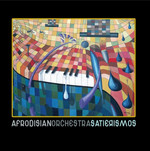
 That's back at Velo shedding the heavier fingerprint of classic steel-core output transformers. It lightens and freshens up the tubular action. It's quicker. Finer. It leaves more scope for tone modulations. They're allowed to escape the prison of the always 'pretty' and 'romantic'. The Afrodisian Orchestra's inspired meditations on Erik Satie fittingly dubbed Satierismos make that distinction already on the slow-burning moody "Gnossienne N°3" before the next number goes rollicking Big Band. Be it solo sax, wailing ney, reedy bass clarinet, held-back brasses or Antonio Lizana's bluesy vocals, they all morph their harmonic loading. That modifies timbres for inflective emphasis. Timbres are free to turn like a weather vane in the wind. They show different sides. Some could be polished, others rusty or pock-marked. Unless synthesized, tone is no steady-state affair. It's a constantly moving target. To follow its motions needs no makeup. But very light makeup that doesn't cake up the subcutaneous remains responsive to what goes on just beneath the surface; even when it swims in an echoic chamber like "Ceremonia" from Leonardo Prakash's Humanidad with its reverb-clothed solo trumpet and occasional sitar.

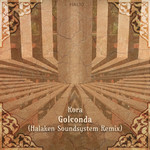 Where the transistors retained their traditional edge was bass. Here Smadj's Dual with its synth-generated soundscapes, Sylvain Barou's wooden traverse flute and Jean-Pierre's signature oud is loaded with the infrasonic kind. Maximizing the power and pitch definition of LF chicane without bleeding past its outlines remained the special provenance of solid state. Likewise for quicker synth percussion as the Halaken Soundsystem remix of Golconda places in a drier venue generated on computers. Here the same delightful Velo quality of subtly enhanced fading trails pays a small price of lesser damping when proverbial hail peppers the tin roof. But then listeners on a predominant diet of techno, electronica and related genres tend not to pursue tubes. For max brutality, piss 'n' vinegar, you'd probably want hyper-damped class D or classic circuits which emulate that behaviour. Velo is more elastic, a bit more ebb 'n' flow than robotic jack hammer. Listeners tuned into how breath carries winds, brasses and vocals appreciate how this Velo quality informs music per se. It feels less clipped or mechanical, more 'on the breath', more spatially embedded than aloof.
The special ZOTL trick is doing this without telegraphing a damper on momentum. There's no energetic neutering. Those aspects of speed remain intact. It's why my transistor-shaped biases left classic transformer-coupled tubes behind. They felt too slow. For someone of my tastes, Velo remains on the straight + narrow but still manages to differ in meaningful ways. Eking out such distinctiveness where less it more is Velo's core success. It does the tube thing in more advanced fashion. We usually say close but no cigar. In this instance being close—to premium DC-coupled transistors—but not identical is the cigar.