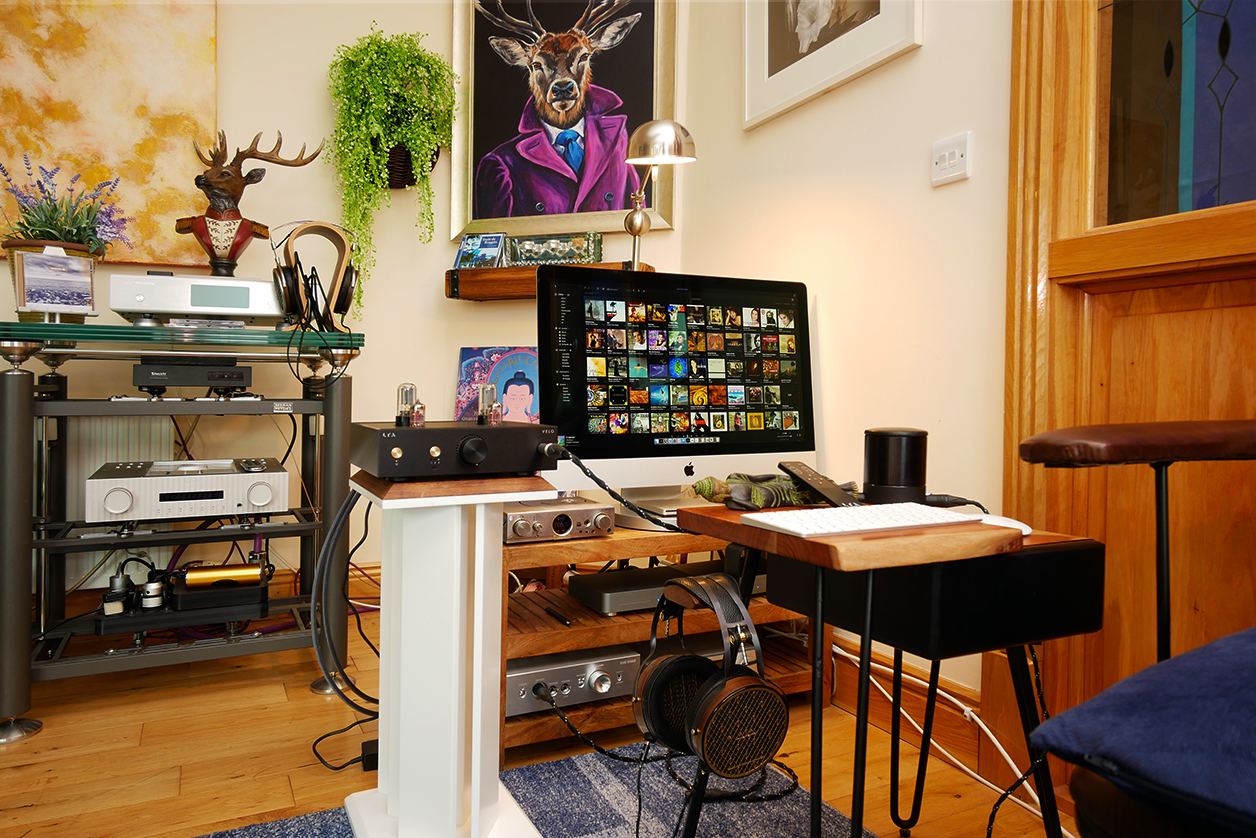
Playing pig in shyte, I couldn't help it. I stuck Velo with my stiffest loads right off. With its own attenuator bypassed, that of the iFi sat at ~9:00 for solid SPL on Immanis and Susvara even on that DG box set of the four Brahms Symphonies with very low recorded level for proper dynamic range. I had headroom for the apocalypse and no obvious signs of strain or distortion. This photo shows a ¼" connection between Velo and Raal's impedance interface as that black cylinder on my side table; then an XLR4 connection from that to the headphones proper. Susvara merely needed an extra click on iFi's balanced motorized attenuator. I also tried the opposite with the iFi at 12:00 to normalize its otherwise 6V output and Velo at ~12:00. I heard no difference between shifting these gain contributions.
This was so unexpected that my inner sceptic needed a close-up of said volume setting for proof. All restrictions on my headphone collection were off? All was fair play? My inner pig grunted with glee. My inner doubter remained suspicious. Despite reluctant paper power, Velo's voltage gain packed a proper punch though. To finish basic housekeeping, there's a short power-on delay during which the LED beneath the stand-by switch blinks. Once that goes solid, the input and volume lights come on with zero noise, crackling or other thermionic signs of life. Resolution was high enough to track the changes between running the iFi at 49MHz DSD 1'024 or 706.5kHz DXD. Time to put my itchy woollen reviewer's cap on and satisfy the doubter. His first task switched over to the Kinki to assess the difference delta on these unlikely loads. I then did the same for the standard load of Final's D8000 to track whether the delta stayed put or shrunk. If it diminished, the offset would be the 'protest margin' of bench-pressing loads which typically want higher wattage. After all, just because something goes loud enough doesn't automatically equate to optimal drive.









And so it was. The Final change between Velo and THR-1 was seriously narrower than with Susvara and Immanis. Switching those from Velo to THR-1 moved me from humid echo chamber to sun-lit outdoors after a fresh breeze. On the bearish loads, Velo's shortage of current control not SPL overemphasized stacked decays with their gelatinous thickening, de-aeration and image clumping. On the wideband lateral Exicon Mosfets, PRaT asserted itself in a completely different manner. Space between images opened up to create clear separation. Air returned. These A/B played virtual slider between transient articulation, control and resolution; and decay-heavy softness with humid texturization and warmth. Let's call the Susvara/Immanis showing typical 'deep triode'. Had you never heard a Berning circuit before and didn't know you now faced one, you'd conflate these sonics with generic no-feedback transformer-coupled triodes to think no more of it. Expectations. Met. Just another day at the hifi office. Next. Not so fast. Jack in the D8000. Sayonara echo chamber, humidity and associated thick sticky warmth. With a now realistic load, Velo stepped out from the deep triode thicket to leave behind generic tube trifles. The moral of this detour is plain. Velo is no T-Rex who eats humdingers for breakfast. Just because with sufficient source voltage it will play them loud enough doesn't mean the results will be representative of the circuit's true potential. Though its struggle won't cause obvious distortion just dynamic compression and insufficient raw drive, I'll still call the results a distortion of its true nature; like a chef who makes mushrooms taste like chicken. Why? Properly scolded and ears red, the howitzers left the building. My inner pig got put on a leash. Just so, this paragraph's broad difference delta was ideal to zoom into the true ZOTL signature.
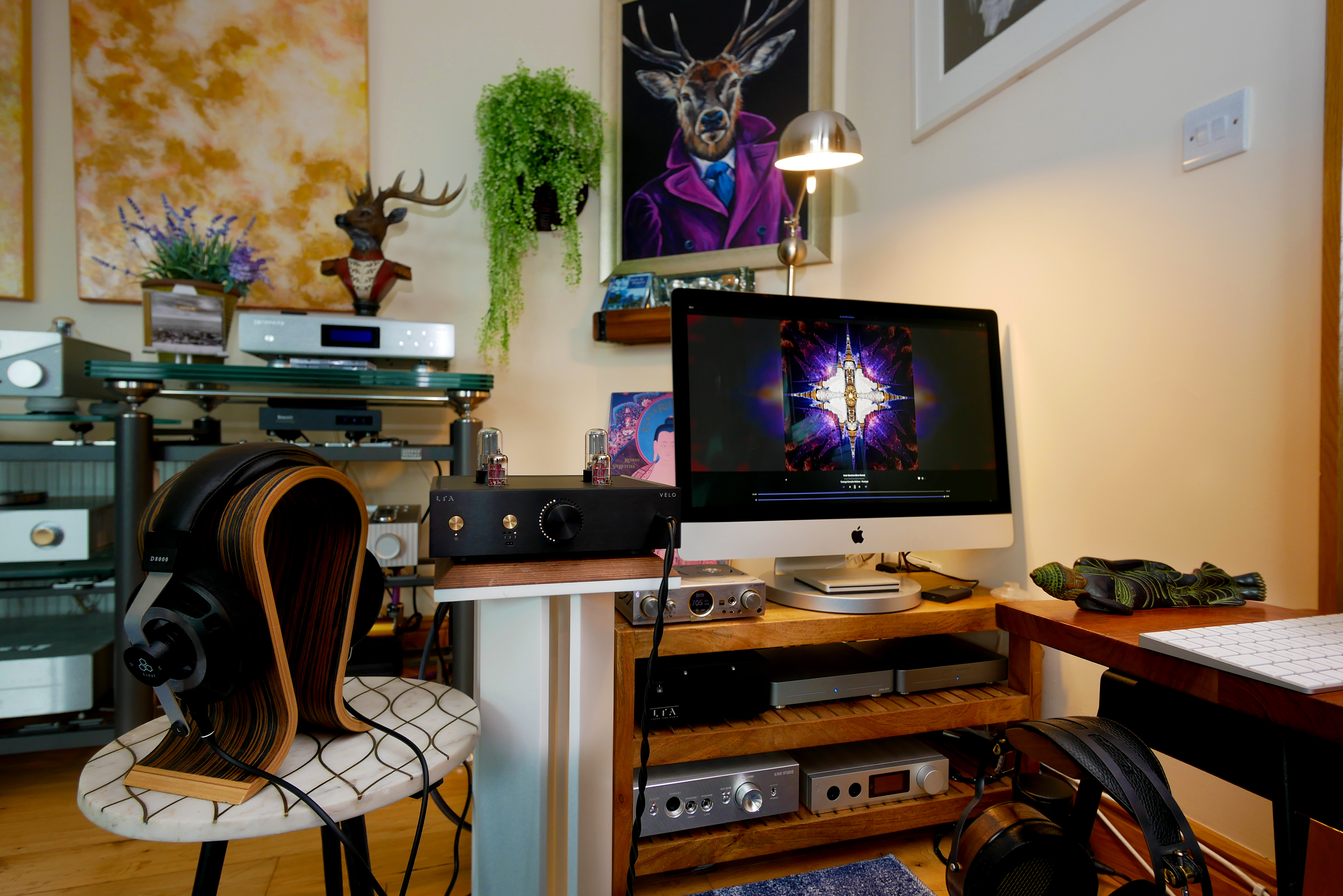 Volume change as temporarily illuminated with all the LED below the current setting.
That doesn't really leave the transistor reservation on resolution, just moves slightly off the most intense centre. It plays the same shift game away from the leading to more onto the trailing edge but shrinks the amount from severe and arguably off balance as with my howitzers to far more finely dosed. The result is minor transient softness particularly in the lower registers and from that mellowing, slightly less locked 'n' loaded separation focus and locomotive propulsion on groovy club beats. Meanwhile slightly more generous decays enrich tone textures and move weight from the front foot of attack mode to the rear foot of fluidity and repose. It's exactly the same game Susvara and Immanis previewed but played with far more nuance. That doesn't cripple the resolving powers or congeal musical structures. As always, our sense of balance revolves around a few degrees of leeway within the inner circle where the bull's eye lines cross. The Velo/D8000 combo maintained that balance within the inner circle. The tubular action was clear and demonstrable with each swap yet precipitated no skewing, just a minorly looser more pliable feel. That was the ZOTL action I knew from before. To be cute, it makes those four letters shorthand for "zoom onto textural largesse". The vital qualifier is a dosage which achieves this without undue thickening. It doesn't load up on 2nd-harmonic distortion, phase shift or overly compromised rise times. It's subtle not deep triode. It's a faint whiff not florid cloud of tube perfume. It's for those who grew sick and tired of heavier SET excess. It's for transistor familiars who want just a touch more romance from a deliberate small amount of soft focus, energetic repose and density infusion. With headfi's explicitness from extreme proximity, it can be the perfect antidote to needling crispness and full-frontal directness. It's as though our seated ears moved back by three rows; just enough to undermine front-row assaultiveness, not enough to drown in the far seats' dominance of venue resonance.
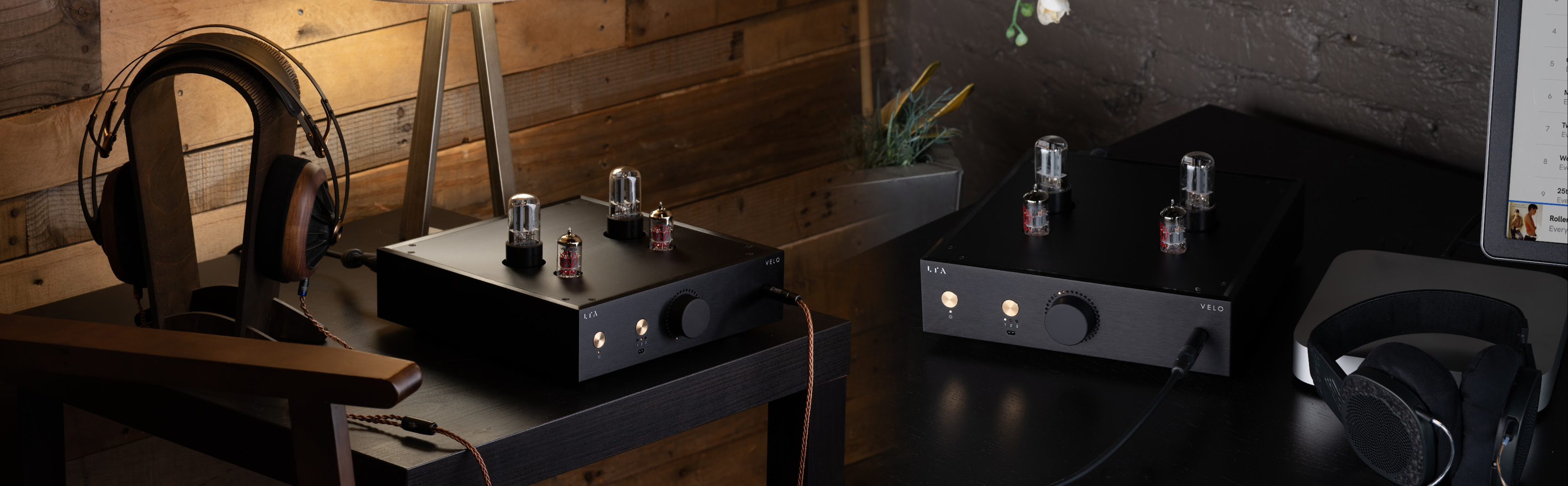
How about transferring this effect to loudspeakers in preamp mode? Before we do, one final bit of headfi housekeeping. Velo incorporates a clever bit of signal sensing. With no cables on the pre-outs or a 6.3mm plug in the headphone socket, the volume control won't work. None of its LED come on. Neither manual rotation nor remote commands make a dent. Yet the moment we insert the ¼" plug, the volume LED comes on like above the door of a suddenly occupied aircraft lavatory. It's neat software-coded control for 'retro' valve kit.