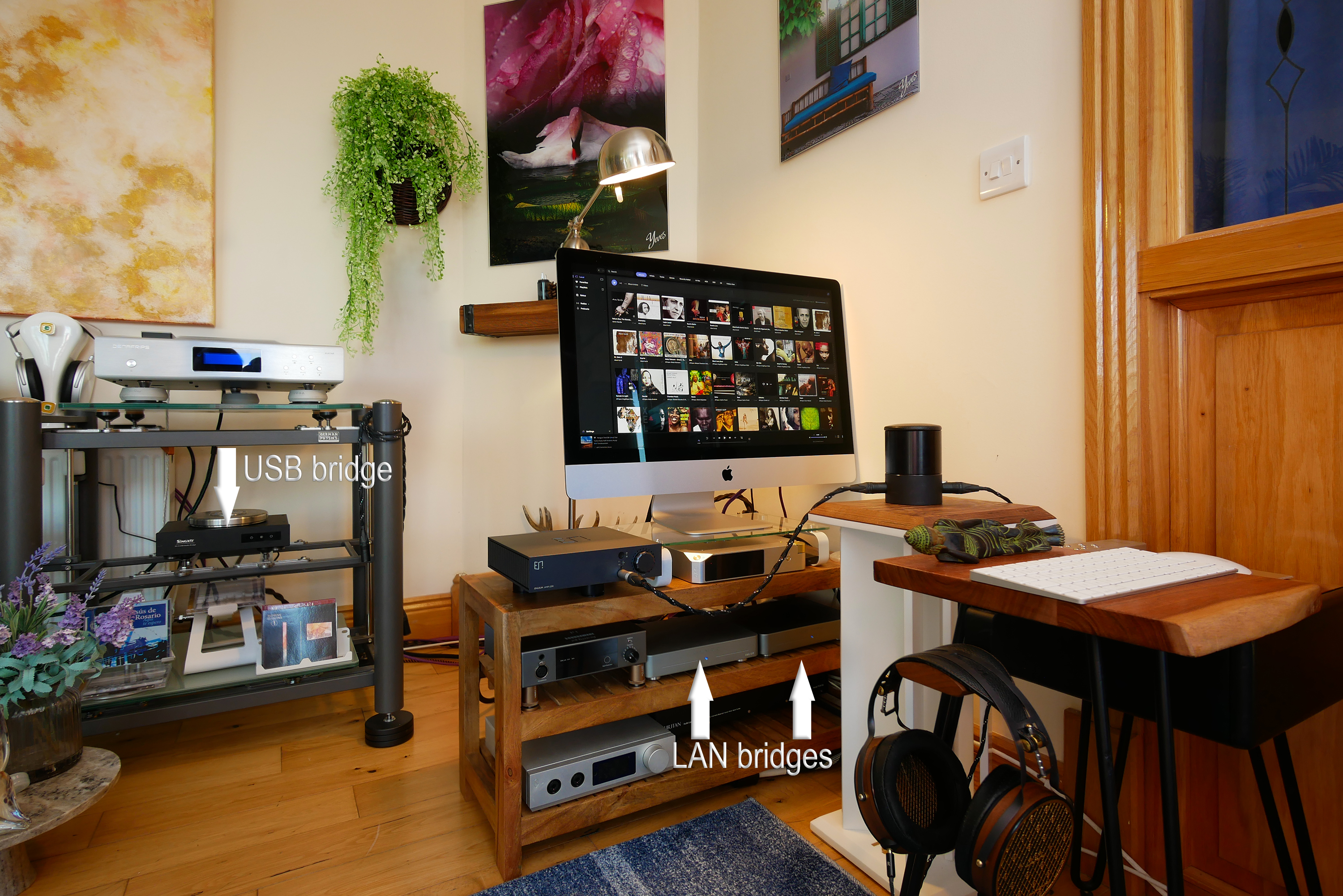
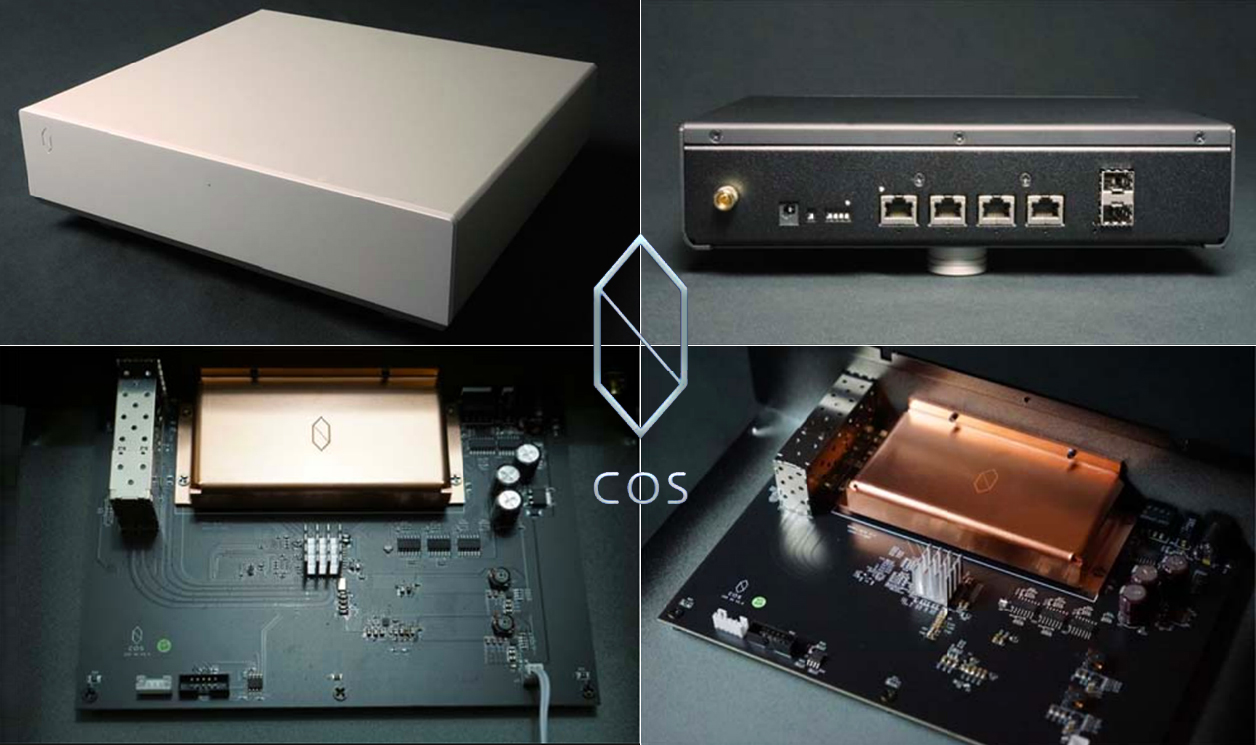
Whilst my series-connected Ethernet switches aka LAN distributors in the main system have since been superseded by newer models, as a pair they cost ~3-4 times more than what EFI does now. Aside from far more i/o, they rock oven-controlled oscillators to retime Ethernet packets before they hit our D/A converter with its own clocking. I've read convincing arguments why reclocking Ethernet is senseless. I lack the tech chops to be sure either way. I simply used my ears to determine that for my cloud files to achieve parity with local files required two cascaded "in-betweeners" for my 20-metre CAT8a copper stretch from router to iMac. Inspired by SOtM's scheme of triple switches, I went the LHY route of two serialized network switches and never looked back; until now. That's because as far as I could tell, EFI showed equality with far greater simplicity of one smaller box and single power cord versus two of each; one fewer CAT link; plus significant savings. If I had to rebuild this system below, the noise-isolation benefits of fibre-optic intercession—which is all EFI does—would seem greater than LAN reclocking and whatever filtering and isolation that accrues. It's not that series-strapped network switches don't work. My most recent experiment only suggests that fibre-optic insertion done right can decommission them if allied to a power supply of exceptionally low noise. My takeaway? The same job can be done easier and cheaper than cascaded copper switches. Sometimes better isn't about performance wins. Sometimes it's about simplicity gains and cost savings. How about allocating a whopping €2'800 to a network switch with outboard linear PSU? That's the 'hood the COS S6 & LPS1 from Taiwan play in. Would those twins rocket me to the next level of this game?
Just when I thought I was out of the audiophile ghetto, they pulled me back in.
 Whilst following the challengers' travel progress with my FedEx tracker, EFI was back in the office. Listening to George Dalaras' I Doxa Ton Anemon with Michalis Terzis songs, I wondered. How in our racket do we recognize and define 'more natural'? On the face of it, the term is as uselessly ambiguous as 'more musical'. Mulling over why the question presented, the answer was 'absence of special effects'. That felt useful. FX as performance aspects beyond the norm—hyper resolution, over-sharpened depth of field, extreme dynamics, chiselled transients, patinated timbres, oversized images (continue with other examples)—are things we can relate to and identify. In their absence, the sonic feel becomes more ordinary. Normal. Isn't that just another word for natural? As we tire of anything über to
  call it a skewing in which one aspect claims special significance over the rest, naturalness and its innate balance become bigger virtues. After polishing specifics, we return to wholeness—on a higher octave than before. Nothing stands out in particular. Yet the sum of it all adds up to more than a beginner's hifi. So calling it a higher octave makes sense. It doubles the frequency but otherwise is the same. In that sense the audiophile journey exhibits certain rest spots. We reach them after various sonic facets are improved equally to regain balance where nothing stands out but all aligns. If we push farther, we once more cause imbalance. Specifics step forward again. We might think of this like an upward spiral. In regular intervals it crosses a zero line of equilibrium. We can stop at different levels of this equilibrium of naturalness whilst acknowledging lower and higher stopping points or manifestations equally in balance. In short, with the latest addition of EFI, I suspect that my office system now sits on one of those rest spots. When I ask what has improved, it's not about a single quality. Yet no doubt, something clicked which in turn elevated the whole. To avoid getting pretentious, let this suffice. It certainly implies one very satisfied shopper – for a layout less than many just minor extremists allocate to a single power cord.






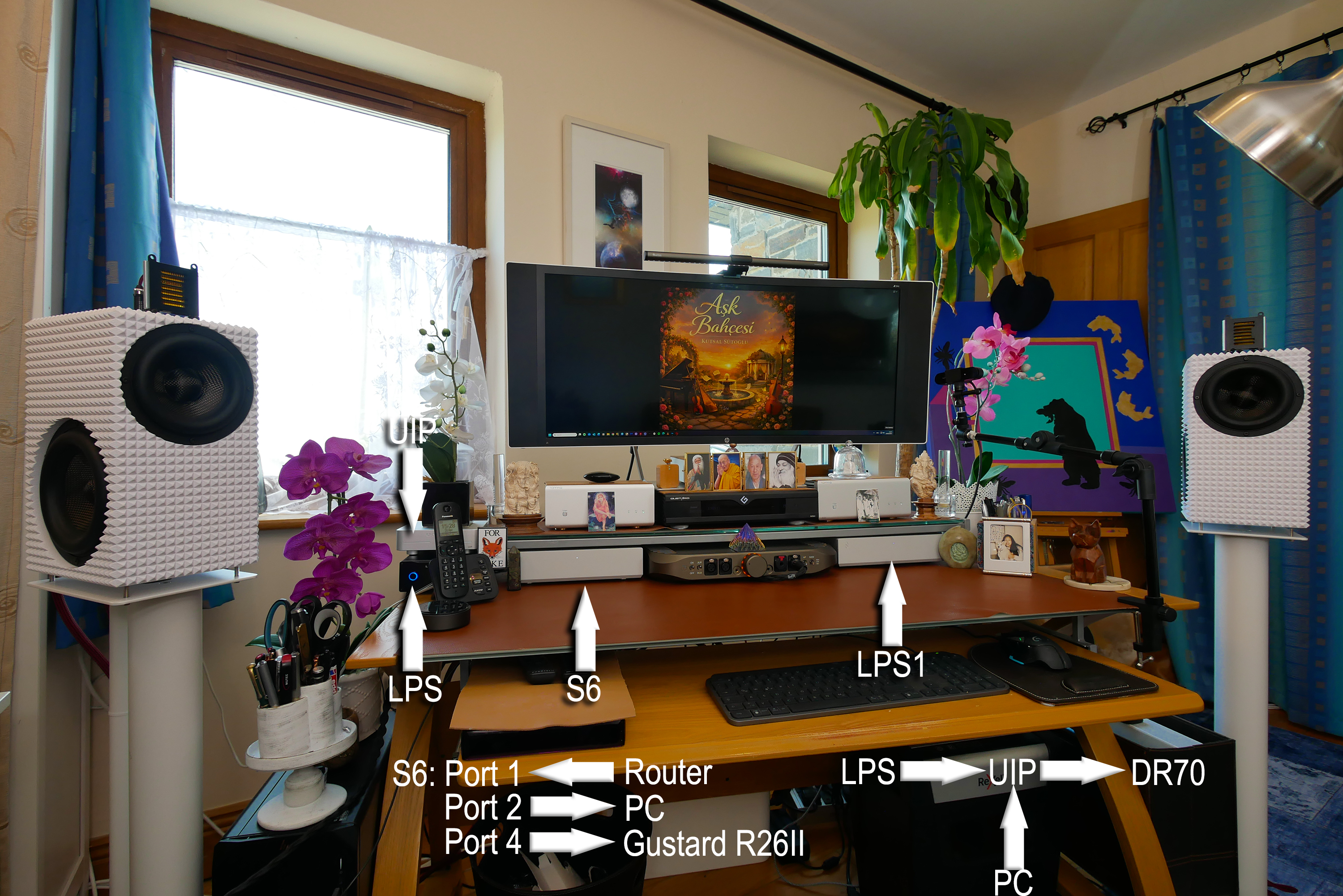
 In effect, the final two-box swap of the below S6/LPS1 was both quiet and loud. On minimalist fare like the linked track, nothing changed that I could tell. The difference raised its ears on more complex arrangements and did so in two ways: they felt slightly louder; and when background ensembles added themselves like a booster rocket, they remained more distinct. These observations connected. The loudness sensation was due to higher data density whenever my listening path wound through thicket. More tiny bits previously masked fuelled this perception of extra density. Simultaneously, whatever micro detail is responsible for maintaining distinctiveness hence separation between mass-paralleled or intersecting lines asserted itself more clearly. Granted, this effect of reaching deeper into the minuscule could be duplicated on the attenuator. Raised playback SPL too brought up these least significant bits. It's why I called one perspective on this swap quiet. More happened just a click sooner on the SPL scale. But to be clear, the sensation of higher data density wasn't about primary or secondary layers whatsoever. It was purely about planktonic minutiae. Their recovery led to sufficiently more sonic substance to have playback feel fuller on more complex richly arranged cuts. That simply didn't factor on ultra-minimalist fare like Lena Chamamyam's breathy vocalizing of a Göksel Baktagir qanun composition.
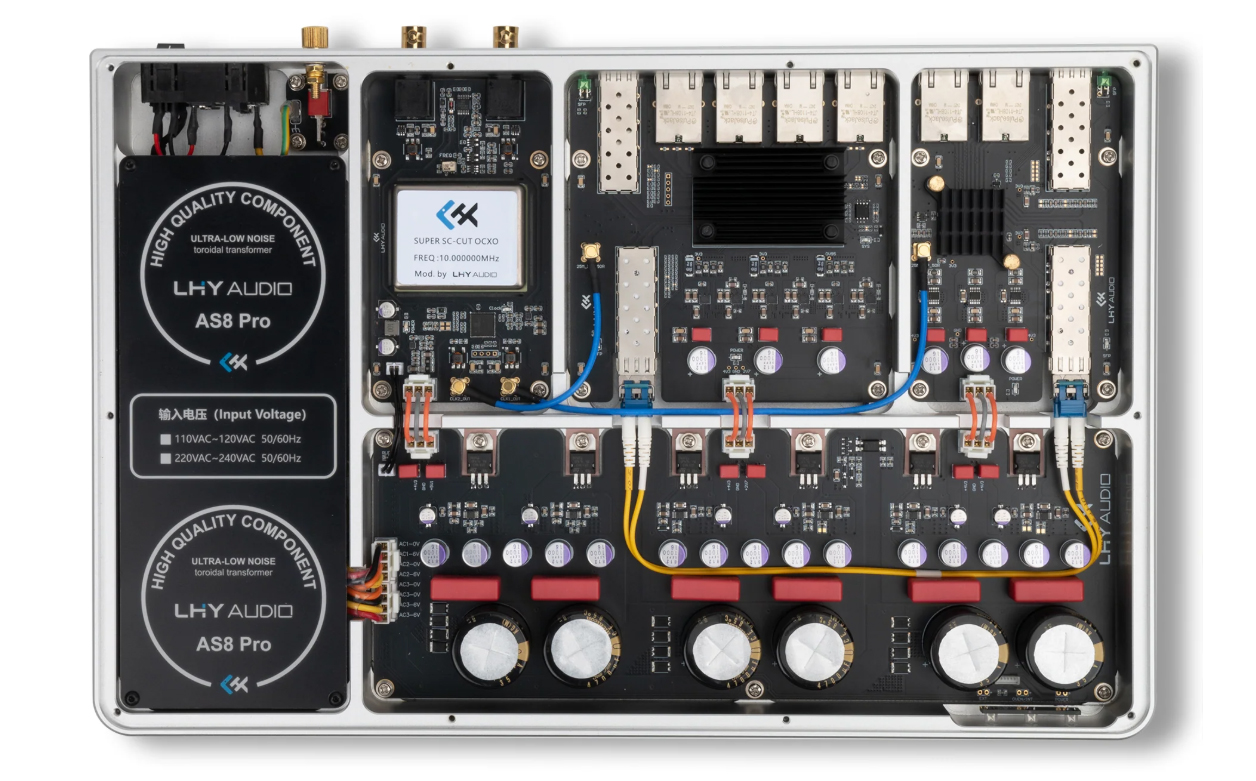
My takeaway from my three experiments is plain. LHY's own range-topping AS8 Pro network switch too combines copper⇒fibre⇒copper conversion and reclocking with an elaborate twin-toroidal power supply. Apparently the pincer attach of 'super'-galvanic isolation and ultra-stable temperature-controlled clock can go farther than just one or the other approach. That our audio pay-out would shrink versus first picking one approach over just the telecom-provided router as part of our monthly Internet plan goes without saying. It's also clear that as more hifi devices hang off our LAN, the extra ports of a performance-tuned 'audiophile' switch can spread the luv from a single chassis to multiple gear even systems. EFI can isolate/purify only a single streaming component.
Having reported today from the LAN trenches as a regular consumer, consider me very pleased with my EFI purchase and its price/performance return. "EFIng a!" For $495 it's neither silly money nor a Computer Emporium plastic affront. It's from the folks behind Jay's Audio but sold consumer-direct for highest possible value. With more than a handful of their problem solvers in my collection by now, the time has come to call the LHY catalogue a sure thing no matter what model. Rephrased, once I have another particular hardware hole to fill which they can plug, I'll be back at LHY…