 Ear bending. "8 x high-purity cryo strands of 26-gauge 7N UPOCC true hybrid copper/silver not silver-plated wire in semi-Litz geometry with PE insulation." It's how Mateusz Przychodzień of Poland's Forza Audiolabs describes the build of his Hybrid Noir leash. That became my first comparator. It set up a contest of custom aftermarket vs aftermarket custom cable. Using well-recorded vocals by El Cigala and Buika, it didn't take long to bend my ears to the differences. Konstantin's cable was the harmonically more lit up. Yet for that it was every bit as smooth and grain free as Mat's copper-augmented stretch. The latter's dose of subliminal fuzz countered the pure silver's even greater lucidity. Keying into recorded ambience, the Polski stretch was drier. It damped down some reflective treble action so also its energizer effect on illuminating recorded space. A side effect were slightly heavier textures with less teased-out image separation.
  The Portuguese closer tracked the signature overtone rasp of Diego Ramón Jiménez Salazar better known as the lobster. Flamenco nicknames. As the crayfish, El Cigala was so christened by the Losada brothers whom he toured with early in his career. José Monge Cruz's uncle called him Camarón or shrimp for his blonde hair, lanky frame and light skin, rare features in his Romani community. He later grew into Flamenco's most legendary singer: Camarón de la Isla. First the shrimp, then the lobster. Singing seafood? Back on track. Spin up the linked YouTube track for three popular Latin vocalists against symphonic forces. The Audirvana inset shows its recorded dynamic range. With the Lavri cable, the stronger-lit outer headstage quadrants made these dynamic crests seem grander though I wouldn't fall on my letter opener for it. Still, the impression certainly left a mark perhaps because it seemed to involve more sonic matter. How so? If a tightly clustered ensemble hits the same loudness as a broadly spaced one, doesn't the latter feel more massive even if an SPL meter calls them equivalent? Something to that effect. The Lavri leash's greater inside-out reveal felt bigger hence when it moved up and down the loudness scale, that too bigged up. Reality check. Landing Lavri's silvery loot involved €8'800 flagship cans of impeccable resolution across the bandwidth, particularly so in the top end. Would a heavier darker load like my original Final D8000 dig into and discern the same differences? The message parlayed but the translation
  lost some magnitude. On the other end of the response, pure silver rendered tauter more damped bass, silver/copper presented clearly bloomier and weightier.
That was interesting. Konstantin's cable better tracked recorded micro reverb on top yet was more controlled down low. This lay of the land equally transposed to my aune SR7000 with narrower margins except for one surprise. Occasionally my hybrid link was just a bit splashy yet the silver version never. The hybrid silver/gold traces of FiiO's FT7 really cottoned to the Lavri link's pincer attack of more top-down illumination plus utter smoothness. Yet none of my 2nd-tier brigade could match what Susvara Unveiled did for exploded spaciousness and HF finesse. I now saw why Konstantin had been keen on either Susvara OG or Unveiled. At lesser micro resolution for our transducers, those skills of his cable won't fully factor. Checking into my stock of stock cables, what FiiO include with the FT7 is already a cut or two above what many competitors bundle. Just so, in the range which informs airiness, image halos, harmonic spray and recorded reflections, it couldn't match the Lavri. That effect suggests a microphone being closer to lips or strings. It picks up the full dose of overtones riding on rising transients before distance blunts that energy and diminishes harmonic intensity.






Mind bending. At this juncture, my inner commentator awoke from his afternoon nap. Didn't everything I'd written thus far conform to audiophilia's beliefs on silver cables? As usual in these matters, there was some truth, just not the totality of it. 'Silver sounds bright' can imply a tonal-balance upshift. Now treble forwardness equals tonal imbalance. On the score of fundamentals, nothing shifted or tilted. Bass, mid and treble were as loud relative to each other as before. It's on the overtone score where previously muted or obscured elements stepped forward across the bandwidth. In that context, 'silver sounds sharper' actually meant sharper focus so less diffusiveness over copper's apparently softer grasp which with descending frequencies can also get more bloomy and resonant. However, Lavri's crisper focus lacked any and all subtext of grain, splashiness, overexposure or knife-edge cuttingness. It's how actuality modified the truth kernels of common silver perception. Just how much transducers can milk from a skylight suddenly open to the influx of harmonic moonbeams depends. That lesson my unabashedly costly Susvara Unveiled sample taught the far more attainable bunch. If we have 'phones which can process finer overtone data because their moving mass and energy storage are low enough, today's Grand line really steps out. Now spending ~1/10th of a can's coin on its custom cable becomes clever not capricious.
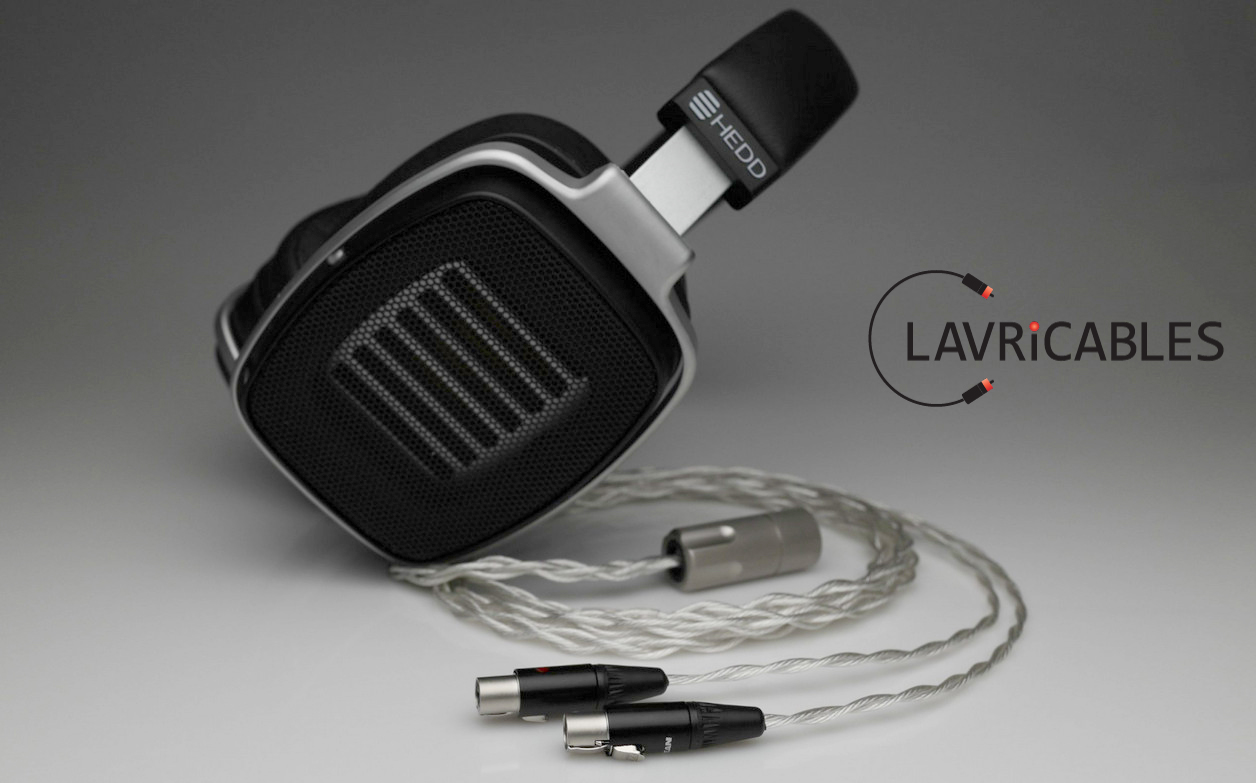

 "Houston. Problem." As canheads, we can't move our transducers and listening chair to tweak the response and imaging. We can't add a sub or footers. Shy of the almighty EQ so beloved by headfi YouTubers, all we can roll are ear pads and wire harness. It explains why amongst the serious squad in this sector, cable rolling is virtually de rigueur. It's our form of sonic customization. It shows engagement and sophistication. We won't be caught dead driving stock. Okay, I'm hamming it up but the voicing leeway for headphonistas is shorter than it is for speaker listeners who for that privilege must battle their rooms. On the score of personalized tuning, headphone performance is more fixed. Swapping out stock cables is one way to exercise personal preference and exorcise one size fits all. In my book, Lavri Cables' top leash is highly resolved, very close to the microphones, super informative about harmonic content, adroit, fit and smooth. It isn't fat, loose, blurry, distant, soft, dark or heavy. It is mechanically limpid, microphonically mute and very finely crafted whilst eschewing bling and branding. Its high resolution implies imaging excellence for lateral spread, front/back layering and being deeply embedded in recorded space whenever present.
L for Latvia, Lavri, lovely and lucrative? 100 percent! When behind these scenes Portugal now factors as well, let's add P for poshness, precision, purity and pampering. In this context it's instructive to mention that Aleksandar Radisavljevic of Raal Ribbon and Raal 1995 too has gone full-on silver with the top execution of his transformer-based Ω adapter and low-inductance cable for the ribbon headphones Immanis and Magna. Ditto Konstantin's fellow Club Med transplant Arek Kallas of Hattor/Khozmo—formerly of Poland now Spain—who operates four silver-wired autoformers in his best passive-magnetic linestage.
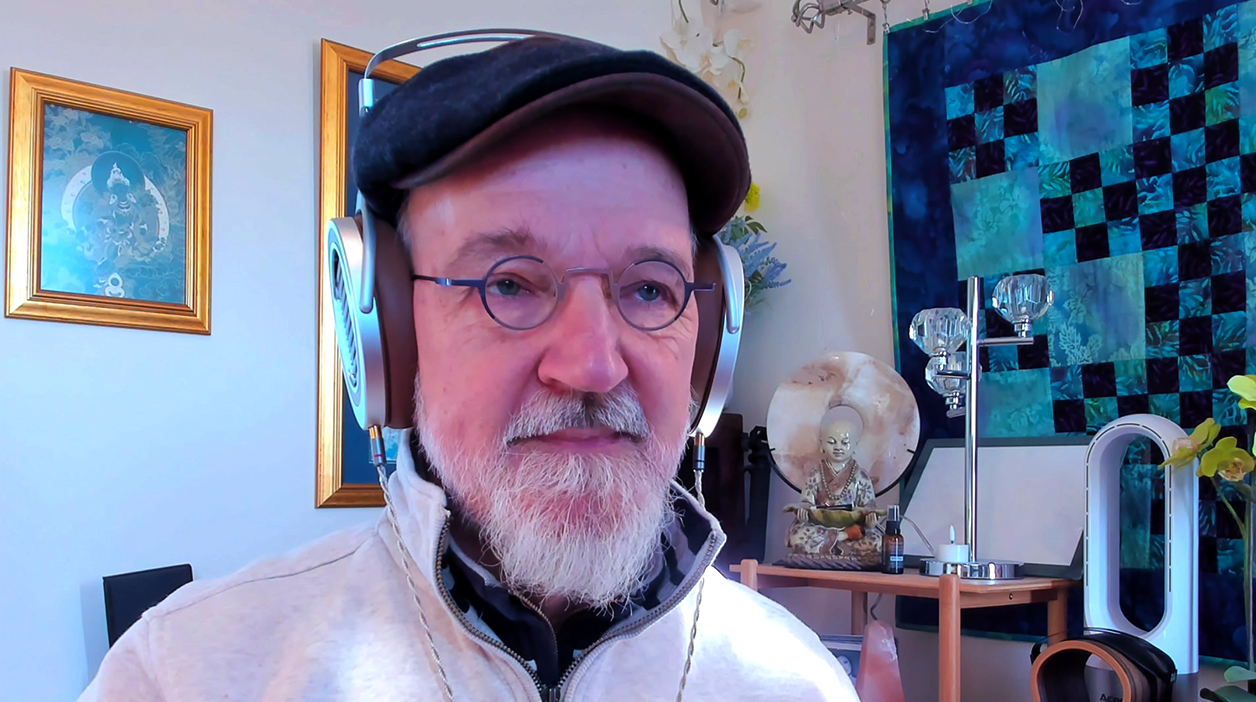
"The chemical symbol for silver is Ag. This derives from argentum, Latin for silver which stems from a Sanskrit word for 'shining' or 'white'. It's a transition metal known for having the highest electrical and thermal conductivity of any metal." S for silver and shining? After spending time with Lavri's best cable, that strikes me as a very white – er, fair summation. Why? Because one gent's bright—mind you, bright all over, not just the top octaves!—is another gal's shiny. It's one quality judged two ways. Hence some listeners prefer balcony seats, others pay extra for front-row centre. The latter prioritize directness, harmonic intensity and dynamic contrast before the ambient field diffuses and blurs the lot. You know exactly where you fall; at what distance to stage you must sit to be happiest; and where this Lavri cable places you depending on the load's resolution. That means my job is done…