 Click bait. "Selling all my Chinese hifi DACs." It's how a hifi blogger thumbnailed a YouTube video only to subsequently qualify that catch-all to cheap ChiFi DACs à la smls and Topping. He lambasted them for being virtual clones to offer nothing unique or inventive. Clearly that's not the µDAC. In fact, it drives downmarket the same tech which Rockna, msb and TotalDAC have championed at the very top of the food chain for decades.
From its most obvious discrete R2R competition only the Denafrips Enyo 15th asks less. Sister brand Musician have the Draco for Laiv coin, Topping the Centaurus with Holo R2R board. So whilst the µDAC doesn't outright own this sector, it's a member of a very small club. When we add 'smallest' and arguably 'prettiest' that it takes ownership.
In that it reminds me of Wattson's Madison and its Lounge Edition. In a recent Stereophile review that tidy Swiss garnered "state-of-the-digital-art measured performance at a relatively affordable price". At 4'995 that's a rather different ballpark. But it too is most compact and pretty.
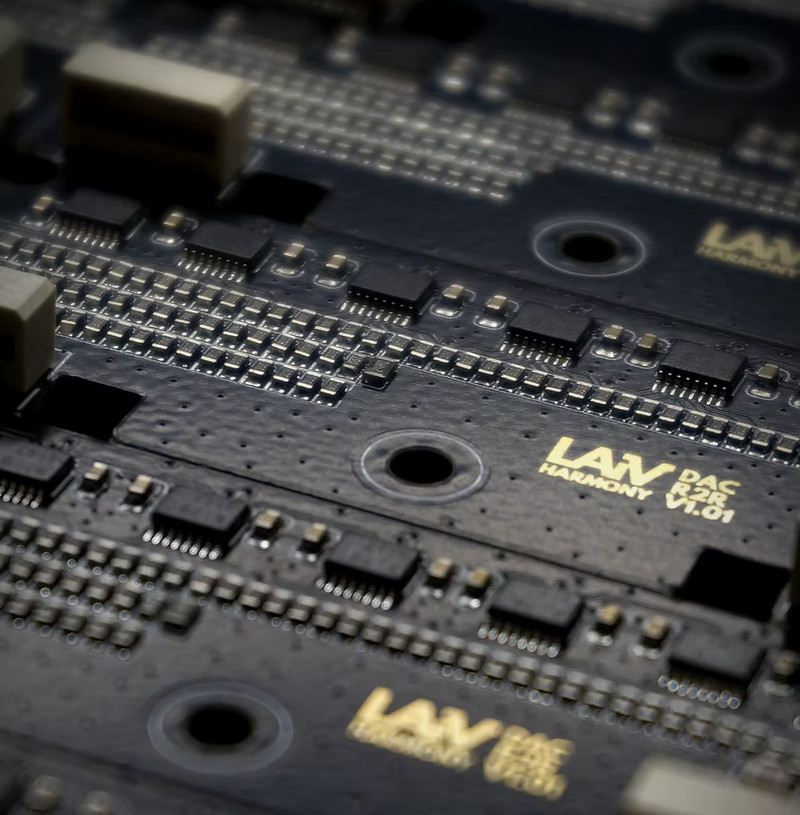
That sweeping statements can backfire spectacularly was brought home by a recent Bob Katz article on PFO in which he claims that the forthcoming Imersiv D1 DAC will be the world's first multi-path converter. He clearly doesn't know Cees Ruijtenberg's prior art of the same approach going back to already 2015 (!) with the first R2R Metrum converters with split processing; nor St. Petersburg designer Leonid Burcev who came up with the same concept including Ruijtenberg's variable reference voltage for no-loss volume control well after the fact to abandon his own take. [At right, Laiv's 0.05% tolerance resistor ladders.]
So let's reframe the above paragraph with the obligatory "as far as I know". It leaves doors wide open to contrary evidence. Regardless, the sub €1K sandbox of discrete true balanced R2R DACs should remain small. But whilst we're on the subject of no-loss volume in the digital domain, there's Leedh as embraced by CH Precision/Madison, Lumin and Soulution. I'm unsure whether Laiv's R2R approach disavows adoption of Leedh's code on principle. If not, it would be lovely to see their next-gen versions incorporate it for those of us with 1-source systems who prefer an amp-direct connection to a separate preamp. The µRange's whole miniaturization appeal calls for a quality volume control. If not Leedh, perhaps variable reference voltage? Another shout-out is due for making Laiv's gorgeous metal wand optional. On the desktop it won't be necessary to save us $194. At greater distances, some might like to have it and it's there for the taking.










Readers keen on musical notes will feel shorted because I referenced the µDAC's 'sound' only against the bigger Harmony DAC. Its prior review already spelled it all out. It makes capture by contrast the most effective description. It also won't be lost on you that in this sector, the performance gap between converters isn't big. Because digital can't be listened to until it's analogue, all design work in the digital domain relies on measurements exclusively. Today even very cheap DACs can have ace measurements. It's why routinely what tips the balance happens in the analogue domain with the output stage/buffer and power supply. For their class A buffer Laiv rely on modern IC for their compactness and efficiency. That could be—snob alert?—why we don't get a lush dark sound but instead one that's tuned for the brand's 'live' motto? It prioritizes clarity, timing and energy and with it, transients over decays. It's precisely why I bought my Harmony DAC review sample. Had the µDDC/µDAC combo arrived first, it might have stayed instead. As such it's only fair to grandfather the µCombo under the bigger DAC's earlier award. It saves money and to my ears, performs on par. Who doesn't like a good deal?
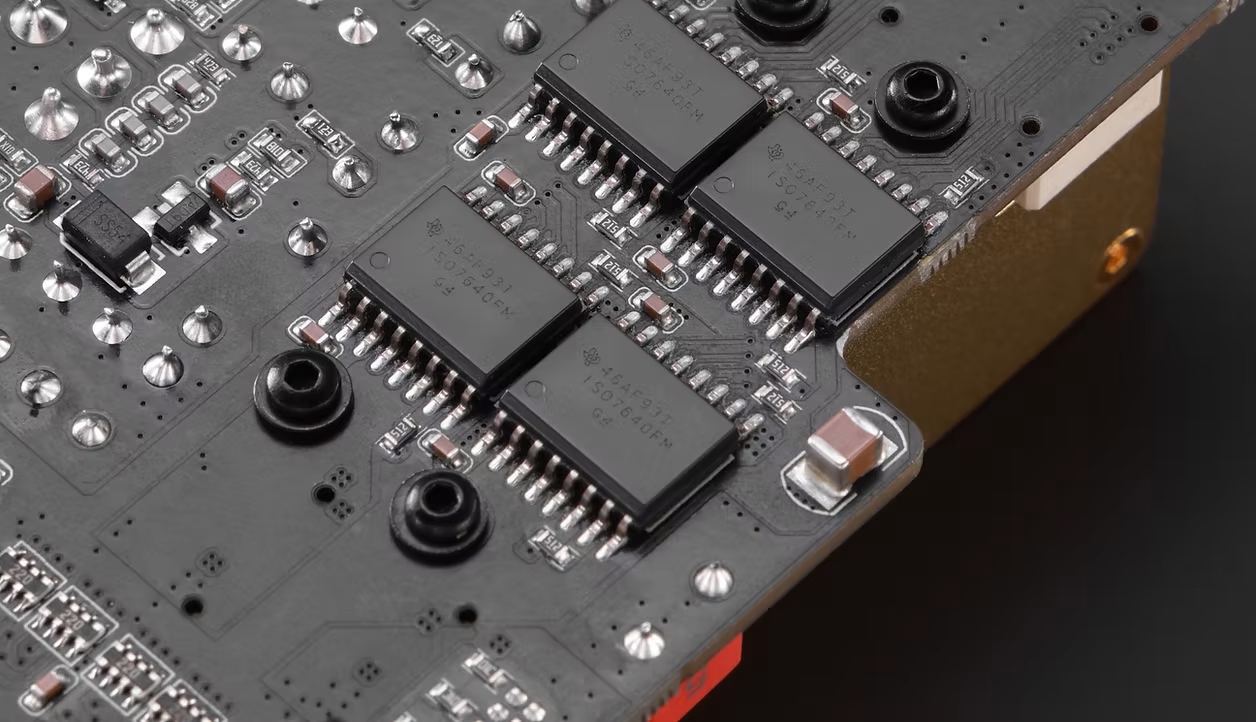 IC-based galvanic isolation.
Does that make the combo a Harmony DAC assassin? I don't see that at all. We do lose the bigger deck's RCA outputs. We do need an extra cable and power socket. We are looking at two easily cap-sized pieces not one. Aren't these two different customers? With Laiv a popular brand with reviewers, we'll undoubtedly get a lot more commentary very shortly. Let's see how others hear it and do this math. To get you started, for now you have my opinion. Cheers.