Digital sound. It's an oxycodone, er… moron. We can't hear digital, just analog. Digital sound doesn't exist, just measurements. Just so, the term has stuck and with it the assumption that everyone agrees on what it means just as we all sign off collectively on analogue sound and musicality. Not. Never mind that Laiv's execution of class D isn't digital in the first place. But, put together fast-switching outputs with earlier ceramic Accuton drivers. Now there's a fine chance of a collective consensus on the most likely results: "digital sound" aka dry, clipped, overdamped, monotone, transient emphasized, whitish, lean and mechanical. Back when I did think that most ceramic speakers indeed trended that way. It's why once I chanced upon a glorious exception in a small form factor, it became my in-house reference for a modern hard-diaphragm speaker. Today its author Massimo Costa no longer works at Albedo but competitor Alare. Yet his handsome transmission-line Aptica 5¼" two-way remains in my collection. Given the innate setup of knee jerks and other hasty certainties, those were the speakers first hanging off the GaNM twins. Here's a hero VU meter shot in copacetic ambient light.
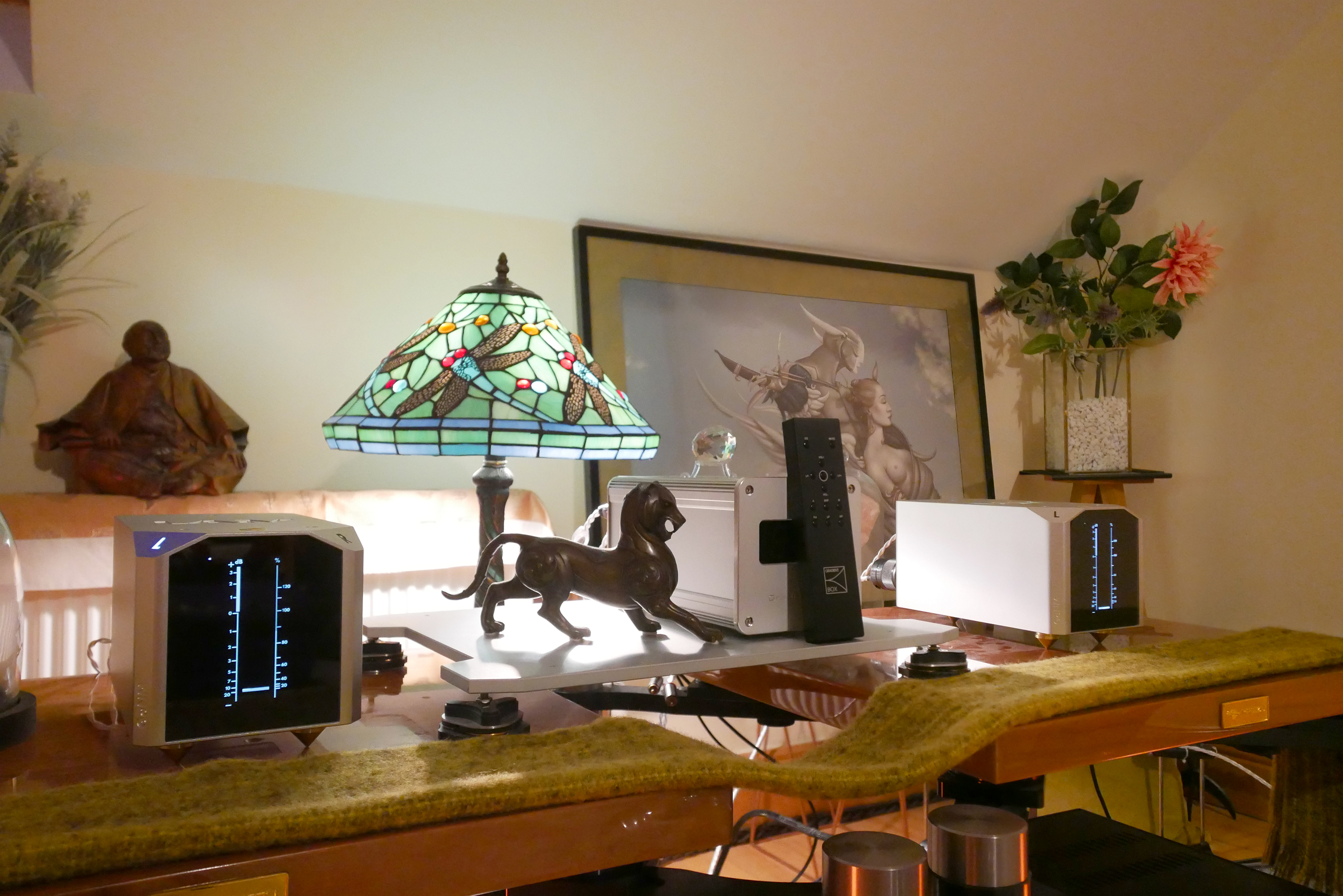
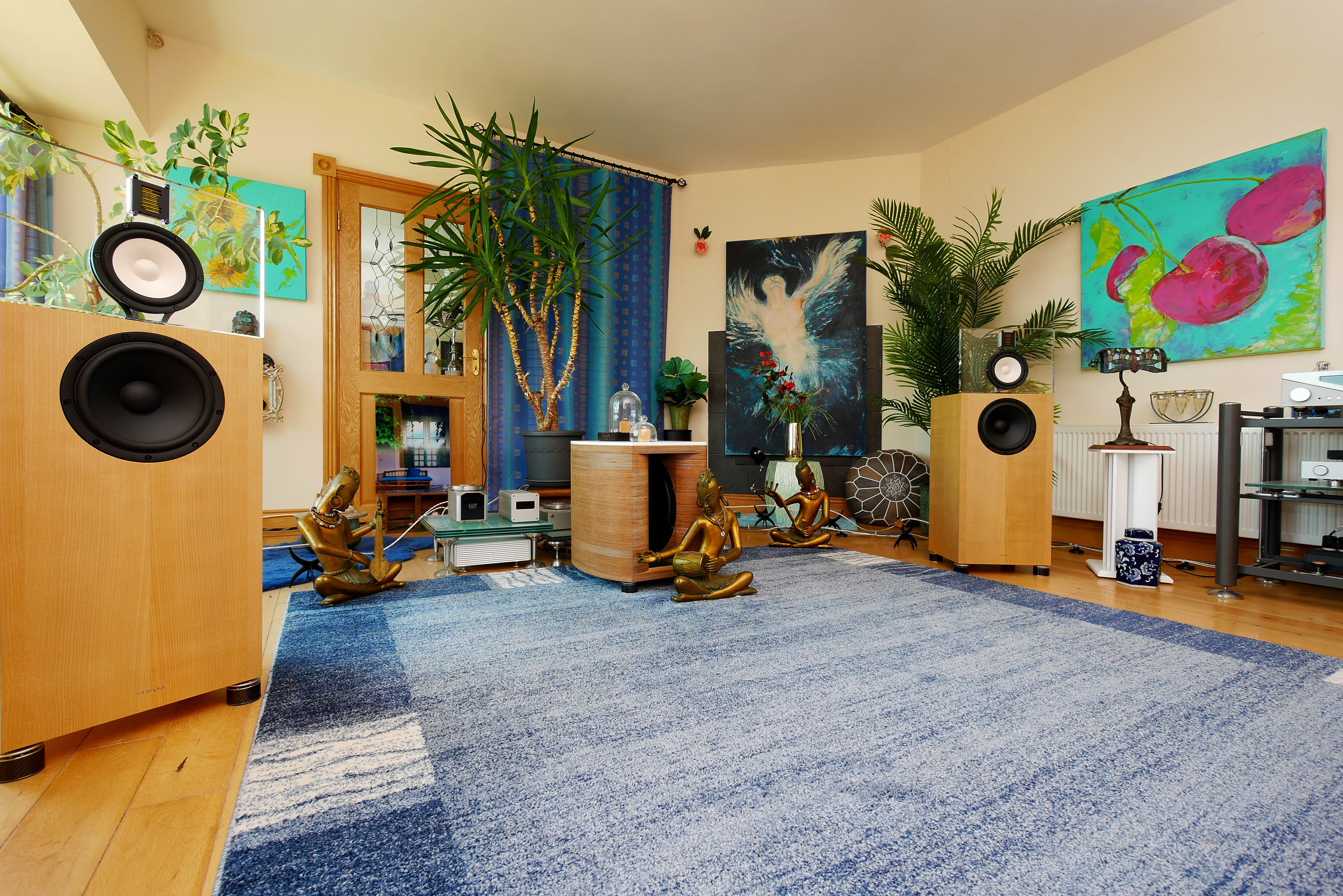
Then we zoom out for the full show, with the front-end of SD card server, USB bridge and DAC with analog volume control on the sidewall, the rest between the speakers. Cueing up the Ayoub Sisters with Arabesque backed by the Istanbul String Orchestra for a heady dose of massed violins and celli recorded well—a sure-fire recipe to unmask "digital sound" in all its limitations—I faced demonstrable sweetness. Right out of the gate the oxymoron of a digital sound found itself cancelled. Trust me, had even echoes thereof factored, these transducers on this music would have exposed them. A feisty Johnny Cash salute then at presumptions which just 10 years ago might still have met their target; and which would continue to do so were I to swap out these GaNM for my very aged Nord Acoustics Ncore monos. Time really has moved on. The only thing digital about these amps are diehard assumptions.
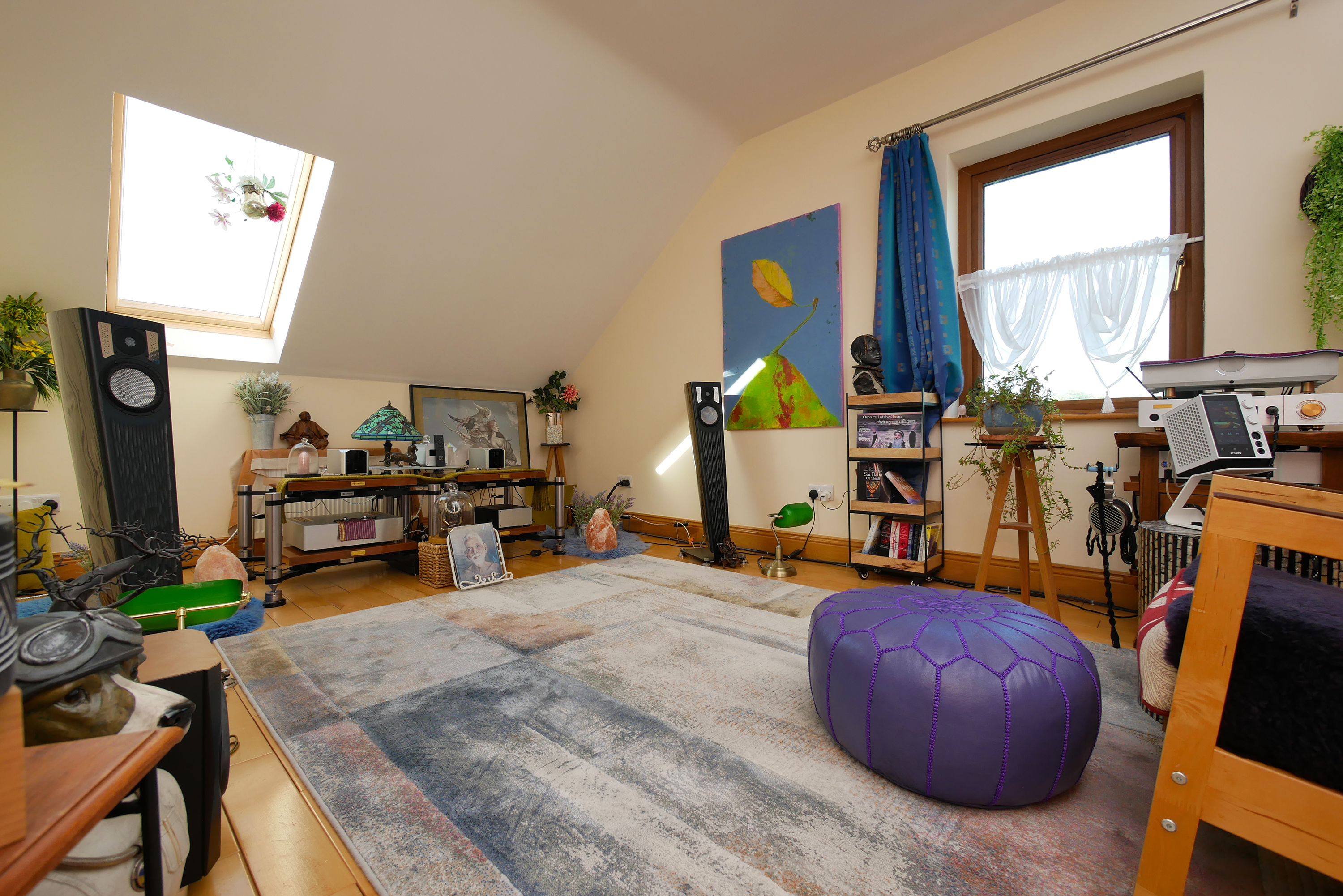
If one arrives from DC-coupled gain circuits of ultra bandwidth like CH Precision, Goldmund, Kinki or Soulution, class D can most obviously fall short in the treble. It's as though there wasn't sufficient data to fully elucidate tweeter deeds and high harmonics. At least that's been my observation and one reason I've not embraced the breed for speaker rather than sub duty; the aforementioned GaN models excepted but abandoned due to their stiff pre-Trumpian tariffs.











Checking off personal treble treats, be it solo piano or close-mic'd strings, the end-blown Turkish ney or cymbal exploits, the Laiv monos were decidedly informative and full-bodied on top, not reluctant or stiff, desiccated or needling, frosty or grey. Whilst arguably not as explicitly illuminated as my 2.5MHz monos, I had zero complaints or pangs of omissions with high hounds as fiercely tracking as my dipole papyrus-cone widebanders handing off to dipole Mundorf AMT. Because of their fleshy midband, I wouldn't profile the GaNM as airy per se. They don't lazy Susan that quality into the foreground. What's in the foreground instead is a more organic sweeter milieu. But come familiar tweeter gymnastics as on the electronically enhanced Miles/Gurtu collab, none of it felt curtailed. It simply lacked all splash and tizz, those 'boiling-oil' aspects which can accompany those registers like rusty specks. In short, this treble was very clean in the benign sense of lack of dirt, not stiff dry-cleaned sterility. It encouraged higher SPL which promptly led to real data density with a wall-to-wall stage packed with highly materialized sounds. If the notion of hi-rez is hearing more, the GaNM obliged with quite a macro function as playback levels escalated. In my book that's always a function of low distortion which doesn't make the sound uglier as it gets louder; particularly on fare that includes glitch and noise effects.
 With the display option of the company logo exercised at top brightness.
Where my Kinki monos strut more subjective speed to make Rafael Cortés' glassy Flamenco guitar arpeggios sharper, the Laiv versions portrayed him a bit warmer because their power region of the upper bass was meatier and separation not quite as intense. It's how class D can apply for an old-fashioned organic rather than digital biometric passport and have it granted. I'm obviously talking degrees versus my status quo, not tubular excess. Just so, Laiv's aesthetic had undertones of EJ Sarmento's tuning of ICEpower when Wyred4Sound were still a press darling and worked on their own class D platform which never materialized.