Wearing (out?) the software. Doing the hi-rate PCM/DSD dance, I didn't hear my Audalytic's special 1-bit magic. That applies a kind of legato/sostenuto or billowing ebb'n'flow quality to how images populate the spatial expanse. By contrast, its PCM render feels more rigid, strict, locked in, to the point or matter of fact. That too was Verse's style; for both formats; equally. I heard no compelling reason to 'remaster' to DSD. That's neither critique nor complaint, just an observation. Laiv's commitment to R2R intrinsically ties to pulse-code modulation. That expertise or focus overlays how they implemented their 1-bit modulator. But, mixed PCM/DSD libraries can render natively. It merely inserts a short click at the beginning of the first track past any format change. To avoid that click, set Verse's DSD option to multi-bit. To avoid misapprehension, we must distinguish between tone and temporal texture or touch. For tone, Verse was demonstrably fruity. If we buy more citrus than we can consume in time, lemons in particular shrink, dry out and lose their plumptiousness. Verse portrayed tone properly sun-ripened and flush with juice. Fresh not aged fruit. It was in the temporal domain of rhythmic tension that it tightened its grasp over my DR70's 1-bit take. Sticking to this imagery, Verse combined juicy fruitiness with high muscle tone and athletic motion. In the domain of beats setting down markers in time and giving melodic lines a pulse to sync with or diverge from, Verse played it exacting and crisp. It simply caused no dryness because its level of controlled timing didn't simultaneously rigidify tone.
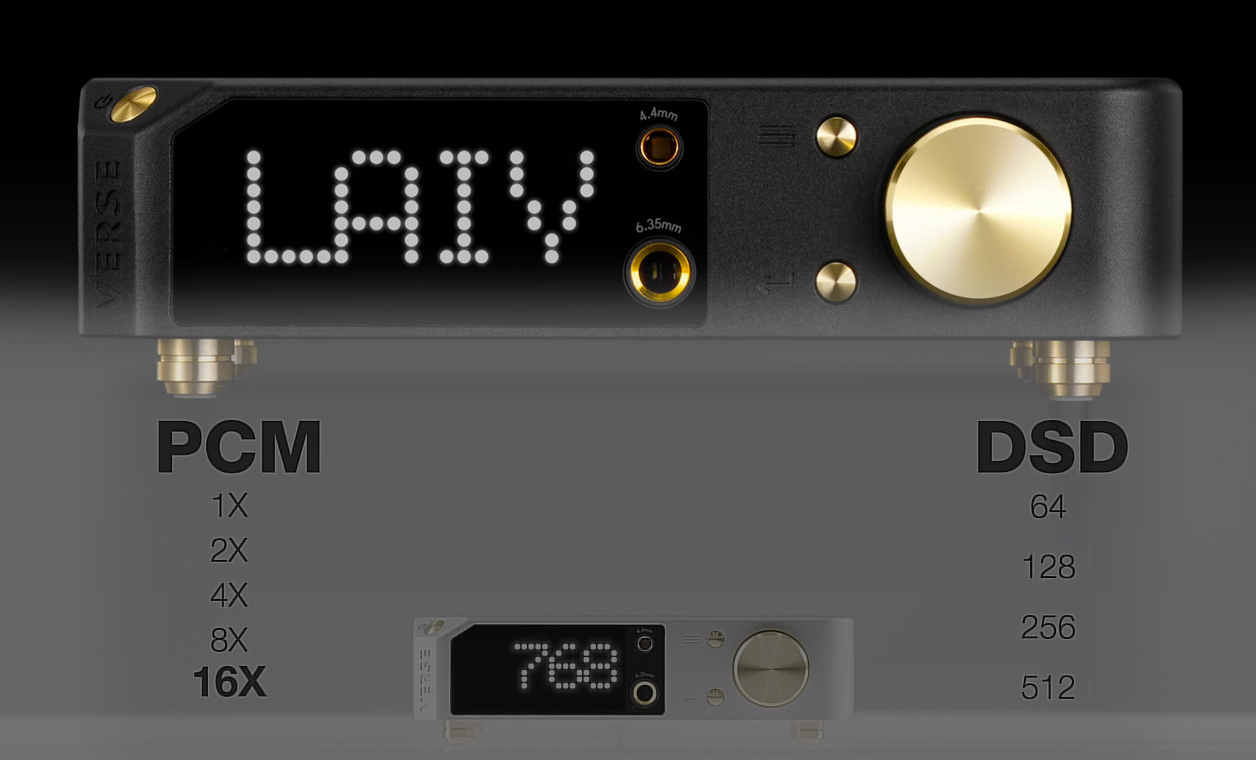
If you groove to transients, Verse enunciates them superbly. This extends into the low registers. Nothing loosens its grip or blurs. Another way of describing this invokes correct drive. This is probably the doing of the active preamp buffer's low output Ω. If I have my facts correct, the Harmony DAC direct-connects its R2R network to the output sockets. That creates 600/1'200Ω impedance on its RCA/XLR outputs. As a result they aren't recommended for simultaneous use. At first Vincent Brient of TotalDAC too promoted such a 'purist' connection to his discrete ladders. Later he authored a separate so outboard active buffer. Variable Verse mastered the same lesson in one box to accommodate amplifier-direct scenarios over longer cables. This isn't just cheap servile spec wisdom. You can hear it¹. According to the day's online currency converter, Laiv's $849 equated to €720; on par with my €748 Gustard twins. Verse does in one smaller chassis what those do across two bigger ones. For most civilians not worshipping a big hifi footprint, that's a clear selling point and one chief takeaway. On sonics the Singapore visitor was a rather close stand-in. Those who adore slam, crunch, snap and pop would in fact prefer it over my slightly gentler more elastic duo.
________________________
¹ From a HighFidelity.pl review of the Wadax Studio player with user-adjustable output Ω, "…changing impedance affects the sound and tonal characteristics. Available output impedance values are 0, 7.4, 7.5, 8.2, 8.3, 8.7, 8.83, 9.8, 10, 28, 30, 46, 50, 66, 75 and 600Ω. As impedance increases from 0 to a higher value, you should hear a transition from a more rhythmic and punchy sound to a softer, smoother sense of rhythm."








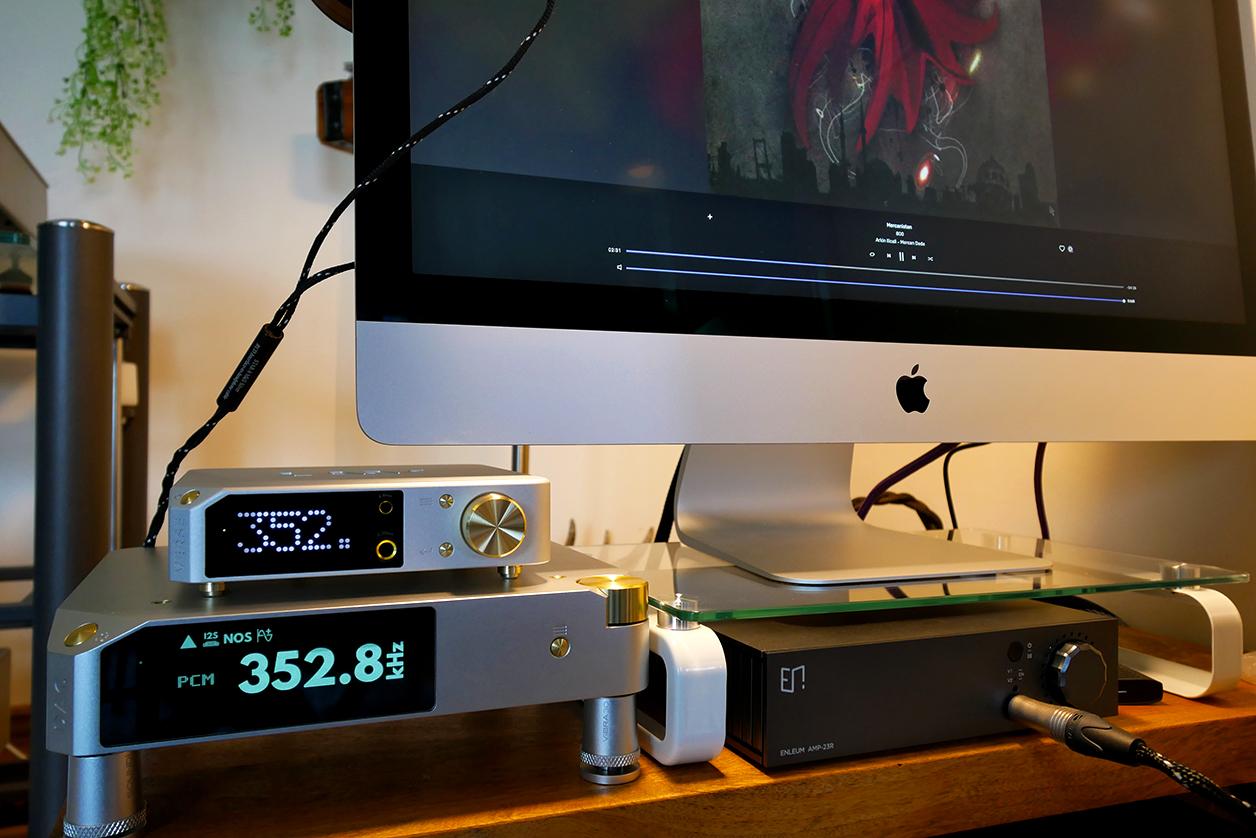
If coins weren't cramped but capacious; if multi-tasking wasn't mega but merely meh—what would a Harmony DAC into Enleum's premium headamp driving Raal's top thrice-paralleled ribbons buy us? Here we see both Harmony and Verse in I²S processing identical 352.8kHz PCM in NOS mode, Verse set to fixed out. Run off its stock switcher, Verse applied more upper-harmonic gloss and sheen, rendering Harmony's textures a bit more matte by direct contrast. The bigger DAC's overall gravitas was greater, however. With it the same tunes felt more stately, anchored and majestic. To be sure though, once coins cramp again and multi-tasking lords it over, Harmony tanks. In this type application there's just not enough performance margin to be more than a negatively skewed proposition due to a very disproportionate cost increase. Once we bolt €390 worth of LHY-grade linear power onto Verse, its sheen and lit-up undertones tone down whilst bass mass increases. That further narrows the gap when judged by ~€15K worth of deluxe downstream kit. In short, view the downgraded plastic remote and wall wart your price of admission into the same club. Even if it makes you a younger member of zero seniority, the perks are the same. Viewed from the Laiv stable, Verse is an overachiever. That makes it possibly their slammiest dunk yet; nearly too good to feel commercially sensible in their scheme.
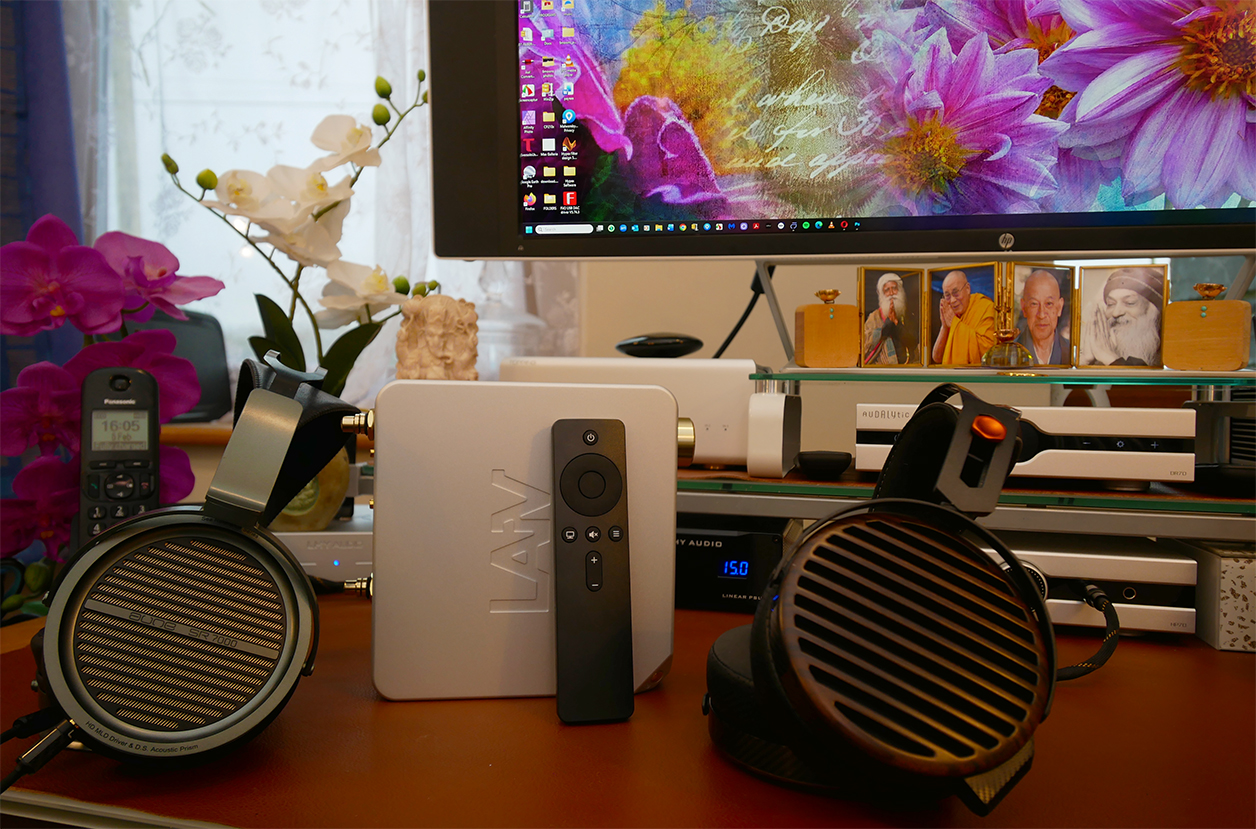
What about headphonic chops? To suss out competitiveness, back to my desktop it was to contrast Verse with my €349 Audalytic HP70 getting balanced analogue signal from the Verse's XLR outs. When it was my amp's turn, I ramped up Verse's attenuator to zero so bypass. In Verse's high gain, my FiiO FT7 planars and aune SR7000 sealed dynamics both sat at -34 for stout levels, the DR70 at 66/99. At these matched SPL, Verse was glossier and crisper on the leading edge to present as more energetic, snappy and driven. The HP70's textures were more matte, its energetic profile was mellower to feel marginally slower. In short, no class warfare but equals with slightly different tunings and matched headroom/gain for gnarlier loads. My takeaway was plain. Verse's class A fully discrete 4.4mm port is no afterthought but equivalent to what competitors do in a standalone headamp. For blood-sport spectators, such comparisons lack colour. They hope for violence with a clear winner. Not here. This bout would end in a decision between multiple judges weighing the same evidence differently.