By triangulation, a recent mini editorial explained why Laiv's Harmony DAC, DSD and I didn't get on. It converts DSD to PCM to use its metal-enclosed vertically mounted R2R ladders. It has no separate 1-bit path. Likewise for Laiv's $1'049 µDAC. But Verse does pack a 1-bit modulator—just like my €399 Audalytic DR70 from parent brand Gustard. That I listen to at 11.2MHz aka DSD256.
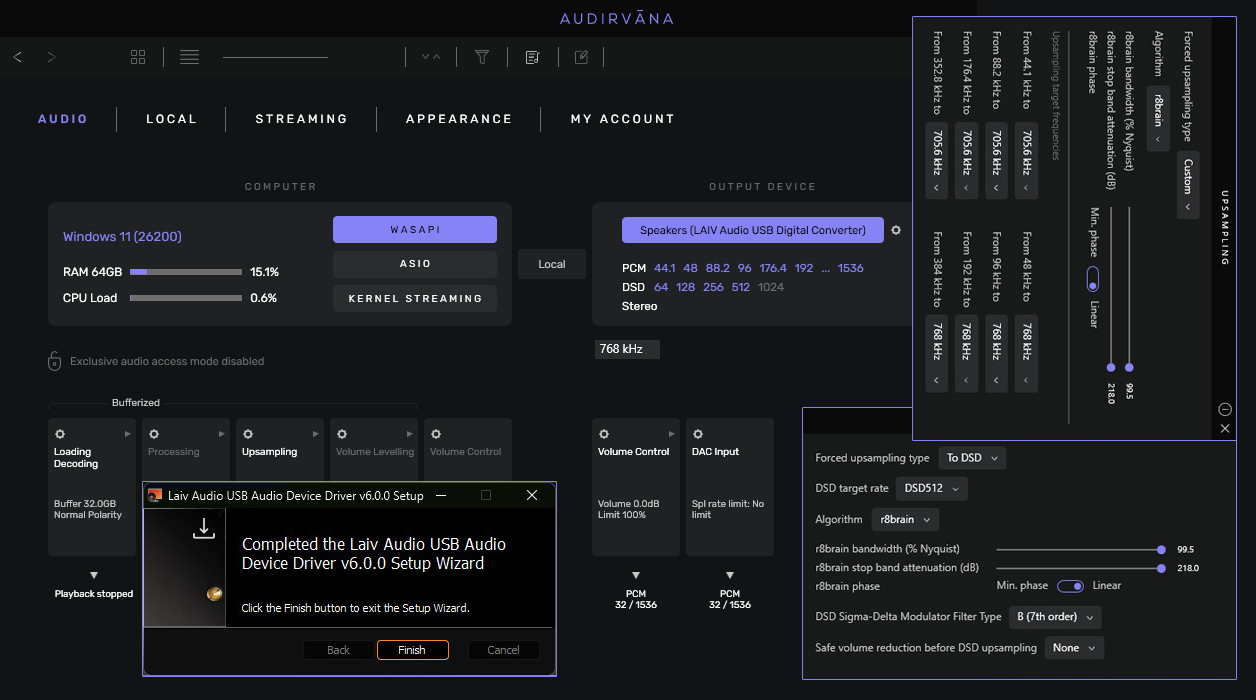
Verse has this playback option for listeners interested in DSD. Now one sets the DAC to NOS mode. This fully offloads high-rate DSD math onto a computing source. In my experience, DACs with well-implemented 1-bit processors can make this option more meaningful than most selectable digital filters. Whilst measuring different on the scope, those often don't telegraph at the ear. DSD however can. I couldn't predict which flavour you'd prefer. With Verse, you can simply investigate for yourself. And to get really DSDweeby, Audirvana offers two different algorithms each with various modulator types and other adjustments. As an equal-opportunity employer, Verse doesn't care. "Have at it". Here it shames its two pricier DAC siblings; and piles on by integrating proper analog volume control and class A headphone drive.
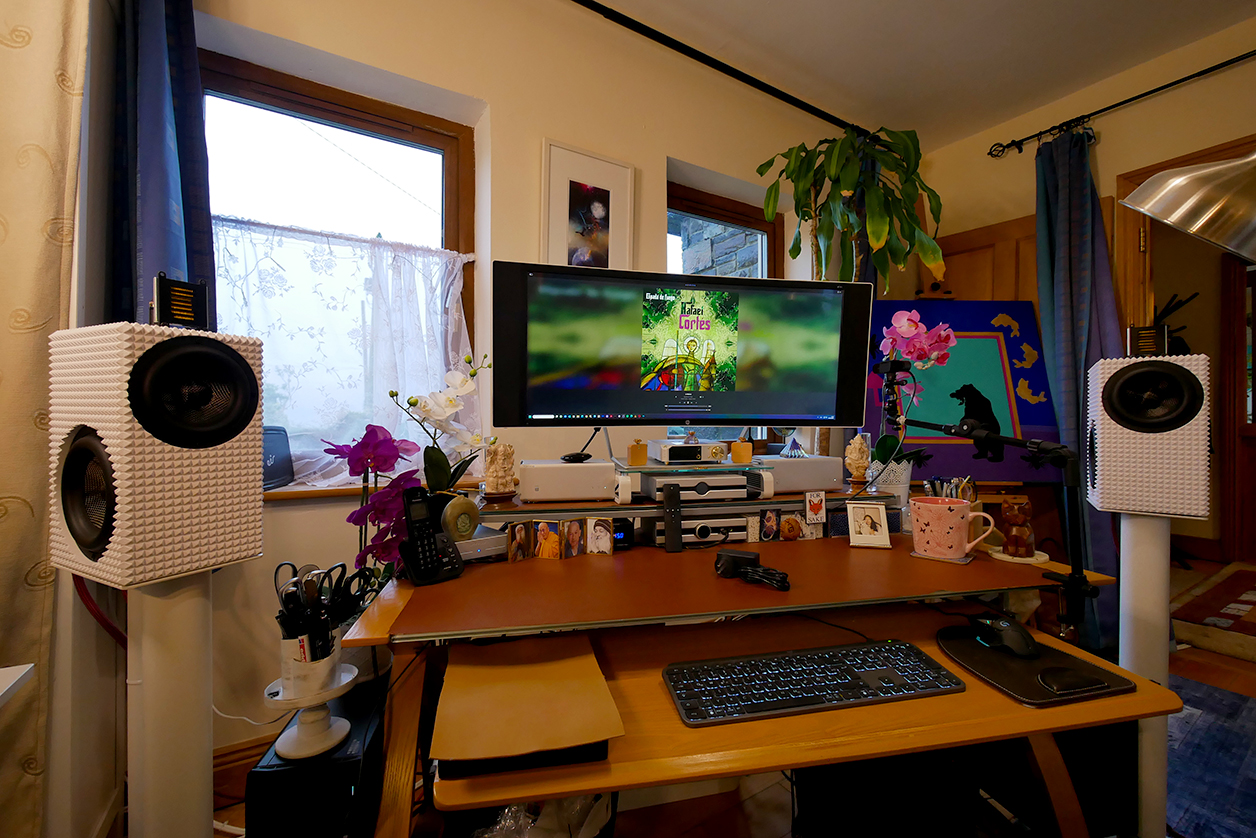






To settle just how loud this Crescendo goes versus Harmony, the below headphone station compared Laiv's top DAC getting I²S signal from a Singxer SU-6 USB bridge fed by Audirvana Studio on my dedicated music iMac. Here the headphone amp is an Enleum AMP-23R driving Raal 1995 Immanis through their stock 32Ω impedance adapter at the far right.
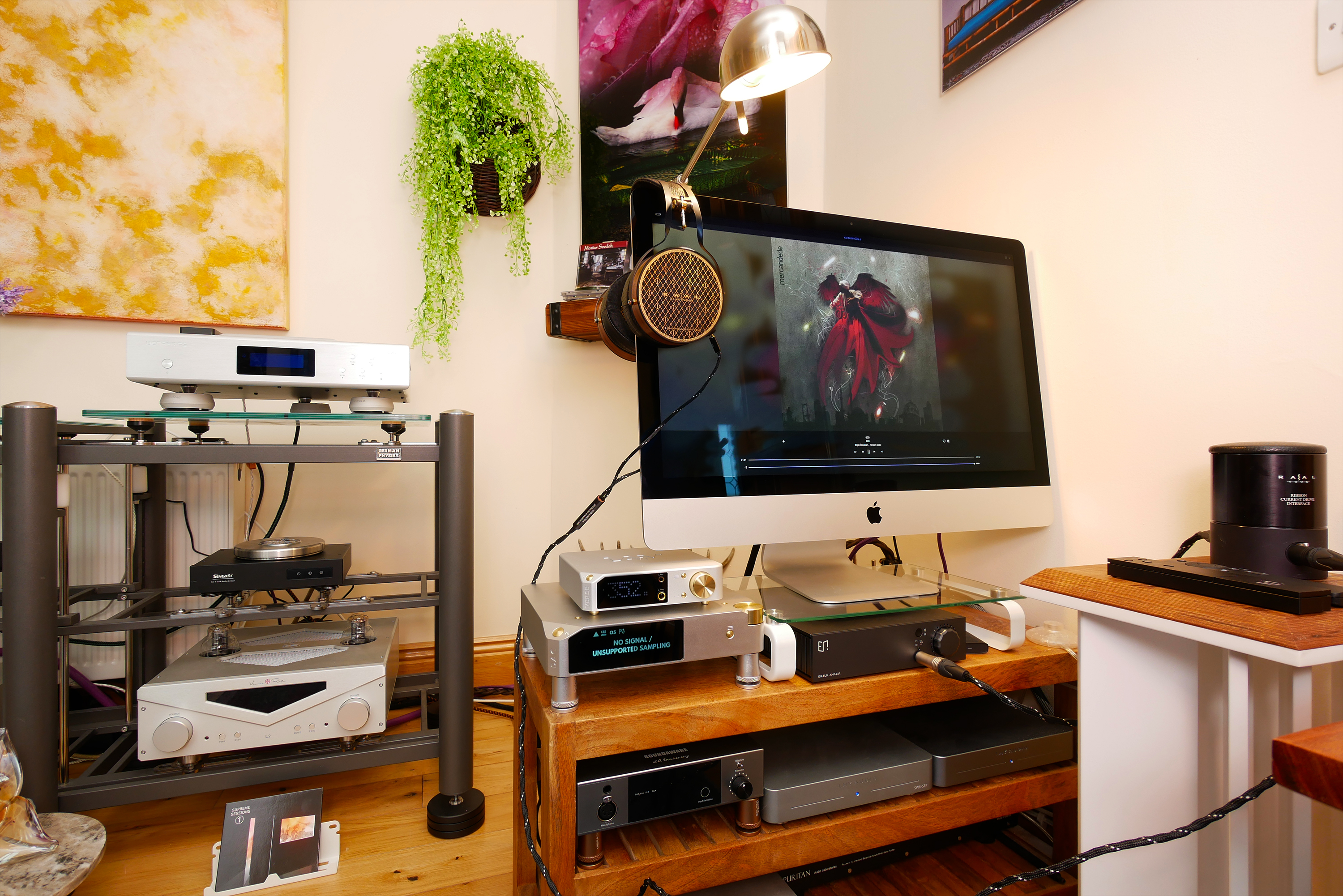 Verse display at low brightness, Harmony at high.
But first I had to install Laiv's Windows driver on my desktop. Alas, neither Audirvana, Spotify Premium nor the Windows sound device selector could be set to Verse. It would show then revert to an error message in an endless flip-flop. I soon realized that it didn't like my longish Curious USB cable. With that replaced, everything was peachy. I could send Verse DSD512 or DSD705.6/768kHz; or let it handle upsampling. I already explained why I prefer NOS mode. As the next micro stack shows, Verse is even smaller than the half-size Audalytic twins. Just so it's deep and weighty enough to not capsize with heavier cables. The µDAC could get seasick without a top weight.
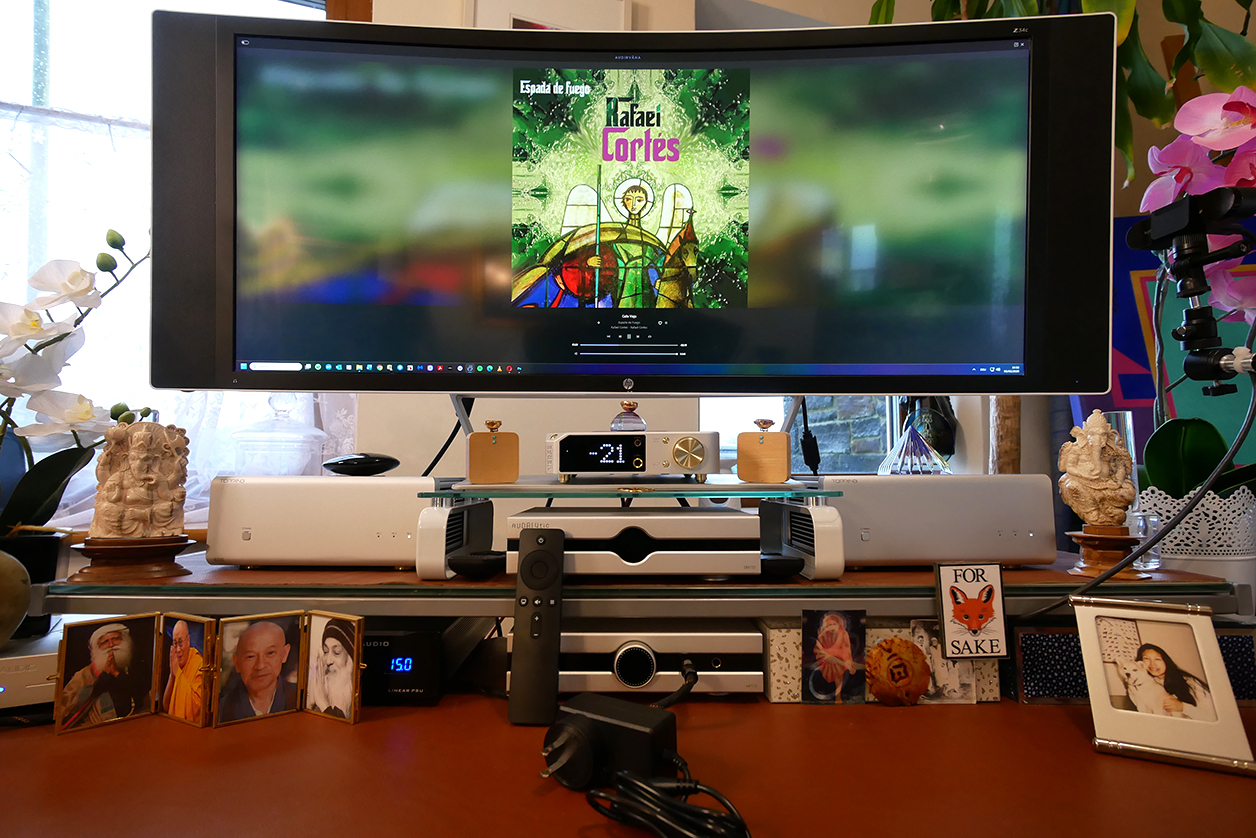 Remote control and 15V/2A 30-watt switching wall wart in foreground.
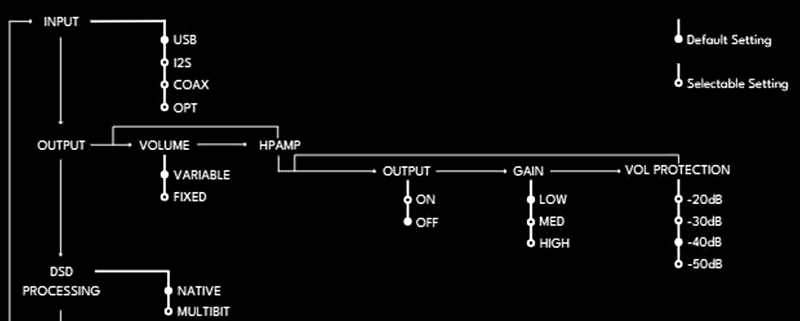 Onto a minor gripe. To de/activate the headphone port we must navigate a few menu layers. Inserting a headphone into the activated output still won't auto-mute the speakers. The main outputs are always on. So we must turn off the speaker amp/s. To avoid unhealthy volume skips between speaker and headphone swaps, we cut the headphone start volume in 10dB increments from -20 to -50dB. Here's the thing. Past setting our initial preferences, switching between speaker/headfi could be the most common action other than volume trim. Here I want to see a basic hardware function to toggle output modes, say a quick double tap on the power button. Tapping it once already toggles the display on/off. A long push triggers standby. Couldn't a firmware update bolt on a more convenient mode change via one or more hard controls; or the remote? As a poxy proxy punter, I'd like to see something to that effect. Right then I left the 6.3mm/4.4mm ports active and just unplugged my cans when not in use. Gold-plated problems. As delivered, it simply took five menu commands to get at the headphone on/off command. Not super slick!
Related is the large dot-matrix display. Whilst nicely legible across the distance, it relies on ticker tape to show longer or multiple words. Particularly whilst navigating the menu's sub sections, that actually makes things difficult to read. I'd prefer a different kind of display that can show multiple whole words even lines at once, then apply a zoom function when reverting to volume display to show in twice or triple-large font. Again, that's me being a critic to earn my keep. That just bought me a cuppa. I really wanted one. Buyers will quickly get used to it all.