René and Nicola are childhood friends. Together they have worked on high-efficiency electrical power conversion solutions for multiple industries across very many decades already. With 2018's commercial launch of gallium-nitride transistors, they saw that a new class D circuit for audio could now run at 4ns deadtime, a magnitude faster than Gemincore's 50ns silicon Mosfets. They could also make an associated switching power supply with GaN devices still more efficient. Applying their prior Gemincore lessons, they spent the last eight years refining a brand-new circuit for Ixycore. It's a full-bridge/balanced affair with four non-Infineon GaNfet per channel. [Other suppliers of advanced GaNfets are EPC, Navitas and Transphorm.] Those switch at 500kHz-1.2MHz depending on load behaviour because unlike the original Gemincore, the output filter now embeds in the feedback loop to make the switching frequency adaptive. Ixycore's self-oscillating modulator is completely custom, the hyper-critical GaN drivers are ultra-tolerance special parts. Ditto the custom French magnetics of power supply and output filter. Applied NFB spans 60-100dB. Odd-order harmonic distortion as a function of deadtime is down to -150dB from the 3rd-7th harmonic. Anything above it disappears in the noise floor. The circuit's damping factor prior to the final 7cm of wiring to the binding posts is 100K. The resistance of our own speaker cables obviously depresses that figure past the internal wiring. The custom PCB is a 6-layer affair, production wholly French. Bandwidth in DC mode is 0Hz-85kHz for constant propagation delay. Whilst the power mains sits adjacent to the rear IEC, a single capacitive switch on the front toggles between standby and 'on'. The power LED blinks when comprehensive protection circuitry detects pre-limiting conditions. Then it turns red when the amp shuts itself down. In how his engineers collaborate, Frédérik dubbed René¹ the brain, Nicola the hands. One thinks in multi-layer circuits, the other considers manufacturability, parts availability and other practicalities.
________________________
¹ René is also the director of Lumen Core established in 2019 which specializes in the design of analog and digital electronic applications and prototype creations.

"Every day they speak for hours. Whenever decisions to modify anything arise, we follow up rapidly." Being a compact team, there are no corporate overlords to consult. CEO Jean Cohen Adad manages financials. Pre pandemic, Frédérik ran a Paris-based recording studio. He has since shifted to a home-based studio. For Ixycore he interfaces with the team whilst focusing on marketing matters and lending his very experienced ears. Whilst Gemincore the company no longer exists, its amplifiers still do. Frédérik continues to use his original in the studio. Professional colleagues in the field still swear by theirs. Active speakers by Atelier de Synergie Acoustique with Gemincore inside still perform. What caused Gemincore's demise? "Timing. We were too early. In the minds of sophisticated listeners, class D hadn't yet arrived. Whilst Audiophonics.fr sold our modules to DIYers, that market was limited." Two decades later, class D has broken down many if still not all of those perception barriers. GaN tech is beginning to signal real seriousness. Ixycore bank on the stars now aligning properly to present to the world a perfect amplifier. Because they consider it so advanced, they presently can't see the need for multiple models. Dealer/distributor feedback might disagree sooner or later but when I chatted to Frédérik and René in mid July 2026, their sole focus was on today's pair of monos, not scaling them up or down.












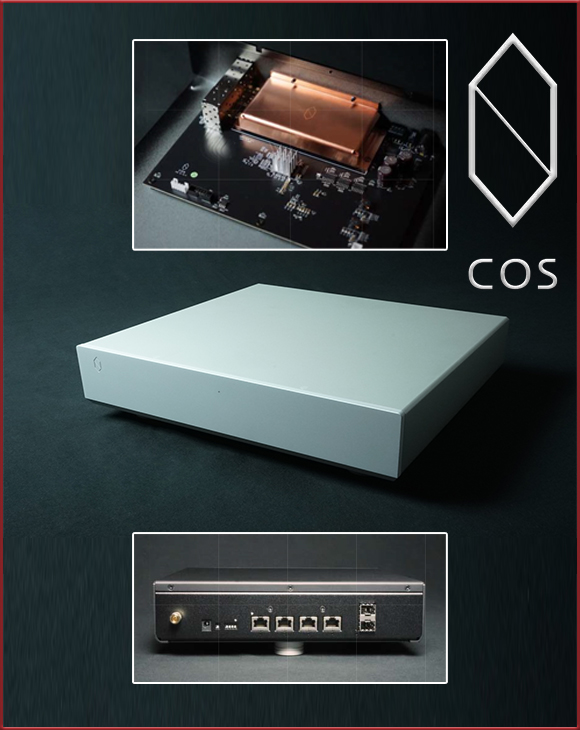
To rephrase a notion attributed to either Stewart Hegeman of Harman Kardon or Peter Walker of Quad, once we have a straight wire with gain, we can't make it any straighter. Why then worry about making it longer or shorter? Actually, team Ixycore would propose to make it as short as possible. That's because they view audio amplifiers as energy converter systems. As parts shrink and circuits gain efficiency, less energy dissipates so more delivers at the speakers. On that score, this amplifier already is as 'short' as they can make it. As to electromagnetic and radio-frequency emissions, Ixycore are equally rigorous. Not only does an internal aluminium wall separate their proprietary SMPS and signal-path PCB, the entire case seals hermetically. As Frédérik quipped, "we don't understand how so many popular class D amplifiers obtain their certifications of conformity with stringent international emission regulations." Hence following their AC power inlet is a special filter. It not only cleans the incoming alternating current but prevents HF noise generated inside their enclosure from infecting our powerline. Concluding my intro is a Gemincore anecdote directly related to the multi-module image of the prior page. This Gemincore circuit ended up in applications well outside audio. Enter a wealthy owner of a 3-masted schooner. He had it equipped with two massive diesel engines but didn't fancy their ruckus whenever he pulled up in a harbour. So René and Nicola collaborated with a specialist in active resonance dampers to decouple his noisy engines from the boat's hull by using multi-strapped Gemincore modules for ultra low-noise very efficient non-audio purposes. There's clearly a direct link between making advanced sound and being as quiet as possible. About the name, 'core' pays tribute to the project of ~20 years ago. 'Ixy' references the Cartesian coordinates of left/right x-axis, front/back y-axis and up/down z-axis. To be pronounceable, 'I' for up/down replaces 'z'. Still, the name's focus is a maximally developed three-dimensional soundfield without apparent origins.
Both Frédérik and René find that extreme resolution from minuscule distortion and noise has their Ixycore amplifier uncommonly capable of staging well outside the speakers—extra-wide not compact 3D. For more visuals, I asked Frédérik whether he could furnish us with any inside or partial assembly photos. He had quite a few but first had to check with his engineers to insure that they wouldn't show details that might jumpstart competitors. Just so, "a good engineer could look at some of our parts and know what they do. But he'd still be puzzled why we put others where we do. This finely tuned circuit leverages more than two decades of hard-earned experience. It has perfected many seemingly trivial things to work in very tight conjunction and control all the performance parameters² such that the circuit works at its optimum capacity. It's not any one thing. It's like a big symphony orchestra where each player's contribution is vital to the end result." As to the sonic progression from Gemincore to Ixycore, "because our feedback loop now includes the filter, the circuit has become essentially load agnostic. Gemincore still favoured 8Ω loads. Resolution and speed now are even higher. That improved ambient recovery and spatial cues, microdynamics and performer modulations of tonal harmonics. But the magic of the original circuit is still there. With Ixycore you can finally hear exactly what your expensive DAC or preamp is really doing because all of it passes intact to your speakers." With the engineers behind both being the same whilst exploiting advancements in parts that didn't exist in 2005, that claim doesn't sound hollow. This concludes my Ixycore coverage until Q4 when actual review samples drop. To hold you over, here's how Dune's God Emperor Leto Atreides II summarized the danger of Ixian computers. "What do such machines really do? They increase the number of things we can do without thinking. Things we do without thinking—there's the real danger." No wonder Ixycore's living god René has no smartphone. For more Frank Herbert trivia, "…though the Ixians themselves favoured cold machine-driven logic over artistic expressions, their creations like the Semuta player were notorious across the Imperium. Semuta was an intensely addictive drug made from the burned residue of elacca wood. Its narcotic effects could only be triggered by certain atonal vibrations generated by the Ixian Semuta player which the nobility used to plunge into ecstatic trances." It's a most suitable quote to suggest that cold mathematical precision—ultra-low measured distortion and noise—can produce intense musical pleasures. Should those require ownership of an Ixycore player to sustain, it'd be mission accomplished.
 There are many examples of what artists imagine the bizarre human/sandworm tyrant of Dune looked like in Frank Herbert's mind. The above illustration is by mohsen_ny on reddit.
_____________________
² From Gemini AI: "Because GaN devices lack reverse recovery losses and feature extremely fast switching speeds, they require significantly shorter deadtimes than traditional silicon Mosfets. Unlike those, enhancement-mode GaNfets have no parasitic body diode. During deadtime, current flows through the channel in the reverse direction. This creates a higher reverse voltage drop, meaning prolonged deadtimes result in excessive power loss and lower efficiency. To minimize this, designers must tune the controller's deadtime to be as brief as possible without risking cross conduction. It's why many modern GaN half-bridge modules integrate their driver directly into the package. In HF power converters and motor drives, minimizing deadtime directly improves output waveform quality, reduces speed ripples and prevents overheating. However, the exact ideal deadtime depends heavily on the specific gate driver, PCB layout and parasitic inductances."