Country of Origin

Reviewer: Srajan Ebaen
Financial interests: click here
 Main system: Sources: Retina 5K 27" iMac (i5, 256GB SSD, 40GB RAM, Tahoe 26), 4TB external SSD with Thunderbolt 3, Audirvana Studio, Qobuz Sublime, Gustard U26 USB bridge, LHY Audio SW-8 & SW-6 switch, Sonnet Pasithea; Preamp: Hattor Audio ARP-S; Active filter: spl Audio Crossover MkII; Power amplifiers: Vinshine/Kinki Dazzle & Audiophonics NCx500 on subwoofer; Loudspeakers: Qualio IQ [on loan]; Subwoofer: sound|kaos D15; Cables: Exact Express Flame, Furutech; Power delivery: 2 x Kinki/Vinshine Tai Hang on amps and source stack, Furutech DPS-4.1 between wall and conditioners; Equipment rack: Artesanía Audio Exoteryc double-wide 3-tier with optional glass shelves, Exoteryc amp stands; Sundry accessories: Acoustic System resonators, AudioQuest FogLifters; Room: 6 x 8m with open door behind listening seat; Room treatment: 2 x PSI Audio AVAA C214 active bass traps
1st upstairs speaker system: Source: Shanling EM7 into Soundaware D300Ref SD transport to Cen.Grand DSDAC 1.0 Deluxe with POW; Preamp/filter: Lifesaver Audio iCon 4SE & Gradient Box 2; Amplifier: Kinki Studio EX-B7 monos; Loudspeakers: sound|kaos Vox3awf; Subwoofer: sound|kaos D12 on twin Nord Acoustic NC500 monos; Cable loom: Exact Express Earth; Power delivery: Vibex Granada/Alhambra, Akiko Audio Corelli Corundum & Castello Solo; Equipment rack: Hifistay Mythology Transform X-Frame [on extended loan]; Sundry accessories: Furutech cable lifts, Furutech NFC Clear Lines; Room: ~3.5 x 8m
1st upstairs headfi system: DAC: Cen.Grand DSDAC 1.0 Deluxe with POW; Headamp: Cen.Grand Silver Fox; Headphones: Raal 1995 Magna, HifiMan Susvara
Desktop system: Source: HP Z2 workstation Win11/64; USB isolator: LHY UIP; LAN distributors: LHY AS6 Pro & SW6-SFP; Ethernet reclocker: Stack SmoothLAN; DACs: Gustard R26II & Audalytic DR70; Preamp: Topping A900; Speaker amps: Topping B200 monos; Headphone amp: Enleum AMP-23R; Loudspeakers: Virtual Hifi Viper; Headphones: Final D-8000, aune SR7000, FiiO FT7, HifiMan Susvara Unveiled
2nd upstairs headfi system: Shanling EM5; Headphones: Meze 109 Pro, Fiio FT3, HifiMan HE1000 Unveiled
2nd upstairs speaker system: Source: smsl PL200T CD transport; DAC: Shanling EM7 w. 1TB microSD; Crossover: Lifesaver Audio Gradient Box II; Amplifiers: LAIV Crescendo Chorus monos; Loudspeakers: MonAcoustic SuperMon Mini with Dynaudio S18 subwoofer
2-channel video system: Source: Oppo BDP-105; All-in-One: Gold Note IS-1000 Deluxe; Loudspeakers: ModalAkustik MusikBoxx; Subwoofer: 2 x Zu Method; Power delivery: Furutech eTP-8, Room: ~6x4m
Review component retail: €499
 |
 |
 |
 |
 |
 |
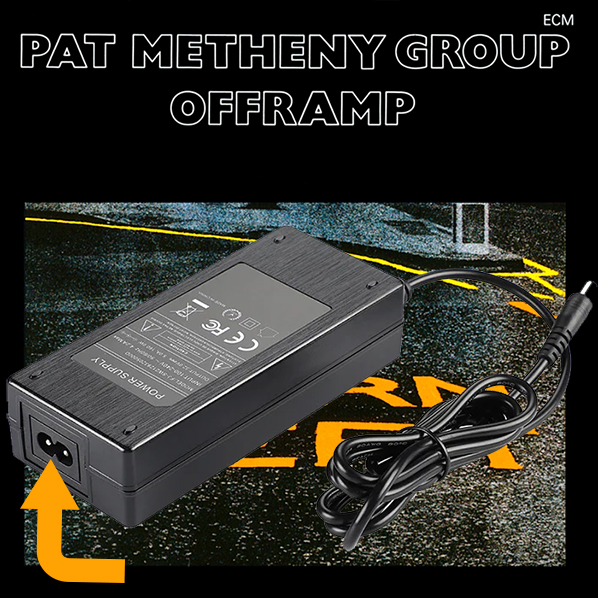 Offramp. It's a fab Pat Metheny album. Its title implies orderly directional traffic. A recent TikTok craze overrides it when teenagers motor down freeways in the wrong direction, upload their cell-captured idiotic stunts in real time then cause fatalities to themselves or oncoming travellers. Audio has its own motorway. Each wall outlet is an offramp for utility power. But that alternating current, one-directional though it may seem, has sneaky motorists driving on it the wrong way. That's retrograde noise which domestic even industrial appliances inject into our hifi gear—some of which acts dirty itself. Under special suspicion are switching power supplies present across all modern homes. They're considered kickback noise makers—onramps for tonal TikTok troubles. It's why better power filters install isolation also between AC sockets. It's an attempt to close the backdoor, enforce one-way traffic and shut down component-generated hash from using incoming power lanes for outgoing accidents. This gets us at the figure 8. It's a line which like a circle has no end. It often symbolizes infinity. In our space it shows up in a dipole's dispersion pattern but also C7 power inlets common with not just electric shavers but smaller hifi kit. The lowly status of such sockets is exacerbated by a virtual absence of aftermarket power cords that fit them. If you've got a figure-eighter, you're likely stuck with whatever excuse for an AC cord on hunger strike came with.
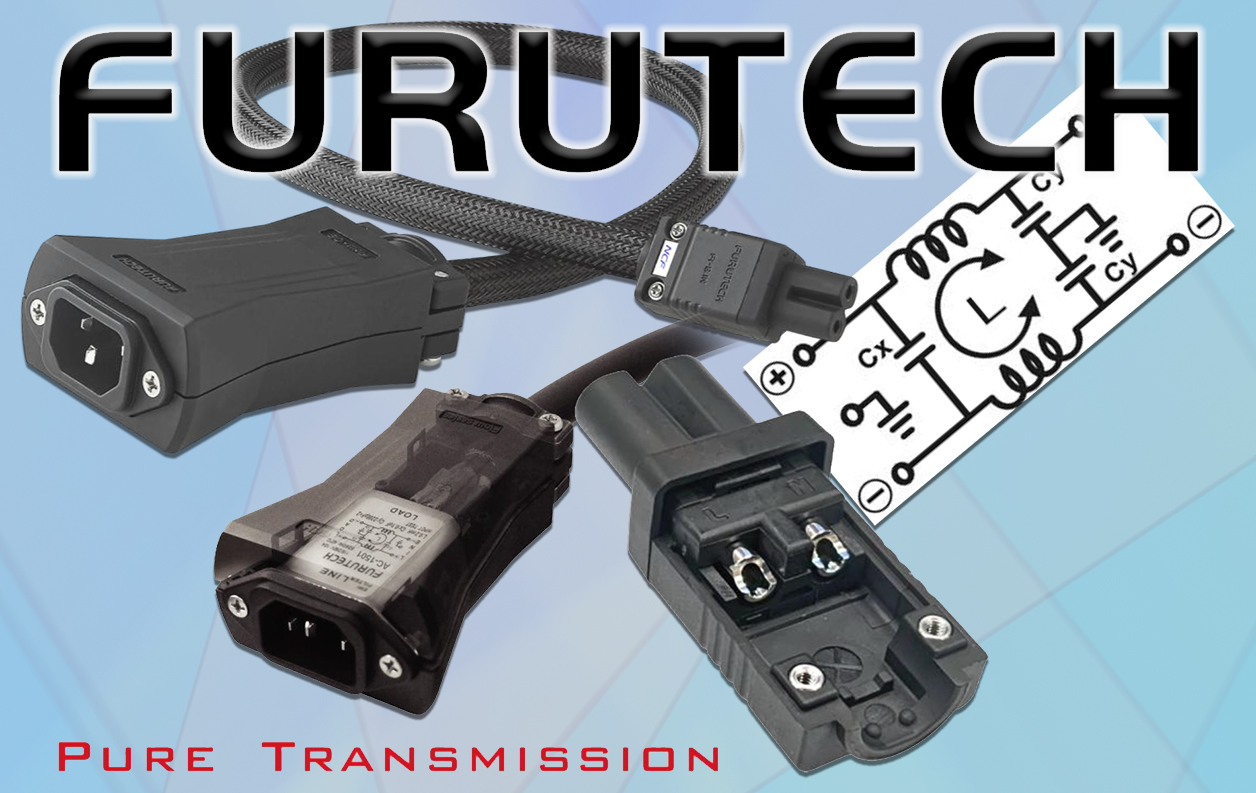
Enter Furutech's Flow-8.1 NCF above. It's no power cord per se but an inline power filter with C7-terminated ~60cm pigtail. Plug said pigtail into your infinity component, a proper 3-prong AC cable into the other end. Presto, incoming and outgoing noise filtration, the latter of particular appeal since it's often flatulent switching bricks that run C7 IEC. As it happened, this very fact enabled today's gig when my factory contact Graeme Coley asked whether I even had any kit stuck behind the 8 ball. I could do him one better. I had two trusty office workers each driving double donuts: Topping B200 monos with laptop-sized external switching bricks like the one at right. I could handle the review request—if he could spare twin samples. Sorry, no mono for this mano! The NCF suffix abbreviates 'Nano Crystal² Formula'. It's Furutech's proprietary piezo-active mix as exploited in all their flagship products for either chassis liners and/or as a material compound in connector bodies. Today's device also encases a noise filter with 0.1µF and 3'300pF micro caps plus 0.3mH coils to reduce AC hash by a claimed 10dB/1MHz and >30dB/10MHz. Both plugs embed NCF plus nano-sized ceramic and carbon particles in the service of policing EMI/RFI hence electromagnetic and radio-frequency interference. There's resonance damping via cable clamp. The conductors are treated with Furutech's trademark α process, a combo of deep cryo plus demagnetization. The Flow-8.1 NCF henceforth Flow is a kind of love letter to smaller more budget components fitted with these often dreaded figure-8 receptacles; and how to get them into proper power delivery.
Why should only the posh boys have all the upgrade fun?










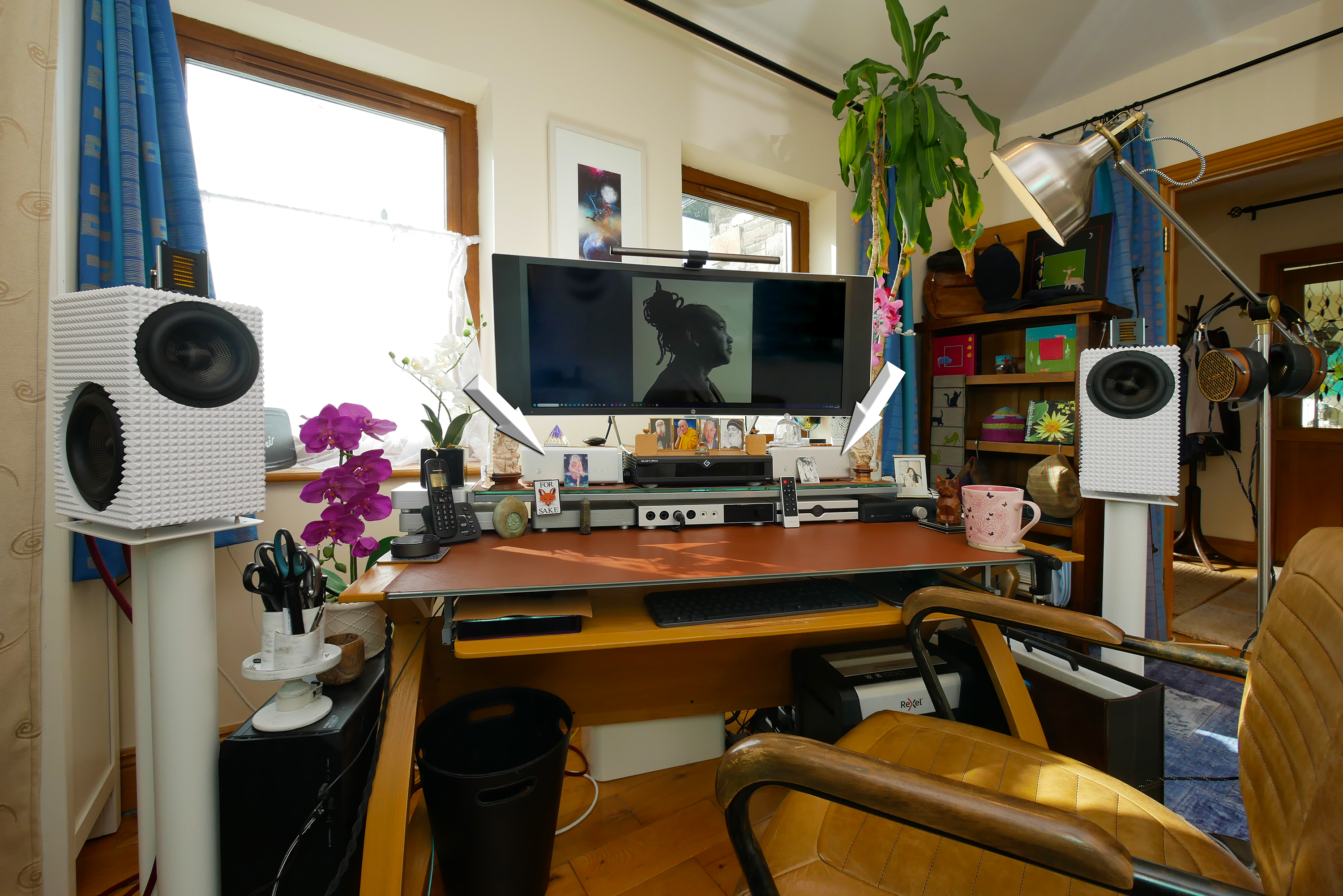
Readers thinking about review procedure already spotted twin variables joined at the hip: Flow itself plus power cords which, whatever I picked, would not be Topping's skinnies. While that's precisely the point of today's exercise and gives its longer legs, it does undermine the strictest isolation of comparative cause and effect. Using Flow changes two things at once. To reduce its impact, I would start with generic C13-fitted cords—far thicker than the stock 8ers but otherwise just as basic. Afterwards Ireland's overcast sky was the limit. Premium power cords on my switching bricks would explore how much daylight might separate such teamwork from Topping's baseline. Audiophile observation has long been that switch-mode power in particular is very sensitive to how it connects to the grid. Here was an opportunity to test just that. Bunk or bingo? The below system would tell. Its signal path: generic router ⇒ LHY AS6-Pro network switch ⇒ fibre-optics ⇒ LHY SW6-SFP network switch ⇒ Win11/64 PC with Audirvana Studio ⇒ Stack Audio LAN regenerator ⇒ Gustard R26II discrete R2R DAC ⇒ Topping A900 preamp ⇒ Topping B200 monos ⇒ Virtual Hifi Viper monitors. An alternate path exits the PC over USB into a LHY UIP bridge feeding an Audalytic DR70 discrete R2R DAC then enters the Topping preamp on a second input. Local and Qobuz Sublime cloud files travel the LAN. Spotify Premium/YouTube propagate via USB because Audirvana can't integrate them over the network. The amps playing truth serum for these Flow sessions were discrete class AB 200wpc chaps of complex multi-stage nested feedback generating sterling distortion/noise readings. Their external switching bricks rate at 64V/4A so 256 watts—far stiffer figures than the 5-15V/2A typical for small network switches, USB bridges, half-size converters and micro phono stages. Did that stack the deck in favour of Flow and its option to use python-esque power cords? Having naught else to try, I'd never know. As most winners would say, by hook or crook doesn't matter. Just come first. If Flow did, let's mention the obvious to clear the path. Bolting a €499 anything to a ~€599 Chinese high-value amp just to go faster should strike most as insane. Without knowing how good these amps are, they'd advocate for getting a better €1'100 amp instead. Adding a €1'000 power cord to Flow to infuriate the peanut galleries further then asks for a straightjacket at the audio asylum. Fair enough. I made an appointment with its psychiatric superintendent to reserve my padded cell. Now let's turn that corner.
Before we do, a brief recap. AC supplies draw constant utility power across our power cables. That makes them de-facto extensions of our AC supplies. The lower the Ω of these cords, the higher their conductive mass, the more current can flow on demand, the more quickly storage capacitors recharge. Despite the argument that miles of Romex preceding our wall outlets nullify whatever designer stuff we plug into them, to our gear the power cord is the first thing it sees. It's not the possibly kilometres of utility wiring that connect our dwelling to the nearest mast-fitted transformer which here in Eire steps down 110-400kV overhead power-line voltage to the 230V our wall outlets present. Just like a water filter which sits just prior to our kitchen faucet, a noise-filtering power cord inserts exactly where it should; closest to the thing we mean to filter. By extension, our music signal is simply modulated AC. Utility power is the very stuff which moves our speaker drivers to push the air we perceive as music. Discounting power delivery just because it happens out of sight behind our gear and racks is folly—if we chase superior sound. That pursuing a new speaker, amp or DAC is far sexier is equally obvious. Here it's the serious crowd which knows and practices that 'the boring black and smelly stuff' of premium tyres, brake pads and fuel are mandatory to optimize a ride's speed and handling at the racetrack. Weekend warriers just wax and polish theirs. As Yogi Berra said, "when you come to a fork in the road, take it."