"This 25cm woofer works together with the rear-firing passive radiator. From a Physics view this is similar to a vented cabinet by extending the response by half an octave. At low SPL both loading types operate identical. However, they differ at high levels. The bass-reflex tube has a small cross section to deliver correct acoustic pressure such that when the amplitude of the sound wave is high, air velocity too is high. But at high speeds, airflow changes from laminar to turbulent which we hear as chuffing and compression. The passive membrane is larger than the woofer. Even at maximum sound levels, its movement won't exceed a few centimetres so cause no distortion or compression. Using a passive membrane is more expensive and complicated than a bass-reflex pipe but superior for LF dynamics. We have a lot of experience with passive radiators from our other models. The midrange too uses neodymium which in addition to high efficiency allowed for a significant reduction of size. This rare soft dome is just 6cm across. We operate it from 300Hz to 8kHz which moved both filter frequencies far from the presence region where human hearing is most sensitive. In the key part of the range, we run a single driver without overlap. Meanwhile the tweeter features a ferrite magnet. This was deliberate as it gives us much greater mass so a more stable base for a fast-moving fabric diaphragm. Being fixed in the centre operates it closer to a ring radiator than classic dome. It reduces the length of the delayed acoustic wave at the maximum frequency by half. As a result, the driver reproduces bandwidth of up to 40kHz rather than the 20kHz typical for a soft dome. The crossover is the third key element of any speaker. Unfortunately it's invisible so often underestimated. A carelessly designed overly simplified crossover can ruin the most beautiful drivers. Properly designed, a crossover has three functions. First, it distributes the electrical signal to in our case three drivers so that each operates across a limited but optimal range. Second, it sets the correct frequency response for the entire speaker. Third, it corrects the time alignment between drivers.
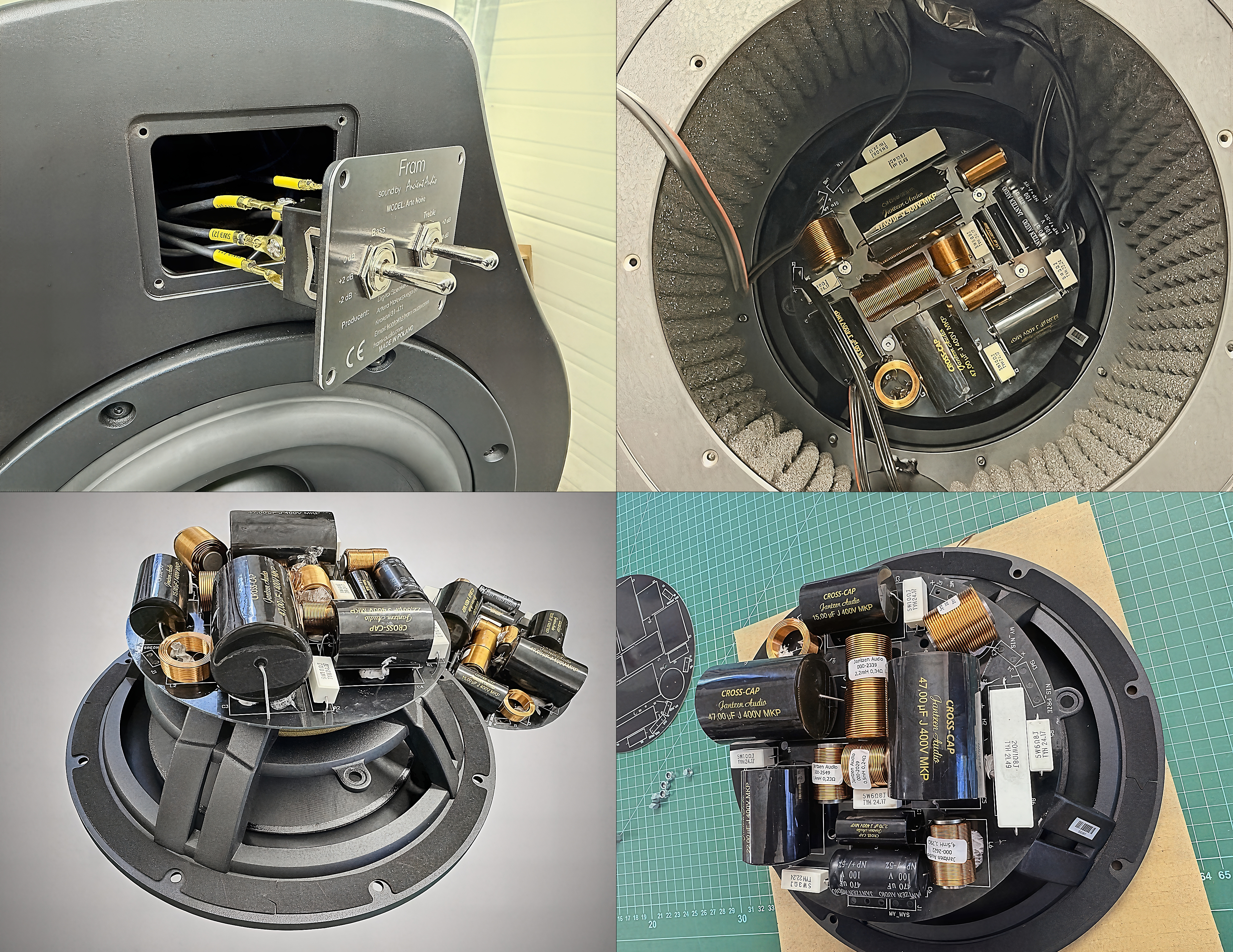
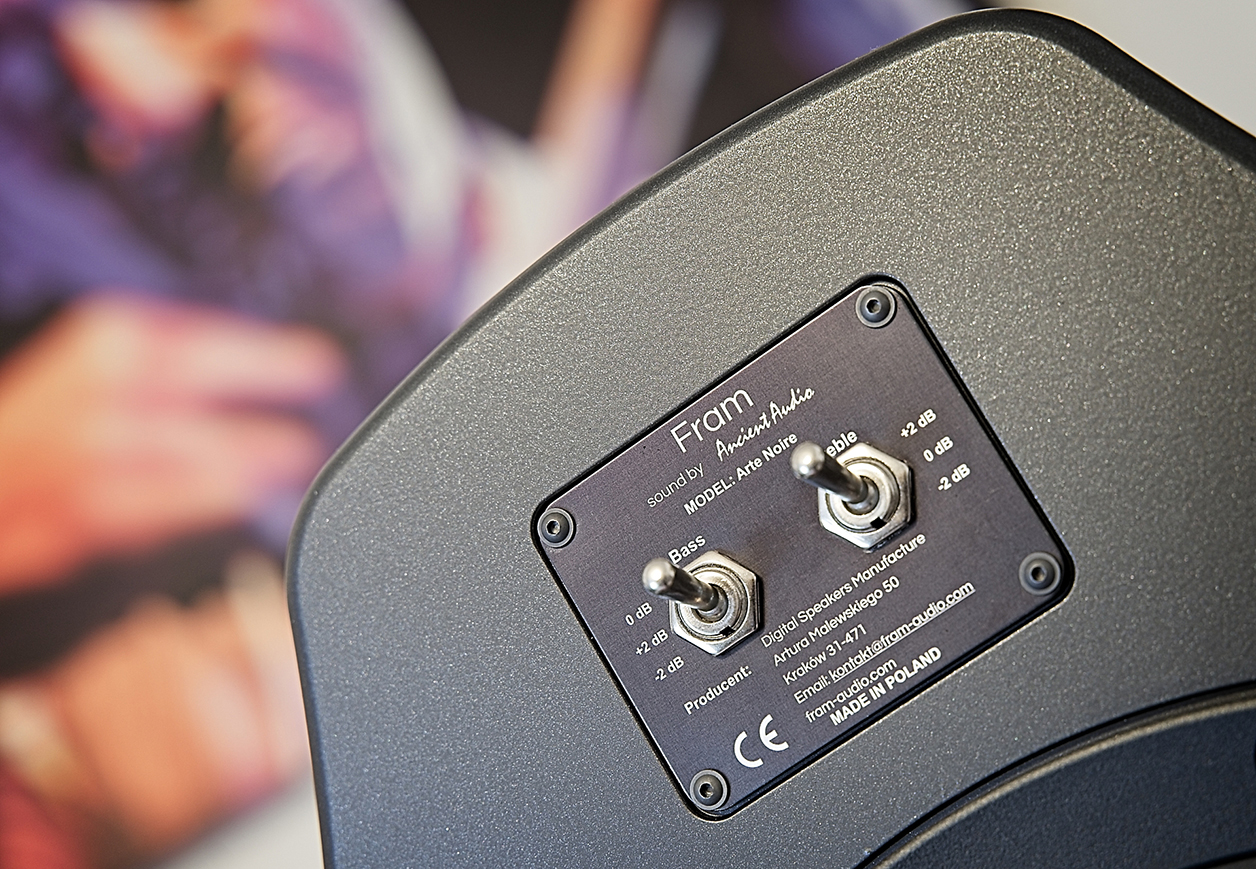
"This is very important when most instruments generate sounds across a wide frequency range. When plucked strongly, even a double bass generates not just low content but harmonics across the entire band. In a three-way speaker as ours, a single quick pluck of a string or a snare drum hit must reach the listener at precisely the same time even though it is reproduced by three different drivers simultaneously. Only correct time alignment preserves the dynamics of the original sound. If any part of the range accelerates or delays, playback dynamics limit and the reproduction of space and image placement suffers. It's why the development of the Arte Noir crossover proved to be most time-consuming, involving hundreds of hours of listening tests, minor adjustments and fine-tuning. We tested the speakers in various rooms, on tube and transistor amplifiers, acoustic and electric music. During the most critical tests, we compared it to drums, guitar, violin and the human voice. The crossover connects multiple filters in series and parallel. The resulting tweeter high-pass is 4th-order, the midrange uses a set of linear and elliptical filters to achieve appropriate slope steepness and the woofer low-pass is designed in a similar manner. During our auditions we saw how depending on electronics and room acoustics, some mild response correction would be useful. Hence we offer three-position treble and bass adjustments implemented in the crossover which is unique but turned it into a complex 17-part affair of precisely matched values to become labour intense during manufacture and testing. This is significantly different to typical high-end speakers whose crossover are often primitive by consisting of just a few components."









Before we go sonic, some practical issues. Depending on size and weight, setting up speakers can involve real work. Here Arte Noir are interesting because their tripods place them higher than normal. Whether we opt for the metal or wooden supports, tilt and toe-in require no moving, just loosening wing nuts. With the passive radiator in the rear, front-wall distance doesn't seem overly critical. Already 20cm should work fine. The tripods simply have a large footprint so we must decide whether to orient one leg in front or two. Then come the rear-panel adjustments. Sensitivity of 91dB is quite high, impedance 4Ω, rated power handling 100 watts. Both my solid-state amplifiers of class AB 300wpc/4Ω Circle Labs M200 and class A 37wpc/8Ω Grandinote Shinai did an excellent job. I thus conclude that these should perform well with any high-quality amp of decent output. Even my 8wpc 300B SET worked well at low volumes though didn't scale to Rock or symphonica at serious levels. Still, in a small room it could be a great partner. It also showed that raw power is far less important than quality. So how did the Arte Noir perform? Quite different at first. To be honest, it took me some time before I could focus on the actual performance and appreciate it. At first I was confused by the sound coming from above. Despite my downward tilt, they still cast the musical image higher than even large floorstanders in a room where my seat is at 2.5m. If that distance doubled, unusual height might not be the first thing to notice. Anyway, it took me a while to get used and only once I had moved past this aspect could I start my assessment.
What then became the initial impression? It was of a classy, refined and somewhat laid-back sound with powerful well balanced and natural bass. I quickly realized that one of the strengths was an inner calm, a combination of perfect coherence, neutrality and lack of nervousness. This sound wasn't cold nor did it lack energy or dynamics. These qualities along with punch only emerged when needed then were fully controlled. And yet once musicians went crazy, Arte Noir followed suit. That was truly impressive even for quite an expensive speaker. The Fram may sit high but remain mid-sized monitors. They include seemingly conflicting features in their ability to completely disappear and create a spatially very immersive experience yet even with both switches at 0dB still act like floorstanders in that their bass is truly turned on and at times gets even visceral. Given enough power, they easily filled my entire room. When I listened to Dhafer Youssef's Shiraz, bass was truly present. It seemed there was a lot of it but it did not dominate. It simply supported and completed all instruments within their respective ranges. The surprising part was that I not only clearly heard the lowest notes but felt them in my bones. To be clear, these weren't 20-30Hz sounds but felt like it. That's not small feat for stand-mounted speakers. So I had truly deep visceral bass that was well-controlled and punctual which enhanced the rich dense colourful very natural midrange as well as the open sonorous treble for great coherence. That become the recurring leitmotif for whatever album I listened to over several days, whether from digital folders files or vinyl records.