Hifi treads a thin line between so-called designer and audiophile products. Some look good, some sound good and the most sought-after category combines great looks with ultimate performance. Clearly today's Arte Noir speakers are designer product but my auditions proved that they are more than just a pretty face; much more. Not that long ago I reviewed the Ancient Audio Silver Grand Mono II, the latest incarnation of the iconic 300B monoblocks developed by Mr. Jarek Waszczyszyn. After many years of admiring his brand from afar, this was my chance to experience its top model in my own room. Those who read the review know that it was a unique experience for me as these monos offered performance among the best money can buy. If you have followed Ancient Audio, you realize that apart from the amplifiers and CD players they're best known for, Mr. Waszczyszyn has developed speakers as well. Models like Wings and Vintage Ribbon showcased his talent, allowing him to create truly high-end speakers to best match his own electronics. Later he turned to smaller active designs including studio monitors for professionals like the Master Oslo. About 10 years ago he founded a new brand with some industrial design specialists. Named Fram, it at first offered relatively inexpensive active speakers. One of their key features were elegant aluminium cabinets. Over the years Fram evolved and today they only offer passive speakers ranging from the medium-priced Fram Midi 150P through the larger Fram Arte to today's quite expensive Fram Arte Noir. All of them are stand-mounts. Later this year I'll get a chance to assess the Midi 150P. Today we start at the top.
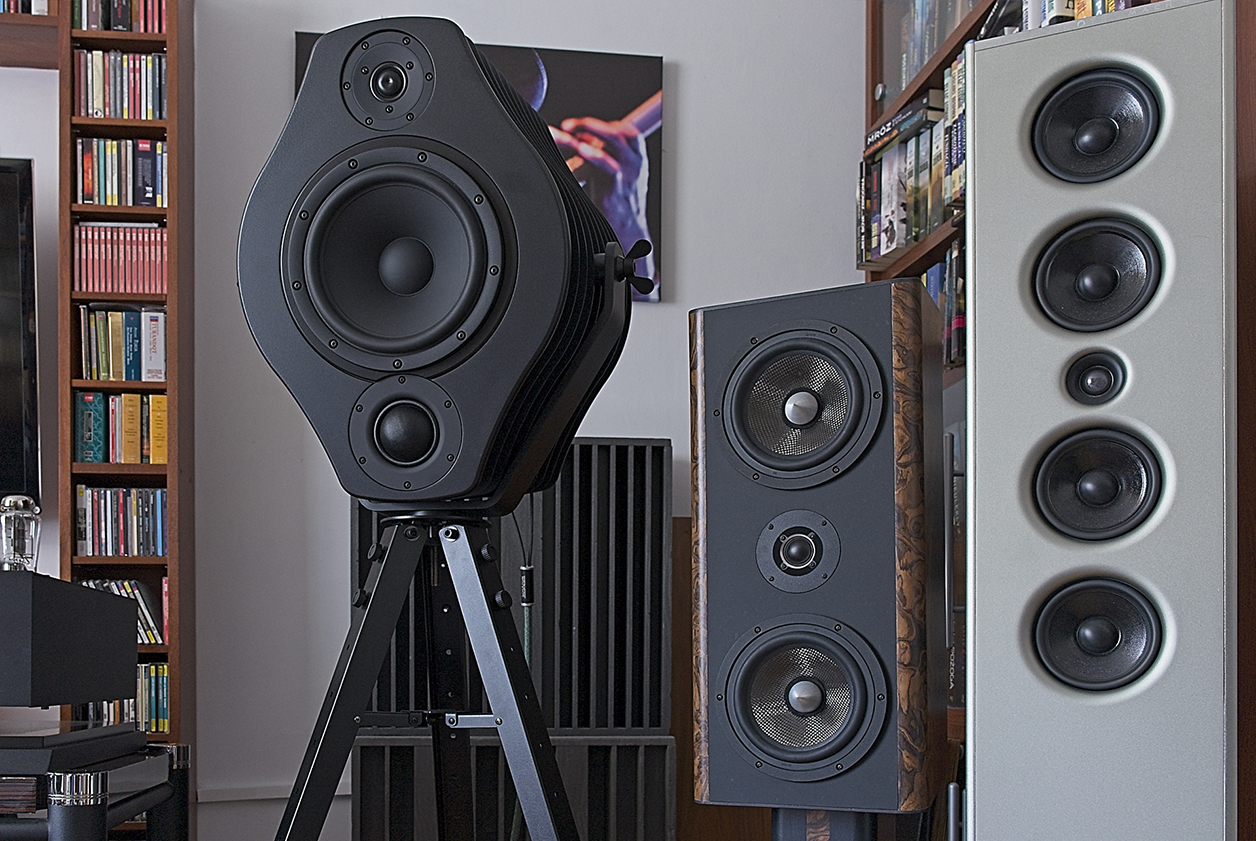
It is not that simple to develop a hifi component that is not just another representative of its kind but has features that stand out from hundreds even thousands of competing offers. When it comes to Arte Noir, the first less common feature relative to its size is being a 3-way. These are pretty large though don't come close to a Harbeth M40 or similar monitor beast. Most potential competitors of similar size are 2-ways as is Fram's own Arte. The second feature of note is that instead of the common bass-reflex, sealed or rarer transmission-line bass loading, here we get a large passive radiator. What makes it truly stand out is of course the form factor. It's what first caught the eye. The inspiration is quite clearly a stage light. It's all about the tall tripod and how the speaker mounts to allow us to point it exactly where needed. Fit and finish are excellent, stunning even. To learn about the innards, here is Jarek: "Speakers are the most important most difficult component of the audio system to design. On first glance it looks simple. Enclose some drivers in a box. Done. But a speaker is somewhat similar to a violin with its sound box and strings. Yet despite looking the same, there is a long way between a Staaga violin and Stradivarius. The most visible part of the speaker is its cabinet. It must be visually attractive when speakers are more seen than heard. My architect wife rightfully reminds me that audio equipment is seen 12 hours a day but at best listened to for only half that time. Hence looks are very important. It is also true that as an artform, music is about emotions. The appearance of our audio toys often suggests what the ears should expect. That is why at Fram we strive to perfect the aesthetics and appearance of all our designs. Deep knowledge of technology and production processes frees our imagination. This is how the first Fram models in the Mini / Midi / Maxi series came about as simple but flawlessly executed aluminium cuboids which met the expectations of music lovers of both sexes.










"The second series of Midi 120/150 and Maxi 150 further refined this concept as award-winning active designs. However, it turned out that more sophisticated buyers feel limited by active speakers. So we returned to passives sophisticated and suitable for medium to large rooms. For adequate bass performance and power handling, we needed the right drivers. But what cabinet to house them in? As we considered various concepts, I was just finishing a miniature car/camper hifi set. The limited dashboard space required something neat and aesthetically pleasing. I made small speakers in the shape and size of old bicycle lights. When the rest of the Fram team saw them, it birthed the concept of a larger speaker in the shape of a classic stage reflector. To be honest, I was not convinced. Fram's activities conduct in multiple locations which at times strains cooperation. However, it also has advantages as we can independently refine many ideas. When I saw the prototypes Tomek and Adam designed, my jaw simply dropped. These were large two-way speakers featuring a 24cm Satori woofer and small ring-radiator tweeter. We named them Arte because they were a fine piece of art. The idea of large stage lights turned out great but led to enormous work to divide such complex cabinets into parts and develop individual tech processes for each. Even our external ribbing mirrors the enormous heatsinks of kilowatt stage reflectors whose large bulbs horribly heated up their entire structure.
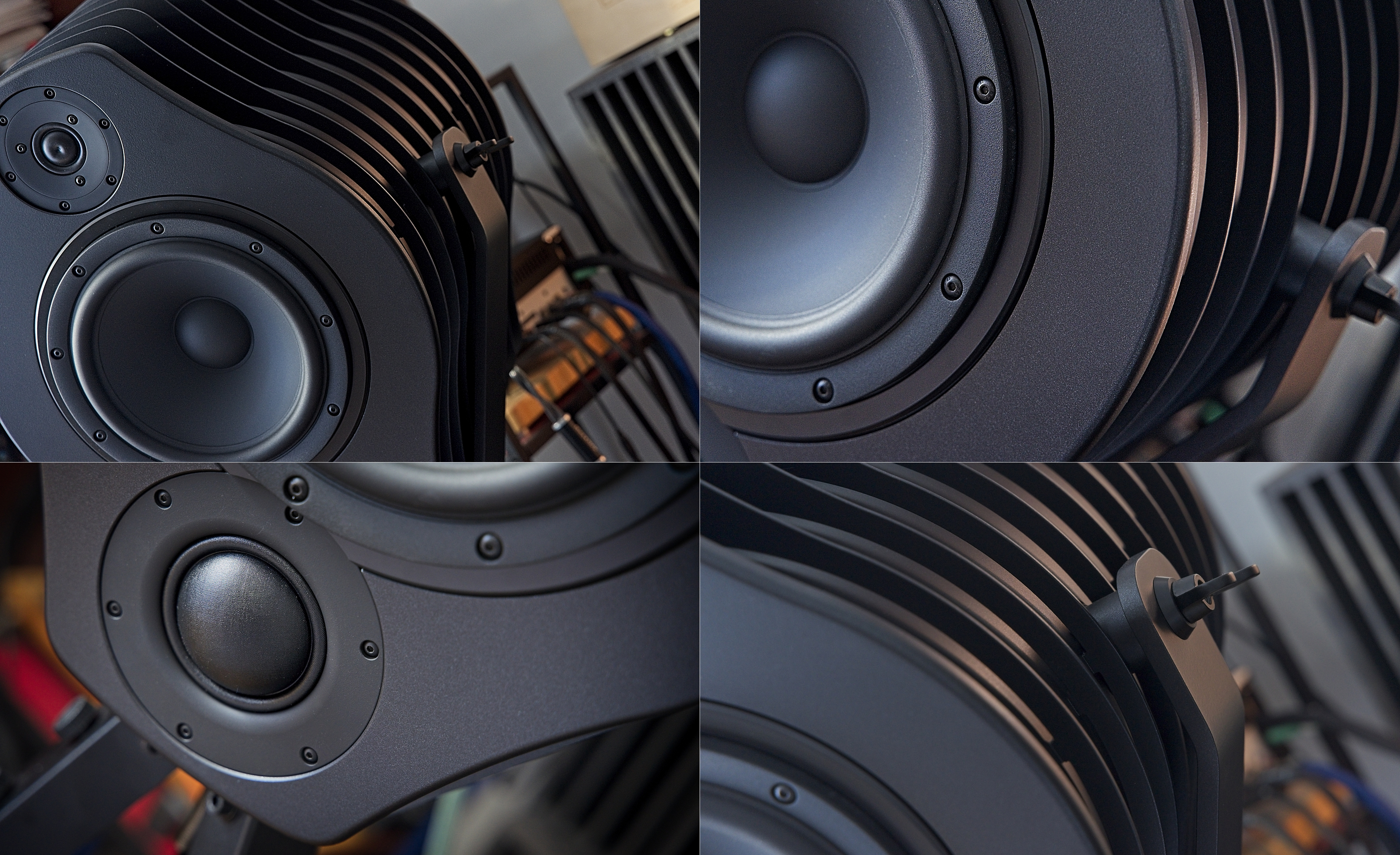
"The speaker's shape perfectly suggests an on-stage atmosphere. Just as the reflector illuminates the stage with light, so does the speaker fill the stage or room with sound. The concept and form of the first Arte speaker were recognized in the final stage of our Good Design utility art competition. Its sound was widely acclaimed but we still believed that the concept's potential wasn't fully exploited. Combining a large woofer with a small ring radiator was extremely difficult and the crossover featured 18 parts. Yet we were not completely satisfied. That's how conversion to a three-way with extra midrange arose. The latter placed at the bottom front to replace the bass-reflex port of the previous two-way. We picked an excellent though difficult-to-implement soft-dome midrange with neodymium motor. To augment the woofer which had lost its port, we added a passive radiator to the rear. All four drivers are from the Danish/Indonesian company SB Acoustics. The woofer uses a very powerful neodymium motor whose high magnetic flux in the gap ensures high efficiency despite a 23mm long voice coil. At the same time, induced currents insure adequate self damping. The coil supports linear excursion of 17mm so even at very high SPL, operation remains linear without dynamic compression. Due to our cabinet specifics, the driver underwent modifications to adapt its Thiele-Small parameters. Our aperiodic bass loading supports fast impulse response."