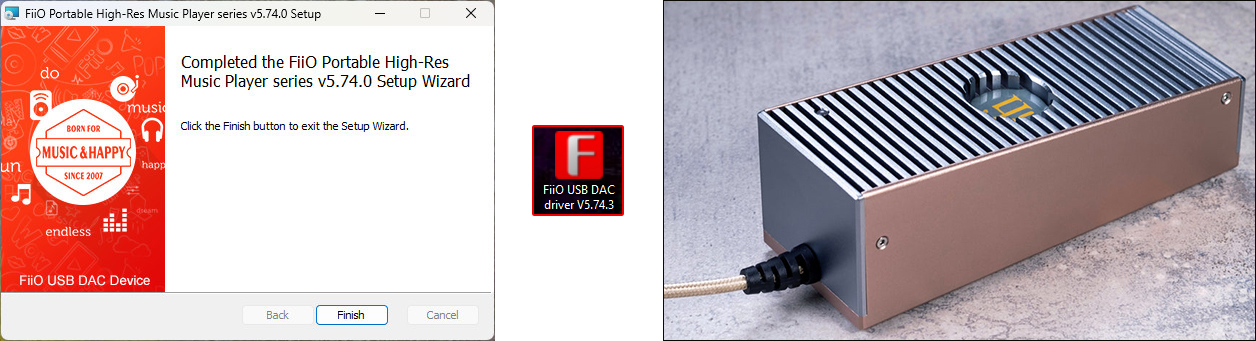
In use. To stream beyond UAC 1.0's 96kHz limit—I have Audirvana's SoX upsampler set to 176.4/192kHz—I installed this FiiO Windows driver.
To explore external power, I had this €319 12V/4A iFi/SilentPower iPower Elite¹. To contrast can-amp chops, the K15's analog XLR outputs would feed a €399 aune N7 whose sticker still felt appropriate by subtracting all digital features. Reaching for €2K+ dedicated head amps seemed rather beyond the pale. Swiping the home screen to one side opens the 'Settings' access panel, swiping to the other 'Work mode' i.e. inputs and streaming access, swiping down the VU meter where available. Mains power switches via rear toggle, making the frontal knob a manual standby switch. Whilst set to 'on', the remote offers its own standby function wherein "the main control and microcontroller units continue to operate in low-power mode". We can code the volume knob to black out the display with a brief press; or instead mute the sound. Volume spans 0-100. If you've owned a FiiO player, it's all perfectly intuitive and familiar. Everyone else has the very comprehensive manual.
____________________________
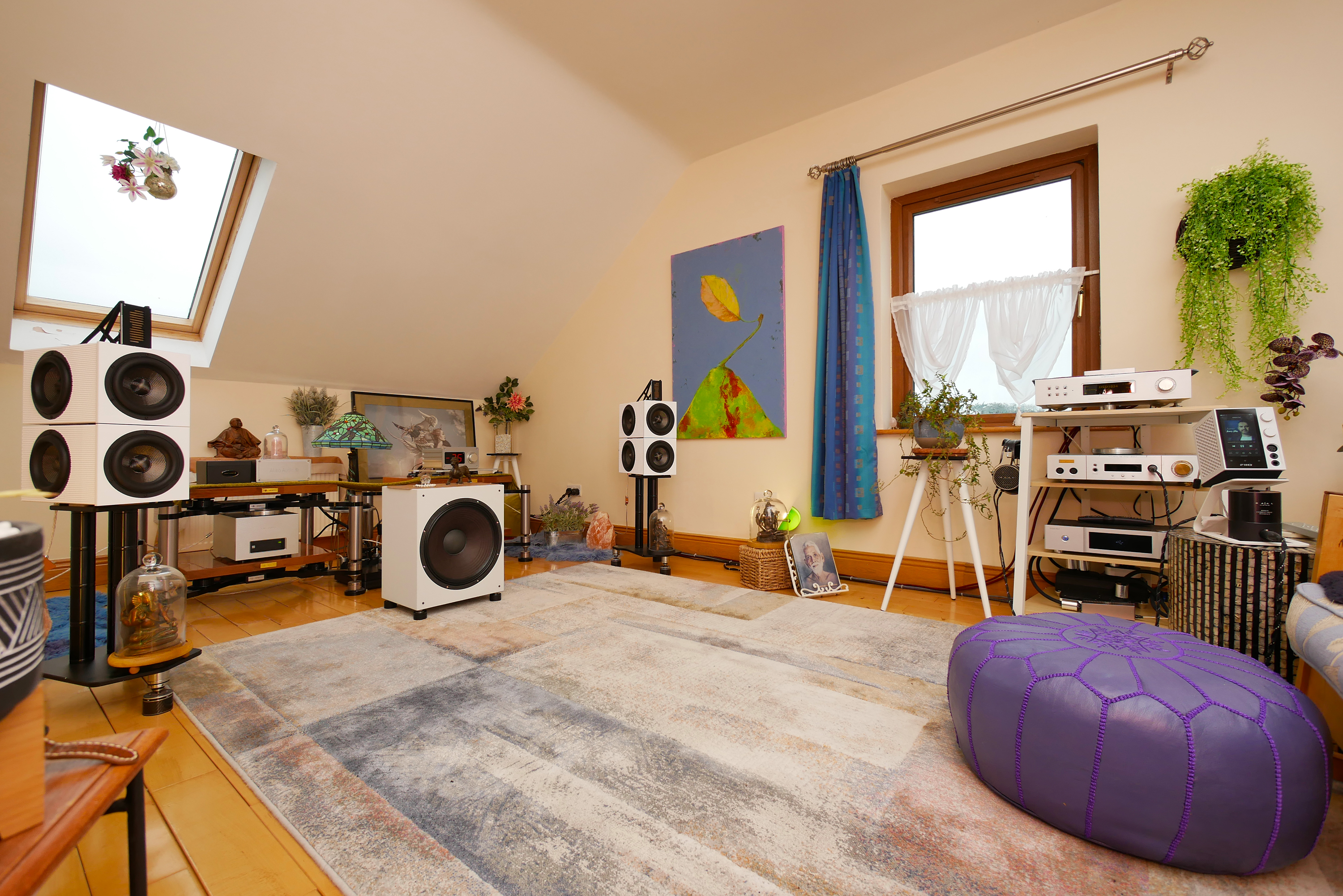
¹ The 15V version of this comes standard with my €3'295 iFi flagship DAC. It includes spread-spectrum active noise cancellation for a claimed noise floor below 1µV. But it isn't a linear job which most 'go offboard' shoppers tend to think is superior by design. My experience says, not necessarily. Digital seems most responsive to noise interference. By that metric, for me the supply with the lowest radiated/injected noise wins regardless of topology. It's why I bought this one for my upstairs FiiO R7 as shown next.
When my UPS tracker arrived, I asked my factory contact this question. When we choose the external DC input, does the internal PSU bypass completely? Or does it still power certain functions and the external supply now gets dedicated to say the analog board? "When the external DC input is chosen, the internal power is blocked 100%. Now the external DC powers the entire device."








On behalf of Hifi Klutzes United, a request for FiiO's firmware fanatics. Please transplant the overlay screen from my older R7 to the new K15 so that whenever one switches the rotary to 'LO', the display warns of a now full-scale unattenuated signal being sent to the downstream gear and only activates said feature after we acknowledge our wish to proceed. After all, a visitor unfamiliar with LO being shorthand for line-out could play around and cause a heart-stopping surprise. Even someone familiar could make an unintentional mistake by simply moving the rotary one click too far. Et voilà, the extent of my reviewer critique. What follows will be unusually terse for good reason. The K15 is a very finely built compact. Its manufacturing maturity shows everywhere. Mirroring the petite but precise knobs, sonics are highly resolved, light filled, nimble and fine boned. Unlike my older R7's chip-based THX power, the now discrete output stage no longer exhibits that subtly perfunctory—hyper-controlled, damped, dry-ish—feel. As both a DAC/pre into speaker amps and headphone driver, the refreshed tuning has more fluidic elegance. Whilst black values hence colour saturation didn't match what 12 years ago was a (cough) €9K machine from hi-tech Taiwan, subjective depth of insight was actually greater. This even influenced out-of-phase effects placing more widely off-axis particularly over my Viper monitors. What's a digital decade in dog years? It must be a toothless old canine when on the resolution score from superior timing, the €599 K15's AKM silicon wasn't at all embarrassed. That said, the overall tonality did shift deeper into lucid mode so away from the bigger deck's more muscled body. I thought it a fair trade. We give up something to gain something. These gains were in subjective speed. That won't play a 3'55" tune ten seconds faster. Instead it expresses itself as more finely articulated enunciation. Sounds start and stop even better defined and more discrete so individualized. Nothing mumbles like so many current actors do where additionally, their dialogue bleeds too deeply into location din and sound effects. If that were desirable, wouldn't a Jazz quartet's lead singer sit down behind the piano and drums rather than stand in front? No such nonsense here. If music were a movie, even against busy action the K15 renders it brilliantly intelligible. Compared to Luxsin's X9 used 'raw' hence with no applied EQ or crossfeed, I thought FiiO's sonic textures more sophisticated; a bit how resampling to DSD512 informs spatiality. Against aune's discrete class A headamp, FiiO's headphone drive wasn't as colour-saturated or locomotive. Where I suspect the K17 might outsmart the K15 is by going back to the well of my COS D1 for greater weightiness. When asked whether I should review the K17, my factory contact demurred by calling it "too similar". At €400 more, it's perhaps no wonder why I wasn't asked to make that comparison.
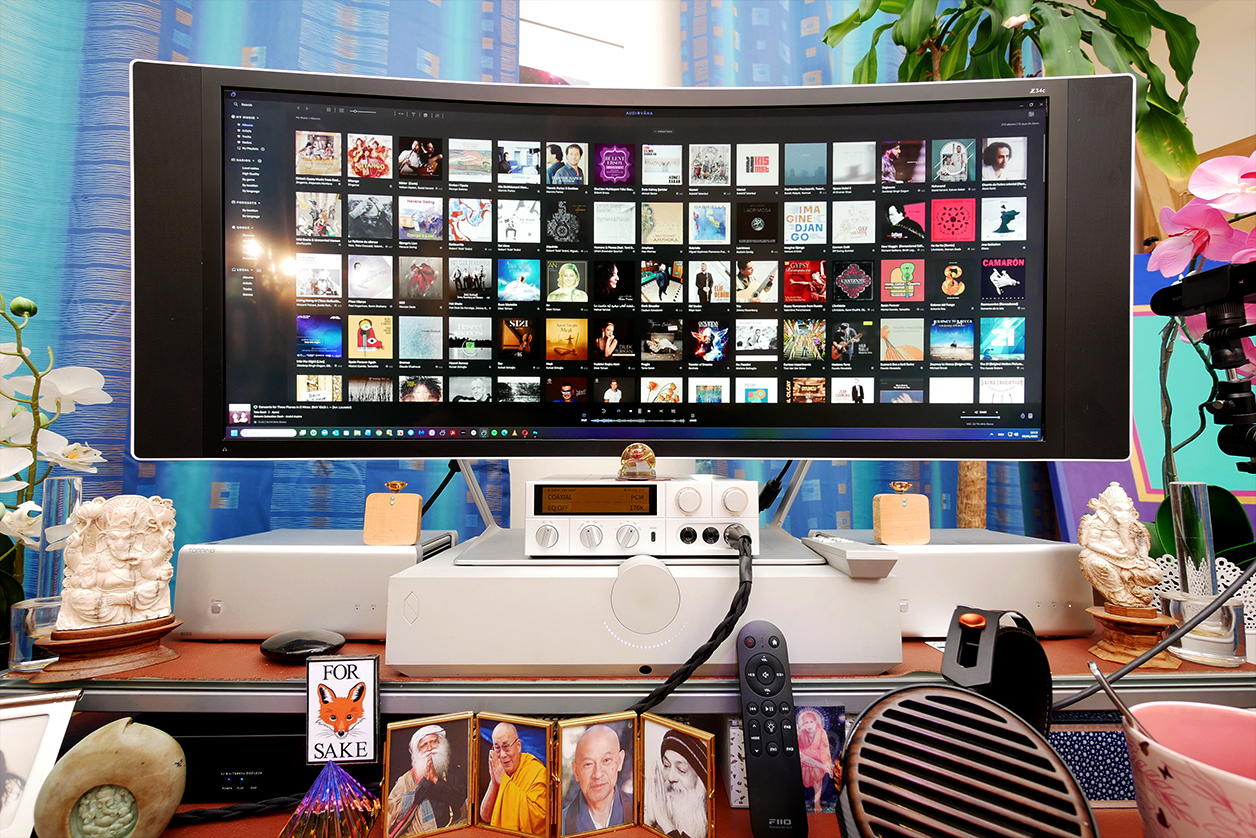 In coax mode, the VU meter option isn't available.
Saying naught else, those two words already unlocked the motherlode. The K15 is fine value. In SH gain, add the companion FT7 planar flagship [foreground above] and have yourself a very merry ambitious HeadFi system looking for a USB-C or LAN signal. Though more hookup options exist, those two will probably be most popular. I heard no need to alter any headphone tuning with the browser-based EQ and my aftermarket iFi/SilentPower PSU made very little difference beyond sharpening contrast. What's more, in PRE mode using the XLR outs into Topping's extreme-rez B200 monos, I observed no sorry drift into whitishness, just a more quicksilvery fleet-footed gestalt which prioritized spatial mapping and image specificity over my prior connection which played up the R&R of Relaxed 'n' Robust. The FiiO was a StarTrek fan where space is the final frontier. Hello superbly specific wide-open imaging. For once I won't use more words to keep our focus squarely on this takeaway. Twelve years after my full-size D1 touched down, I'd be pleased enough to use FiiO's half-sized K15 instead – at 1/15th the outlay but with the added functionality of HeadFi.
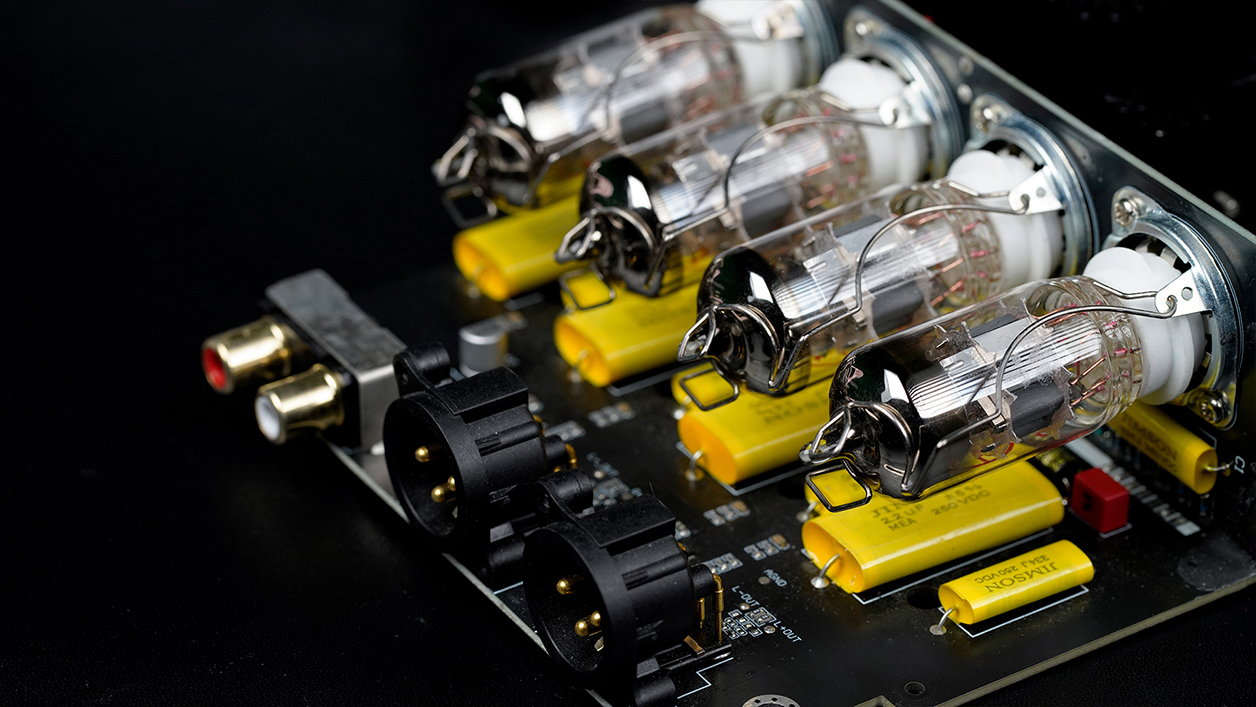
If that's not progress, what is? FiiO just don't stop there. In the same chassis minus all the interactive features but instead a genuine quad so balanced E88CC tube stage running at a very low ±28V for long life and barely any voltage gain, there's the Warmer R2R Tube DAC; for just €379. Can you hear the competition groan? FiiO are on a real tear. The K15 is just one of the more recent pit stops on an ongoing victory lap. Can you blame me for thinking FiiO to be one of the most exciting brands currently working this space? Or as my pal in Berlin occasionally sunning in Lisbon put it again, "their hit-to-miss ratio is unusually high. When they get it right—and they often do—they get it really right." Count the K15 as a proud part of that really right FiiO crew…