Here's another aspect of review coverage. Some companies are from 6-24 months behind delivering their goods. Others ship when they said they would and introduce new stuff regularly enough to fill unplanned gaps caused by the other guys. On that score FiiO are quick draws and fast reloaders, just not from the Wild West but Far East. For a video recommendation that explores the Wild West of the East, consider both seasons of the American television crime drama Tokyo Vice based on the real-life memoir of Jake Adelstein who worked as a foreign journalist at a major Japanese newspaper investigating the local Yakuza. It's a fascinating immersion into Tokyo's underbelly not seen by hifi-show tourists. Back to China and commerce not crime, FiiO deserve props for their comprehensive product documentation. After all, the intel and images on these intro pages aren't mine. I pulled them off their product page. Selling requires telling a story. Build interest. Craft expectations. It's a skill FiiO have clearly honed better than most. It also works on reviewers. Yellow's solicitation just mentioned a model name. Sealing the deal so selling it was all done by its webpage. Such marketing basics are often neglected by smaller outfits without a public-relations staff. But as we all know even if we don't practice it, 'build it and they'll come' is a lazy myth.
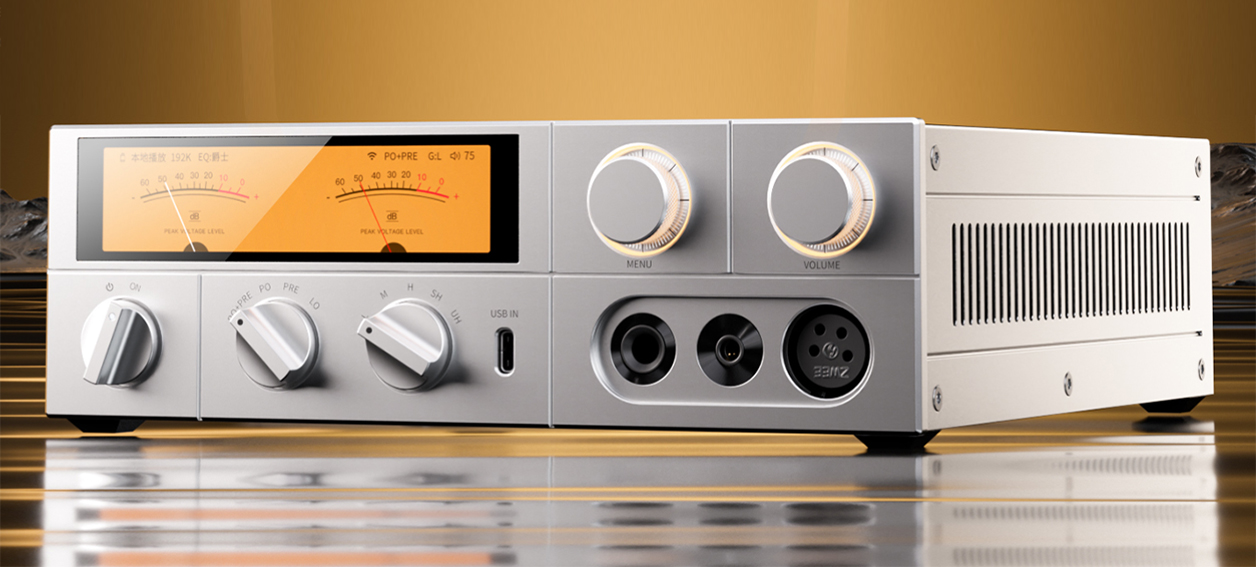
Now we've got most the basic K15 features which include playing host to external USB storage and 1Gbps RJ45 streaming though no embedded Connect services but certainly smartphone/tablet control. As a WiFi abstainer due to radiation-induced headaches, I'll leave related commentary to more impervious brains. My use scenarios would be USB streaming via my Win 11/64 workstation with Qobuz-embedded Audirvana Studio and Spotify Lossless; balanced preamplification into my desktop's Topping B200 monos; and HeadFi with FiiO's own FT7, aune's SR7000 and Final's D8000. In short, office work as per below. The K15 would dislodge the Kinki headamp and bypass the COS Engineering DAC which doubles as riser for my curved computer monitor.
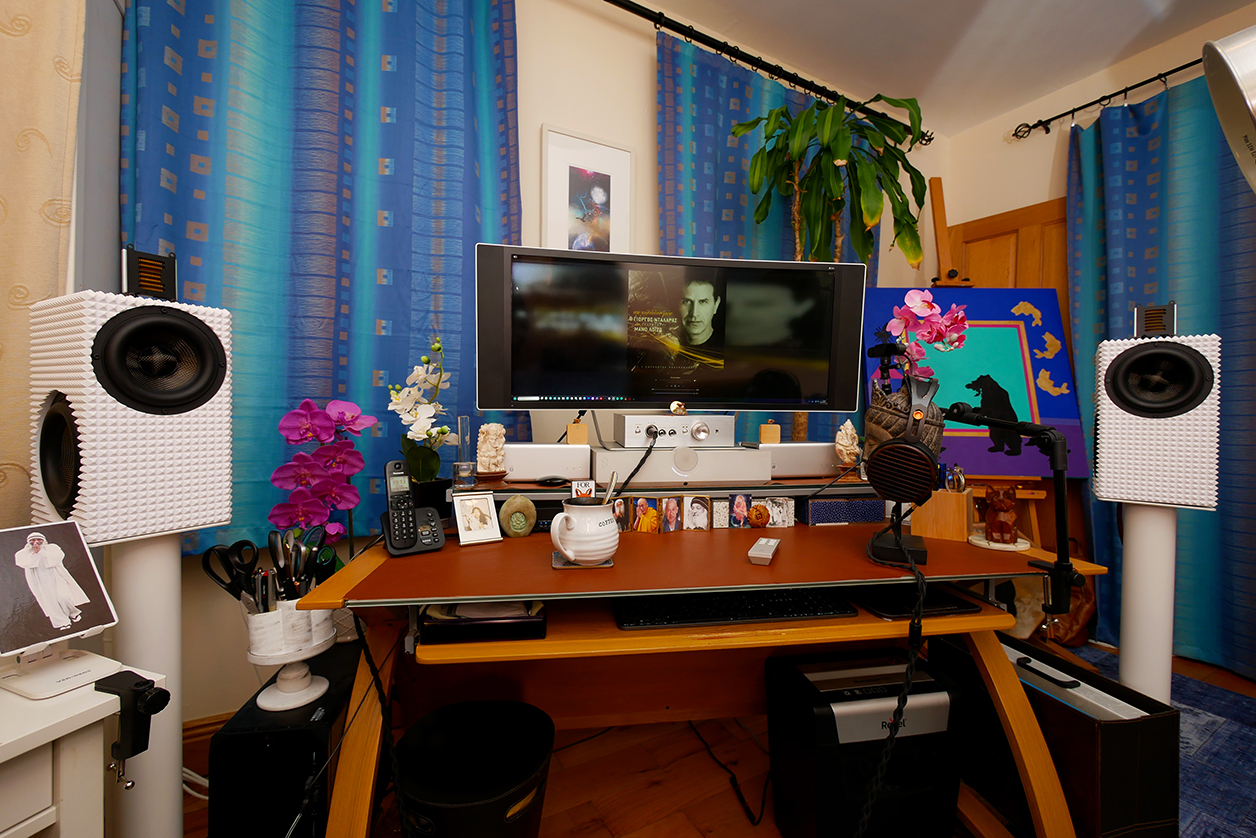 My desktop: HP Z2 workstation ⇒ USB 3.0 ⇒ Singxer SU2 bridge ⇒ COS D1 ⇒ XLR ⇒ Topping B200 ⇒ Virtual Viper / ⇒ RCA ⇒ Kinki Studio THR-1 ⇒ headphones.






Luxsin's X9 is my closest 3-in-1 touch-screen competitor to play juxtaposeur, a fit spelling for its €500 price gap. On the fairness score, it's FiiO's K17 which plays the X9 league. At the K15's ask I simply had nothing comparable, just pure analog headamps. Even beyond my own four walls, today's FiiO should be quite the outlier. In that bigger context, extra noteworthy is its class AB power-stage execution with eight bipolar transistors, not the THX AAA 788 chip amps of my FiiO R7. That discrete stage is directly lifted from the K17. That it squeezes out slightly less power is due to its smaller power supply. Digital detectives could spot another FiiO advantage by dint of Asahi Kasei VelvetSound silicon not the ubiquitous Sabre chips used elsewhere? Sweet spot, again?
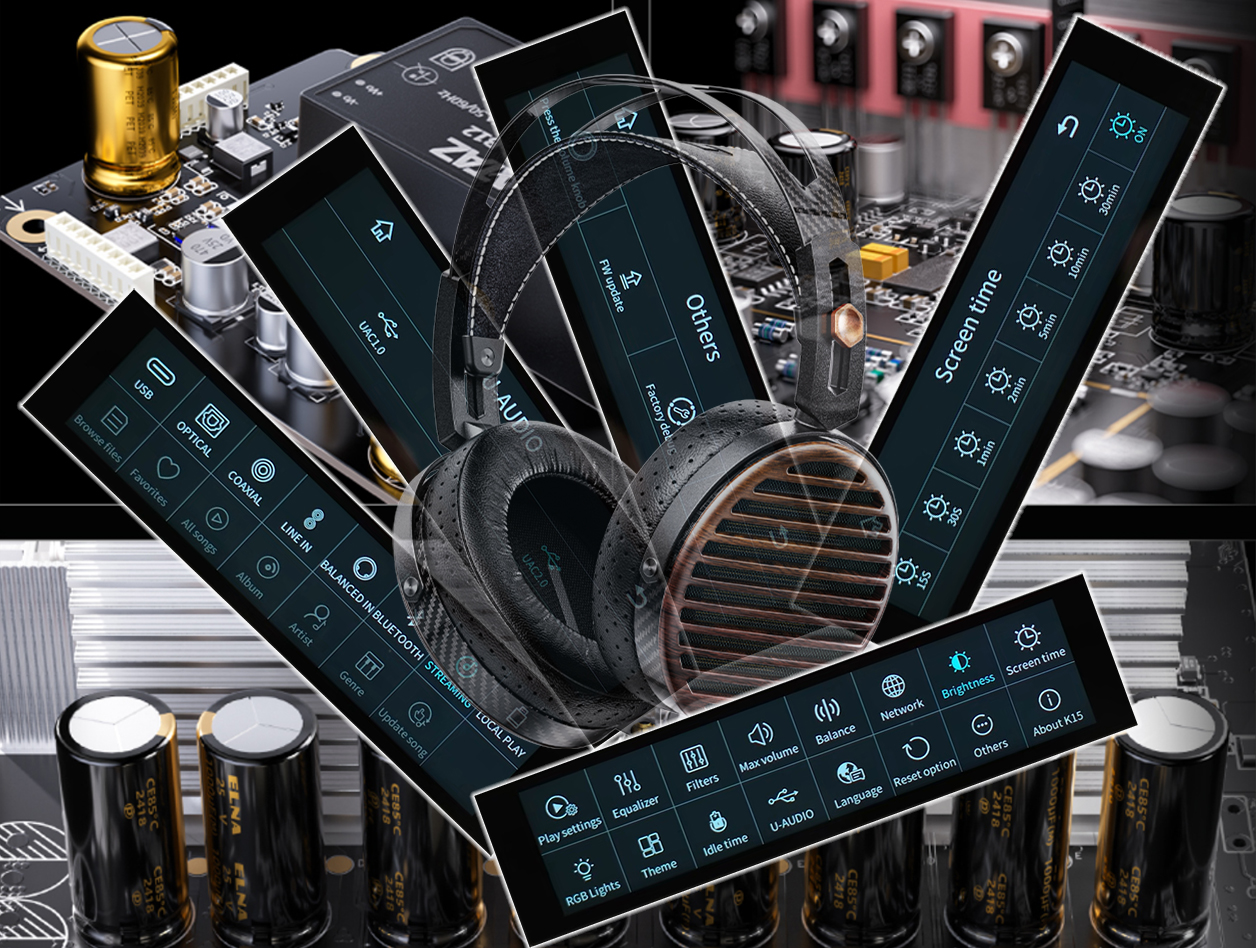
Still in absentia, my inner sugar detector certainly thought sweet spot because of, 1/ desktop-friendly all-in-oneness; 2/ realistic high power; 3/ comprehensive featurization of hard 'n' software; 4/ proven FiiO build quality; 5/ PC-based then installable EQ profiles; 6/ the price. If you hadn't yet done that math, the K15's front-selectable LO for line-out mode bypasses its attenuator for a full-throttle fixed signal into an integrated or preamplifier should we seek an upgrade path or pursue a second system. The 4.4mm line input on the back looks at a DAP's line-out without requiring a 4.4mm/2xRCA cable. The frontal USB-C input shakes hands with our own or a visitor's smartphone and has auto priority over the matching rear USB-C port should both be connected. There are many viable usage scenarios which the K15 creators anticipated. With many portable players later desktop versions in their portfolio since 2007's inception, FiiO have deep experience in this sector. They now offer very mature so intuitive thoughtful navigation of multi-tasking kit in a clever balance of classic fascia controls aka knobs and switches; and layer-driven software menus. For all the 'x's and 'o's, consult the manual.
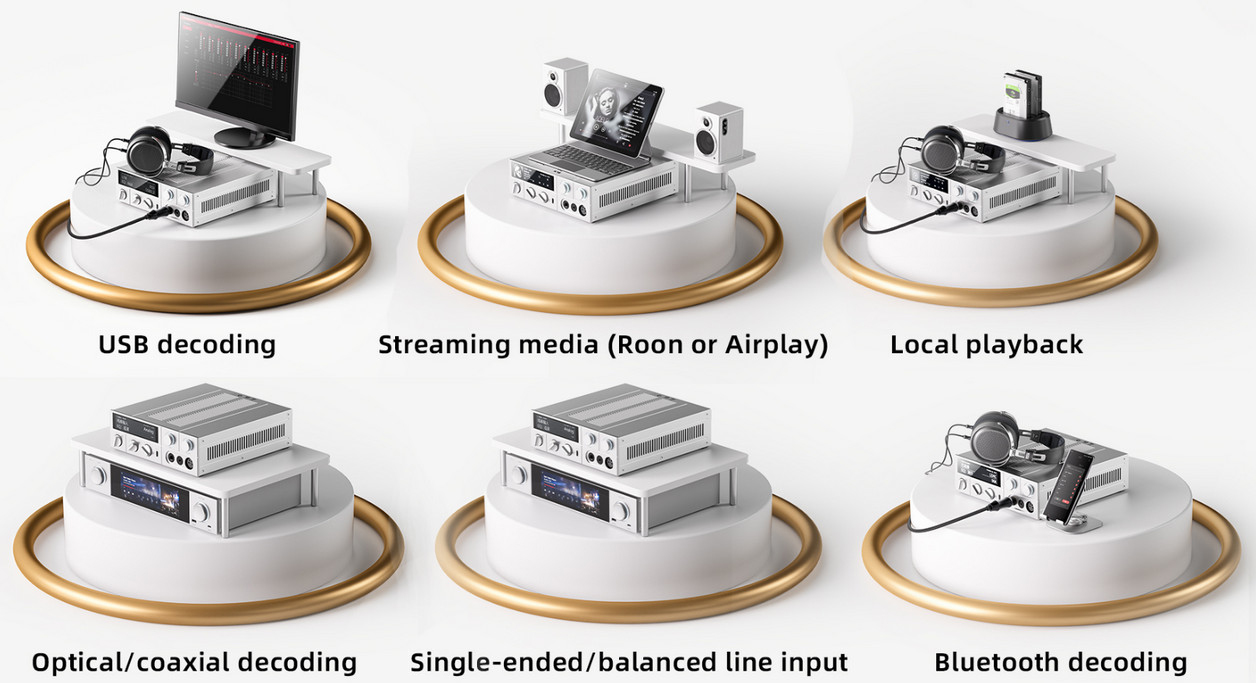 Six moons, six usage scenarios.
Where Sino brands enjoy a very particular advantage is access to high-contrast touch screens at ultra-competitive costs to already show up in budget-friendly product where the West can't even think of rolling them. Though US-built Schiit work in the same price sector, none of their models use touch displays, not even $2'299 Yggdrasil. If you grew up with a smartphone, you're likely married to its GUI. Now you want the same for your hifi. Here too K15 complies with its WiFi/Bluetooth lanes and control app. Now we've squared the €599 'lot' circle. Before reviewing becomes its own lazy myth, enough theory and promise. Time for ears/hands-on practice. Would reality throw shade on my sugar rush like the Irish joke about how you tell you're in a County Cavan man's home – because there's a fork in his sugar bowl? Then there's the one about the Irish thief who'll take the milk outa your tea then come back for the sugar. Hopefully the K15's sonic virtues were more generous than thrifty. Prior luv for their FT7 cans and two of their R7 portrait-mode players had me quite certain that we'll hit pay dirt for ground that contains ore of sufficient quantity to extract profitably.
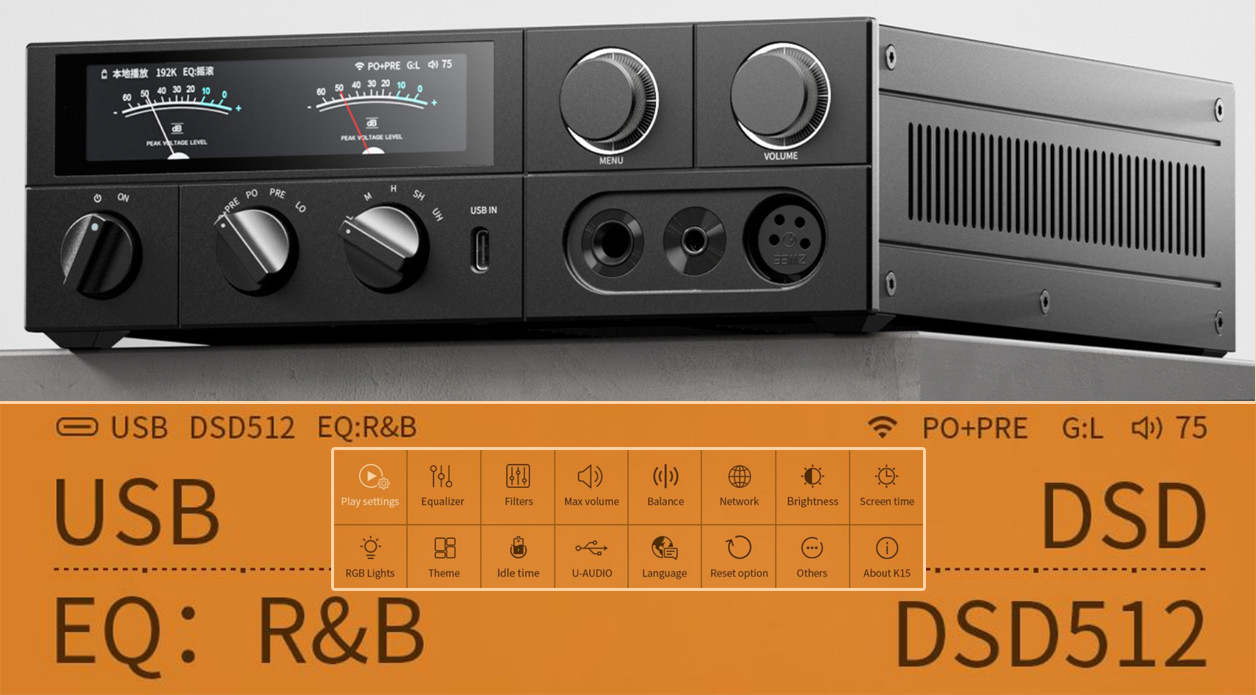 Black display, white light ring option above | orange display below.
Real-life Santa Rosa anecdote: During my years in audio retail in Northern Cali, we had a customer whose pilot brother was undergoing life-threatening surgery then lengthy convalescence. Our client wanted to buy him a nice hifi to install in his recovery room. The speakers became Platinum Solo stand-mounts which we carried. For digital his heart was set on Wadia, a brand we didn't carry but which my boss could source from an old LA dealer friend to save the transaction. Why had a Wadia become critical? For its blue display. The client insisted on blue like an airport's taxiway yet nothing we carried had that. So the fact that the K15's display can switch between two colour themes isn't mere whimsey. It could well spell the difference between yeah and nay. Ditto the plentiful accessorizing by light-ring options which, if not set 'with music' to denote sample rates and formats via associated hues, can be a steady colour we pick. If you think only the sound matters, you've not really lived retail yet. FiiO clearly have. I may well reject a black component or speaker just because I want silver or white. Shallow but true. On which score, it's obvious that using this narrow landscape display to scan folders of attached USB storage as though it were 2010—maximum draw 500mA without separate power supply—will be rather tedious compared to hosting the control app on a WiFi tablet. This reflects the K15's hybrid style between past and future, between classic hardware controls and Eversolo/HifiRose full-width touchscreens. Its charm is being a bit of both; and not costing a kingdom or a horse.