Country of Origin

 Reviewer: Srajan Ebaen
Financial interests: click here
Main system: Sources: Retina 5K 27" iMac (i5, 256GB SSD, 40GB RAM, Sonoma 14), 4TB external SSD with Thunderbolt 3, Audirvana Studio, Qobuz Sublime, Singxer SU-6 USB bridge, LHY Audio SW-8 & SW-6 switch, Sonnet Pasithea, Laiv Audio Harmony; Active filter: Lifesaver Audio Gradient Box 2; Power amplifiers: Vinshine Audio x Kinki Studio Dazzle & Gold Note PA-10 Evo in mono on subwoofer; Headamp: Enleum AMP-23R; Phones: Raal 1995 Immanis; Loudspeakers: Qualio IQ [on loan] Cables: Exact Express Flame, Furutech; Power delivery: 2 x Kinki/Vinshine Tai Hang on amps and source stack, Furutech DPS-4.1 between wall and conditioners; Equipment rack: Artesanía Audio Exoteryc double-wide 3-tier with optional glass shelves, Exoteryc amp stands; Sundry accessories: Acoustic System resonators, AudioQuest FogLifters; Room: 6 x 8m with open door behind listening seat; Room treatment: 2 x PSI Audio AVAA C214 active bass traps
2nd system: Source: FiiO R7 into Soundaware D300Ref SD transport to Cen.Grand DSDAC 1.0 Deluxe with POW; Preamp/filter: Lifesaver Audio Gradient Box 2; Amplifier: Kinki Studio EX-B7 monos; Loudspeakers: Virtual Hifi Cobra [on loan]; Subwoofer: Zu Method; Cable loom: Exact Express Earth; Power delivery: Vibex Granada/Alhambra, Akiko Audio Corelli Corundum & Castello Solo; Equipment rack: Hifistay Mythology Transform X-Frame [on extended loan]; Sundry accessories: Furutech cable lifts, Furutech NFC Clear Lines; Room: ~3.5 x 8m
2nd headfi system: DAC: Cen.Grand DSDAC 1.0 Deluxe with POW; Headamp: Cen.Grand Silver Fox; Headphones: Raal 1995 Magna, HifiMan Susvara
Desktop system: Source: HP Z2 work station Win11/64; USB bridge: LHY UIP; DAC + Head/preamp: Audalytic DR70 + HP70 both on LHY PSU-80 Dual; Speaker amps: Topping B200 monos; Loudspeakers: Virtual Hifi Viper; Headphones: Final D-8000, aune SR7000, FiiO FT7
Upstairs headfi system: FiiO R7; Headphones: Meze 109 Pro, Fiio FT3
2nd upstairs speaker system: Source: FiiO R7; Integrated amplifier: Simon Audio Lab i5; Loudspeakers: ModalAkustik Musikboxx with Dynaudio S18 subwoofer
2-channel video system: Source: Oppo BDP-105; All-in-One: Gold Note IS-1000 Deluxe; Loudspeakers: Zu Soul VI; Subwoofer: Zu Submission; Power delivery: Furutech eTP-8, Room: ~6x4m
Review component retail: ~€3'500 contingent on daily exchange rates, ex VAT
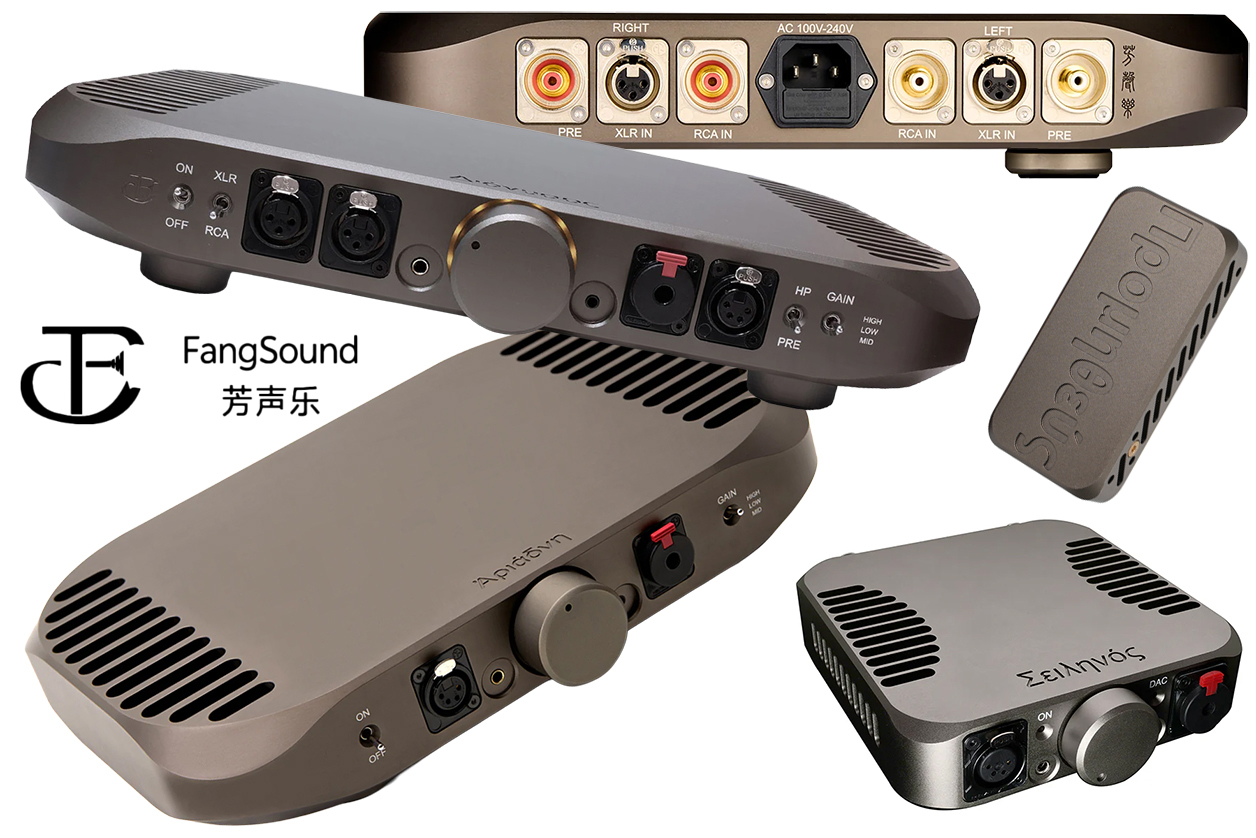
If FiiO could introduce more than 40 products across 2025, why not China one new hifi brand across roughly the same patch? By late 2024 early 2025, FangSound by Fangshen Music of Shenzen started global trading via online retailers Linsoul and Elise. In the above collage, the first crop of models are the compact €359 Silenos [lower right], an 11wpc/32Ω minimalist head/preamp with built-in R2R DAC; the scaled-up €1'370 Ariadne sans digital [lower left]; the pocket-rocket €359 Prometheus dongle DAC/amp with ESS 9039Pro; and the range-topping again purely analogue €3'500 Dionysus head/preamp. All flaunt sleek precision-milled chassis; model names engraved in Greek alphabet on the foreheads; and an absence of i/o switches except for the current flagship. Where Ariadne dispatches an already Olympian 20wpc/32Ω into headphones, Dionysus goes Spartan suicide mission with twice that so an aggressive 64Vrms/180Vpp. Whilst 40wpc suggests distortion escalation, FangSound instead claim DR of 134dB, THD+N at 0.0006%. All of it captured my attention to contact UK retailer Elise Audio. "Thanks for reaching out. It's great to hear from you. We are big fans of your reviews and have much admiration for your knowledge in our hobby. We often learn something whenever we watch or listen to your interviews. We reached out to FangSound regarding sourcing you a Dionysus for short-term review." Straight to the best seat it would be, dining at a banquet hosted by the character Romans called Bacchus. Known as Dionysus in ancient Greece, this archetype of wine, fertility, ritual madness, religious ecstasy and theatre was "a figure embodying the paradoxical link between civilization and wild nature, representing liberation, joy and destructive frenzy".
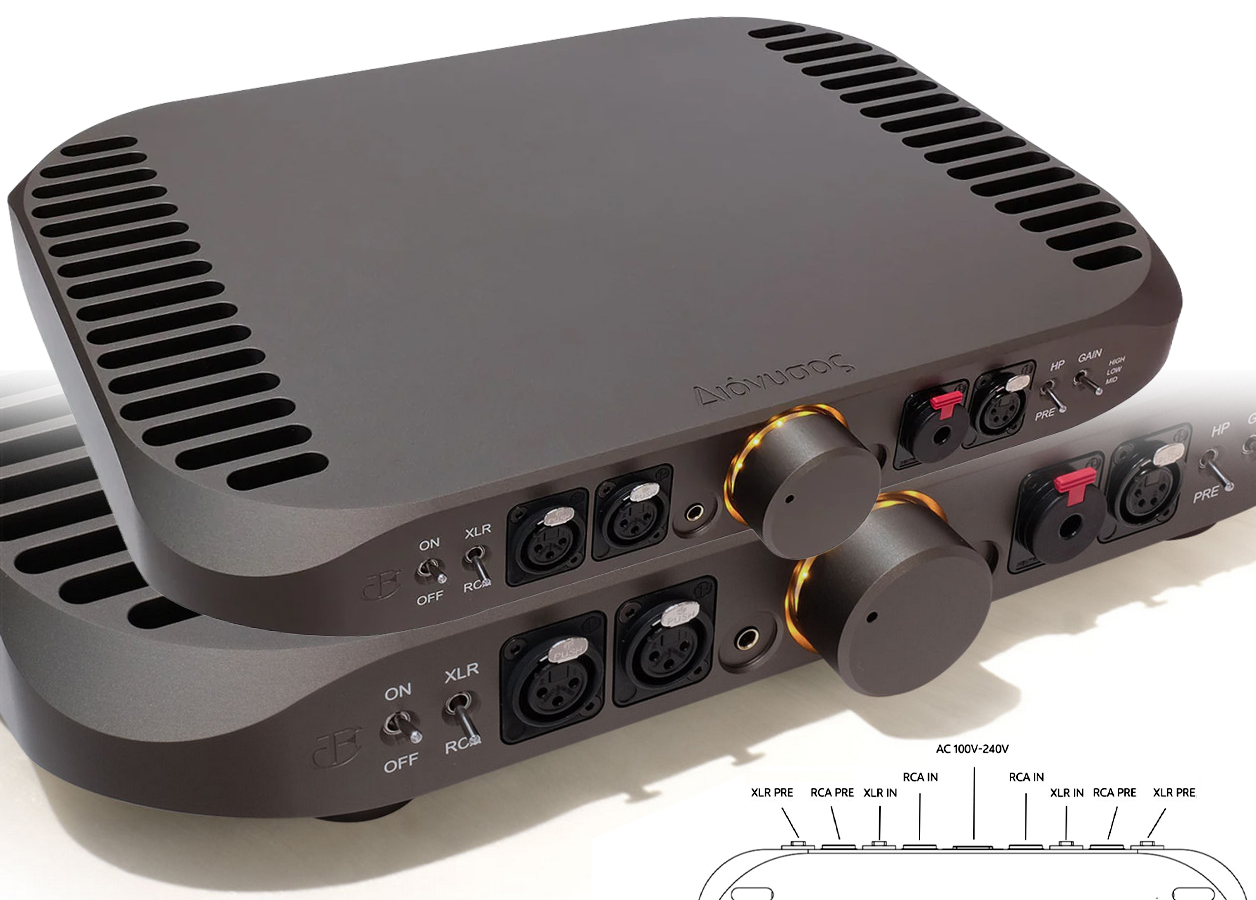
Debauchery pulls as hard in our 21st century as it did in the Rome of Nero and Caligula. Just so, intoxication requires a properly calibrated volume taper and/or low input sensitivity to cause no destructive frenzy of clipped ears and melted voice coils across just a few millimetres of knob travel. Does Dionysus' 3-stage gain toggle apply to its many HeadFi ports and pre-outs? Without display or IR eye, preamp mode in a rack well removed from the seat could feel limited. Do actual headphones exist that can handle in vino veritas at 40-proof? Whilst such power might drive five headphones simultaneously, without dedicated attenuators for each that too could descend into an unholy bacchanale for at least some of them. These design choices were atypical enough to invite investigation. About which, who are FangSound? With no English webpages just then, I had to ask someone at the company. Clear from the line drawing is that Dionysus has RCA/XLR ins 'n' outs switched by frontal toggles. That makes for a take-all-comers minimalist head/preamp. 100-240V global compliance suggests a switch-mode power supply fronting high-power discrete class A/B outputs. Would industrial design and full-metal execution dominate my encounter? Would they package equally sophisticated sleek sonics?










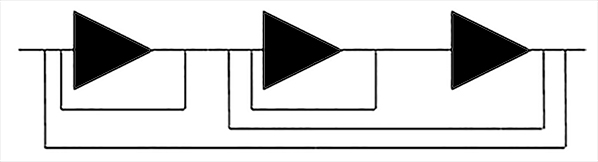 Eversolo/Luxsin and FiiO celebrate layered-menu touchscreens and app control. FangSound's knobs and switches play it resolutely old-school. Their flounder-like form factor and absence of remote control suggest desktop ambitions. There physical controls within easy reach are still quicker than menu navigation and require no regular polish to remove skin oils. What about a gain toggle starting at mid in the lowest position, going to low in the middle then high on top? Surely that sequence is a bit skippy? I had questions. Most of all I was curious. What were ancient Greek gods up to in contemporary China? Did one of Socrates' lot trek to faraway Mount Wutai in the Middle Kingdom and start a Grecian lineage of drunken Shaolin masters? I love a good mystery. This one starts with forty fermented watts of headphone juice tapping out Topping's 22wpc/16Ω spec for their A900. Where that calls its discrete nested-feedback fully balanced architecture T'ang-ku-la, FangSound call their ±48V version Kunlun¹. "Most headphone amps use a simple amplification + current-boosting structure of two parts. The first amplifies the signal voltage for high-Ω headphones, the second increases current for low-Ω headphones. The overall distortion is the sum of these two stages. High-performance devices incorporate nested feedback to further reduce distortion. Due to rising distortion levels with high-power devices, stronger feedback must control distortion. Therefore we adopted the very complex Kunlun architecture to maintain circuit stability and successfully reduce THD+N to 0.001% in single-ended mode, far lower than most single-ended amplifiers to achieve high-spec headphone sound." Doesn't this suggest self-inflicted pain as in, first increase output power to unnecessary extremes², then combat rising distortion with more interactive feedback-loop complexity? For HeadFi, sterling S/NR figures are even more critical than for speakers yet high gain is virtually always synonymous with higher noise. Talk about challenges. FangSound clearly felt the extra complications worth the effort to double up on Ariadne's already plentiful power specs. [In the above schematic, we see two local feedback loops, one loop that spans two gain stages plus one global loop that spans all three. Complicated!]
¹ "Kunlun refers to a vast high mountain range in Western China that's both a major geological feature but in their lore also a significant mythical realm, symbolizing a divine axis connecting heaven and earth that is home to Taoist deities." Meanwhile T'ang-ku-la "refers to a major mountain range in southwestern China that is part of the Tibetan plateau known for its high peaks, vital water sources like the Yangtze's headwater, important passes and mineral deposits". SB Acoustics have their Satori range of drivers named after a Zen term for temporary illumination. Enleum is a portmanteau of the Korean words for enlightenment and sound. Sacred mountains, higher states of consciousness. Do we detect a theme?
² 3wpc/32Ω are generally considered sufficient for Susvara and Immanis. The Modhouse Tungsten's 155Ω impedance and 78dB/mW load wants to see 5V to reach 100dB loudness. For context, the Laiv HP²A deliberately empowered for Tungsten applies four lateral Exicon Mosfets per channel to produce up to 11.8wpc/32Ω or 19.2Vrms with a 4V input source. A review of FangSound's 11wpc Silenos running Tungsten II reports that in low gain, loud volumes sat at 9:00. High gain came on far too quickly. At 40wpc and 64Vrms, Dionysus feels armed to the teeth.
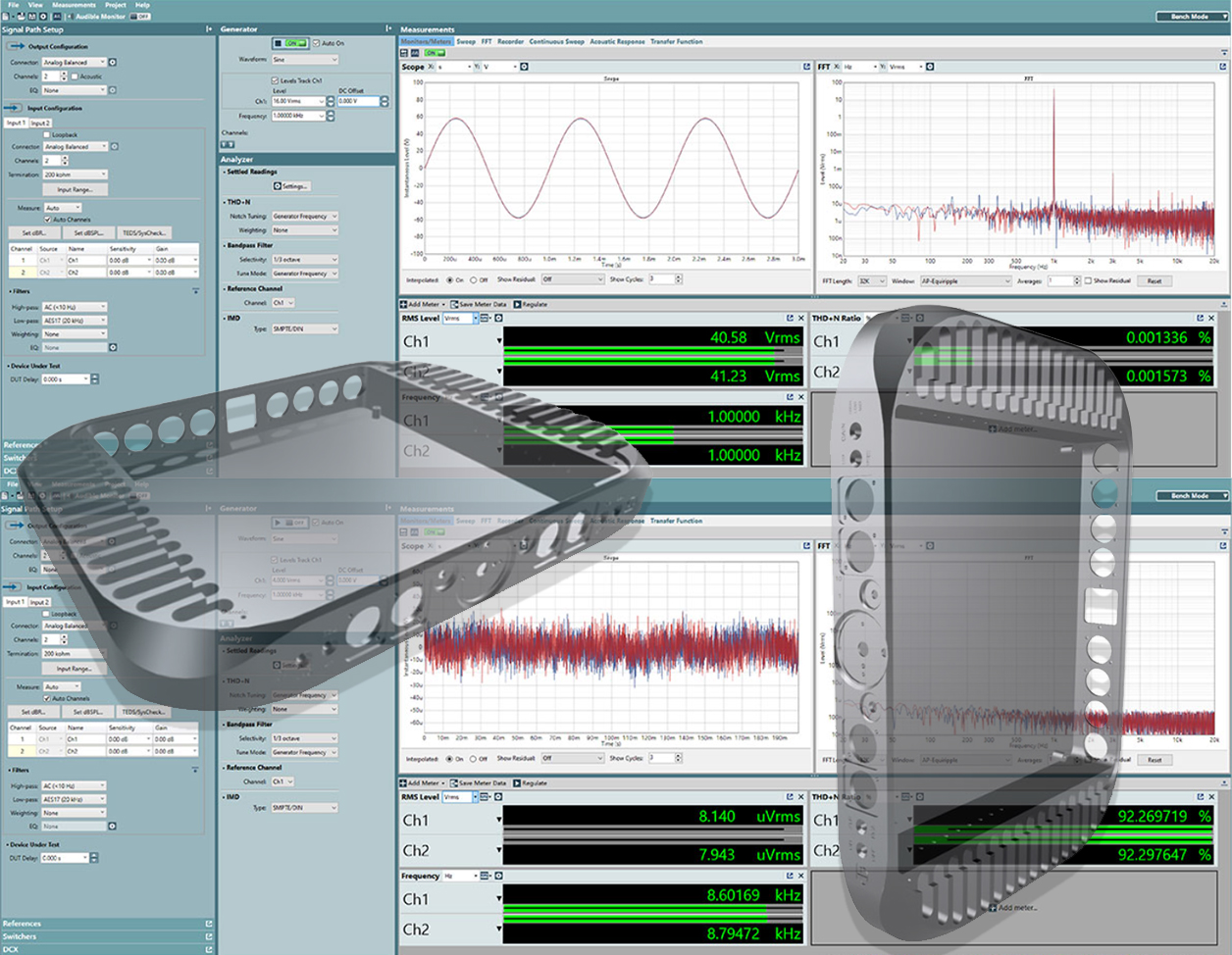
This brings up another wrinkle in SinoFi's current fabric. Arguably led by Topping and smsl, many brands compete for trophy specs as though sales hinged on beating the spectrum analyzer's decimal point over the competition. By that metric, perfect specs equal perfect sound. We all know how the original CD fared. If particularly younger brands don't as yet trust their own hearing or familiarity with global standards and expectations, measured excellence must fill those gaps. By FangSound's own admission, high specs are vital. That will please those who shop on them. It works until a competitor shaves off still more distortion. Meanwhile a practiced libertine like Dionysus won't give a raisin as long as the wine keeps flowing. Can one have Apollonian rationality with pristine mathematical order and wild Dionysian ecstasy? Given FangSound's naming, we should have our answer; unless they picked the wrong name and should have gone with Demosthenes, a skilled rhetorican of the times. He could win by argument so specs alone. As Dionysus or Διώνυσος in Homerian Greek, imbibing is the only correct response. Then Elise Audio had this: "At FangSound we believe music to be more than just sound waves. It is emotional and spiritual resonance. Beyond tech specs, we infuse our profound understanding of sound and unique tuning philosophy into every product. Our tuning team spent over a decade refining their craft… The lead tuning engineer alone accumulated over 10'000 hours of critical listening and tuning during daily sessions of 5+ hours over six years. For us, tuning is not just a science. It's an art. We are firm believers that the soul of any hifi product lies in its tuning." This was promising. Rather than spec chasing, a concerted effort is made to impose upon circuitry a personal vision of good sound developed from years of attentive listening. After all, tuning is the process which follows measurement-driven groundwork. Once all specs hit the design targets—here power/Ω, noise and distortion—and a PCB's layout is optimized, parts choices remain which don't affect specs. Three different capacitors may measure identical but sound different. Which to use? Possible variables well eclipse a single part, hence mapping the interactions between many becomes ever more complex. That's the black art of tuning. Measurements no longer help other than monitor that parts swaps don't negatively impact them. This process is purely ears-on. It relies on knowing what one aims for to recognize whether one moves closer or farther away. What to do when a parts swap improves the sound—a purely subjective call—but worsens the specs whose numbers don't lie? It's why tuning/voicing is called an art not science. Art can justify decisions which science or AI wouldn't make.