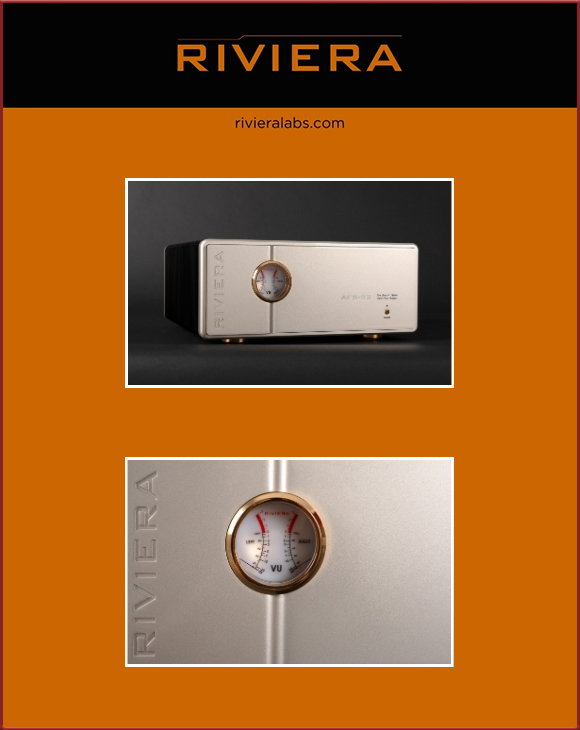
Allegedly, low-end control presents a challenge to 300B SETs¹. Although deep bass may come out smeared or slow on poor designs, Auris addressed these shortcomings with special care for the power supply and multi-tapped output transformers. Headonia tackled complex bass tracks with ease, authority and articulation. Still, bass exhibited a certain degree of elasticity and buoyancy which I personally like even if in the next breath I must admit a trade-off on startling snappiness, tightness and slam. This is not to say that Headonia can't slam, just that it does so with a certain gentleness. Here high gain gave best results. For a listener more inclined towards dry and punchy bass, Trafomatic's Primavera delivered bass in tighter fashion, with steeper attacks, faster settling times but similar extension.
_________________________________
¹ To avoid generalization, this is more typical for speaker drive where an 8Ω output impedance meeting 2Ω swings lacks sufficient damping. Once we replace the speaker with a 32Ω-or-higher headphone with a small dynamic or planar driver sans crossover, the tables turn. Now the primary challenge, especially in the absence of negative feedback, is often one of noise. Ed

 Headonia's treble comes at you like a sophisticated breeze so as refined and smooth as one could wish. It's a velvety type devoid of harshness yet still technically accomplished, resolved and extended. This presentation suited Valkyria and Immanis for different reasons. It provided a less grainy and raw top end to the Italians whereas Immanis dissolved occasional traces of brightness into a sparkly yet controlled voicing. I would list the treble as one of Headonia's most solid strengths. Compared to my AIC-10 and even more so when we consider the more rigorous Trafomatic Primavera, the velvety nature of this 300B treble makes Headonia very pleasant if a bit laid back in a positive way. The overall soundstage was big and well developed in all directions. It wasn't the most capacious but highly competitive with the Riviera AIC-10 and Viva Egoista 845 by filling the stage with fascinating connective tissue made from atmospheric ambient cues. Gary Bertini's reading of Mahler's 5th Symphony with the Cologne Radio Orchestra is one of my favourite renditions of perhaps my best-loved Mahler symphony. The first movement opens with a faraway solo trumpet which segues into an earth-shattering orchestral crescendo which plunges into the bass section of this big ensemble. Headonia portrayed the trumpet slightly less ominous or transparent than the Riviera but was splendid on control and scale when the orchestra occupies the stage with full force where lesser amps collapse into chaos. Instrumental localization in 3D space was competent though not of ultimate transparency.








However, Headonia suffered no speed impediments. While not paced as quicksilvery as some extremist solid-state amps like the Benchmark AHB or Spectral speaker amps, it combined weight and mobility in very satisfying fashion. Take "Battery" from Metallica's Master of Puppets and you will be physically relocated by the pounding guitars and rhythmic section. On a different score, the marvellous interpretation of Bach's Chromatic Fantasy and Fugue BWV 903 by Kenneth Gilbert, one of my all-time best recordings, offers a luminously rich harpsichord held consistent over an enthralling avalanche of notes and arduous harmonies. Where other amps can sound 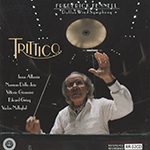
 mechanically fast but thin and overly metallic, Headonia brought emotional gravitas to this ancient keyboard. Headonia also cruised over large dynamics swings with aristocratic aplomb. The "Funeral March for Rikard Nordraak" from the Reference Recording Trittico with Frederick Fennel conducting the Chicago Wind Symphony is one of my torture tracks for macro-dynamics. Headonia passed with flying colours by rendering the tremendous crescendo up to the cataclysmic tympany strikes with strength and fullness which very few amps achieved in my system. A somewhat more insidious album is Stravinsky's Histoire du Soldat performance from Ars Nova conducted by Robert Mandell [DSD256 from HDTT]. This recording is full of abrupt changes of dynamics and requires both micro and macro prowess to deliver its magic of tactile presence which I have rarely found elsewhere. Here Headonia was just a step behind the AIC-10 due to a slightly less black background between instruments and a softer attack of the notes, partly compensated for by a more rounded and meaty depiction of percussive instruments.

 Piano holds a special place in my heart as I consider this instrument and its literature the pinnacle of musical expressiveness. My go-to headphones for piano are the Spirit Torino Valkyria. They have a unique capacity to capture the energy, tonal balance, weight, forcefulness and harmonic structure of this wondrous music machine. Headonia was able to drive Valkyria to their max on piano music, magnifying its sophistication, warmth, urgency and scale. So piano compositions, especially solo performances, were one of my highlights with the Serbian amp. None were better than the Belgrade-born piano genius of Ivo Pogorelich's Scarlatti showing just how emotional the Headonia|Valkyria combo could make me feel. As mentioned earlier, I settled on low gain because high gain's SPL were overkill and slightly worsened the already audible self noise. With Immanis high gain was my preferred mode because of its extra sonic boldness which became more contrasted, open and dynamic compared to the comparatively softer low gain. As for inputs, I tried both XLR and RCA and the latter was my preference due to its additional clarity and low-level resolution. However, the degree of variation between the two was subtle enough to be of the same order as the difference between the interconnects at my disposal. So although RCA bypasses the fine Duelund input-summing transformer for a shorter signal path, I don't feel confident in drawing a definitive conclusion on this score.