Country of Origin

Reviewer: Simone Ragionieri
Source: Generic 5G router into Taiko Audio network switch (both powered by an Uptone LPS1.2); Taiko Extreme Server; LampizatOr Horizon 360 DAC
Headphone amplifier: Riviera Audio Labs AIC-10
Headphones: Spirit Torino Valkyria, Raal 1995 Immanis
Cables: Digital: Sablon Ethernet 2020 & USB Evo, Taiko DAC cable; Analog: Acrolink 7N-2090 Special Anniversary
Power delivery: Audioquest Niagara 5000 & Hurricane power cords, Shunyata Alpha HC power cord, Furutech NCF AC wall plugs on a dedicated spur
Review component retail: €11'999
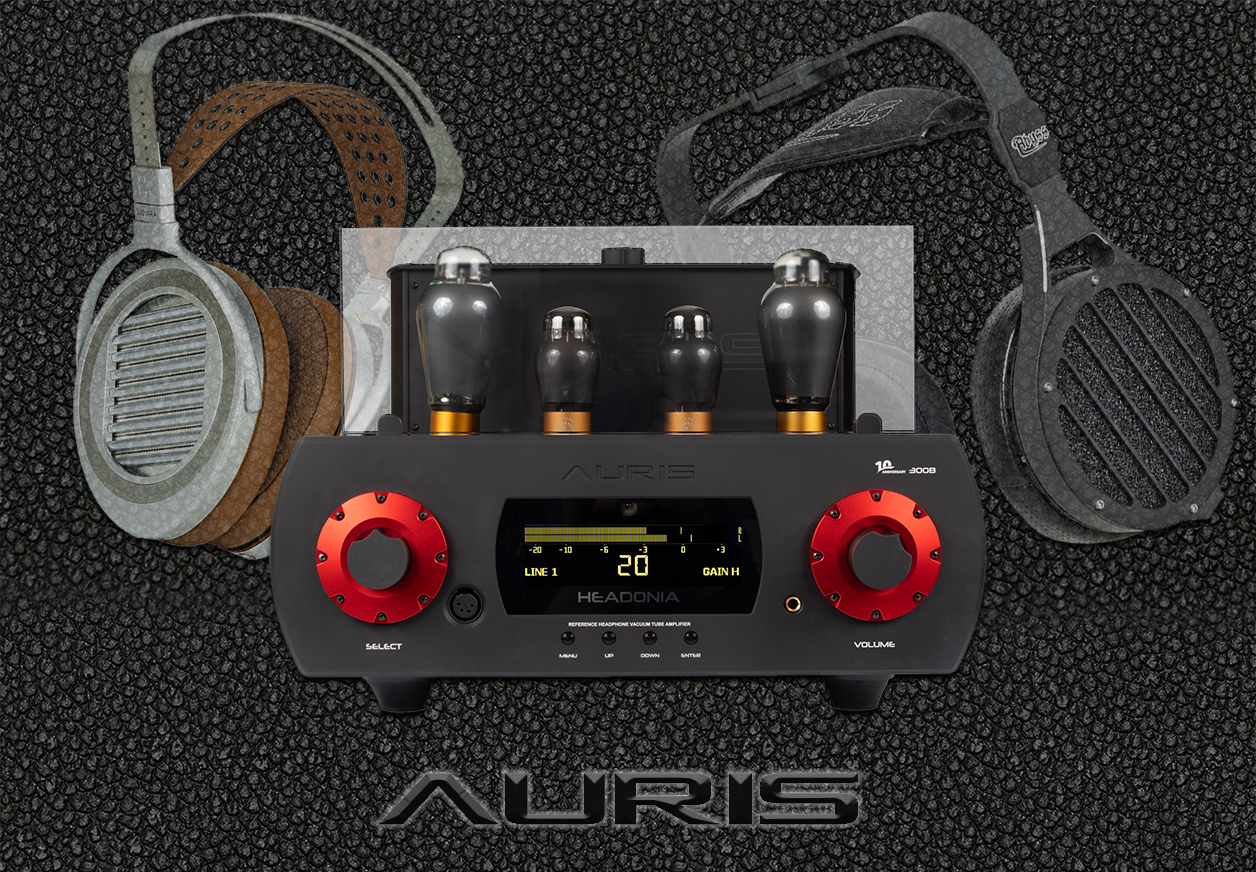 Collage with HifiMan Susvara Unveiled & the big Abyss.
I have been following Auris Audio for years, growing increasingly interested in their pushing the envelope of high-end tube headphone amplifiers. The culmination of this journey was the release of the Headonia 300B 10th Anniversary which I first saw in the flesh at the Munich High End earlier this year and have thought of ever since. Auris Audio was founded in 2013 by Milomir 'Miki' Trosic, now CEO and still deeply involved in the design of gear which nowadays spans from amplifiers for headphones and speakers to turntables and vinyl ancillaries including tonearms. Miki's passion for music has seemingly imbued his life from being a DJ in his youth to working in recording studios, playing electric bass then diving into his own audio brand and business project.
During our interview, Miki guided me through a virtual factory tour—hail to the powers of video calls—which revealed scale and complexity well beyond the typical boutique company one might sometimes associate with exotic audio gear. This is because most processes and technologies involved in the manufacturing of said equipment here are done in house. Taking Headonia for example, the most crucial parts of its guts are designed and built in the factory including the critical transformers, power supply, circuit-board printing and population. Even machining and sand blasting of the mechanical chassis parts is done internally. While requiring significant investments and highly trained personnel (Auris currently employ 30 people), such end-to-end control ensures know-how preservation, quality control and protection from supply chain pricing and availability fluctuations.









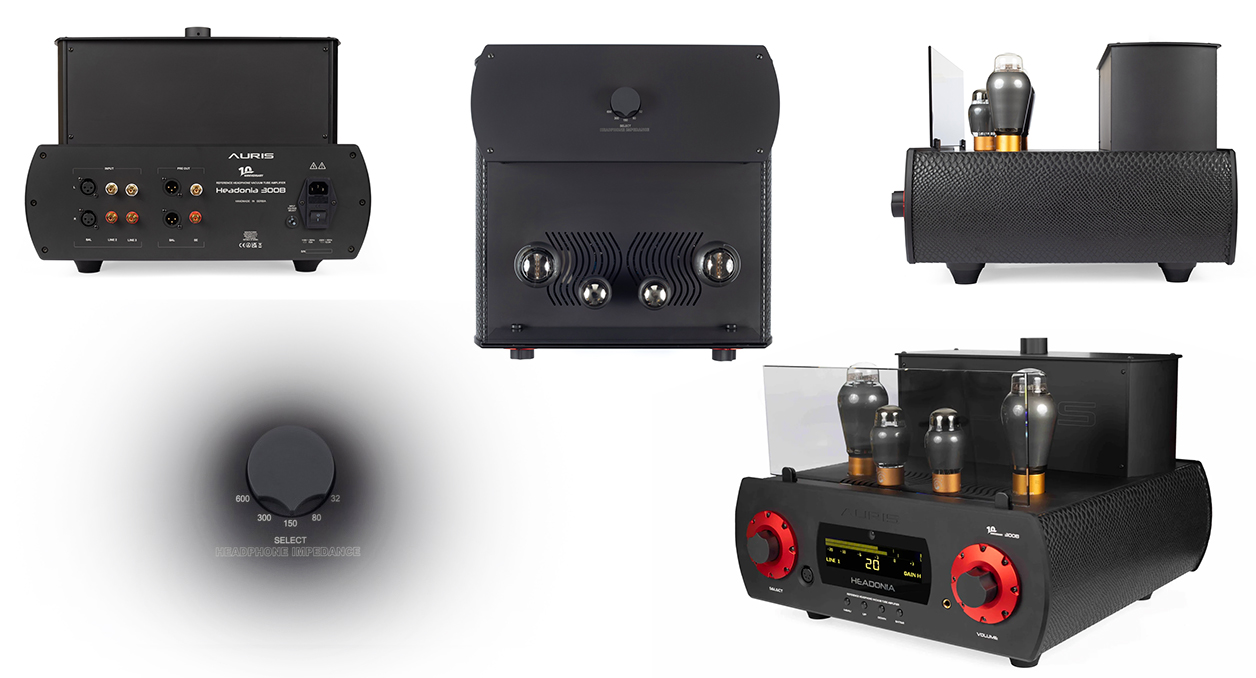
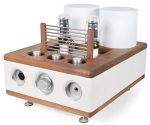 I was impressed already by the unboxing. The amp came in a wooden crate. As I went ahead to unpack the contents, I noticed the care and professionalism that had gone into the smallest details, from the tube boxes to the remote and smoked glass panel intended as tube protection and further design accent. It was clear that Miki's crew put a lot of effort into making their customers feel appreciated, well cared for and filled with pride of ownership from the start. Headonia is a large and heavy amplifier at 46 x 44 x 31cm and 23kg, a significant part of which is the housing containing the transformers. It shows how Miki strives for top-notch quality both visually and technically. Former Auris Audio products like the original Headonia at left made extensive use of outsourced wooden dress panels. Those proved prone to bending and occasional cracking due to temperature and humidity swings. Moving to machined aluminium has overhauled the design language by creating a bold mix of vintage in the exposed tubes and digital VU meter, modern aspects plus a touch of luxo bling in the leather cheek trim and red-anodized knobs. Headonia won't go unnoticed. But apart from aesthetic considerations, moving to a solid aluminium build provided more options for vibration and EMI control complemented by custom-made footers sandwiching rubber, plastic and metal.
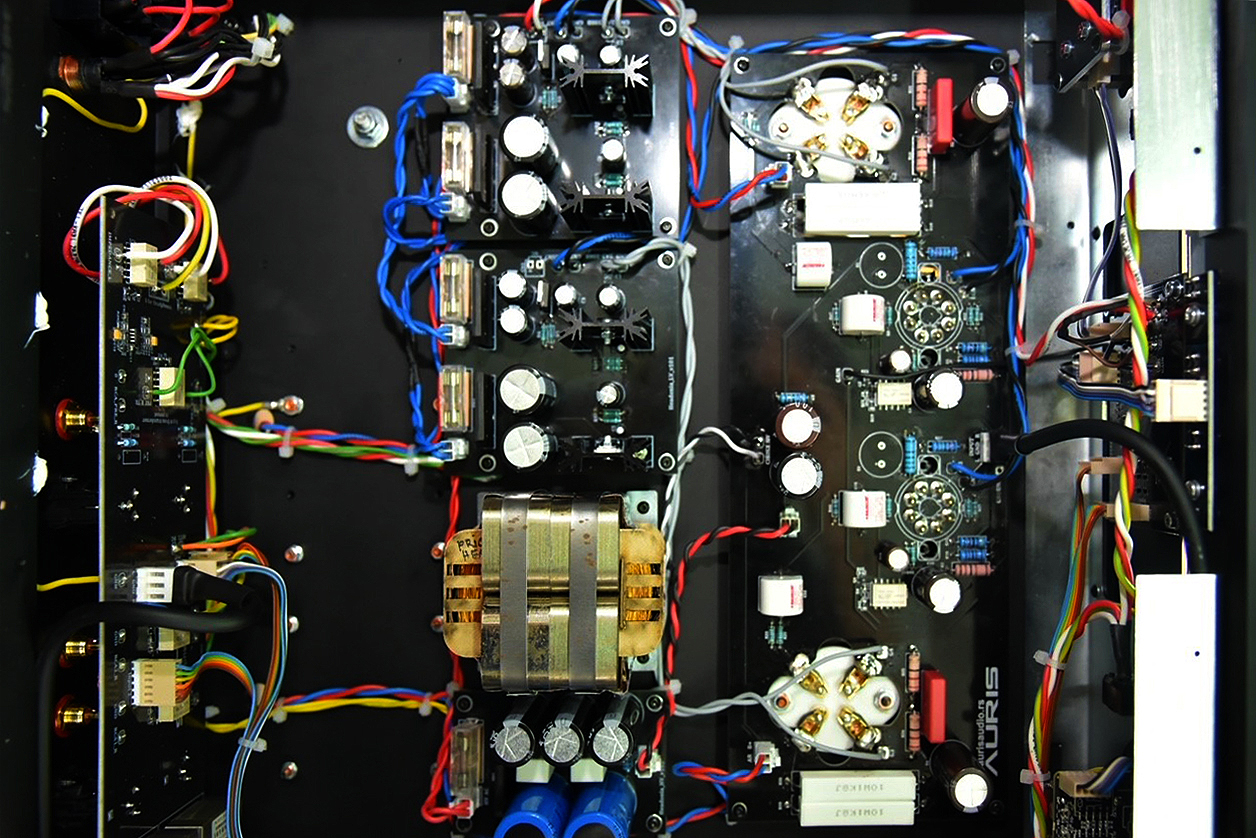
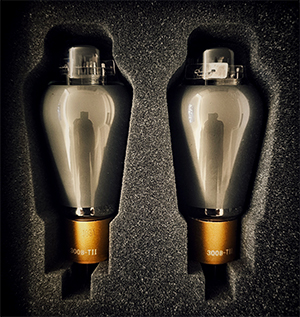 For their Headonia project Auris seemingly spared no expense which Miki confirmed really was a cost-no-object exercise. It is a statement piece summarizing the brand's achievement in its first decade of existence; hence the 10th Anniversary logo. This extends to component quality which includes Lundahl transformers for the balanced inputs, Mundorf capacitors and a top Alps potentiometer. Headonia uses twin-stage solid-state rectification of which Miki is especially proud, providing clean AC to a CV181/6SN7 preamp stage which in turn drives a single-ended 300B output stage. The four tubes are by Psvane which Auris selected for sound quality, availability and reliability. Despite being a single-ended design, XLR and RCA inputs and outputs make Headonia suitable as headphone amp and 2-channel preamp. Miki is adamant about the need for a variable-impedance output transformer in a no-compromise headfi amplifier. It's the only way to insure full power transfer regardless of load impedance. Rated output power is the classic 300B-SET 7wpc into all impedances from 32-600Ω selected by top rotary. High/low gain is chosen by gently pushing the left knob or using the remote. That's another remarkable piece of engineering. Machined from solid aluminium, it recharges via USB-C and provides access to nearly all available settings reflected on the OLED screen. Among them I appreciated the non-resettable odometer for the amplifier's working life and that of each individual tube. This allows one to monitor tube life, a neat feature I'd like to see on all tube gear.
"I see the amp and tubes are almost new, 17 hours according to the timer. Great feature by the way. What is the recommended burn in? Is there a preference between balanced and unbalanced inputs in terms of sound quality? The topology is single-ended but looking at your website description of Lundahl input transformers, it seems that the balanced input should be the way to go. I'm using the Raal 1995 Immanis headphones with a custom 16Ω transformer interface. By selecting 32Ω as the lowest option on your amp, will this constitute a performance penalty?" "The included tubes are new but 50 hours of play will be enough for a review. We use Lundahl balanced input transformers to prevent loss of quality when using balanced sources so both the + and – signal halves are preserved rather than one half being shunted to ground. Immanis can be ordered with a 16Ω or 32Ω interface and the ideal match with Headonia would be their 32Ω version but you can use your 16Ω barrel without any problem. There will just be a small difference in power delivery."