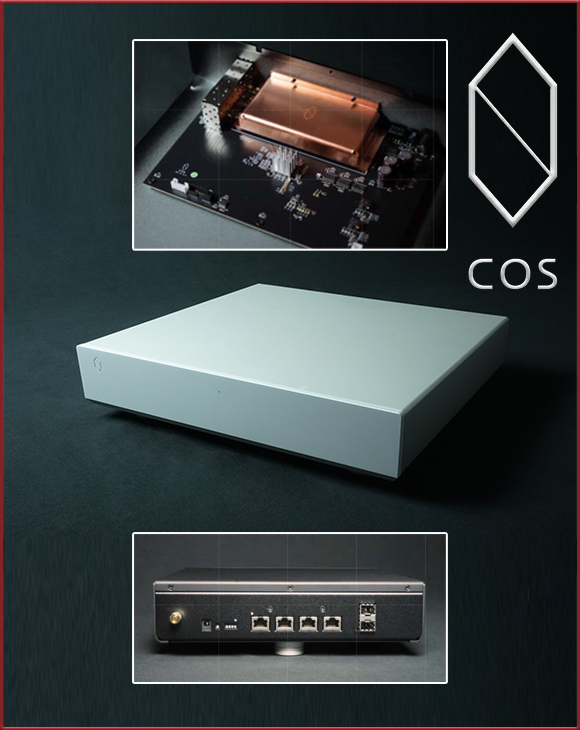
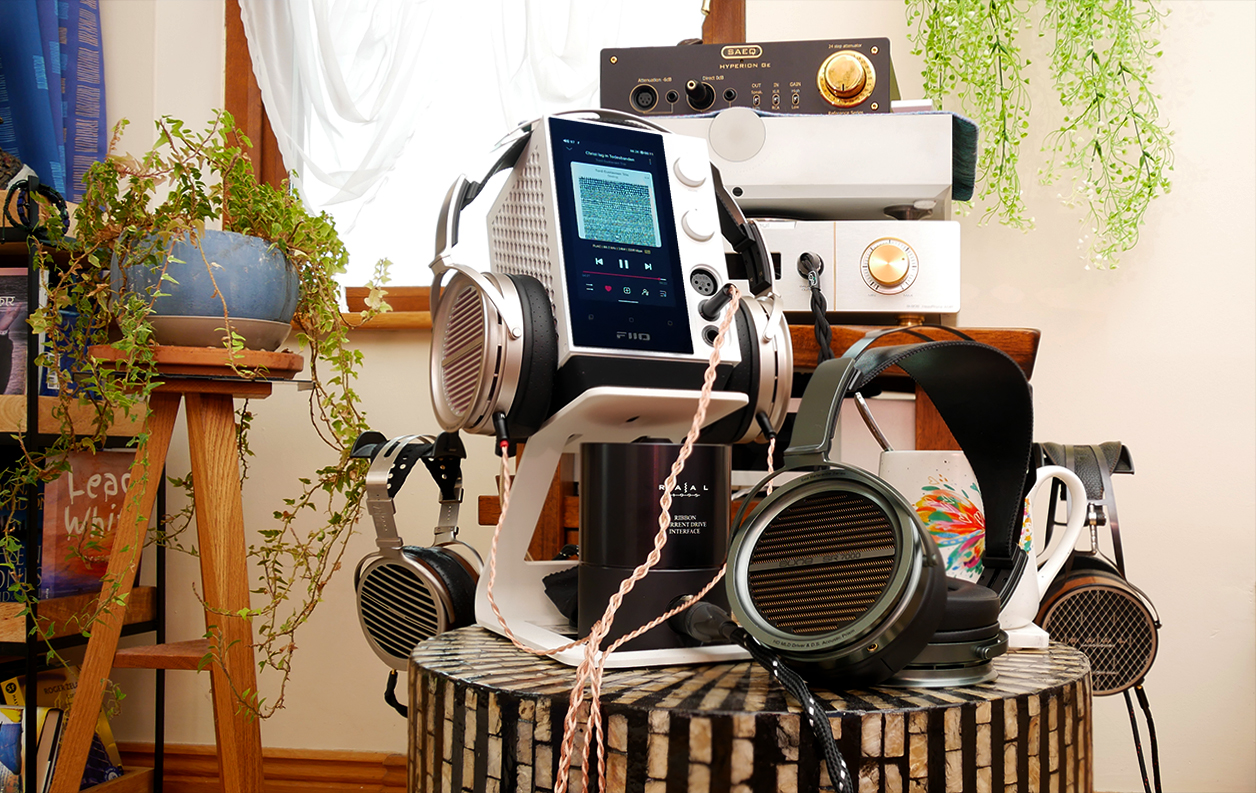
For today's comparators, let's start with the Meze 109 Pro. Its $799 ask, though higher, still places it closer than other cans in my collection. Their first playmate was the price-compatible FiiO R7 loaded with a 1TB card of CD-quality or better files. I power that FiiO from an external iFi iPower Elite. From there I headed into foursome group sex with the same FiiO as a raw USB-C transport into a Soundaware D300Ref USB bridge. That spit out reclocked S/PDIF into a COS D1 DAC with remote-controlled analog volume whose XLR outputs fed a Cen.Grand Silver Fox in BTL so bridged mode. An alternate amp still in from its review was SAEQ's Hyperion Ge. Saucing up ancillaries would show how well the SR7000 scale their performance.
On industrial design, the Meze exude an overt fully accessorized stylishness which exceeds aune's more conservative form factor and detailing. Mechanically the 109 Pro use an elasticized headband where the SR7000 exploit discrete click stops. Actual cup depth is the same but aune's flat backs have them look thicker than Meze's bowed ends coming to the final quarter-sized point of the bridge attachment. Meze's inner driver grill is a finely filigreed copper-anodized piece of metal jewelry. aune's protection looks more industrial; not that you'll see either whilst wearing them. Meze's headband contains thin padding, aune's is a solid piece of pleather. The 109 Pro vents out the back, the SR7000 seals. Meze's oval pads cover their foam in velour, aune's round pads use solid pleather. Both run split cabling but Meze's angled sleeves create a stupidly deep entry which fatter shorter plugs fail to reach. aune's flush ports will take 3.5mm plug barrels of any size. The long axis of Meze's oval cups measures 5mm more than aune's diameter but in width the 109 Pro obviously looks narrower than the circular SR7000. Meze's clamping force is higher, wear weight 25g more. Whilst I count the 109 Pro as very comfortable, I call the SR7000 even more so.

This Axis of Good spanning from California through Romania to China shows some competitors for size and cosmetic reference.






The Dragons Return, episode 2. Once more aune's very trick sealed loading refused to play second fiddle on head-stage width or in-sight into complex mixes of many layers. If you swapped these two blind, you'd not identify their loading. But you would, virtually instantaneously, latch onto Meze's 'fun' voicing which gives the 1kHz to 3kHz region a small boost. Depending on taste, you might call that fresh and exciting, attractively forward or—on something like Andy Narell's steel drums for example—a bit hot and zingy, possibly bordering on the prickly or nervy. It's a glossier more contoured response regardless. You'd also identify a small upper bass boost to complete the other half of the 109 Pro's smiley-face tuning; what today's YouTubers call V-shaped. The aune is a more honest and linear performer. It banks on listeners favouring less interpretational liberties even if at first, the 109 Pro will dazzle more. Switch to a string quartet alas and aune's choices quickly clock as more natural and appropriate for unamplified live sound; especially if you reference actual experience with that. To reframe this difference, I'll call the Meze tuning younger, that of aune more grown up. It not only points at a possibly different focus of music types but also audiophile maturity. The SR7000 looks at listeners who, having explored enough of the hobby's myriad sonic variations, now wish to settle down right in the middle.
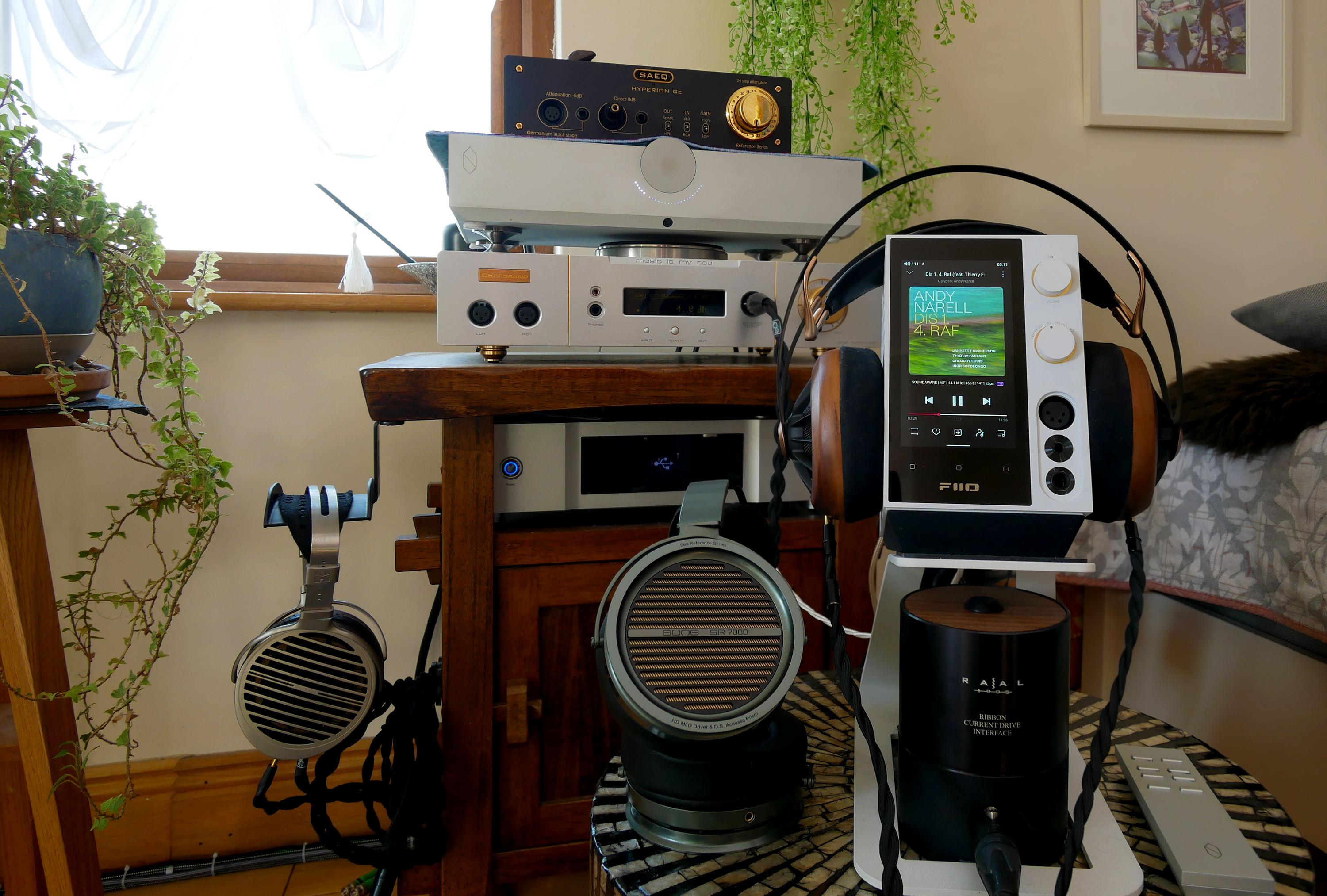
With my exposure level, I've long thought of the 109 Pro as the visually most attractive, best built performer at its €799 mark. At €639, the SR7000 now presents us with a terrific alternative; and one that packs the extra benefit of sounding like a vented design where it matters but offering the socially-aware benefits of being sealed. Like the Meze, its sensitivity and impedance are ideal for even modest mobile devices like my Shanling M3 Ultra. And because of its honest tuning and effective resonance traps, this aune handily scales up as ancillaries wildly eclipse its own tariff. But that's also down to dynamic drivers being ultra-mature transducer tech which doesn't take 4-figure tags to shine. That's not yet true of thin-film types. So how about crossing rapiers with costlier planarmagnetic specimens? Enter the €2K Meze Liric2 and €1'299 Audeze LCD-XC, two more sealed alignments. The Meze is a good 77g heavier and its friction sliders rotate far too easily in their height-adjustment sleeves. Couple that to narrow contact patches of the oval pads and on fit, the Liric2 and I don't get on at all. That's because on my head, these cups have a propensity to roll forward to detach from my head. I find the aune far more comfortable, its pad seal secure. Sonically the SR7000 staged wider, its bass had clearly more wallop and its dynamic reflexes were more boisterous. For 1/3rd the coin crunch, the aune secured an easy choke hold and the Meze tapped out quickly in the first round. As for the Audeze, the less said about its ridiculous 677g weight, the better. On sheer comfort, the SR7000 murdered them off the bat. To add insult to sudden death, it also injured them sonically by sounding more open, direct and intense. To not punch a can whilst down, let's leave it there when my point is made. You could spend twice even thrice on these planars and not match our aune. That's not to say that the right HifiMan, Sendy or Sivga might not. I just didn't have one when my Susvara were out on price.