 Impressive vocals. When an amplifier reproduces vocals convincingly, it's usually a sure sign that the midrange is tonally harmonious and balanced, a realization the BBC applied when developing its legendary monitor speakers which set lasting standards. The Audio Analogue Puccini Anniversary firmly anchors the midrange on a tight clear fundamental tone and a springy slightly rotund bass transitioning seamlessly into clear yet never harsh overemphasized highs. Time and again I had the impression that this could be a high-quality tube hybrid because its midrange was so fluid, organic and rich in colour. These mids exhibited not just substance but also seemed fully defined. Vocals emerged vividly and speech intelligibility was excellent with appropriate recording quality. This was particularly impressive on Johnny Cash's American Recordings. The Audio Analogue conveyed almost tangible authenticity with a dense atmosphere and emotional immediacy. Tonally Puccini remained neutral in the midrange rather than overly warm which certainly didn't detract from detail resolution or differentiated reproduction of delicate timbres. Even complex midrange frequencies such as the middle voices in a string quartet were clearly distinguished. Thus on Dvorák's String Quartet N°10 with the Panocha Quartet on Supraphon, the individuals were easily followed even though the recording engineer and ensemble clearly aimed for a homogenous tightly interwoven overall sound.
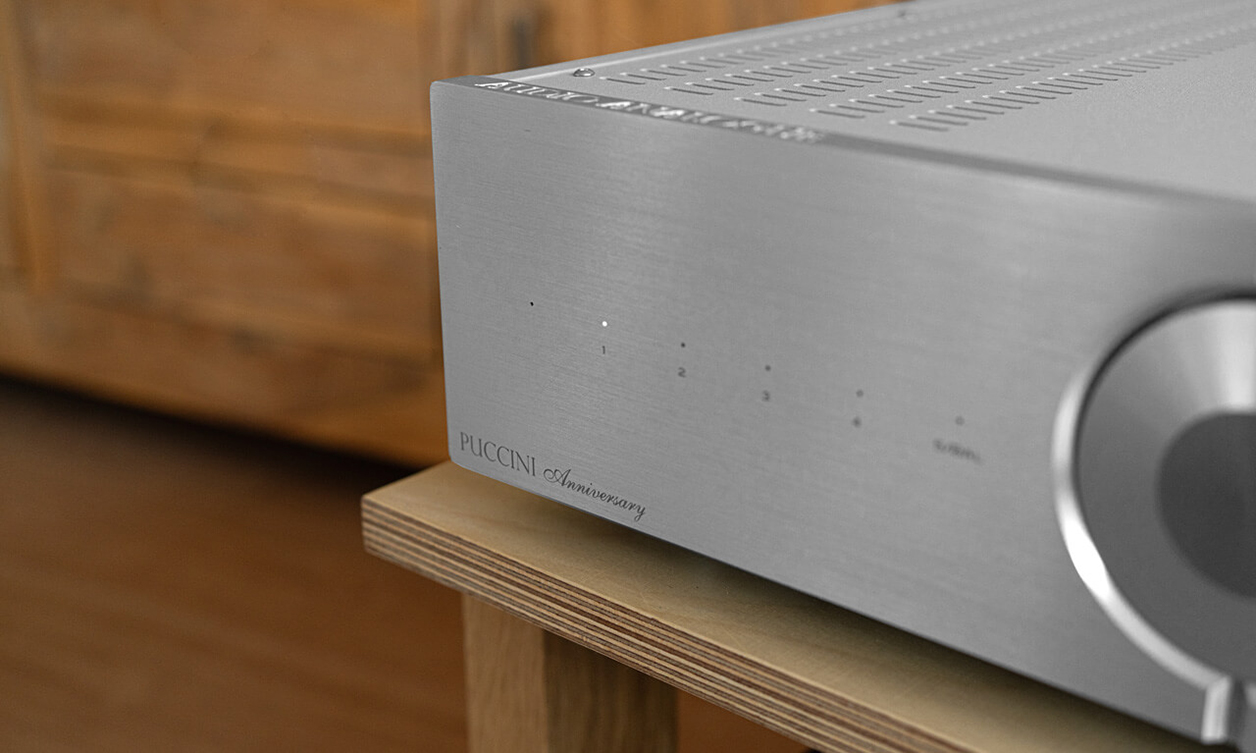 These LED can be dimmed.
A special symbiosis. It wasn't entirely by chance that I mentioned the BBC and its speaker development. Voices on Schubert's Lieder become a feast when you pair Puccini Anniversary with a Spendor LS 3/5A or derivative. A Spendor S3/5SE or Musical Fidelity LS 3/5A follow the same path. The voice carries in the room with exhilarating naturalness and the thrust that Puccini delivers even at lower volumes revives the spirits of these rather inefficient boxes. Furthermore, the combination of opulent bass and grippy lower mids is a perfect match for small sealed speakers which sound considerably more mature with Puccini than most other amps. If you have an affinity for these speakers, it's definitely worth a try.








A gentle but expressive treble. With Puccini Anniversary, cymbals and loud brasses shine more golden than silver. They certainly sound rich but still cut through without me ever flinching during phrases played with real verve and nerve. Why? In the upper range beyond 12kHz, the Audio Analogue remains present but tonally gets slightly restrained which noticeably benefits long-term listening. The high frequencies play a big role in timbre differentiation via overtones. Recently there has been a growing number of different triangles which thanks to new shapes and materials produce very different harmonic spectra. Of course the attack starts in the midrange but if you record a few triangles and clip off their leading edge, you quickly notice what an amplifier leaves behind of the instrument's overtone web to define its identity. Here Puccini impressed and far exceeded my Rega Elicit or Cambridge Audio EXA 100. The pleasure of listening at slightly higher volume already mentioned in connection with its dynamic performance significantly enhances with this sonic tuning. In the studio too, excessively harsh highs quickly fatigue and quickly put an end to discerning listening. Here too the Audio Analogue designers succeeded in creating a treble tuning with a rather gentle tendency without lacking in perceived energy or expressiveness. This delicate balance is so successful that one could almost overlook the underlying mellowness.
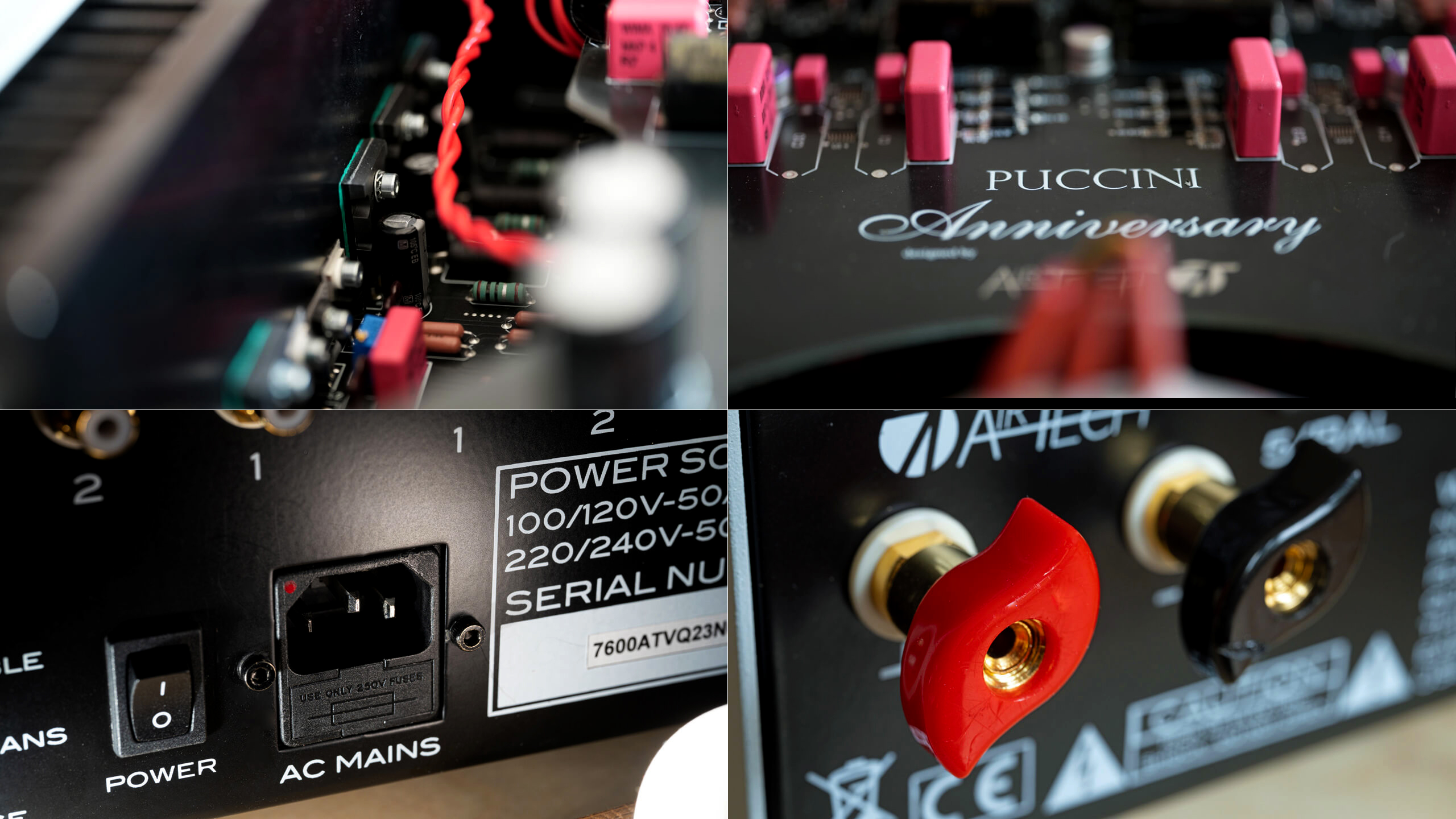
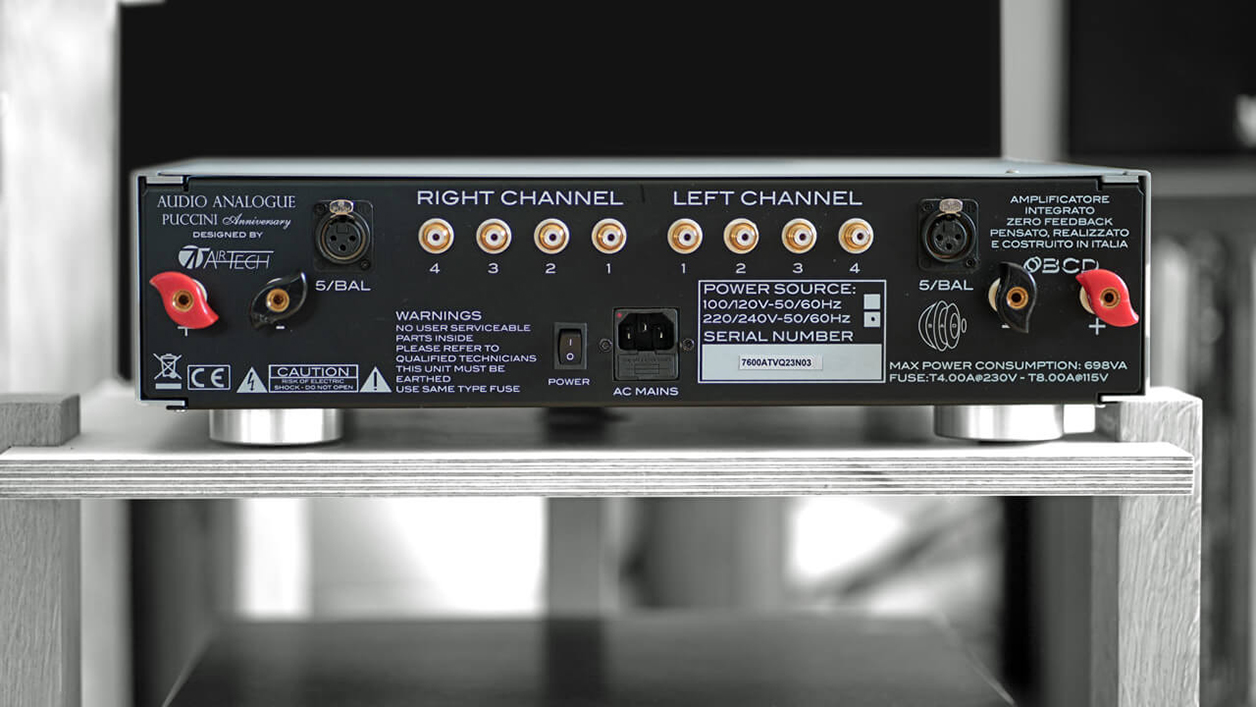 The power socket of the Audio Analogue Puccini Anniversary has a phase marking
After a brief warm-up phase, Puccini Anniversary instantly won my heart. It's a place where pleasure listeners and sound engineers are often at odds. A device may impress with emotional appeal, spatiality or beautiful timbre but exhibit weakness on an analytical level. Others may impress the mind but fail to create the emotional connection. The Audio Analogue achieves a synthesis worth listening to. While the amplifier primarily conveys strong musical expressiveness, it makes no real compromises on technical accuracy. It hits a balance that probably meets the heart of every pleasure-seeking soul yet won't immediately alienate recording engineers. Fairly neutral for the most part, it adds subtle amounts of power in certain areas, slightly softens others and ultimately achieves a fluid colourful sound reminiscent of good tube amps. However, if you want to enjoy letting the puppets dance especially on classical music without completely losing sight of the production's factual information, Puccini is a perfect choice. While the balancing act between euphony and truth drifts slightly toward the former, it nonetheless testifies to the skilled hands and very precise vision of the designers. The Audio Analogue Puccini Anniversary offers its owner a free hand when it comes to speaker selection but I would still like to strongly recommend the successors and derivatives of the BBC LS 3/5 speakers. Still, the Puccini is an amplifier with a few peculiarities I found hard to grasp. Why does it sound louder than it is? Why would you want to keep turning it up just to disturb the neighbourly peace? Why did it happen so often that I cued up a track to test a specific sonic aspect only to end up listening to the whole record? My recommendation is, find out for yourself at a trusted specialist retailer.
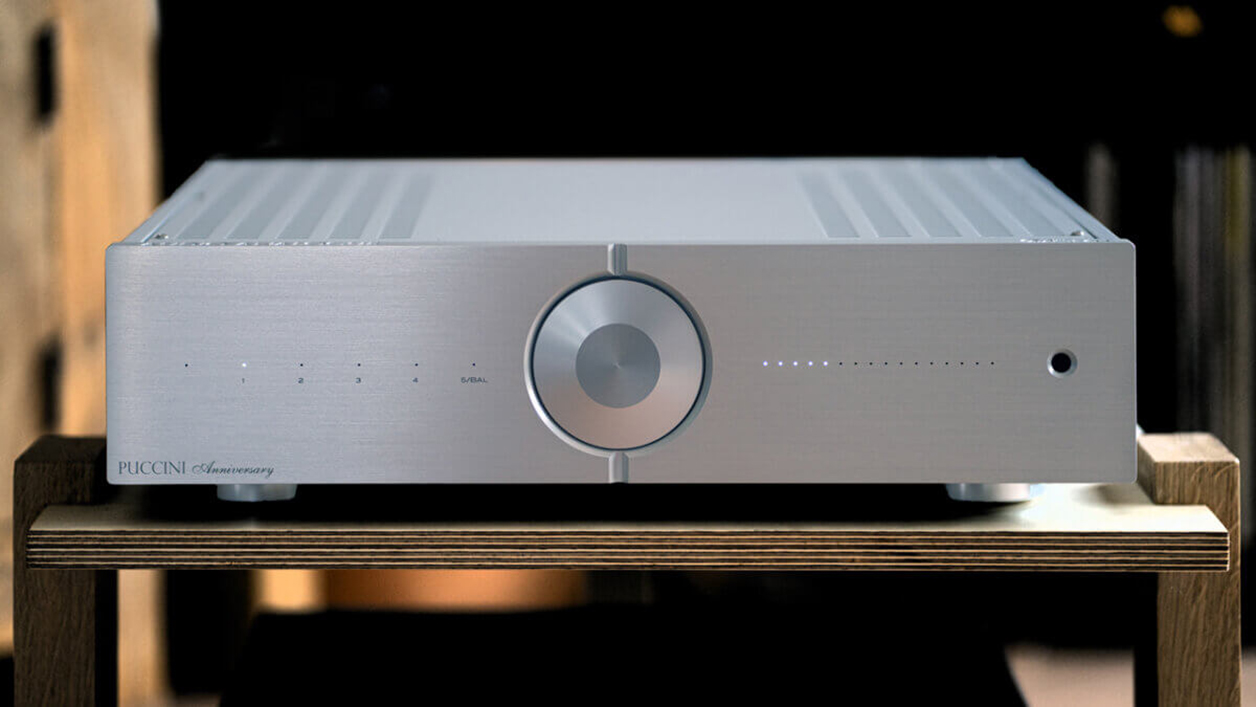 The row of LED to the right of the central controller knob doubles as IR receiver.
Audio Analogue Puccini Anniversary psych profile:
Facts: