Since the Silver Grand Mono II turned out to not be the most forgiving, instead of reaching for classic Rock most of which lacks good sound, I played Kinga Głyk's Feelings or S.M.V.'s Thunder albums. And it was really fun to listen to electric bass on a foundation of pace and rhythm. These amps not only conveyed the music's dynamics uncut and saturated with energy but with fantastic momentum. When needed, they served up powerful lightning-quick bass punches. Yet even the lowest notes carried energy which even some solid-state amps fail to convey fully. Once more, after many years of ownership my Mach4 speakers still surprised with how powerful and perfectly controlled their performance can be on the right amplifier. The company's own Shinai which I've used with them for a long time does them justice and sets a quite high bar but puts out 37wpc with class A transistors. Just so Jarek's half-power monos achieved equally spectacular results when Stanley Clarke, Marcus Miller and Victor Wooten join forces on Thunder. Covering the full bandwidth with proper energy and control is one thing, flawlessly differentiating three bass guitars playing at the same time another altogether. But it's one Ancient Audio's best amplifier has mastered to perfection.
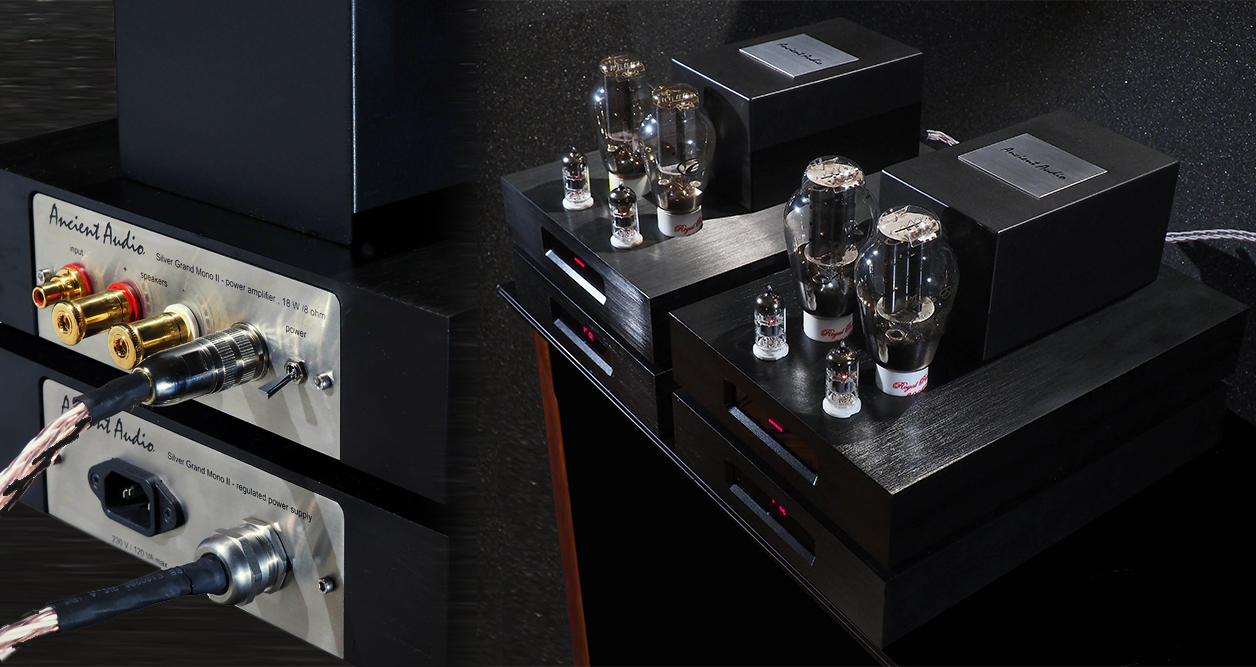
For me the crème de la crème of all recording types are well-recorded live performances. I do realize that they are never 1:1 copies of the event but some are captured so well that with a proper system, one feels more active participant than passive voyeur. And so I listened to many such albums and had to admit that the Ancient Audio truly excelled in rebuilding the performance, venue, ambiance and last but absolutely not least, audience emotions. Each of those elements is necessary to fully involve and re-create an event to the fullest extent. Even another not-quite-audiophile Billy Joël concert still sounded much better than with almost any amp that ever visited. It was recorded in a stadium and though obviously downscaled in my room, these amps still showed enormous venue with a huge cheering crowd and reverberation coming from seemingly many dozens of meters away. Yet despite the scale and exuberant complexity, it still delivered in orderly fashion. Curiously not each far more powerful solid-state amplifier I tested before managed in this fashion.











Switching to my Ubiq speakers was quite seamless despite being definitely more demanding. Yet these monos drove them with ease and a sort of grace given how refined and classy it came off. Granted, bass control was not as perfect as it had been with the Mach4 but still very good. In fact, I switched speakers in the midst of the Thunder album and only then did I notice a touch rounder or softer attack of the electric bass. When the Tingvall Trio's Pax started, my attention turned to the deeper more natural sound of a double bass devoid of any additional softening. I loved what I'd heard with the Mach4 but the bigger drivers and cubic volume of the Model One proved to be undeniable assets for acoustic double bass and piano. They were simple better equipped to show these huge instruments in all their might and the Ancient Audio monos showed not only the expected beautiful timbres and textures, incredible detail density and a convincing spatial setup whereby all three instruments appeared in front of me as large substantial bodies but also sheer power required to drive these large 3-way speakers. Again I pushed the volume far higher than I usually do just because I could without any audible downsides.
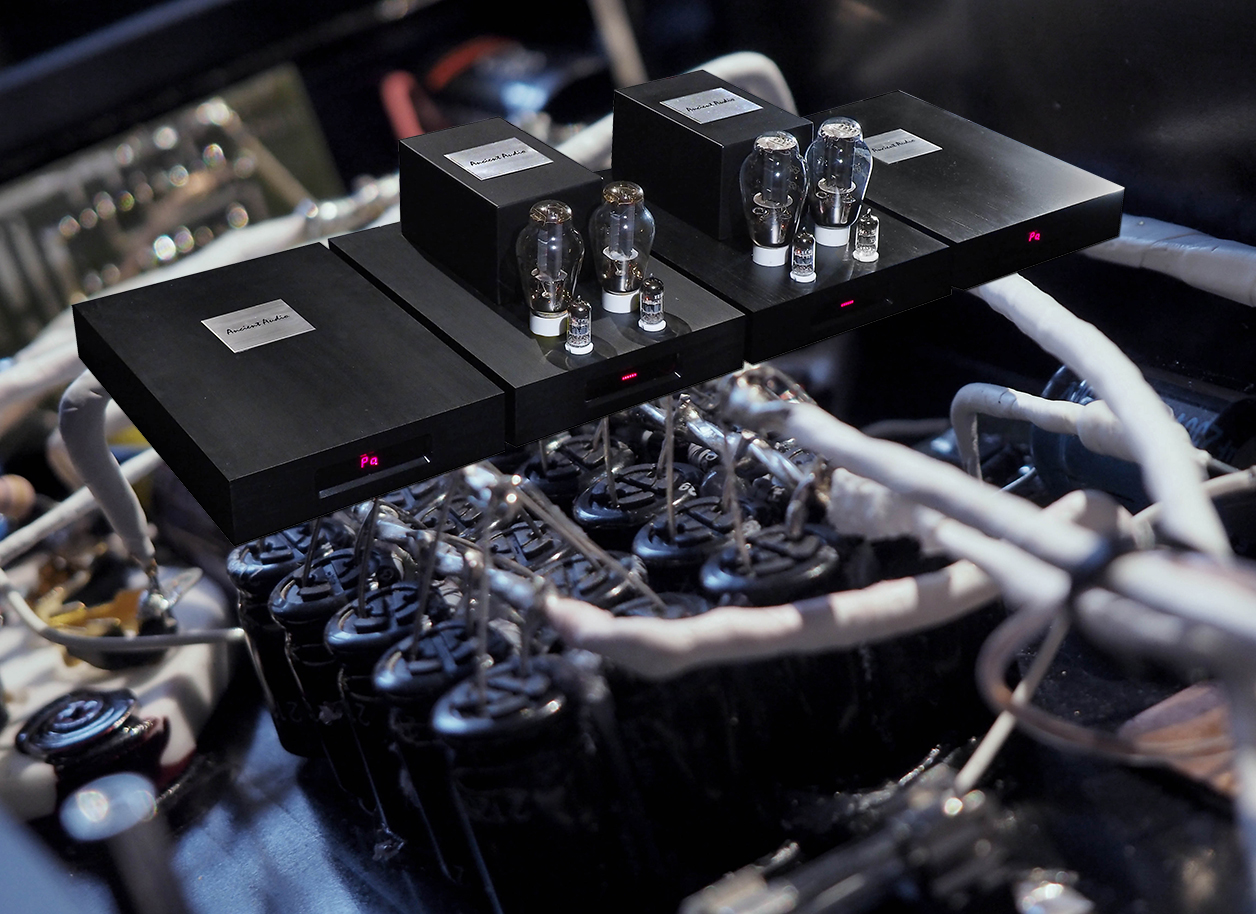
Later I continued with acoustic live performances including Arne Domnerus, Patricia Barber, Ray Brown, Muddy Waters and Etta James. Again the II showcased how natural and real a good recording gets when played by premium 300B circuits. The presentation was amazingly lively, dynamic, open, spacious and still somewhat intimate. What surprise most was how deeply saturated by energy this was. Many more powerful amplifiers can't match this. Also, the II's amazing resolution allowed me to enjoy a unique but unforced insight into the deeper layers of each recording. Whilst packing all that is needed for this, these monos are not what we usually call analytical. They are in fact one of the most non-technical ones I know yet resolved even the most intricate details of a performance and the unique timbres and textures of Etta James and Patricia Barber. They felt close, even intimate, despite being presented from a certain distance. In short, this remarkable resolution didn't show off but served the most convincing, most natural musical experience possible.