

Country of Origin

Reviewer: Frederic Beudot
Digital Source: Aurender A10 streamer, Denafrips Pontus DAC, LHY SW6 ethernet switch, Jay's Audio CDT2 Mk2, Holo Audio Cyan 2 [on loan], Mola Mola Tambaqui [on loan], Volumio Rivo+ [on loan], Lumin X2 [on loan]
Analog Source: VPI Scout 1.1, Zu-DL103 MkII, Genesis Phono Gold, Kitsune KTE LCR-1 Mk5 phono [on loan]
Amplifier: Triode Labs 2A3i, Enleum Amp 23R
Speakers: Ocellia Calliope .21 Twin Signature, Rogers LS 3/5a, Zu Essence
Cables: Zu Varial, Ocellia RCA cables, Zu Event MkII speaker cables, Absolute Fidelity custom XLR to RCA interconnects, Furutech USB and interconnects
Power Cords: Zu Mother, Ocellia power cables, Absolute Fidelity power cable
Powerline conditioning: Isotek Nova, Furutech
Sundry accessories: Isolpads under electronics, GIK Audio room treatment
Music playlist: Tidal
Room size: 18'x14'x10'
Review component retail: NAX $3840/2m, UA3 $480/1m
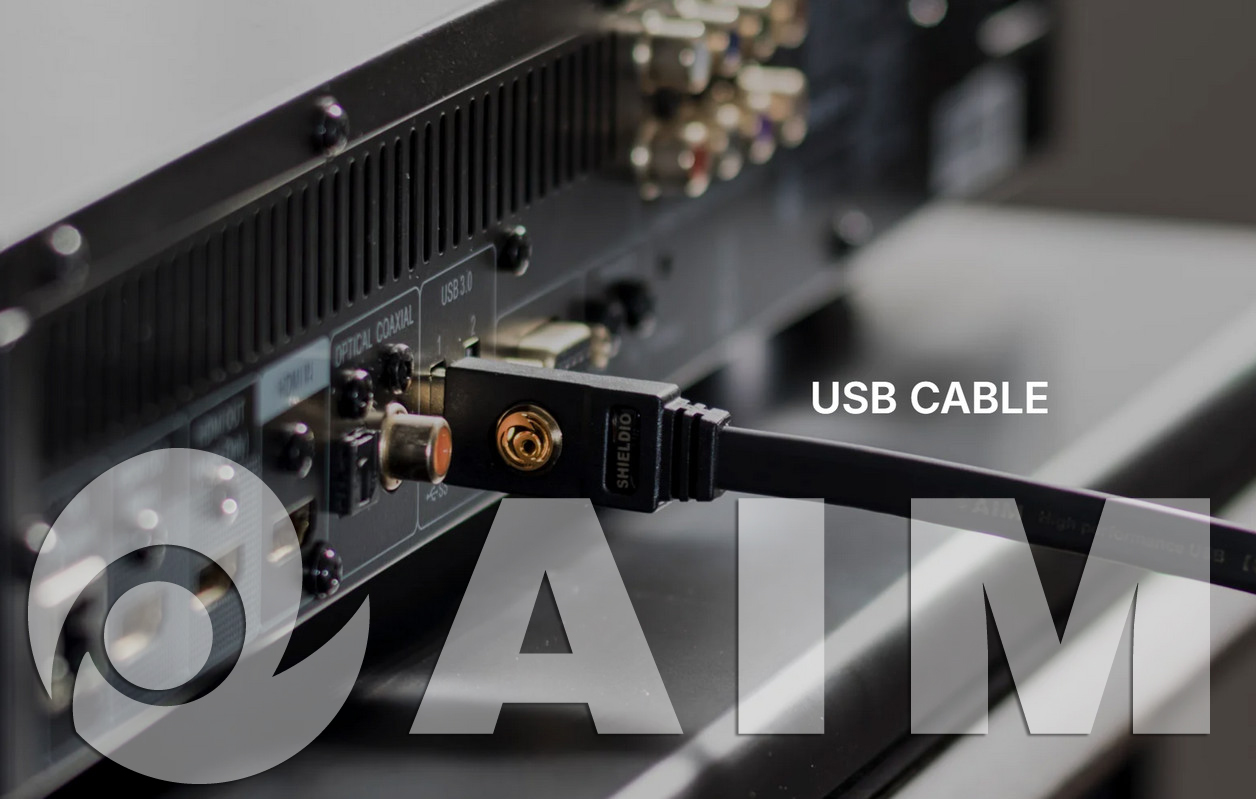
Certain high-end audio categories have even experienced listeners reach reflexively for their smelling salts. Ethernet cables are one, USB links another. Spend four figures on a speaker cable and most audiophiles no longer blink. Spend the same on a cable carrying packets between router and streamer and the villagers suddenly arrive with torches and pitchforks. I understand the villagers. Ethernet was invented to move data. TCP/IP doesn't consult the audiophile before retransmitting a packet. USB doesn't suddenly decide that a violin needs more harmonic richness because a given cable has the better pedigree. Yet digital audio isn't mere math. The endpoint is an analog circuit, the digital signal an analog voltage rapidly alternating between two values. Between network traffic and music reaching our ears sit clocks, power supplies, oscillators, DAC chips, analog output stages and a whole menagerie of mechanisms perfectly capable of responding to electrical noise. That's the territory which Japan's AIM Electronics venture into. Importantly, AIM are not an audiophile cable company that wandered backward into engineering. They arrive from the transmission-cable world, having built a reputation around information and communications cabling before applying that expertise to HDMI, USB and network audio. Their philosophy is to essentially control unwanted interference rather than sprinkle mystical pixie dust over a conductor. Their two products here represent different expressions of that idea. UA3 is their flagship USB, NAX their flagship LAN cable. One of them is merely expensive. The other is what-were-they-thinking pricey. Naturally that's the one which surprised me more.
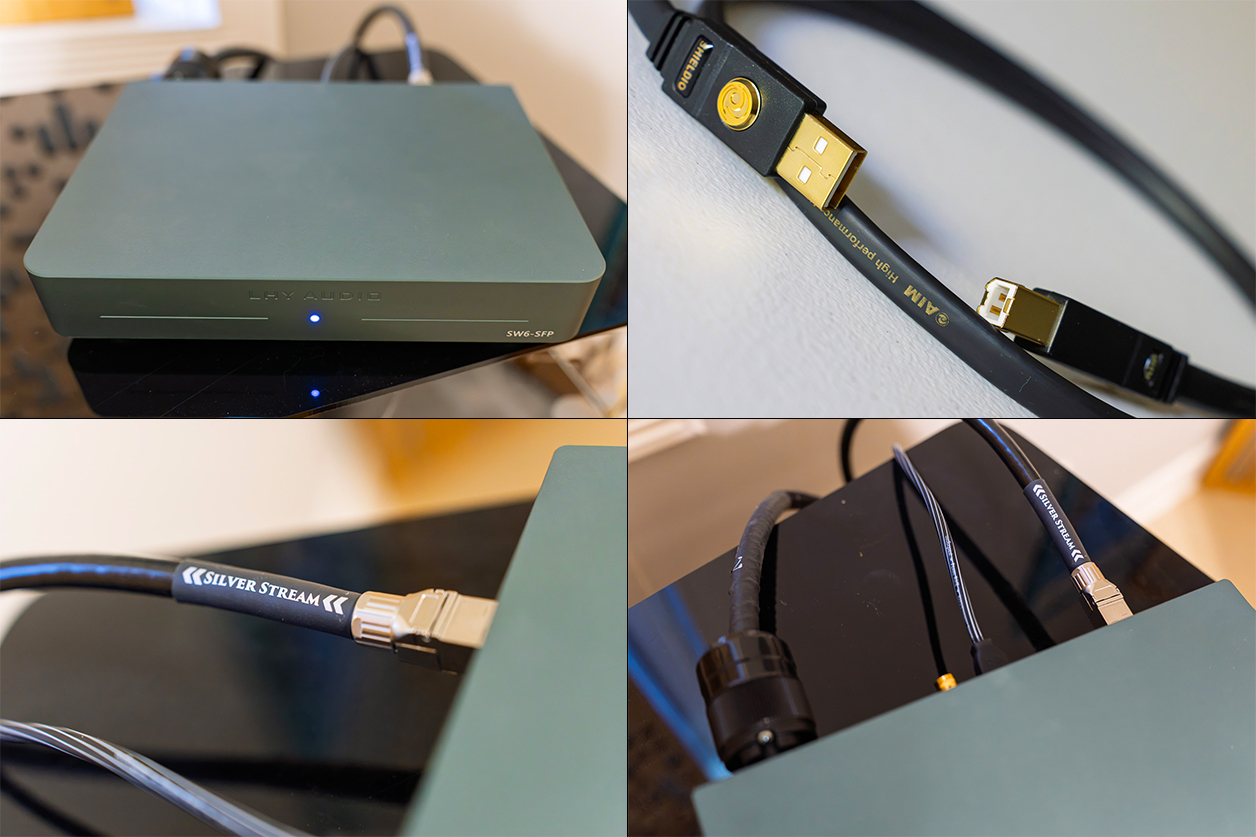
AIM's approach is unusually consistent. Rather than claim that special metallurgy makes digital information somehow more musical, they focus on the electromagnetic environment through which our digital data passes. That means conductor geometry, dielectric behaviour, shielding, separation between conductors and particularly the suppression of electromagnetic interference aka EMI. Their materials include Asahi Kasei's EMI suppression material Pulshut® Mu while NAX adds particularly ambitious multi-layer shielding and a new foamed dielectric called Air 2. UA3 takes another route, separating its USB signal and power conductors within a flat geometry. It's an engineering argument rather than an incantation. Honestly, all that tech jargon probably still wouldn't have convinced me to review AIM's cables had it not been for one hammer of an argument. Lumin's engineers use them to develop the very electronics I've grown so fond of. Nobody will ever accuse Lumin of being esoteric, flashy or into snake oil. When they said that AIM's tech works, I had to hear it for myself and decide whether audible magnitude justified their frontal assault on my wallet. And magnitude is always the operative word when cable reviews are in play, isn't it?











UA3 entered my system first between a Lumin U2 or Volumio Rivo+ streamer and Mola Mola Tambaqui or Holo Cyan2 DACs as I rotated reference gear during my audition of Lumin's X2 also in for review. UA3 is an A-to-B USB 2.0 cable available in lengths from 0.5m to 2m. The physical design immediately tells us that it's no ordinary USB cable wearing an expensive overcoat. It's flatter than most and uses separate conductor arrangements for signal and power. AIM specify pure silver solid-core 20-24 gauge conductors for the signal path, Pulshut Mu around the pairs plus aluminium and high-density copper shielding. The point of their architecture isn't fashion. USB places high-speed differential data and a 5-volt power rail inside the same jacket. AIM therefore attempt to keep the two electrically behaved and better separated than conventional constructions permit. The end result is a cable that looks like a small black ribbon of restrained menace. The connectors are equally serious, with extensive shielding carried right into their construction. No fairy dust here. Compared to my half-priced Furutech USB reference, the AIM feels more solid and beefy, having heft that the slim Furutech lacks. Although some sonic impact of UA3 was audible with all my electronics, it really took my most resolving and quietest combo of U2 + Tambaqui to attain a level of magnitude justifying closer attention. As good as they are, with the others my Furutech cable's clean transparency was more than good enough to call it a day at half the price.

Yet in the best context I could muster, the first thing I noticed wasn't detail. It was continuity, an important distinction. Audiophile upgrades frequently arrive in a sequined jacket labeled more detail. Cymbals acquire a brighter halo. Microdynamics become more obvious. Backgrounds turn blacker. Suddenly you can hear the third chair in the second violin section coughing back in Oslo of 1987. Wonderful; and occasionally exhausting where I'm as guilty as the next audiophile when it comes to chasing the instant gratification of hearing something we haven't before in a well-loved recording. Eventually the novelty wears off, overemphasized detail turns from surprise to assault. UA3 didn't behave that way. Instead music became more joined up. A vocal wasn't simply a collection of consonants, sibilants and harmonic information. It occupied a body. Piano notes seemed to connect more naturally from attack to decay. Bass lines had less of the familiar digital tendency to arrive as information first and physical event second.


12
