
Country of Origin

 This review first appeared in August 2026 on fairaudio.de. By request of the manufacturer and permission of the author, it is hereby syndicated from the German original to reach a broader English audience. Ed.
Reviewer: Elmar Salmutter
Analogous sources: Thorens TD1500, Ortofon 2M Black
Digital sources: PrimaLuna EVO 100 Tube DAC, McIntosh MCD301 AC, Innuos Zenith MK3, NAD M50.2, Macbook Air with Audirvana, Silent Angel Bonn N8 switch
Integrated amplifiers: McIntosh MA8950 AC, PrimaLuna EVO 300
Preamp: AVM PH 30.3
Speakers: Sonus Faber Olympica Nova 3, Canton Reference 7
Headphones: Focal Clear MG, Hifiman Arya
Headphone amplifier: McIntosh MHA100
Cables: Inakustik Reference 2404 MK2, Wireworld Eclipse 7, Goldkabel Executive, Audioquest Diamond USB, Shunyata cords
Rack: Solid Tech
Accessories: Stack Audio Auva 50
Size of listening room: 26m², 2.6m ceiling
Review component price: from €6'600 euros, €10'900 with the options as reviewed
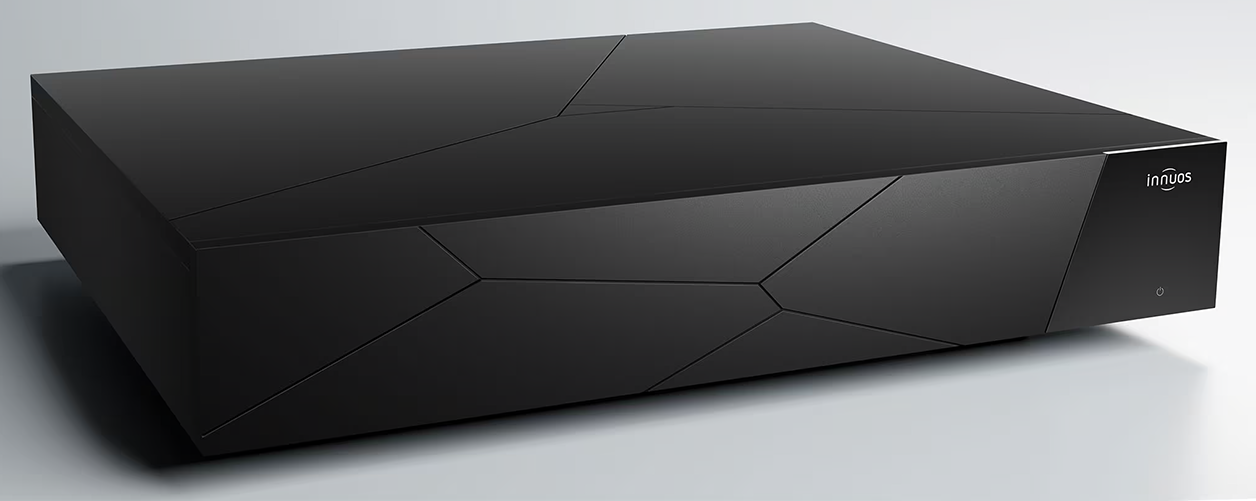
Fleet 'n' flexible. "Is this a vault?" That was my very first thought whilst trying to wrestle the Innuos Stream3 from its packaging. For a streamer/music server to weigh above 12kg is unexpected. But no matter how much I shook and jiggled, no loot of coin or gold bullion emerged. Amongst other things, the considerable weight was due to 10mm aluminium plates machined and assembled extremely cleanly and precisely. So the Innuos Stream3 is a veritable tank. It can be customized with various options to behave as either pure streaming bridge, fully-fledged network player and/or music server. Explained Innuos product specialist Stephen Healy, "the biggest advantage of our aluminium housing is being non-magnetic". Furthermore, the precise tolerances and build are said to have positive vibrational benefits, allowing standing waves in the material to minimize more effectively. Another material advantage is significantly better heat dissipation. "Lower operating temps promote stability of power supply and electronic circuits." Anyone unfamiliar with Innuos or the current hifi world in general would be completely baffled by the Stream3 because when switched off, it has no front-panel controls—whatsoever. My own since-discontinued Zenith Mk3 still had a CD slot. The Stream3 requires an external drive connected to its rear to play/import CD, provided you ordered it not only as a network streamer but music server with internal SSD of 2TB (+ €800), 4TB (+ €1'400) or 8TB (+ €2'500). A significantly cheaper option has you install a 3rd-party M.2 NVMe SSD yourself though this requires opening up the device. According to Innuos, this should be relatively easy even for novices and won't void the warranty. A compartment on the underside can be opened to upgrade/increase storage. With the Stream3 like already the Stream1, Innuos pursue a modular build, allowing the device to configure to individual user requirements via sundry expansion options. The test sample featured an internal 2TB NVMe SSD and PhoenixDAC card whereby the Portuguese company now venture into the world of high-end DACs. While for the Stream1 only the relatively basic (€550) and performance (€1'250) DAC cards were options, at €3'500 the PhoenixDAC board is a completely different animal. My loaner thus packed a total ask of €10'900. Where the PerformanceDAC board utilizes a current AKM chip, high-quality TCXO clocks and separate power supplies for the digital and analog sections, the PhoenixDAC board features a dual-mono architecture with two separate AKM converter chips so one per channel. It incorporates a high-precision OCXO master clock and two additional femto clocks for audio processing. According to Innuos, this more sophisticated architecture minimizes jitter and enables improved channel separation. Furthermore, the PhoenixDAC module adds balanced XLR outputs in addition to the standard RCA connectors. "Our DAC modules aim at users who prefer an integrated approach rather than an outboard converter," said Stephen Healy. "This opens up the possibility for very minimalist systems. In our tests, a Stream3 with PhoenixDAC connected directly to active loudspeakers achieved impressive results."
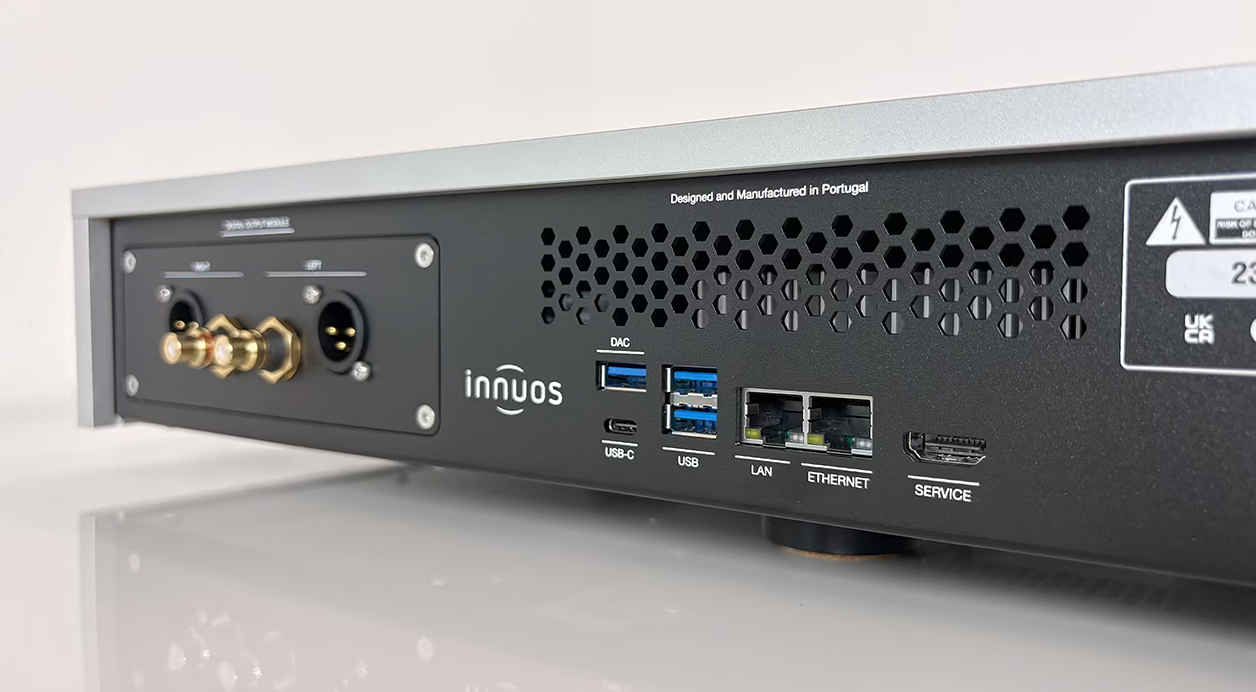












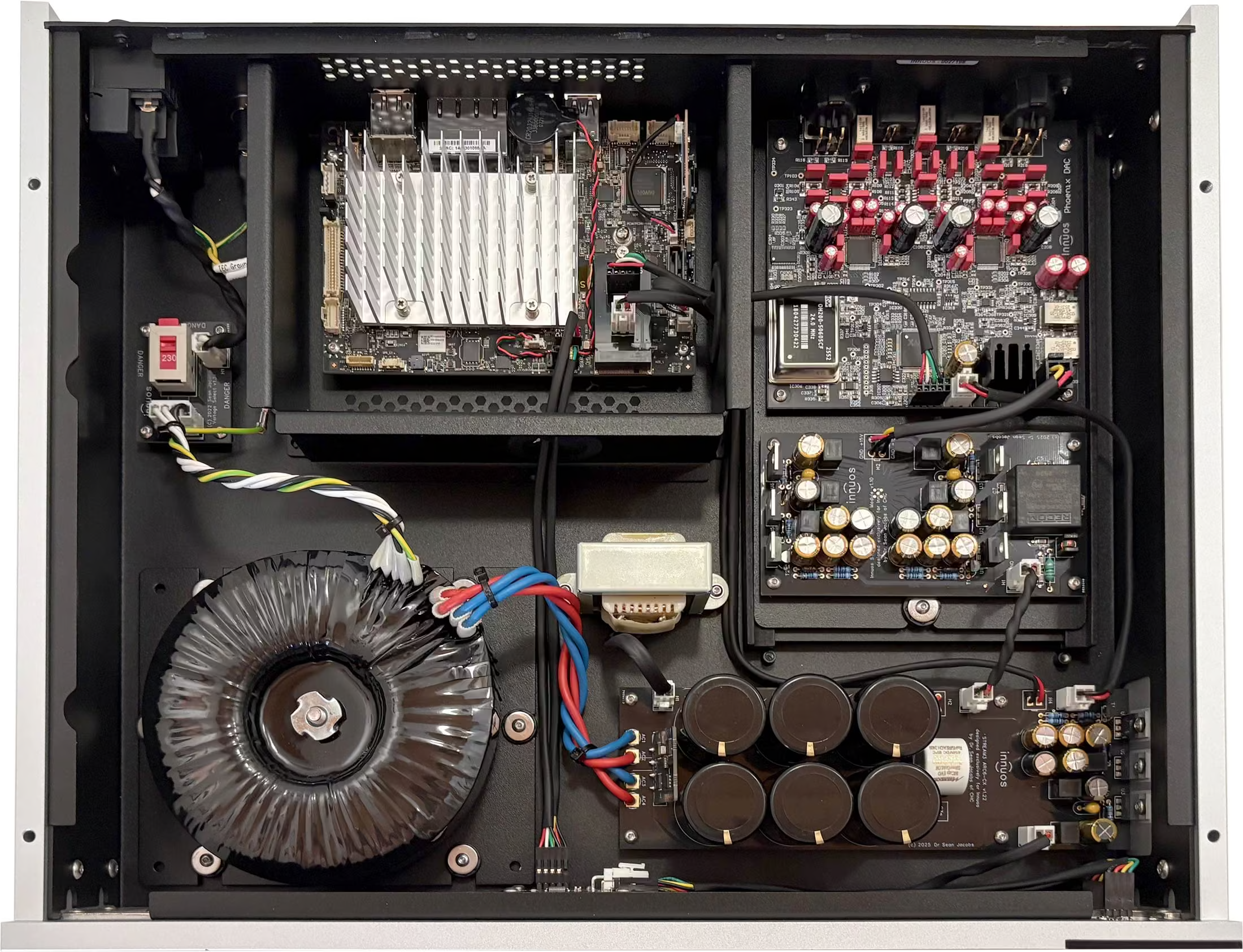
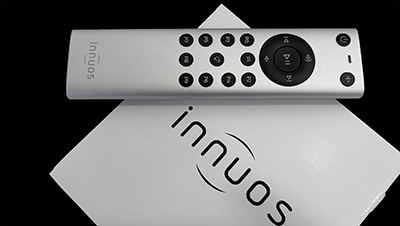 Maximally custom. Those who don't need an integral DAC can instead upgrade the Stream3 with the PhoenixUSB card which forwards a now re-clocked USB signal to an external converter. The PhoenixI²S board with its HDMI interface is more audiophile catnip. Last but not least, there's an S/PDIF board for those who want coaxial, optical and AES/EBU outputs. Users can control the Stream3 with the included metal remote designed to complement the excellent and stable Innuos Sense app. Specifically developed for the Stream1 and Stream3, the remote covers basic functions like power on/off, mute, track skip and volume control. It also features ten programmable shortcut buttons. Technically the Stream3 differs from the smaller Stream1 not only in its larger chassis and more upgrade options but primarily a significantly more sophisticated power supply. Innuos consider a power supply fundamental to sound quality to be one of the central tenets of their design culture. "With each new product range, this area gets optimized further," explained Healy. "In the Stream3, the power supply ensures that both the processing unit and dedicated output modules exhibit exceptionally low noise." The power supply was developed in collaboration with Dr. Sean Jacobs, a specialist in low-noise power. Specifically this means a 300VA toroidal transformer, generous 132'000µF Mundorf capacitors, active rectification, medical-grade mains filtering and DC voltage regulation to ensure particularly clean and stable power delivery with minimal noise. This CX voltage regulation is an Innuos-developed circuit for low-noise stable power supply operation. In addition, a new motherboard designed to guarantee a smoother user experience is based on a 13th-gen Intel quad-core processor. According to Healy, this processor generation is characterized by exceptionally high energy efficiency combined with very high computing power. With 8GB of industrial-grade DDR5 RAM, it offers more than 200% higher computing performance than its predecessor and retains sufficient performance reserves for future software and feature developments. On the back panel you'll find two USB-A ports for USB storage or a CD drive/ripper, USB-C for compatible devices while the HDMI port is for technical service purposes only. Regardless of chosen configuration, there's always a USB DAC output for external converters and a chassis ground post. The LAN interface allows the Stream3 to connect to the Internet while the Ethernet port allows you to connect another player. And of course we also see the RCA and XLR analog outputs of the PhoenixDAC board.
 Normally I let a pre-conditioned sample like mine play quietly for a day or two before consciously paying attention. Sometimes however, certain things catch my ear even during initial casual mode to immediately transport me to the sofa fronting the stereo. That's exactly what happened here. In combination with a McIntosh MA8950 AC integrated amplifier and Sonus Faber Olympica Nova 3 speakers, three things stood out in contrast to my very familiar Innuos Zenith Mk3 connected to the DAC board of the McIntosh integrated amplifier—a setup which cost ~€7K—and the ~€5'400 Stream1 with its integrated PerformanceDAC board reviewed a few months ago. These initial observations confirmed during further listening. All good things come in threes. First: images separated better and more tangibly for more precise soundstage sorting and mapping. This isn't to say that the sound became overly analytical or deconstructed into individual parts. Rather, things simply sounded more present and obvious as demonstrated by "Who Will You Follow" from the new Evanescence album Sanctuary. While this American gothic/modern metal band offers a few strong tracks, the album also sounds overproduced and hyper loud, making it difficult at times to distinguish individual instruments in the sonic gruel. Despite the exaggerated production, the Stream3 managed to delineate and define the instruments more clearly from within the heavily compressed overall atmosphere. This applied doubly to top-notch recordings of any kind. Instruments and vocals were very vivid, three-
 dimensional and almost reach out and
 touch. Secondly, the soundstage projected farther towards me. You could even say that it took a step or two closer, making it all feel more immersive. I was almost startled when Leonard Cohen's "If you are the dealer, I'm out of the game" from You Want It Darker suddenly croaked in my ear as though he were so very close. The lateral soundstage expanded slightly, making the overall vista impressively large. Thirdly, with macrodynamics the Stream3 was bolder. While the other Innuos pieces strike a nice balance between energy, explosiveness and flow, the Stream3 in the configuration tested leaned more towards transient attack. It also was more dynamic than the admittedly lower-priced €1'999 Auralic Vega S1. When discussing macro chops, I refer you to the Health's Conflict DLC, heavy industrial rock with significant dynamic swings. On "Ordinary Loss," the Stream3 was sharper and more forceful than its two siblings, giving the track even more impact and power. Anyone who enjoys energetic music with large amplitude fluctuations should definitely consider this a vigorous 'trio'.

12
