
Country of Origin

Reviewer: Srajan Ebaen
Financial interests: click here
 Main system: Sources: Retina 5K 27" iMac (i5, 256GB SSD, 40GB RAM, Sonoma 14), 4TB external SSD with Thunderbolt 3, Audirvana Studio, Qobuz Sublime, Gustard U26 USB bridge, LHY Audio SW-8 & SW-6 switch, Sonnet Pasithea; Preamp: Hattor Audio ARP-S; Active filter: spl Audio Crossover MkII; Power amplifiers: Vinshine/Kinki Dazzle & mono NC500 Nord Acoustic amps on subwoofer; Loudspeakers: Qualio IQ [on loan]; Subwoofer: sound|kaos D15; Cables: Exact Express Flame, Furutech; Power delivery: 2 x Kinki/Vinshine Tai Hang on amps and source stack, Furutech DPS-4.1 between wall and conditioners; Equipment rack: Artesanía Audio Exoteryc double-wide 3-tier with optional glass shelves, Exoteryc amp stands; Sundry accessories: Acoustic System resonators, AudioQuest FogLifters; Room: 6 x 8m with open door behind listening seat; Room treatment: 2 x PSI Audio AVAA C214 active bass traps
1st upstairs speaker system: Source: FiiO R7 into Soundaware D300Ref SD transport to Cen.Grand DSDAC 1.0 Deluxe with POW; Preamp/filter: Lifesaver Audio Gradient Box 2; Amplifier: Kinki Studio EX-B7 monos; Loudspeakers: sound|kaos Vox3awf; Subwoofer: Zu Method; Cable loom: Exact Express Earth; Power delivery: Vibex Granada/Alhambra, Akiko Audio Corelli Corundum & Castello Solo; Equipment rack: Hifistay Mythology Transform X-Frame [on extended loan]; Sundry accessories: Furutech cable lifts, Furutech NFC Clear Lines; Room: ~3.5 x 8m
1st upstairs headfi system: DAC: Cen.Grand DSDAC 1.0 Deluxe with POW; Headamp: Cen.Grand Silver Fox; Headphones: Raal 1995 Magna, HifiMan Susvara
Desktop system: Source: HP Z2 workstation Win11/64; USB bridge: LHY UIP; Ethernet bridge: LHY EFI; Ethernet reclocker: Stack SmoothLAN; DACs: Gustard R26II; Preamp: Topping A900; Speaker amps: Topping B200 monos; Headphone amp: Enleum AMP-23R; Loudspeakers: Virtual Hifi Viper; Headphones: Final D-8000, aune SR7000, FiiO FT7, HifiMan Susvara Unveiled
2nd upstairs headfi system: Shanling EM7; Headphones: Meze 109 Pro, Fiio FT3, HifiMan HE1000 Unveiled
2nd upstairs speaker system: Source: smsl PL200T CD transport, 1TB microSD; DAC: Shanling EM7; Crossover: Lifesaver Audio Gradient Box II; Amplifiers: LAIV Crescendo Chorus monos; Loudspeakers: MonAcoustic SuperMon Mini with Dynaudio S18 subwoofer
2-channel video system: Source: Oppo BDP-105; All-in-One: Gold Note IS-1000 Deluxe; Loudspeakers: ModalAkustik MusikBoxx; Subwoofer: Zu Mission; Power delivery: Furutech eTP-8, Room: ~6x4m
Review component retail: TBA
 |
 |
 |
 |
 |
 |
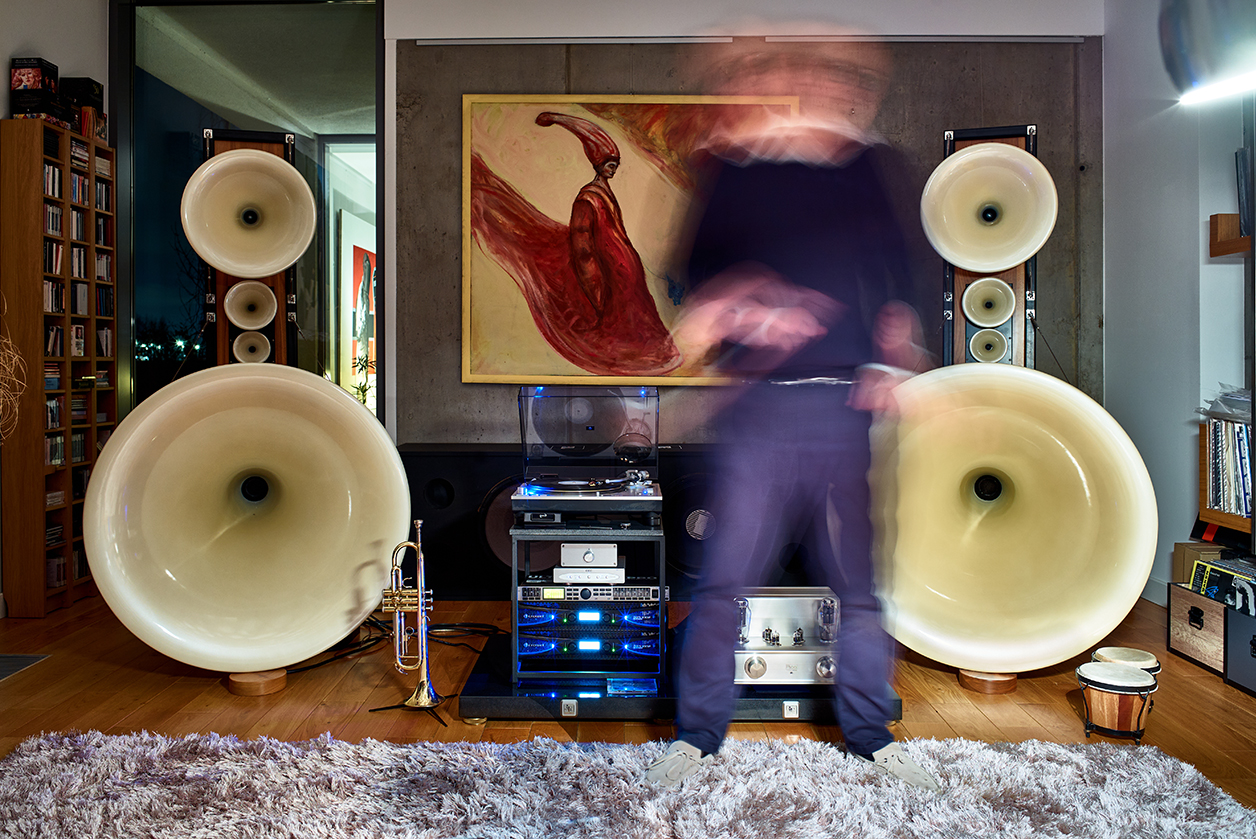
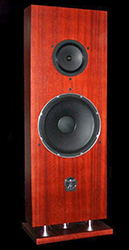 In a review's wake, Marek Kostrzyński and I had this exchange. "I read it with the help of an online translator. This speaker is generally praised for its midrange and expressive vocals. I'd like to ask about that in particular. I appreciate criticisms." "As I wrote, your Qualio IQ remains my favourite speaker. In four years I've heard naught to change my opinion. By contrast, here I perceived box loading. I personally don't fancy that extra warmth and temporal softness. But that's merely personal preference." "I'll keep that in mind with the next speaker I send you." "Why should you? You must design for the greatest possible audience, not to romance a single reviewer." "I meant that I'll send you more avantgarde designs. Family sedans and station wagons are popular and practical but not best for all scenarios." "You know IQ better than anyone; and that I favoured it over the warmer softer IQ30. That tells you my tastes; exactly." "To this day I think of IQ as exceptional not necessarily because of its tonal temperature. After collecting customer feedback, we deliberately tuned IQ Ultra to be softer. Afterwards many clients still stepped up to our even weightier IQ30. I know how you want me to make bolder moves. Just wait on my horns or dipole. They are inevitable. As a memento, I attach a photo of my first large horn speaker from ~20 years ago [above – Ed.]. We made models, moulds and casts from composite resin. The largest horn had a 1m diameter and weighed 90kg. The system was actively powered by a digital crossover and Behringer amps plus a 2×18" RiPol folded open-baffle sub per side. It certainly didn't sound warm. It's simply incredibly difficult to match such a large horn array with a classic box speaker. My first Verseo models are inherently warmer by design. I don't see this as innately better or worse but it certainly makes system matching easier. They also possess a bit more body and less of that 'esoteric' IQ quality. They are easier to drive, too—or rather, easy, period. My goal was being drivable by almost any amplifier. Still, I made an effort to bring their presentation closer to the Qualio style and infuse it with some of that signature atmosphere. To this day IQ remains one of my favourite projects. Coming soon from Cube is the long-promised DIY dipole featuring our own widebander. It will be a two-way available with one or two 15" woofers. It follows my earlier Sensus formula in a simpler design [upper right, with Visaton widebander and 15" woofer – Ed.]. The first baffles are currently being cut. For Verseo I plan on a more advanced dipole. It'll be superior in practically every respect, from driver isolation within the baffle to the LF reinforcement section so useful for dipole bass."

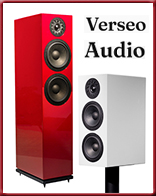
Like street-legal fast cars, avantgarde speakers want proper road conditions and experienced operators. In that context, mainstream speakers are its far more practical and forgiving station wagons. As a concurrent designer for Cube, Pylon, Qualio and now Verseo—the four wheels on his acoustic conveyance—Marek has his eyes on the weekend racer and soccer dad of four kids. His above Jade range for Pylon does not aim at the race track. Even the admittedly esoteric Cube widebanders detune just a bit to decouple from the breed's classic low-power SET paradigm. That allows for more conventional amplifiers. At Qualio the maiden IQ appropriated a classic SB Acoustic Satori papyrus-based midrange as dipole widebander past 10kHz. Treble augmented by Mundorf dipole AMT, bass completed by 9½" port-loaded Satori woofer. It combines racier attributes, full bandwidth and very high resolution. It mates a broad-shouldered bass bin to a transparent acrylic open baffle. It has an unapologetic appetite for power and low-Ω damping. It seems like an attempt to make the single-driver concept fit for modern music whilst leaving behind a traditional rear horn/line and its capacious enclosure. With Verseo's first floorstander and matching monitor, cosmetics, dimensions and tuning aim at the mainstream. Their DNA of course links to Marek's work at Cube and Qualio. Yet his more youthful more extremist appetites for horns and pure dipoles still hum. Would my back and room handle whatever they birthed next? By September 8th, "for years Cube received requests for an open baffle. This year at our annual autumn Warsaw show we'll premiere a dipole 10" Cube widebander with 15" woofer. This exhibit might add a sub to handle the lowest octave but the Sobieski hotel rooms can be tricky so a sub may not be necessary. This model will be compact for a dipole. More info in a month. For Verseo I'm finalizing a model with 8" non-Cube drivers to debut at the same event. That I want to send you by year's end." I already had a parallel date with a Grecian open baffle from Matter Audio called Axion. Belgium's new brand Bombard had bowed their OB1 dynamic dipole by going actively bi-amped with class D and DSP just in time for the Dutch October show. I had a request in with AudioNec to review their smallest OBi Mini dipole with 400Hz-10kHz Linæum-derivative widebander. Was this sector heating up? With SB Audience's new Nero woofers designed especially for ambitious dipoles, it seemed so. Also, Marek's Qualio Quanteen had stopped over at Warsaw contributor Dawid Grzyb's for a review on HifiKnights. Ditto Verseo's Blue Train. Sir Kostrzyński was making the rounds. I seemed to be next on his list.







In a recent review I wrote that "even a beginner's hifi won't mistake a violin for a cello. All basics are recognizable even if more sketchy than fully formed. The pursuit of better gear tends to fill out these first sketches. Bare outlines acquire colour hues and textures even if much restricts to two dimensions. Later the emptiness between shapes better separates them. Then this seeming emptiness begins to exhibit planktonic content of its own. Space becomes audible in performer halos and recorded reflections. We gain a clearer impression of the depth domain. We polish up dimensionally sorted soundstaging. Our eyes applaud. Hifi lingo for these aspects uses visual terms like focus, contrast ratio, imaging, location specificity, structural mapping, depth of field. Yet even at this more advanced stage we needn't have mastered yet the energetic realm. It's where playback expresses a higher electrical charge from superior timing. Now direct-coupled unfiltered widebanders can be advantageous. So can dipoles without time-smeared thru-cone reflections. Our audiophile vacation has many scenic attractions and rest stops. It's in the region of immediacy or energy transmission that many systems still hang." It's precisely why an open-backed widebander for unfiltered dipole action had my attention. Point-source widebanders like Cube's avoid a crossover's energy absorption and phase shift. Their reduced time smear nets stronger immediacy and unfettered reflexes. Dynamic open baffles don't rear-load their drivers with enclosures to absorb that energy. They don't trap energized air which looks to re-radiate through thin cones delayed in time. This too minimizes temporal blur for greater directness. What if we avoid both a crossover between 1kHz to 8kHz and rear-chamber loading? The prospect tickled my ears. "Count me in!"
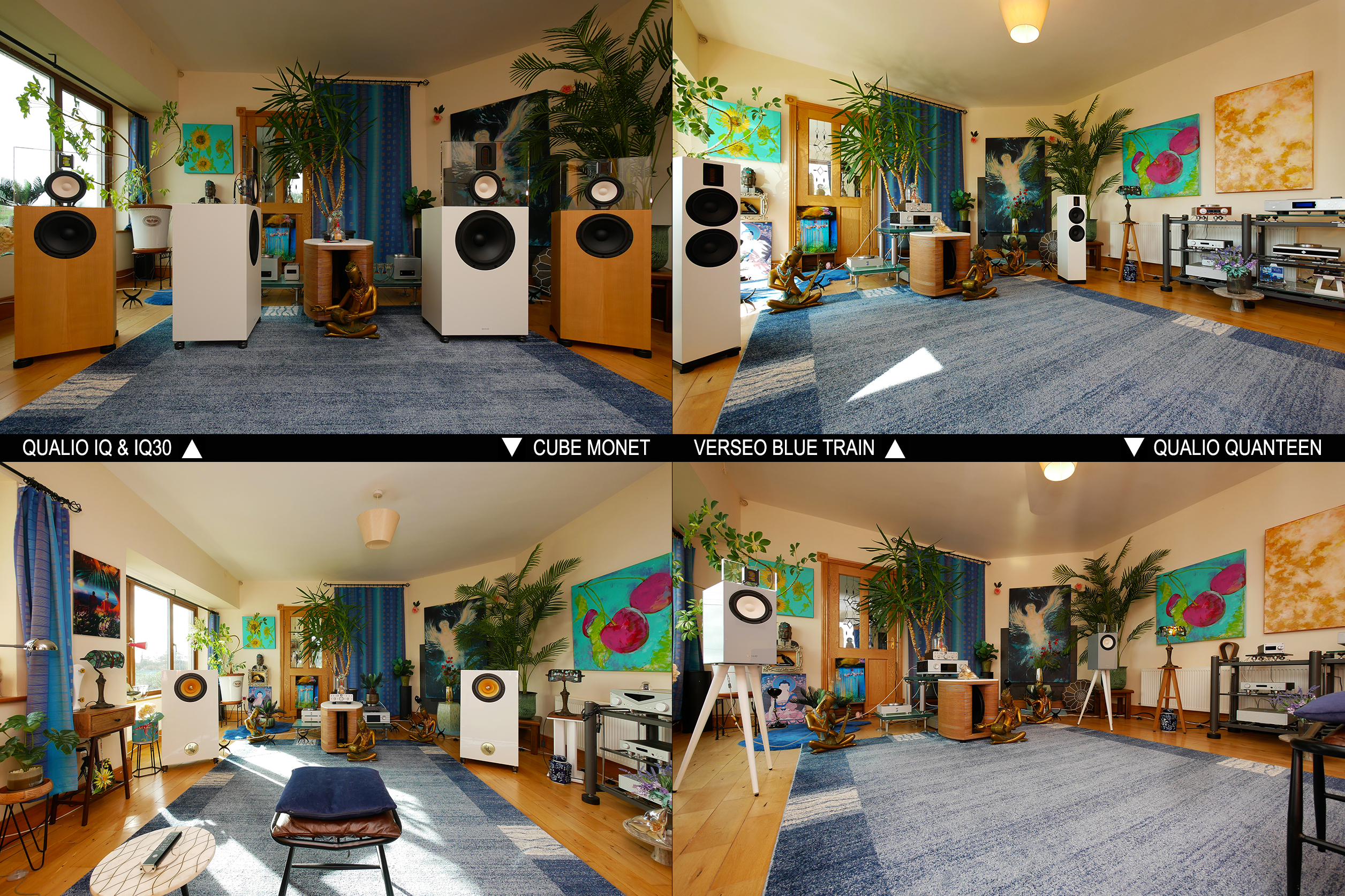
Final acceptance was still contingent on size and weight. Marek simply knows my limits. I felt certain that I'd have a plate for whatever he had on the stove. And, the inefficiency of dipole bass which trades room gain for time-domain clarity mandates high-excursion large cone surface. That's often to the rather wide tune of twin 15" woofers. Here size quickly escalates with LF ambitions to approach room dividers. I'd have to see just how big Marek's appetites were. If his stomach growled, did he still bake in a folded-dipole wrinkle à la Linkwitz W frame or Ridthaler DRS/BMC RiPol? Those reduce baffle width for greater domestic bliss. They also add loading for higher self damping and lower self resonance. Just because now I'm a solitary widower doesn't mean anything goes. My time of youthful excess is behind me. Now I'm into (cough) mature excess. We just saw five Marek speakers I reviewed in my current room. At the annual Warsaw show, from October 23rd-25th, Verseo will exhibit in the Radisson Blu Sobieski's room 129. With already four models in the portfolio by then—Solea, Starlight, Orfeu and Blue Train—Marek could play a game of very busy musical chairs. Two weeks prior to show day, "I'll let you know as soon as I lock in. Something is ready but still needs to be measured. You'll get details on the new models before the event. One of them should appeal to you." Options; beyond the other four? Marek was clearly cooking with gas; on the OB front with likely single or dual woofers; and/or 12" or 15" choices.
… to be continued…

Verseo's website
