Country of Origin

Reviewer: Srajan Ebaen
Financial interests: click here
 Main system: Sources: Retina 5K 27" iMac (i5, 256GB SSD, 40GB RAM, Sonoma 14), 4TB external SSD with Thunderbolt 3, Audirvana Studio, Qobuz Sublime, Singxer SU-6 USB bridge, LHY Audio SW-8 & SW-6 switch, Sonnet Pasithea, LAiV Audio Harmony; Active filter: spl Audio Crossover MkII; Power amplifiers: Vinshine/Kinki Dazzle & mono Ncore 500 Nord Acoustic amps on subwoofer; Headamp: Enleum AMP-23R; Phones: Raal 1995 Immanis; Loudspeakers: Qualio IQ [on loan] Cables: Exact Express Flame, Furutech; Power delivery: 2 x Kinki/Vinshine Tai Hang on amps and source stack, Furutech DPS-4.1 between wall and conditioners; Equipment rack: Artesanía Audio Exoteryc double-wide 3-tier with optional glass shelves, Exoteryc amp stands; Sundry accessories: Acoustic System resonators, AudioQuest FogLifters; Room: 6 x 8m with open door behind listening seat; Room treatment: 2 x PSI Audio AVAA C214 active bass traps
2nd system: Source: FiiO R7 into Soundaware D300Ref SD transport to Cen.Grand DSDAC 1.0 Deluxe with POW; Preamp/filter: Lifesaver Audio Gradient Box 2; Amplifier: Kinki Studio EX-B7 monos; Loudspeakers: ModalAkustik MusikBoxx; Subwoofer: Zu Method; Cable loom: Exact Express Earth; Power delivery: Vibex Granada/Alhambra, Akiko Audio Corelli Corundum & Castello Solo; Equipment rack: Hifistay Mythology Transform X-Frame [on extended loan]; Sundry accessories: Furutech cable lifts, Furutech NFC Clear Lines; Room: ~3.5 x 8m
2nd headfi system: DAC: Cen.Grand DSDAC 1.0 Deluxe with POW; Headamp: Cen.Grand Silver Fox; Headphones: Raal 1995 Magna, HifiMan Susvara
Desktop system: Source: HP Z2 workstation Win11/64; USB bridge: LHY UIP; Ethernet bridge: LHY EFI; Ethernet reclocker: Stack SmoothLAN; DACs: Audalytic DR701 & Gustard R26II; Headphone/preamp: FangSound Dionysus; Speaker amps: Topping B200 monos; Loudspeakers: Virtual Hifi Viper; Headphones: Final D-8000, aune SR7000, FiiO FT7
Upstairs headfi system: FiiO R7; Headphones: Meze 109 Pro, Fiio FT3
2nd upstairs speaker system: Source: FiiO R7; DAC/pre: COS D1; Amplifier: Kinki EX-M7; Loudspeakers: sound|kaos Vox3 with Dynaudio S18 subwoofer
2-channel video system: Source: Oppo BDP-105; All-in-One: Gold Note IS-1000 Deluxe; Loudspeakers: Zu Mission; Subwoofer: Zu Mission; Power delivery: Furutech eTP-8, Room: ~6x4m
Review component retail: $495
 |
 |
 |
 |
 |
 |
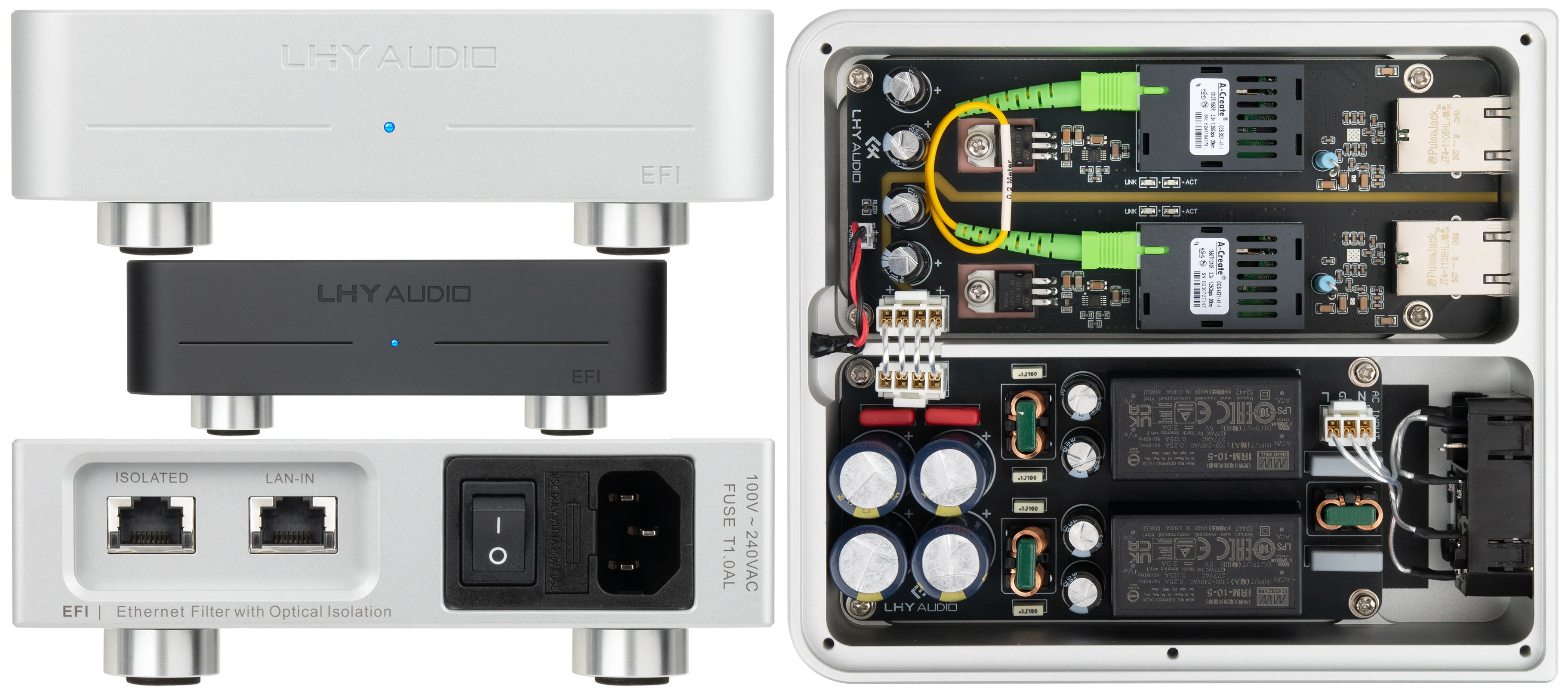
The LHY of the LAN. We needn't live in Texas to know a Houston moment. Of late, my desktop's LAN had the jitters. Whenever I listened to YouTube which Audirvana doesn't embed—I can't apply hog mode to YouTube as I can for Qobuz—parallel tasks could disrupt my PC's USB audio. My main rig doesn't multi-task. It knows no such troubles. But my office speaks fluent parallel processing. At any given time I'll switch open tasks between Outlook, Opera, WordPress, Photoshop, Qobuz and Spotify Premium. In moments of added load—streaming audio whilst opening a large Photoshop file or loading a big site like CNN—USB audio could glitch. Was the deliberate 100Mbps limit in Stack Audio's LAN regenerator a bandwidth issue? Not. Bypassing it made no difference on that score. Was my Windows audio buffer too small? It was already set for 384kHz. When we drown in mystery, we clutch at straws. Having had great success with kit from Jay's Audio subsidiary LHY, I bought the above 10Gbps Ethernet Filter with Optical Isolation, EFI for short. It has no speed limit. Like iFi's LAN iPurifier Pro, it converts copper Ethernet to fibre-optics and back; internally. Hello broadband galvanic disruptor. It runs discrete micro-precision voltage regs for the photoelectric converters. There are high-current common-mode inductors, quality filter capacitors and twin MeanWell power supplies. It has just two high-speed electrically isolated RJ45 ports: one in, one out. The chassis is machined from solid. It's available in silver or black. The size would duplicate my LHY UIP as their equivalent USB isolator. Not only is this stuff very well built and priced right. It ships promptly. Once bitten, twice kissed. So we go back for thirds. In the past I'd done SFP with a media converter (RJ45 to optical), 20-metre long fibre link and LAN distributor with SFP port on the other end. I'd heard fibre's advantages over copper Ethernet. EFI internalizes that, no fibre-optic ports needed. It would slip between my router and PC's network card with short CAT7 runs and in the process kick Stack Audio's mini to the kerb. Happy Houston? Ongoing mystery? If the latter, I had Plan B. I was already convinced. My issue was my workstation's USB management. When I used the Gustard R26II DAC's network input via Audirvana's UPnP interface to bypass USB entirely, the music signal was rock solid no matter what. Sadly Gustard's RJ45 port is undiscoverable direct so off limits to YouTube. There I had to switch back to USB with its intermittent drop-outs.




Below shows how Plan B anticipated my desktop to wire up once EFI landed: with Ethernet isolation between router⇒PC and router⇒DAC plus USB isolation between PC⇒DAC. Where UHF noise from router or PC goes, my motto is clear. Mi casa not su casa! Whether I'd solve my USB hiccups in this manner was another matter. What it would add regardless is PCM⇒DSD512 up-conversion in Audirvana via Ethernet which over USB limits to DSD256. Once a system is truly sorted—in this instance, the nearfield adds further detail magnification—fussy tweaks like these can shave off half a percentage point for those who pay close attention to appreciate final flourishes. In anticipation of EFI's arrival, I rejigged my setup. I placed Stack Audio's tiny SmoothLAN reclocker cum regenerator in what would be its final place. Then I filled the hole that created with one of my two LHY network switches from the big system across the hallway. That was the place EFI would occupy when the switch returned to the main system.
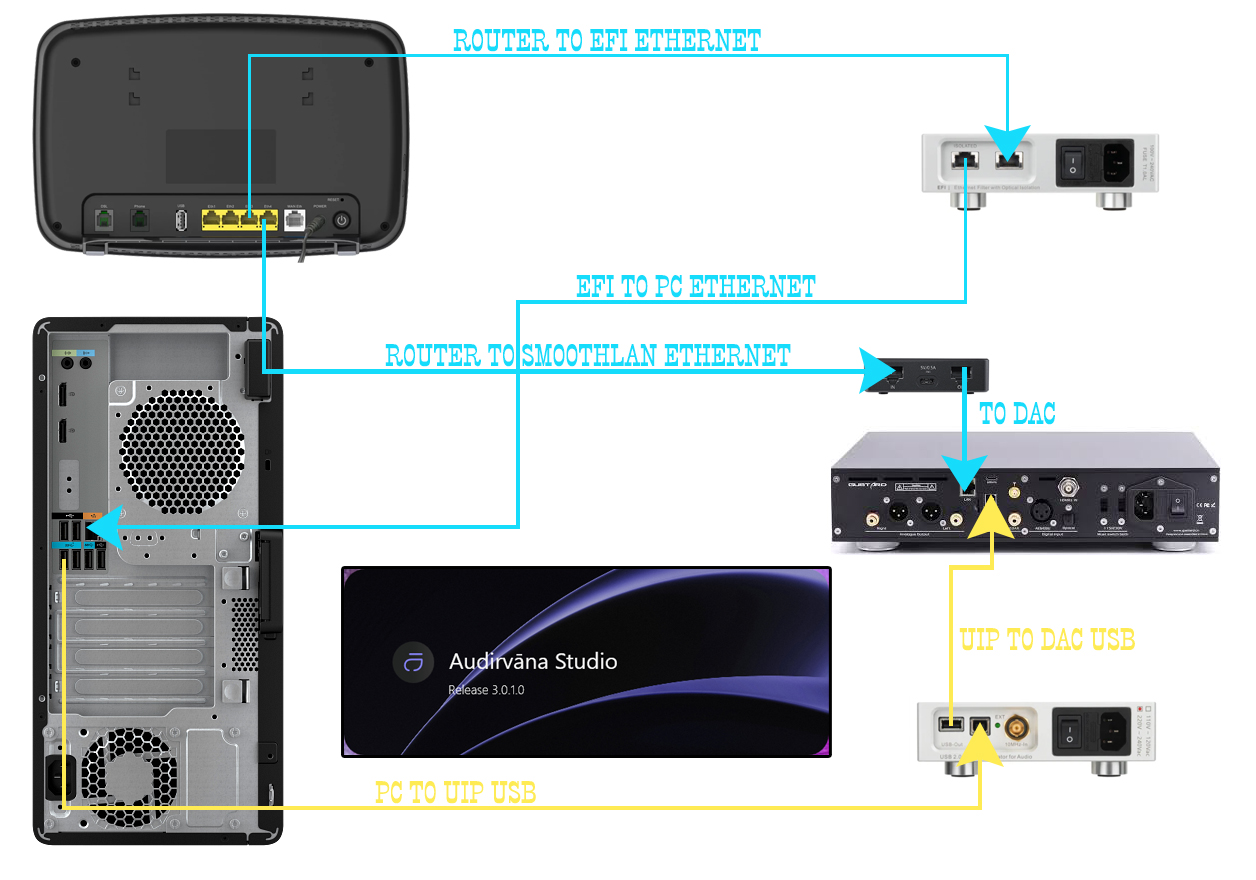
This built isolation moats between my two obvious sources of noise—router and PC—and the discrete R2R DAC. Incoming cloud signal hit EFI before my PC ever saw it. If I wanted to use the DAC in network mode for highest DSD 22.5MHz processing, the signal routed by the most current Audirvana Studio version would hit the router then Stack Audio micro before the DAC saw it. For USB streaming I already had equivalent isolation with LHY's UIP. Perhaps because Jupiter was retrograde, my USB gremlins suddenly vanished. Given that despite plenty of experience with Irish fog I hadn't the foggiest about why, I wasn't at all troubled by my EFI purchase. The Gustard DAC really sounds best in its limited network mode. With EFI, I could run it so without creating an unfiltered router⇒DAC connection. If all this seems complex, it just duplicates what an audiophile streamer does. It simply offboards various building blocks. My WiFi allergy prevents me from using headless streamers for their tablet remotes. Meanwhile streamers with touch displays are dwarfed by my 34" curved office monitor; by the 27" iMac in the main system. Rather than pack various Ethernet/USB circuits of reclockers and isolators into a €10K streamer, I execute them in modular fashion. So what if it means more boxes and cables? Allergies aren't about convenience. Personal incompatibilities look for ways to manage them. If we be allergic to shellfish or peanuts, we avoid those critters. Those unafflicted have no worries. My basic solution hardwires everything from mice to keyboards and streaming audio kit. The wireless brigade has it far easier. Good on them!
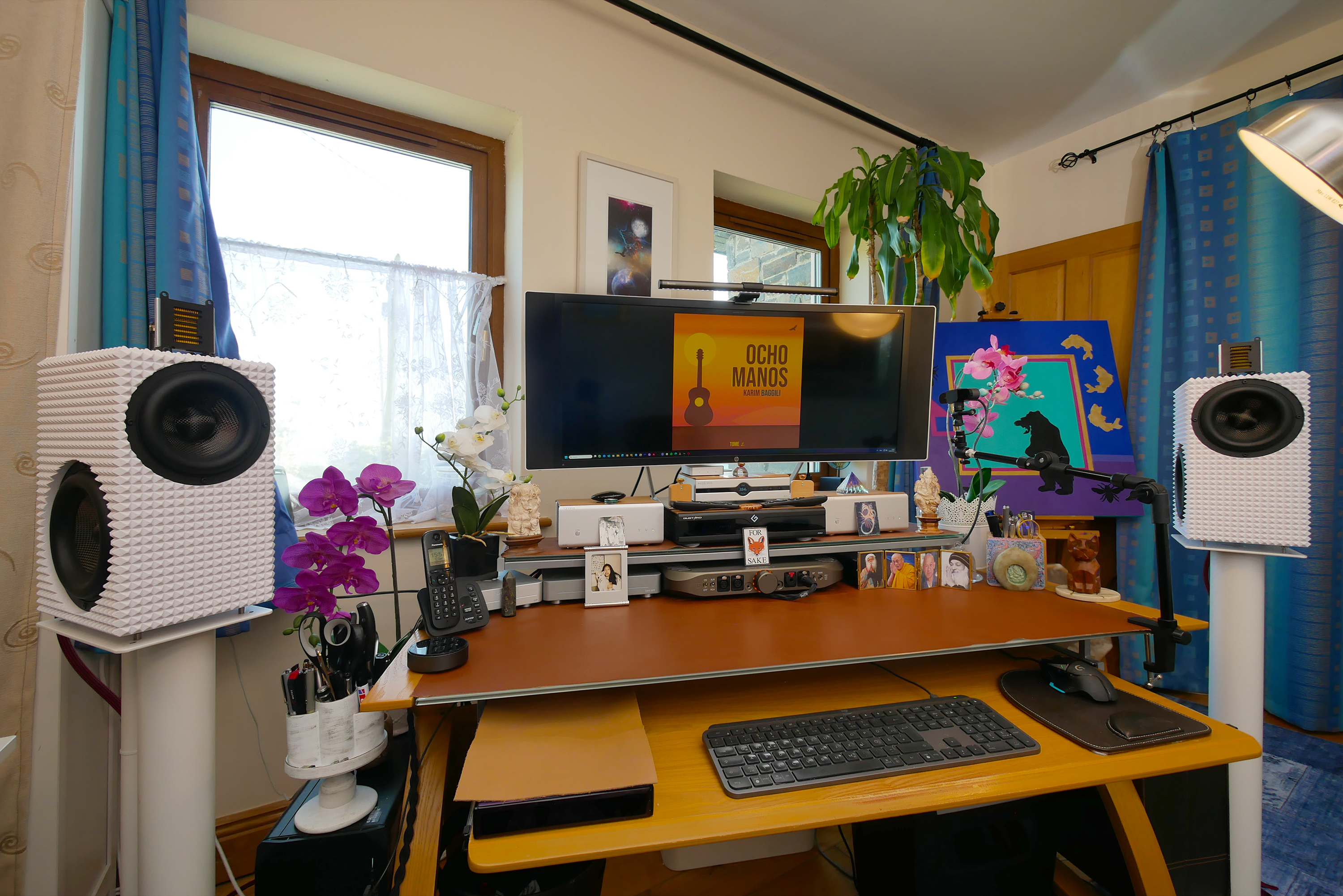 Gustard R26II DAC ⇒ FangSound Dionysus pre/headamp ⇒ Topping B200 monos ⇒ Virtual Hifi Viper.