
Country of Origin

Reviewer: Srajan Ebaen
Financial interests: click here
Main system: Sources: Retina 5K 27" iMac (i5, 256GB SSD, 40GB RAM, Sonoma 14), 4TB external SSD with Thunderbolt 3, Audirvana Studio, Qobuz Sublime, Singxer SU-6 USB bridge, LHY Audio SW-8 & SW-6 switch, Sonnet Pasithea, Laiv Audio Harmony; Active filter: Lifesaver Audio Gradient Box 2; Power amplifiers: Vinshine Audio x Kinki Studio Dazzle & 2 x Nord Acoustic Ncore-500-based monos on subwoofer; Headamp: Enleum AMP-23R; Phones: Raal 1995 Immanis; Loudspeakers: Qualio IQ [on loan] Cables: Exact Express Flame, Furutech; Power delivery: 2 x Kinki/Vinshine Tai Hang on amps and source stack, Furutech DPS-4.1 between wall and conditioners; Equipment rack: Artesanía Audio Exoteryc double-wide 3-tier with optional glass shelves, Exoteryc amp stands; Sundry accessories: Acoustic System resonators, AudioQuest FogLifters; Room: 6 x 8m with open door behind listening seat; Room treatment: 2 x PSI Audio AVAA C214 active bass traps
2nd system: Source: FiiO R7 into Soundaware D300Ref SD transport to Cen.Grand DSDAC 1.0 Deluxe with POW; Preamp: Hattor ARP-S; Active analog xover: Lifesaver Audio Gradient Box II; Amplifier: Kinki Studio EX-B7 monos; Loudspeakers: ModalAkustik MusikBoxx; Subwoofer: Zu Method; Cable loom: Exact Express Earth; Power delivery: Vibex Granada/Alhambra, Akiko Audio Corelli Corundum & Castello Solo; Equipment rack: Hifistay Mythology Transform X-Frame [on extended loan]; Sundry accessories: Furutech cable lifts, Furutech NFC Clear Lines; Room: ~3.5 x 8m
2nd headfi system: DAC: Cen.Grand DSDAC 1.0 Deluxe with POW; Headamp: Cen.Grand Silver Fox; Headphones: Raal 1995 Magna, HifiMan Susvara
Desktop system: Source: HP Z2 work station Win11/64; USB bridge: LHY UIP; DAC + Head/preamp: Audalytic DR70 + HP70 both on LHY LPS-80 Dual; Speaker amps: Topping B200 monos; Loudspeakers: Virtual Hifi Viper; Headphones: Final D-8000, aune SR7000, FiiO FT7
Upstairs headfi system: FiiO R7; Headphones: Meze 109 Pro, Fiio FT3
2nd upstairs speaker system: Source: FiiO R7; DAC/pre: COS D1; Amplifier: Kinki Studio EX-M7; Loudspeakers: Virtual Hifi Cobra [on loan]
2-channel video system: Source: Oppo BDP-105; All-in-One: Gold Note IS-1000 Deluxe; Loudspeakers: Zu Soul VI; Subwoofer: Dynaudio 18S; Power delivery: Furutech eTP-8, Room: ~6x4m
Review component retail: $10.5K/pr speakers, $1.5K/pr optional stands, $7.8K subwoofer
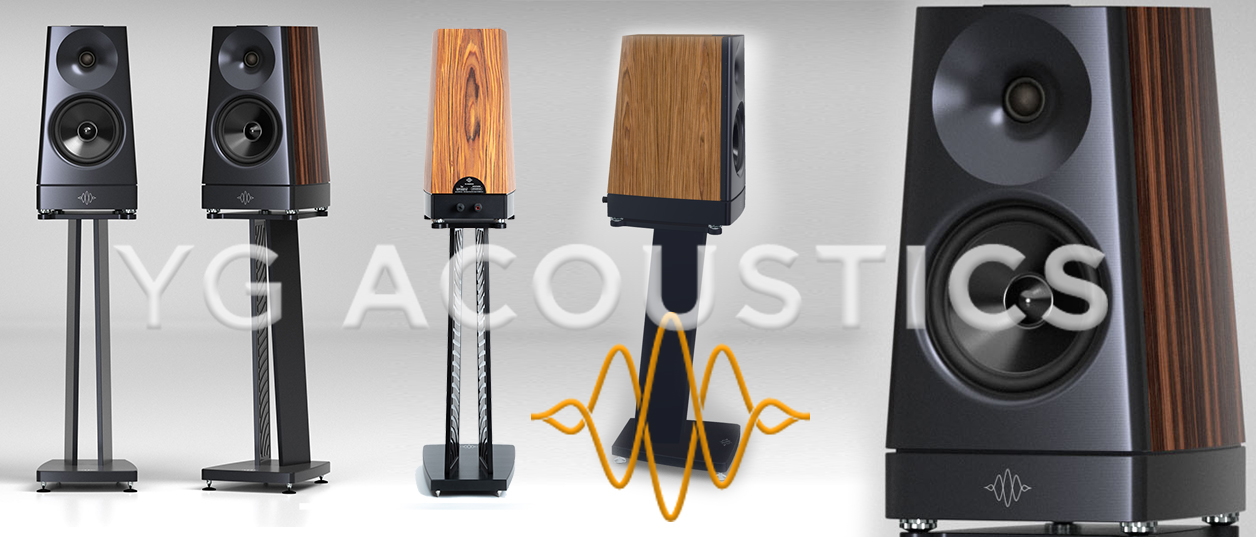
Peakaboo. Train your eyes on YG Acoustics' Peaks range. By replacing a full metal jacket with resin-fibre panels on top, rear and cheeks "curved to exact tolerances in custom presses by experienced European workshops", the brand has gone downmarket. With Colorado's capital of Denver at a 1'609m altitude to earn it the Mile-High City moniker, pricing of course couldn't fall to Florida swamp levels. We still buy precision-machined aluminium baffles with tweeter waveguides; aluminium plinths to segregate the crossover gen.pop from the high-pressure inmates; and the brand's signature milled-from-solid drivers. YG has always been known for deep software-based modelling. Whilst still living in Israel whence too stems Alon Wolf of Magico, Yoav Geva wrote DSP code. This soon led to his own modelling software to optimize loudspeaker filter design for phase and frequency so amplitude and time, in lockstep. By 2004 so two years later, he had moved his budding speaker brand to Arvada/Colorado. There he oversaw the manufacture of all their speaker parts and a production process reliant on expensive hi-tech machinery which the factory invested in. The brand with the founder's initials became famous as that other US aluminator speaker house—Switzerland have Stenheim and Piega—and for advanced math behind non-traditional crossovers; flawless metal work of the cabinets; and in-house fabricated diaphragms forged from solid aluminium billet. By 2020 former client, owner of the Reference XV Studio model and fellow modelling wizard Dr. Matthew Webster of Cambridge Acoustic Sciences in the UK formally joined the team with firm ideas on how to implement technical advancements. By 2022 he became CEO and chief engineer dedicated to shepherding the brand's core DNA to its next evolutionary expression. This was accompanied by capital investments to grow facility and staff. The latter added Boulder's Steve Huntley and PS Audio's Duncan Taylor.
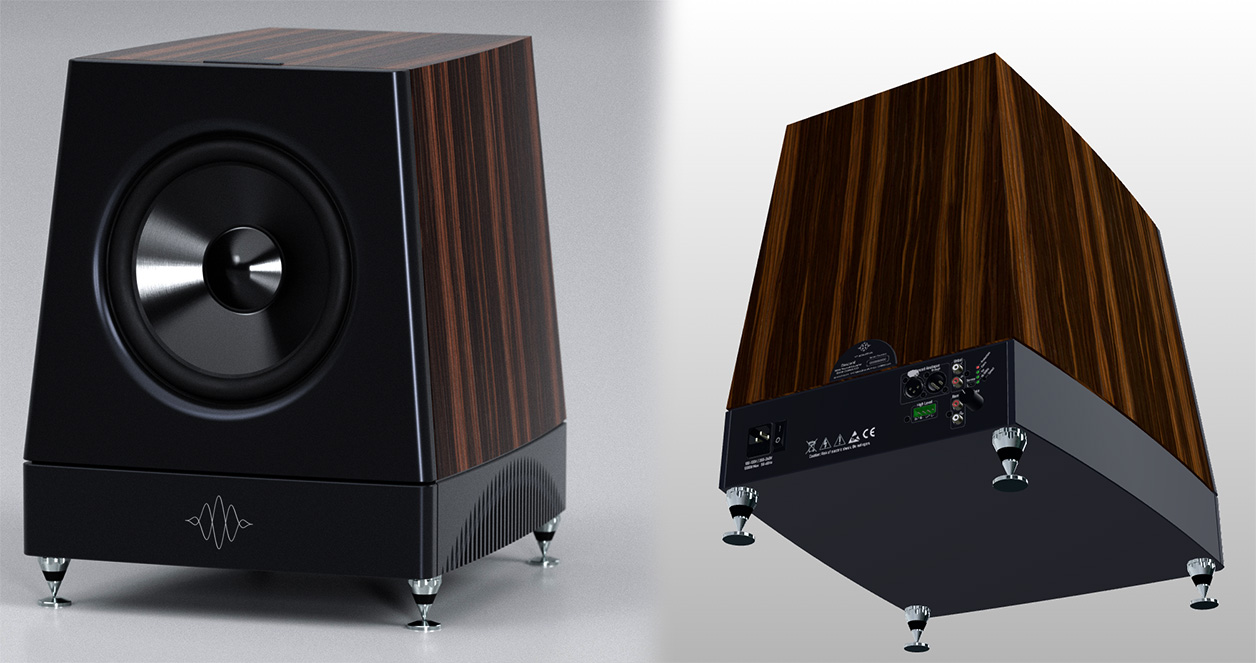
After learning from a John Darko email that Duncan enjoyed my writing, I reached out to propose a review of a monitor in their entry Peaks range which would keep freight and backs happy. Might YG have an EU importer willing to loan me a demonstrator pair for a few weeks to avoid trans-Atlantic shipping just for another review? I had my eyes on the 7¼" two-way Tor so the bigger of the two standmounts. For finishes we can ask three ways and get a blond Oak veneer, figured brown Rosewood or dark striped Ebony. The costly stands are optional but sized to fit and bolt to the speakers. It all looks classic YG but has become more attainable. "Great to hear from you. I'd love to get your ears on Cairn, Tor, Talus or Carmel. With Cairn and Tor, our matching sub is designed differently than most. We prioritize phase coherence between drivers as they hand off so our Descent exactly matches the phase slopes of the bottom driver of each speaker chosen by a button on the sub's back. We could try for just standmounts or floorstanding two-ways but it could be cool to toss Descent into the mix. You're correct that we now differ from the Yoav days. We have two machines and two people left from when he owned the company. We also bring exponentially more scientific firepower to the basic principles he laid out and have fixed tonal balances and cleaned up a lot of previously unknown distortion and improved just about everything, not to mention added this more affordable line. I'm working on EU distribution as we speak. Our electrical and acoustic R&D now headquarters in the UK's Cambridge. As part of the ownership changeover ~2017, we created Cambridge Acoustic Sciences. This not only handles R&D but serves as UK distributor for us and a few other brands like Bel Canto, Boulder, Cardas and Vinnie Rossi. Because of Trump and his lovely tariffs, we opened up limited production at our Cambridge facility as of January 2025. So they have some stock from which they could perhaps supply you. I'll get back in touch once I know more. I think you will really dig our new products and sound."










What I dug right off was Duncan's stereo 2.1 suggestion. It hit 24 hours after I penned this. Synchronicity is a city I often visit though I haven't a clue how to actually get there. It just happens. What doesn't often happen is agreement on the importance of time-domain fidelity in speakers. Yet it's that not amplitude linearity which our ear/brain prioritizes. We certainly don't expect that sitting 4th row balcony in a filled-to-capacity symphony hall gets us flat frequency response. Reality expects deviations well past ±15dB. Yet we don't cringe as we would with a hifi. Why? Because the acoustic concert doesn't butcher the time domain as do so many playback systems. That's right back at Yoav's original tenet to pursue filter functions which combine electrical and acoustic behaviour for high amplitude linearity with minimal phase errors. It's a focus alive and well with YG v2.0 under Dr. Webster. To paraphrase from a YouTube interview with him, "whilst our slopes tend to sum to 4th-order functions, in isolation our crossovers actually make no sense. They only work as they do with the particular drivers, wiring, cabinets and all the structural details we associate them with." For Tor it means just ±5° phase deviation across an octave on either side of the filter. I rubbish math like a pig in shyte accompanied by the same noises. Yet applied math does happen to be the special ingredient of YG's secret sauce; well, one of them.
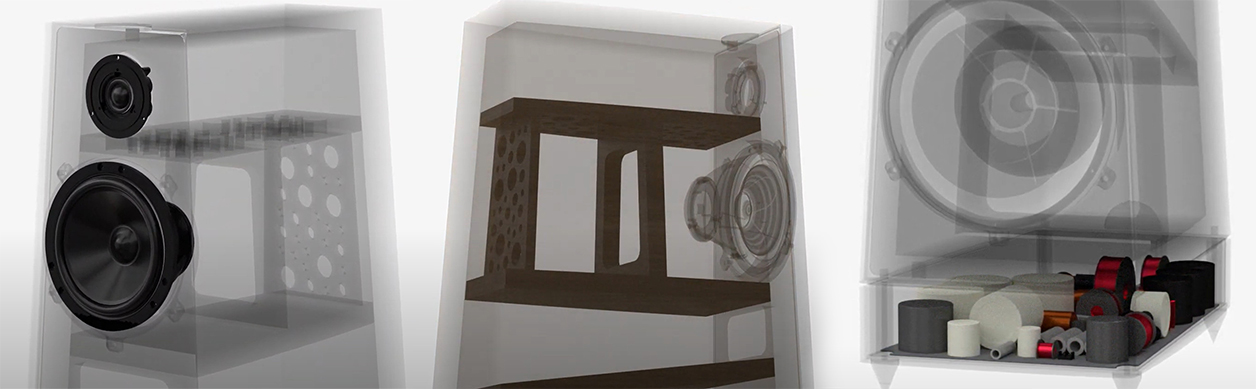 These perforated braces pull double duty as carefully tuned miniature Helmholtz resonators (diameter of the bores vs their depth).
The CAS credo quantifies cause 'n' effect. "Realistic audio experiences are not the result of a mysterious and unmeasurable magic. They are functions of many interacting complex systems. The links in this chain are the traditional elements of audio reproduction from the recording itself through each component and cable on the way to the loudspeaker and room itself. The final link is the amazing ear/brain system which is the ultimate judge of believability. Our core aim is to understand this process as fully as we can. This means understanding music and its signal content. It means understanding the impact and interactions of all components and cables right up to the final elaborate interplay of amplifier, crossover, drive units, cabinet and room. Most challenging though is understanding how humans perceive sound: exactly what makes the impression of a cello utterly believable or recreates that spine-tingling sensation of a venue's acoustic. Human ears have some weaknesses held up against the finest microphones and measurement tools. After all, evolution had no drive to gift us with abilities to distinguish relative volume levels precisely; or to uncover subtle signals buried in much louder backgrounds. Nonetheless, the ear does have some remarkable strengths—signal inference, spatial interpretation and superb phase discrimination to name just a few. Indeed, some of these were the undoing of first-generation digital audio."

12
