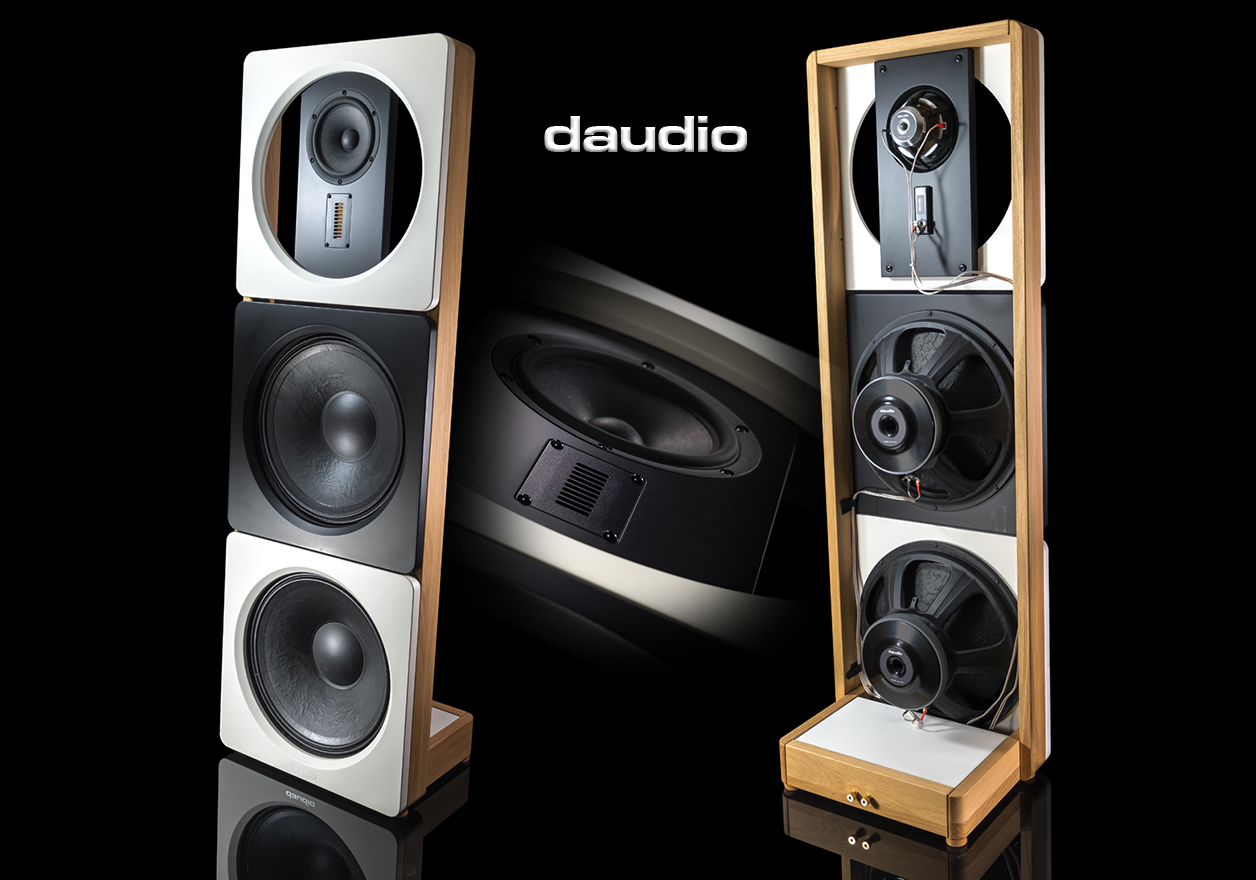
'twas Dawid Grzyb's segue into his recent Daudio MOB3 review. One terse sentence of serious consequences—if anything hifi can ever be called serious given the global state of affairs. 'Once heard, never forgotten' is the upshot. It's of a sonic encounter of superiority beyond our status quo. It leaves a wound. Rooting in it are seeds of desire. Untended to, roots can turn to rot. It's when we can't unhear the thing in question to become a constant reminder of what our present system can't do. What once was right suddenly contains a wrong. True satisfaction now depends on fixing it. Et voilà, our old frenemy the upgrade bug. But this bug comes in different sizes to influence how much a particular bite will bug us. Having had a phone chat with Dawid after his syndicated review published, I know that he now carries a vampiric mark called dipole bass. Being demonstrably different, that's a deep mark. Its carriers grow resistant to, even repelled by, what proud owners of standard speakers call attractive, normal and correct. It doesn't matter whether it's a thin-walled ported Harbeth or heroically inert sealed Magico. Box bass behaves omni below ~200-100Hz. Unless we use sizable unsightly bass traps, that rides our primary room modes for maximum resonance. Meanwhile dipole bass, its folded variants plus cardioid versions like Kii build in directivity to minimize timing blur from late-arriving reflections playing 3D snooker in the LF; and reduce our room's arbitrary EQ on the amplitude response. Once heard, what its devotees call the weight and warmth of omni bass we now view as bloom/boom and lazy stoppages. Even in subtler forms, its presence now troubles us. We grow increasingly incapable of enjoying that type bass and its ill effects on timing and textural linearity. But as you'll appreciate once you know the above woofers to be 15 inches across, the alternative needn't be all roses. What if our décor and/or room size can't cope with such large open baffles? What if our amps aren't up to properly damping open-backed woofers? If you're a reviewer like Dawid—freshly but now irreversibly bitten—how will this affect your happy options for future speaker assignments? How to maintain your ability to judge the vast ported majority like its intended target audience would? Exactly what variant on dipole bass will you end up with to serve both personal pleasure and work?
Today's brief post isn't about answers. Dawid will figure it out for himself when the time comes. It's merely about the risks and rewards when remaining in our comfort zone vs. exploring alternatives which might trigger all manner of inconvenient consequences leading to a comprehensive rethink on how we might want to do hifi to then enforce a reconfigured approach and hardware. Rephrased, whilst audio reviewing for a living can seem like a dream job, if one works across a broad swath of different solutions, such encounters of the 4th kind are virtually inevitable sooner than later. "Now what?" becomes the question then…
