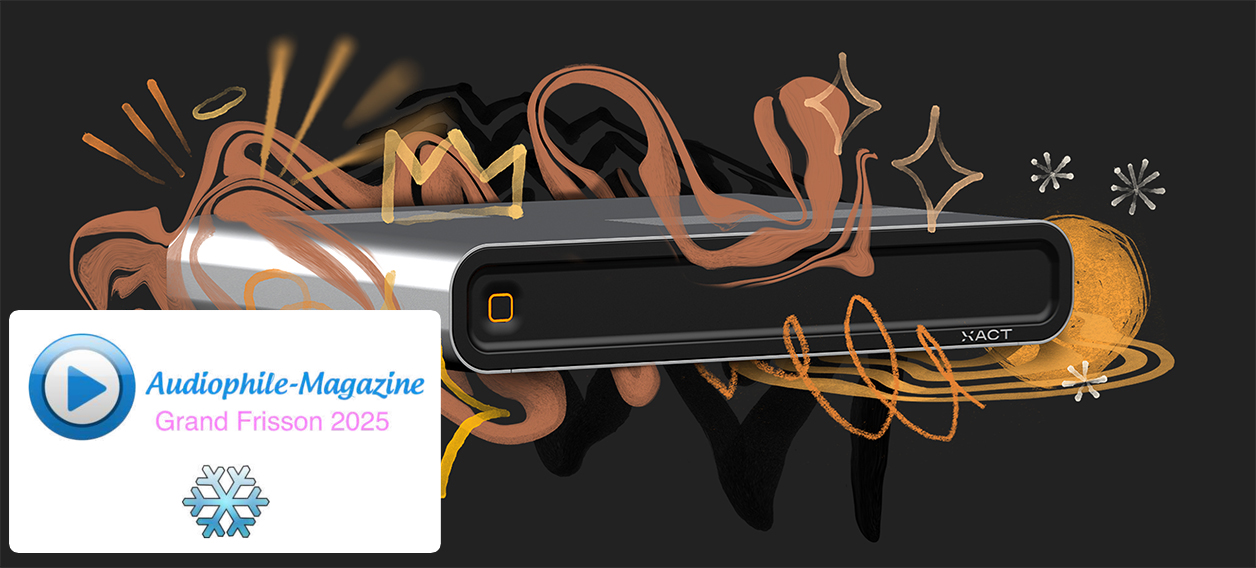
 On the 2L MQA sample album, I was just as surprised to witness the performance gap between XACT S1 and Esoteric. The "Kyrie" sung by the Cantus ensemble and the "Yoiker frode fjellheim" suddenly had a new truly enchanting sweetness and fullness. The "Tomb of Dupré" under organist Terje Winge revealed extraordinary sonics from clearly superior lucidity that had me think I was hearing something rather more realistic. It really takes this type of recording to understand how much closer the XACT comes to exceptional definition without typical digital artefacts. Another upshot of such extreme transparency was understanding how producer Morten Lindberg captured vastly diverse acoustic environs and atmospheres from track to track. It simply takes a transport of the necessary resolution to parlay it. Replacing the Esoteric with a Weiss Helios, I had the same overwhelming observation. Where the Weiss UPnP streamer isn't as efficient as the Esoteric, its DAC is of a completely different calibre and clearly its raison d'être. Here the added value of the XACT over the Weiss was even more impressive than with the N-05XD. Still on the same MQA compilation, "Ujamaas: America" with the Trondheim Symphony Orchestra led by Ingar Heine Bergby developed an incredibly wide, high and deep stereo image on the below small Guru G10 towers. I would have never imagined that such small speakers can throw such cavernous imagery. The Helios DAC added a lot of density while retaining high transient accuracy and tonal variety.
 On my big Vivid flagships, the S1 fed by my Esoteric N-05XD/S-05 duo had Marcin's USB input undoubtedly cause greater holography as well as tonal richness. On Mahler's 6th Symphony with the Budapest Festival Orchestra under Ivan Fischer, the XACT gave me more clarity on the string sections, more timbre variety of the winds. It also drew a more realistic perspective to better visualize in the middle of the first movement the bells of the cows standing at a distance. This contributed increased serenity when listening to this music which is not necessarily cheerful or relaxing. Each time I selected symphonic recordings, I then found constants such as the silky side of violins and cellos which seemed more natural and soft and most certainly less dry than with my other streamers. By changing musical genre to vocal Jazz with South Korean songstress Youn Sun Nah, the differences were more subtle but perfectly audible between my Esoteric and Marcin's streamer which had better attacks and more modulated vocal inflections. On "Calypso Blues", her phrasing felt more vaporous, almost ghostly because I was more aware of her breathing. On "Frevo", her scatting became more energetic. The finger slides on the guitar's neck were more obvious without appearing to be highlighted by post-production zoom. So the XACT felt impressively precise yet also gentle and natural – quite unprecedented for a digital transport in my experience thus far. Even by selecting a musical extract from the Qobuz library. the qualities of the S1 remained intact.











 It is however the type music I tend to consider less discriminating because it's been too heavily remastered to constitute a reliable auditory reference. Yet SIA's music took on another dimension with the XACT since it appeared in a much wider stereo window than over my Esoteric or Lumin streamers. LF transients were sharper too which immediately gets one's feet into dance mode. Synths were richer and vocals acquired nuances so a form of subtlety not suspected before. Still on Qobuz, Toña la Negra's "Antes" grew far more presence as though transporting me to the original venue where the other streamers made the stage feel less inhabited. So the S1 unveiled more ambient data to make the Mexican singer feel more embodied yet also more finely resurrected. Many times during the few months spent with the XACT S1, I had the impression of having changed out speakers which is to say, I invoked the element which traditionally is supposed to have the biggest impact on a hifi's quality. So the streamer designed by Marcin Ostapowicz really changed things up. I loved these few months spent with it and already regret its departure. The XACT S1 went farther than any other digital source I've evaluated and really introduced me to an extraordinarily new level of natural definition.
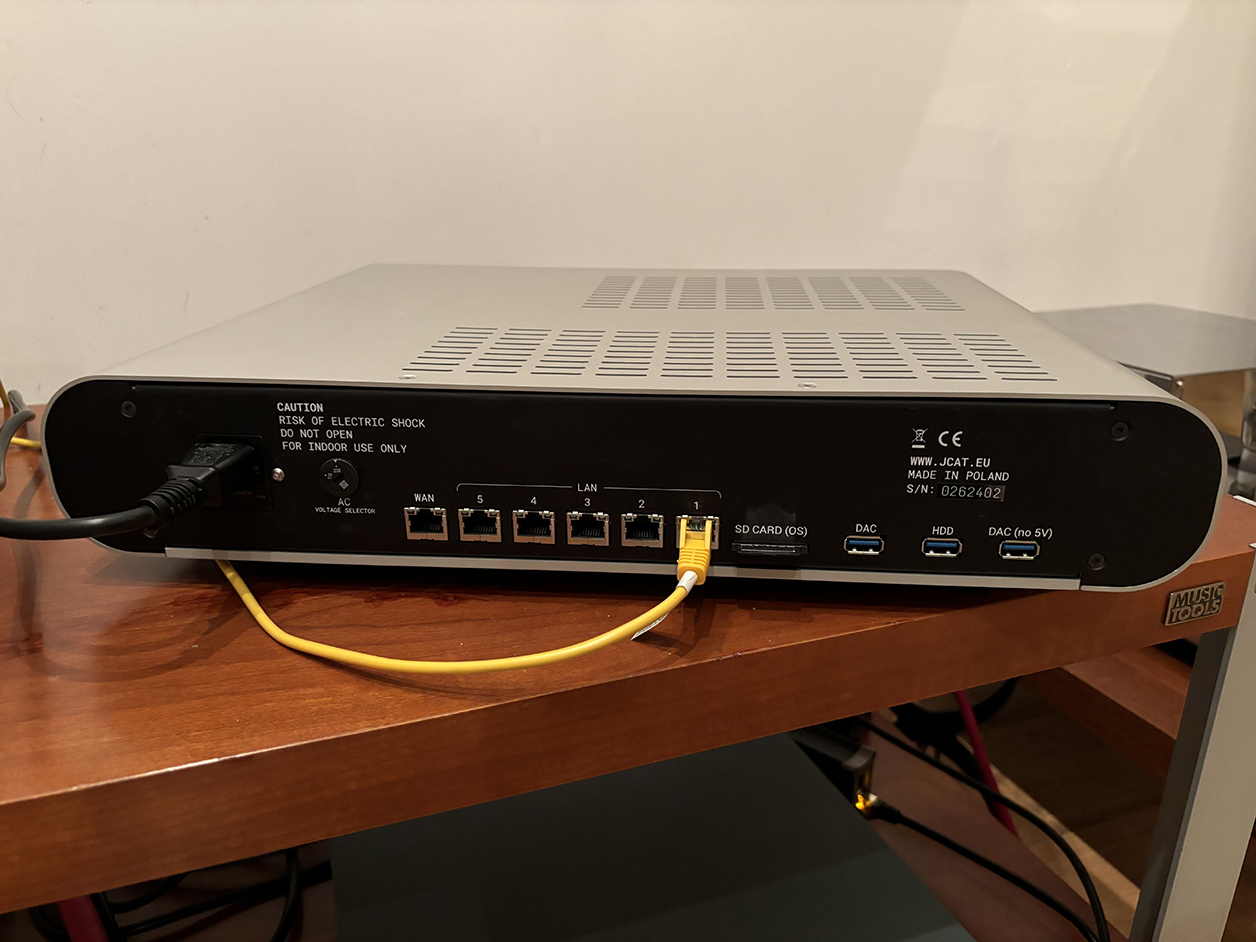
Alas, there's an even higher-spec version called the S1 Evo; as though I'd not fallen hard enough for the standard S1 already. The only thing I'm almost certain of is that in the near future my system will have a new source, be it the S1 or S1 Evo, review forthcoming. I hope to have that sorted quickly. In the meantime, the S1 deserves my first award of 2025.