My original plan for this review included my LampizatOr Pacific DAC. That changed when the latter found a new home. Meanwhile a major upgrade is on the horizon. I'll have to wait several weeks before it arrives but had just the sparring partner for today's TotalDAC. Thorsten Loesch's AMR DP-777SE is an interesting design that sports tubed outputs, fully balanced circuitry and twin D/A conversion hearts. Quad multi-bit UDA1305ATs on FPGA handle 16/44.1 while two neighboring ΔΣ chips process everything above CD quality up to 24/192. This old AMR is gold in a way exclusive to R-2R designs. It aged very well and sounds fine to a point where even today it goes toe to toe with many modern DACs. Since the d1-biunity too is a resistor-ladder type albeit discrete, this comparison was hardly inappropriate. The staggering financial gap was rather more so but such is life. Both TotalDAC and AMR saw the Boenicke Power Gate's captive M2 cords. DIY cables built from LessLoss Entropic-processed C-MARC connected the DACs to the Trilogy 915R preamp's XLR inputs. From there matching 995R mono amps took over. Here I have a small confession. Several days ago one of my sound|kaos Vox 3afw monitors took a hit which resulted in damage to one voice coil and motor. That turned out nigh impossible to fix without a specialist jig. Long story short, a new wideband driver is ordered which is why this gig resorted exclusively to my Boenicke W11 SE+ floorstanders. I'm very happy about that and shortly explain why. To accommodate this load, the two 995Rs operated in quad-power class AB not their usual 'eco A' bias. To swap DACs, I only had to reseat a USB cable and change inputs on the preamp. My Innuos Statement server/streamer recognized the two USB receivers virtually instantly. Since the d1-biunity outputs voltages higher than the AMR, leveling them meant adjusting volume on the 915R by about 5dB.
The Audio Reveal Hercules is the most recent R-2R DAC I had the pleasure of reviewing. One particular paragraph from it nicely encapsulates what I think about multi-bit converters in general and what I want to say now about the d1-biunity DAC. Here goes: "The digital heart of the Hercules belongs to a family of IC with several well-pronounced sonic features, or at least that's what experience tells me. Such products based on either old R-2R chips or their modern discrete counterparts present music in an elegant, pleasantly physiological and soft fashion that avoids extreme magnification. This is quite an oversimplification to demand explanations. Let's assume that a fast, lean, ethereal, open, distant, detailed, cool, contoured, hard and bright sound occupies one end of the scale while the other builds upon darkness, density, warmth, roundness, softness and spatial intimacy. In this context, multi-bit DACs sit closer to the latter. However, warmth, density, softness and intimacy shape their sound to a much lesser degree than elasticity, tonal richness, dynamics, tactility and that fine organic flavor which results from them. This trait unfolds into a specific tissue on instruments and vocals that boosts their mass, adds color and rounds out their outlines a bit but also makes them as nimble and vivid as they are substantial, moist and palpable. The organic charm in question is not the same as plain warmth and density which even slightly overdone screw up agility and expressiveness, suffocate oxygen and kill particles floating in the air. The difference is fundamental though not exactly easy to put into words. Listening is the only way to fully grasp it. Let's just say that R-2R DACs are inherently more dense but not overly sweet, bulky and ultimately hazy. I find their sound aromatic, expressive, resolving, moist and structurally complex. The tubed Audio Reveal Hercules has these traits in spades. More importantly, it charms in such a way that the world around us becomes irrelevant. Last time I checked, that was the main goal of this hobby."










Unsurprisingly, everything above perfectly applied to the d1-biunity. During several days of listening, the impression of its exceptional correctness, flow and ease was constantly on hand. These three traits were present regardless of my musical choices. The TotalDAC did everything truly well without standing out in any way as though its primary goal narrowed down to supportive action for the associated electronics. That's how high-level transparency emerged as the d1-biunity's first major asset. Soon there were more discoveries but first things first. Here a context comprised of three other R-2R designs comes in handy. Although their individual reviews stand several years apart, their key takeaways remain completely valid. While the Polish Hercules DAC sounded like a full-fledged multi-bit machine, its direct-heated output stage reinforced its speed-related traits. The Denafrips Terminator Plus reviewed in September 2021 flaunted the same core aroma though its lower tonal balance set a noticeably dense, soft, calm, somewhat hooded, grounded, romantic, fluffy and less articulated profile. The AMR fits somewhere in-between with soft bass, average quickness and a well-illuminated quite airy overall presentation. While I couldn't compare the d1-biunity to any DAC other than the DP-777SE, I think that it shares the most with the Hercules. That's the general lay of the land.
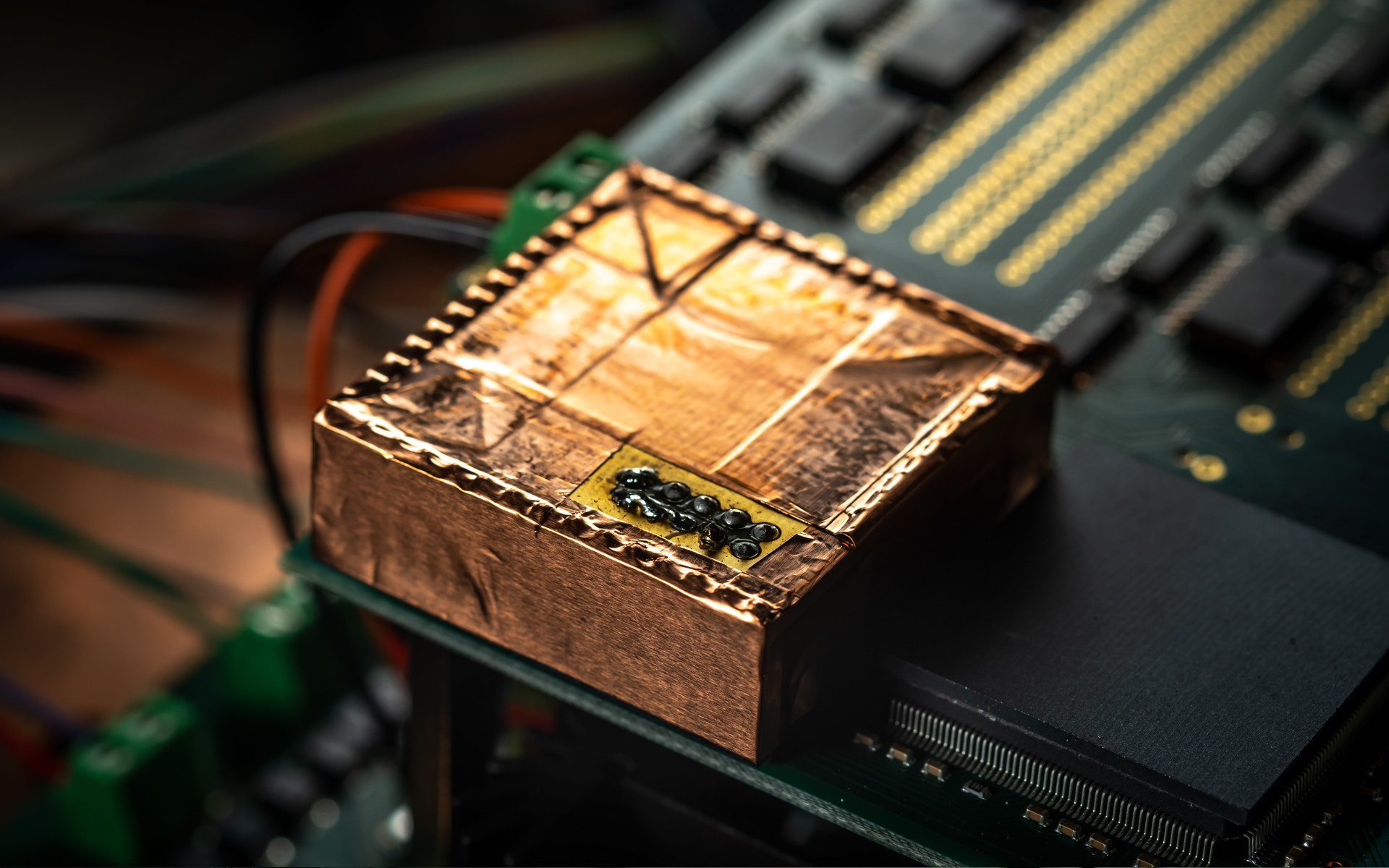
While basic R-2R DACs are packed with color, are fatigue-free and texturally moist by design, their kind tends to be a touch dark and not quite as immediate and dynamically proficient as modern ΔΣ devices. Vincent's new Unity architecture however promises us wider contrast ratio atop extra clarity, tone and spatial presence. Marketing blather? Not today. A single swap from my AMR to the d1-biunity was all it took to get the memo. The French sound wasn't dark in the slightest. Quite the contrary. It brimmed with textures, fruitiness, spatial nuance and that particular easeful radiance not many DACs know how to produce. The result was fully engaged, direct, exceptionally fluid and very much alive. The DP-777SE remained very listenable but quite frankly felt ordinary by contrast. It didn't do anything that kept me at the edge of my seat. The TotalDAC on the other hand felt special with everything it did. To clarify, it wasn't one specific aspect that clearly communicated its higher tier. The tasteful combination of various qualities made the difference of artful intensity. It really sounded like an expensive product that shall remain in our system for years to come. Just to be clear, way back the AMR did something similar but on a far lesser scale which with the passage of time now really pales.