Should you wonder how this review came to be, in early December my buddy Adam treated himself to a TotalDAC d1-unity. Since we're both in Warsaw, I snatched it for two days. Thoroughly impressed I contacted Vincent. He suggested sending me a model one tier above which at that point had no reviews yet. Several days later it delivered and the game was afoot. It's worth knowing that this loaner featured two sound-improving extras and one related to functionality. From Vincent's description we learn that the "live-clocking" option of €800 takes the form of an extra circuit developed to optimize the clock and digital signal distribution for better sampling precision. The master clock now depends less on the FPGA's FIFO to reject more input jitter. The standard external PSU for the d1-biunity runs a toroidal transformer while the "live-power" unit in its matching enclosure upgrades to a custom-made EI transformer from French specialist Electra Sud-Ouest (ESO). That adds €670 when ordered in lieu of the stock supply, €1'200 if purchased later on. Lastly, the standard d1-biunity does no DSD. The option that unlocks DoP is €350 and my unit had that. All in, I reviewed €20'070 worth.
A double cardboard held the DAC wrapped in foil between two foam liners while the PSU had its own foam compartment. The included RC was plastic and rather ordinary so I wouldn't mind seeing something fancier considering today's retail price. On the upside, this remote works as intended and upon setting up all options to my liking, I didn't have to use it much. The TotalDAC d1-biunity measures 110 x 360 x 290mm HxWxD and weighs 7kg so is rather compact given its posh pedigree and very easy to lift and move about. On-site specs list support up to 24/192, non-standard 3.5/7Vrms on the RCA/XLR analogue outputs and power draw up to 16.5W. All TotalDAC DACs share the same trapezoid enclosure comprised of a U-shaped brushed aluminium hood atop a perforated aluminium underside and rear. The stock front of glossy PMMA can become silver aluminium for an extra €420 while hard anti-vibration pucks (€445/4) can replace the standard-issue rubber footers. Since we're at upgrades, the optional bass-boost utility raises the cost by 20% and USB powered from its own internal PSU adds €700. The motto is clear. Pay for only what you need.












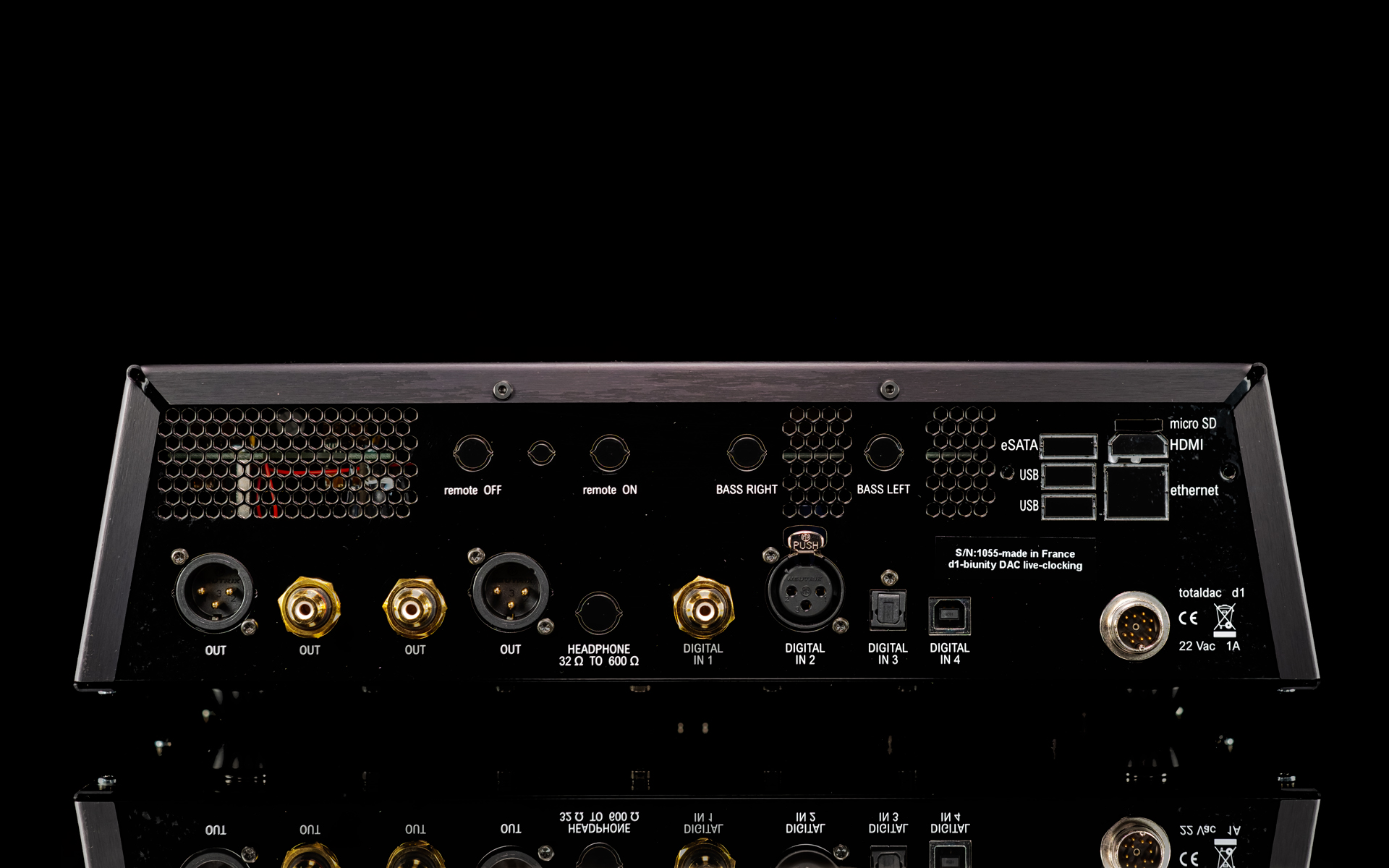
It should be said out loud that while nicely put together and practical, TotalDAC enclosures are compact and inconspicuous. I don't mind and like their signature trapezoidal exterior that can't be mistaken for anyone else's. I can however imagine enthusiasts willing to pony up €20k or more wondering what exactly they're paying for. Performance is the obvious answer. TotalDAC designs are for shoppers inured to bling and most likely already familiar with the brand to appreciate Vincent's focus. To the right audience his approach to R2R is the big attractor. Moving on, the d1-biunity's analog outputs are variable so we can direct-connect a power amp using digital attenuation. The small but perfectly legible yellow OLED display shows volume level, selected digital input and treble FIR filter on/off. The remote accesses the simple menu to mute playback, change absolute polarity or channel balance, connect power to signal ground and turn off the screen, useful when some may find it too bright and there's no option to dim it in stages. The business end on its left holds one each XLR and RCA input followed by coaxial S/PDIF, AES/EBU, optical S/PDIF and USB while the non-standard power inlet accepts the external PSU's umbilical. The on/off rocker on this power supply puts the device in standby while the self-explanatory red button on the remote makes it fully operational.
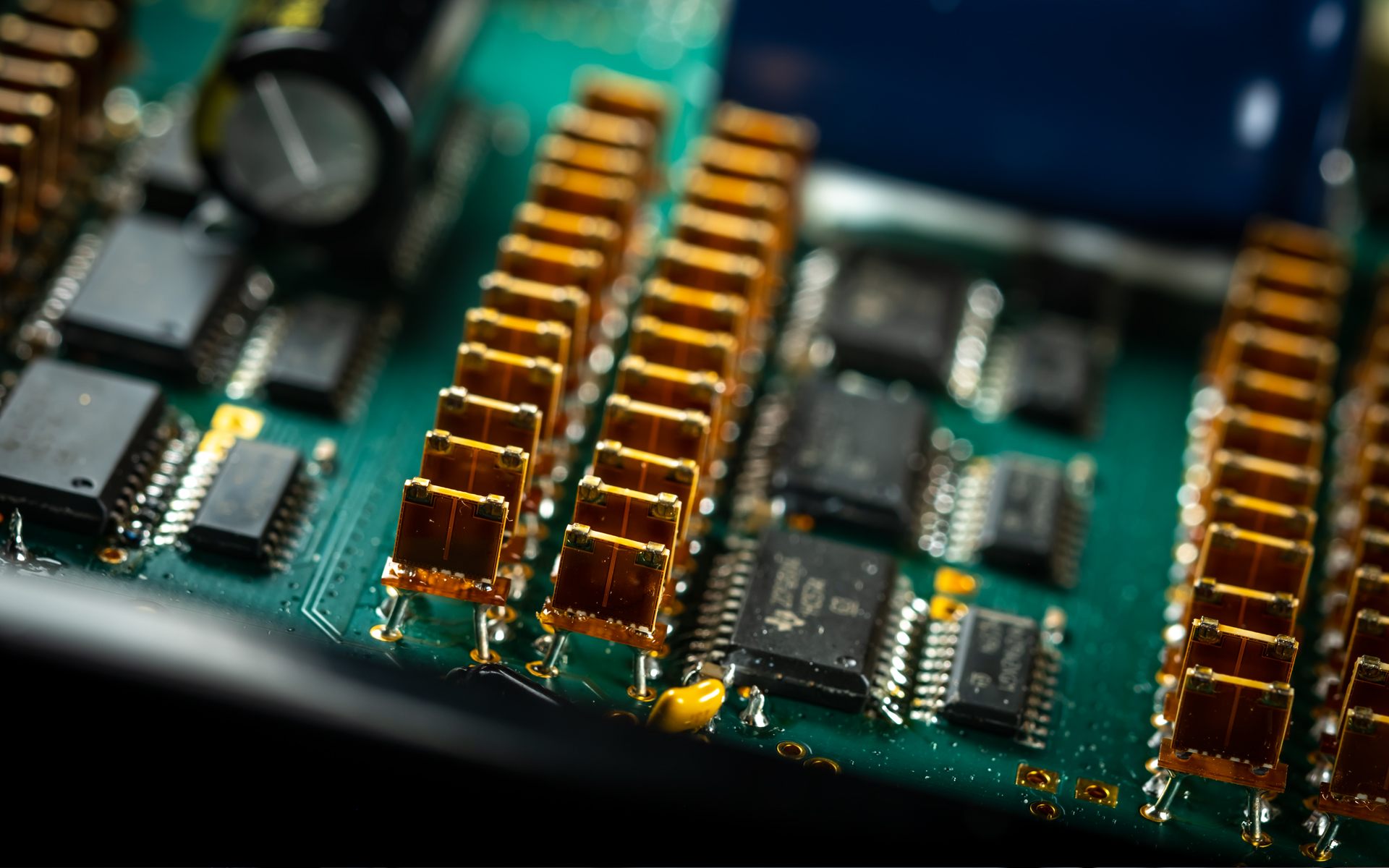
Internally the d1-biunity doesn't resemble any other DAC on the market. The massive copper insert on the bottom improves rigidity and limits EMI/RFI which positively impacts sonics. For this reason the best very expensive Aavik and Kondo products feature full copper liners. The lower PCB bolted to the copper base holds the fully discrete output and power stages peopled with a blend of capacitors from several different suppliers. The upper deck houses a large copper-shielded master clock next to the FPGA logic chip which among other tasks oversees the switching process of the nearby resistor ladders spread across four rows. The remaining unused two rows are reserved for the upper-echelon d1-triunity DAC.