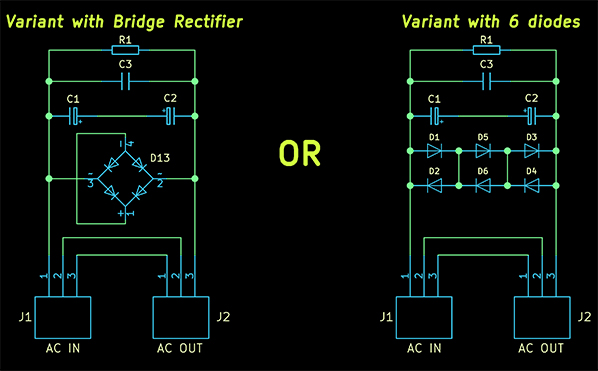
 In any event, DC filters and I are on good terms. This goes back to my early days with Nagra. Then my man-tall active Zu subwoofer hummed though not from any ground loop. I'd checked that and come up snake eyes. But I still badly wanted it quiet. Nagra's marketing manager recommended a Vibex DC filter. For their Swiss R&D lab it demonstrably lowered the noise floor on their measuring kit to let their engineers work to finer tolerances to design for still better performance. They swore by it. Ever since so have I. An active power filter from Puritan Audio Labs works in my upstairs system. It too includes their optional DC blocker described as "rebalancing the AC sinewave which removes all DC components to enable transformers to work silently at their maximum dynamics and power¹". I'm thus hip to DC-blocking benefits even on source and low-level gear whose small transformers were never noisy to begin with. I'll leave the 'why' and 'how' to proper engineers like Nagra's. Kinki amplifiers—I use their monos downstairs, the stereo upstairs–are DC-coupled to avoid the time smear of signal-path capacitors. As such they're more reactive to residual DC on the mains than the ultra-quiet recently reviewed Singxer SA-90 monos. Those also couple all gain stages direct except for the input. That adds a capacitor. It's thus sensible that Kinki would eventually offer an external DC blocker. Because their big amps rate at 250/380W into 8/4Ω, we'd expect the external blocking caps to be large enough to handle their max current draw. [These two schematics are from here and similar to what Vladimir Shushurin's Lamm-1 amplifier used.]
___________________________
¹ Or as Isotek explain: "So-called DC on the mains is an increasing problem caused by many home appliances which generally run a series diode, for example dimmer switches, hair dryers and coffee machines. Solar panels on the roof, elevators and fast-charging stations for electric cars cause even more DC issues. These could be in your house, neighbourhood or further down the road. Strictly speaking, the problem is an imbalance of the mains sine wave on the zero volts line. Any AC waveform which doesn't exhibit equal energy in its positive and negative phase will contain a DC component regardless of the peak voltages or wave shape involved. This DC will partially or fully saturate magnetic circuits and can cause considerable mechanical vibration not only in amplifiers but all electronics to dramatically affect their performance." Standalone DC blockers I know of are from iFi and Vibex. Purveyors of power distributors or conditioners like Gigawatt, Isotek and Puritan either build them in standard or offer that as a surcharge option.









 In a parallel universe, I had another date. And what could go wrong? Audiophile fuses. I could already see the busy monkeys in the gallery, slingshots armed with peanuts ready to wreak havoc on my person. Thankfully I'm allergic to peanuts. They fall right off. So what if fuses can't possibly make a difference? Farther down the Monkey Manifesto we read that all digital sounds the same because it's just 1s and 0s. All cables sound the same, too. As long as they have low SINAD, all amps do, too. Power conditioners are idiotic, cable risers snake oil. Unless they measure the same, only speakers differ. Nothing beats Topping DACs. Anyone who says otherwise is a gullible moron, industry shill or reviewer so both.
 If you're still here, envision a proper AC distributor with quality cords connecting it to the wall and designer audio on isolation platforms. Utility power of 115V/60Hz, 230V/50Hz or some variation thereof presents at the power IEC. There's enough raw current to run a 3000-watt electric heater; a 24/7 refrigerator; other high-draw household appliances like washing machines, dryers, freezers; simultaneously though obviously not off one socket.
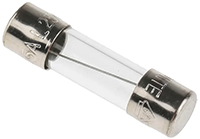
Yet what this raw but potent utility power encounters at our hifi power inlets is a tiny thin resistive wire in a safety fuse meant to sacrifice itself in the event of overcurrent and break the connection. That fuse sits in a holder whose contact clips cradle the conductive end caps of the small glass cylinder. It all conforms with international safety standards. Legit as death and taxes. Audiophile ambition simply questions whether higher-quality wire and contacts of lower resistance might not minimize a qualitative bottleneck for worthwhile improvements.
One solution to the perceived bottleneck could be to replace the fuse with a solid-metal slug then handle fault protection with a magnetic circuit breaker in an AC distribution box preceding the now fuse-less gear. Or as the makers of the Farad external power supplies put it: "A first for our new Super6 is a thermal magnetic circuit breaker as fuse replacement for circuit protection. Listening tests revealed this to outclass every conventional fuse we carry in our portfolio; even the very exotic and expensive ones."
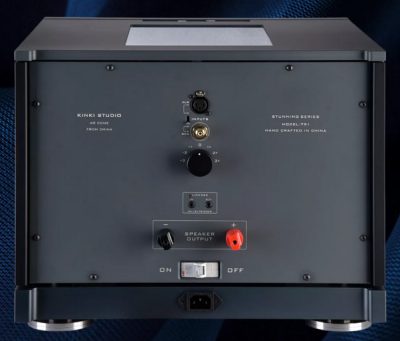
Incidentally, Kinki's Stunning 791 monos at left also use magnetic circuit breakers to sidestep fuse protection altogether.
 Graphic from here. Click to learn more about the origins of the term 'peanut gallery'.
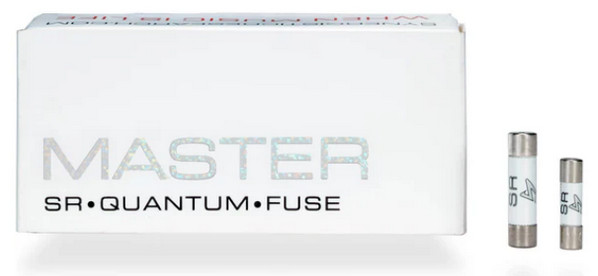 Commercial fuses are obviously dirt cheap. Because of it, any audiophile version with "rhodium-plated ends and Tesla-arced quantum-tunneled silver/gold wiring" that wants from 100 to 1'000 times more is fodder for violent vitriol. Think wet peanut butter bombs lobbed from the gallery. So high-performance freaks must be willing to prove the Monkey Manifesto wrong. Take chances. Mint hands-on experience. At worst something does nothing which we can hear though perhaps someone with a different system or better ears might. So we ship it back. If it was non-refundable, we sell it off and call it an investment into our audiocation. That's a better 'tion' suffix than intoxication, incarceration or indoctrination.
Granted, personal curiosity and risk/reward thresholds vary. My head and wallet couldn't deal with this fuse from Synergistic Research where a silica-filled set with ceramic bodies, brass-nickel contacts and graphene surfacing goes for €660. That's one tarnation too many. Add two zeros to my annual income and I might reconsider? In the hear/now meanwhile and at ~€20 a pop like a meal out? If such a fuse came accompanied by prior brand experience, I might just bite. Given my Kinki konnektion, I'd even chew. But would I swallow or spit back out like a professional wine taster?
Confused yet? This was my alternate lead-in written from back when, in mid 2024, Ken Ng had teased a "next-week" reveal. Many months prior I'd learnt that Kinki Studio were prepping 'audiophile' fuses and a DC blocker under a new accessories brand. I figured that one or the other was ready to pounce. With a wordsmithing weekend at hand before Ken's update was due, I wrote copy to suit either product. The plan was to scratch the wrong one. Then it occurred to me. Letting it stand would be a useful note on what's still coming. But which one would show up for this date? Should I wear cynical chic or go more cavalier casual?
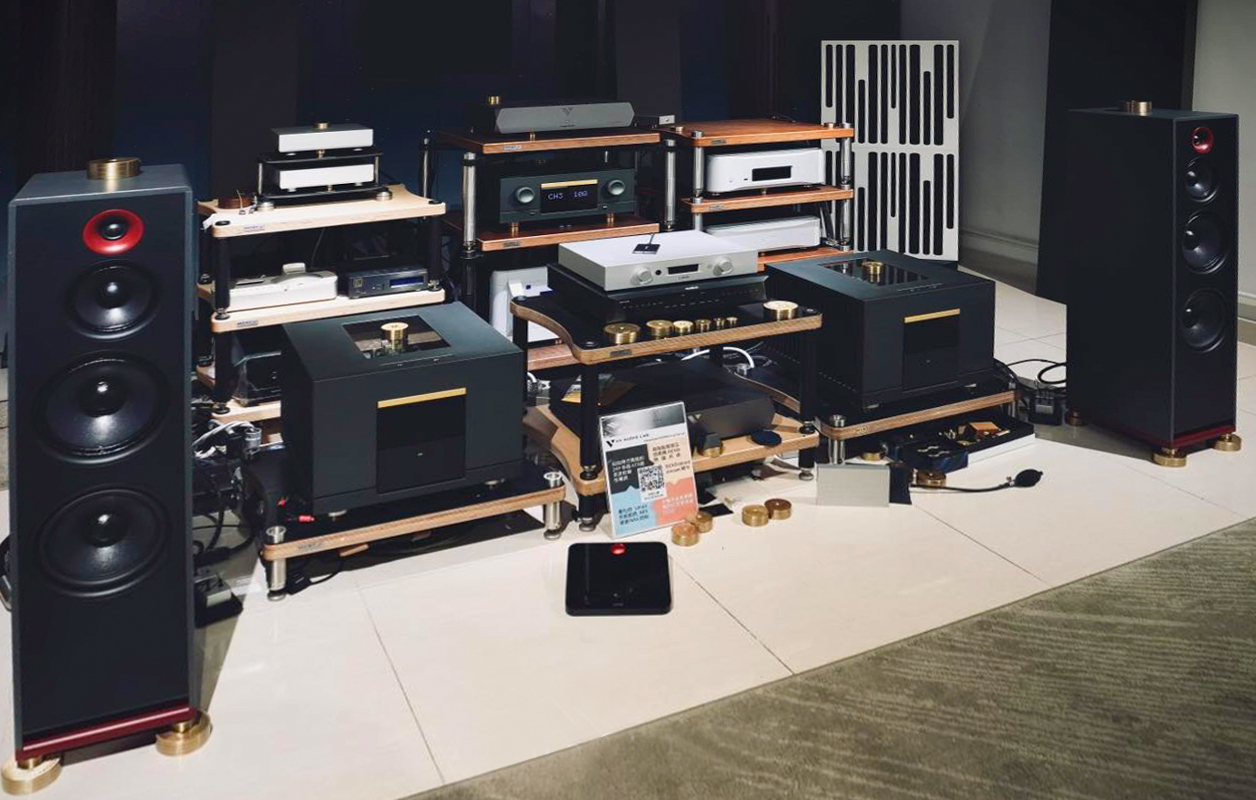 Kinki's 76kg 600-watt Mosfet monos with quad power toroids, the matching preamp plus Stenheim speakers and Esoteric digital.
After I wrote the above, Ken disappeared. Many months passed. Eventually he replied to say that he first wanted to test the new products personally before stepping out with a formal announcement. My date remained in limbo and 2024 was on its way out. This would be a story for another year.