
 I kicked off with Kraftwerk's iconic "Autobahn" and was shocked. It begins with the sound of a starter motor, an engine turns over and the car drives off. And, the Vox 3A almost made me jump onto the couch like Tom Cruise did for Oprah Winfrey to not get run over. The car really seemed to careen through my listening room from the bottom right to the top left. This might sound as though the Vox 3A is some kind of FX box but it's not. If they're recorded, it can render crazy special effects within the framework of classic stereophony. It simply won't create them. In Radiohead's "Codex" for example it threw sensational spatial depth as though my front wall vanished to look outside where Thom Yorke sung hyper-manifest in the centre while later the flügelhorns appeared well outside the speakers. A live orchestral recording of Richard Wagner's Rienzi Overture with the Metropolitan Opera Orchestra generated a stupendous being-there sense because the inhalation of the wind players before their entry, the swing of the conductor's tailcoat and the creaking of chairs all became visible in my room with its corresponding albeit very quiet reverberation that I felt credibly teleported. To be honest, I never heard soundstaging in such high-quality captivating fashion from any other loudspeaker. This was top of that class. Even the Harbeth P3ESR-XD2 came second which I otherwise find almost genre defining on immersive spatial skills.
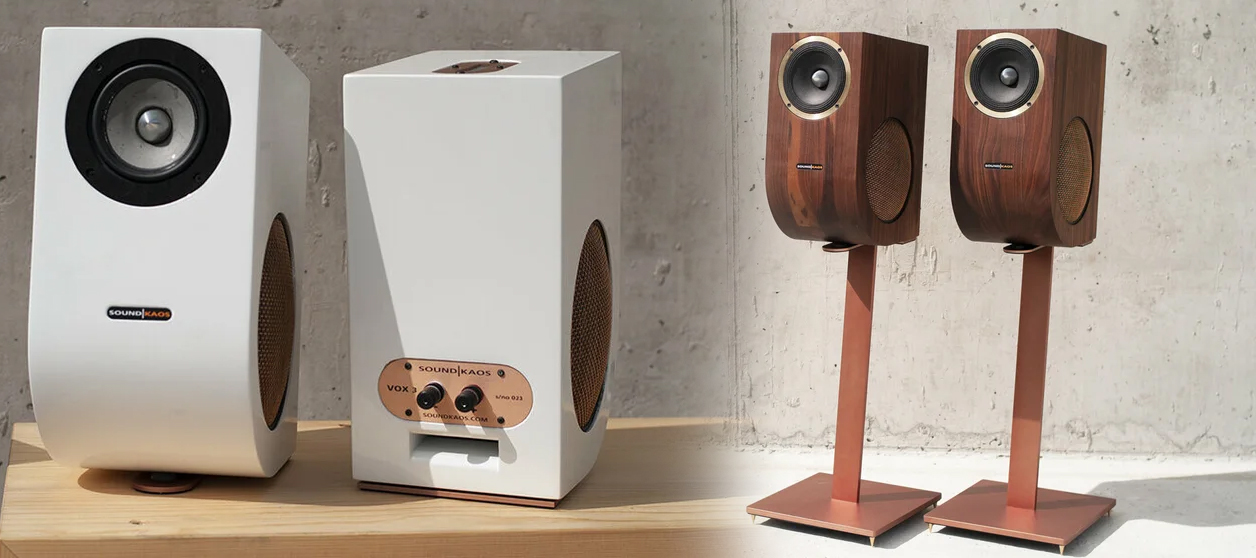 Tang Band widebander at left, Armin Galm version at right.

 Going in I said that the Vox 3A can't do really low bass. It makes a fine effort but with electronic sub bass or jackhammer bass drums on overproduced Billie Eilish tracks, I could sometimes hear a small flow chirp from the port when cranked too hard. However, at room levels and with music not outright focussed on LF, it creates a clean foundation seemingly lacking for nothing because even with sub bass the first harmonic creates the necessary genetic fingerprint. For instance, where the constantly wandering bass in Radiohead's "How to Disappear Completely" sets up a certain feeling of unease, we still reap the intended strange melancholic moods even if technically, the Swiss doesn't extent into the first octave. Meanwhile it has a surprising amount of elasticity and agility to simply fall on the less sonorous or juicy so more sinewy nimble side of this equation.
For the midrange I was thrilled to come across nothing annoying as I expect it from many even expensive widebanders. Martin Gateley cleverly solved this by adding a 1-2kHz notch filter in his xover to end up wonderfully seamless. This I zoomed in on with Hammond organ music like Jimmy Smith's album The Cat and "Delon's Blues". His organ materialized in top form from the gentle tremolo of the lower midrange to the slightly hoarse smokiness in the middle registers to the biting treble especially with added mixtures. Also, the signature slowly increasing distortion spectrum was perfectly legible as Jimmy adds weight on his volume pedal to elicit a juicy growl. Ditto for the quiet but present mechanical key clicks or the slightly clanging percussive effects. Everything was present and in its proper place. Back on the "Autobahn", it was child's play to note amidst the many home-built synthesizers a real flute that had snuck in between the dominating electronica. It takes great tonal accuracy and of course good resolution to tease out such small details.










 A similar picture emerged for the top end which appeared almost straight-line monitoresque. Darker productions like Steely Dan's Aja didn't artificially irradiate with neon whilst on recorded HF bite the Vox 3A didn't go soft. It was a pleasure to follow "Wrapped around your finger" from the Police when during the chorus Stewart Copeland hits the snare with all his might and simultaneously a crash cymbal with his other hand. It generated real airflow in the room – 'direct to ear' as I like it. In short, there was no built-in treble tendency. This treble is basically perfectly balanced and neither leans into the mellow-golden or pointy-silvery side. If it does, it's because that's how the tonal balance was mastered. On both merits and limitations, the Vox 3A strongly reminded me of Lindemann's €3'200/pr Move. That too mates a
  small widebander to an AMT brought in very high.
On the other hand, my working boxes of Harbeth 30.2 get far denser toward the top and tap significantly less stereophonic magic. Also, the Vox 3A is certainly very quick and hits full throttle from a dead start minus the Physics limits in the bass. Back to the Jimmy Smith track, I nearly flinched when after the relatively subdued intro which I had turned up pretty loud some razor-edged brasses suddenly attacked from both sides. Zounds! The Vox 3A blistered so effectively that I nearly dropped my coffee mug. Just so this is no macrodynamic champion. For that the low end is a bit too tame on both reach and output. The real magic here lives in the microdynamic realm which is open for business already at very low SPL; in instrumental overtone halos; and the ability to resolve the tiniest events like a hi-hat's gentle "tchick" amidst a densely orchestrated track. One really misses out on nothing.
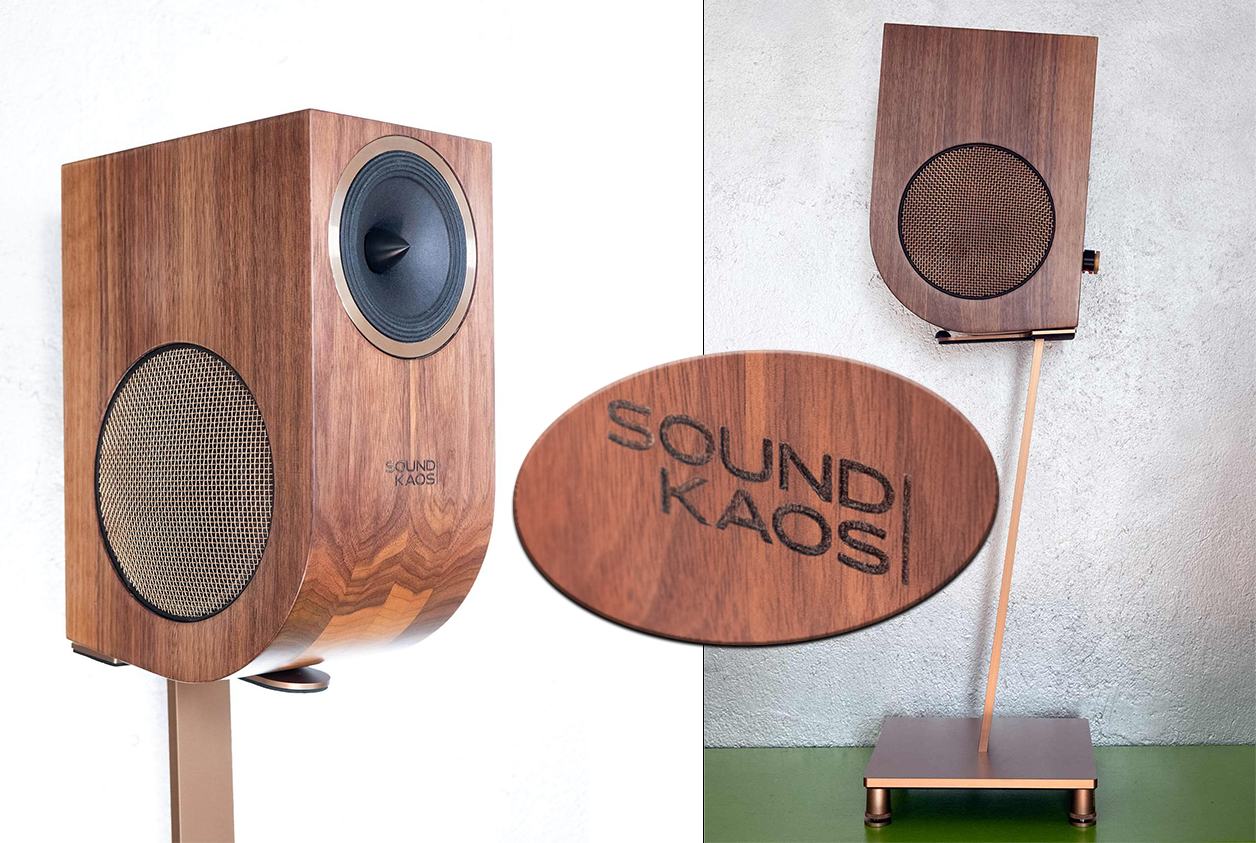
As promised going in, the Vox 3A can gain the 'FW' suffix by building in passive LessLoss filters between crossover and terminals. To be frank, I don't understand their MO but of course tried the external versions between my speaker cables and Vox 3A posts. And damn if it didn't sound better. I can even describe the effect quite easily. Across the stereophonic stage, image localization became noticeably more precise, the contrast difference between signal and background greater especially on live classical recordings. Imagine yourself no longer sitting in 5th row behind a lady with wide-brimmed tall hat and sound-absorbent mink coat across her shoulders but front row with an unobstructed on-stage view. Whether you call this seat change worth the €2K surcharge depends but I'll put it this way. If you've ever been to Bayreuth, that difference in stage distance could cost you the same – for a single ticket. With sound|kaos you'll pay it once then enjoy endless season tickets. These little Swiss really are special. If you're after a standard do-it-all¹, you've obviously come to the wrong place. If however you listen at neighbour-conscious SPL then want to journey the extra mile on soundstaging and micro resolution, you really can't ignore the Vox 3A. Its sensational spatial qualities are unique and can mint many authentic experiences without ever catching us out in cheap tricks. This particular quality I sadly can't describe better. You must experience it for yourself. More plus sides come from the wonderfully responsive quickness, exquisite small-scale dynamic gradations and overall detail recovery. What's more, a Vox 3A buyer brings home two gorgeous sonic sculptures. Which of course comes at a price. For the coin rolled, one can pursue more bass, SPL potential and macrodynamic violence elsewhere. But if none of it is top priority and the talents I described factor instead, definitely give this exceptional speaker creation a listen. I was very reluctant to let it go and would have preferred to keep it as my third speaker. And that no longer really happens to me…
Psych profile for the sound|kaos Vox 3A…
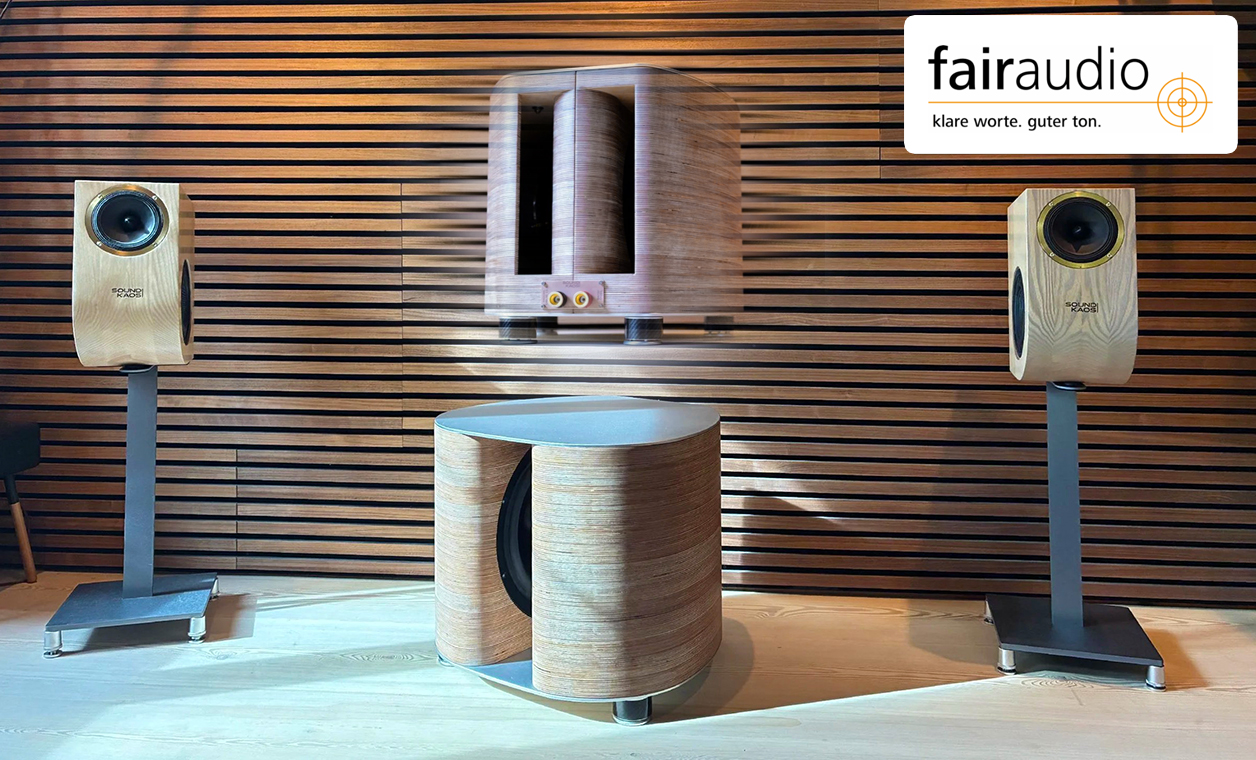
¹ Publisher's comment: With the sound|kaos dipole subwoofer now available with outboard crossover/amp, the Vox 3A can easily convert into a truly full-range performer for stereo 2.1 or 2.2. – Ed.
 Vox 3Awf in casa Ebaen, add-on sub by Dynaudio.