Numerous performers are known to prefer musical instruments with specific sonic qualities. For instance, Richter loved the rather bland even slurry sound of Yamaha's grand pianos. In his opinion, the beauty of a piano's timbral palette was not to overwhelm his interpretation. Sofronitsky liked the rich sound of old Bechstein pianos manufactured before WWII. Violinist Vadim Repin once told that me he played Guarneri because its timbre was more neutral than that of a Stradivarius.
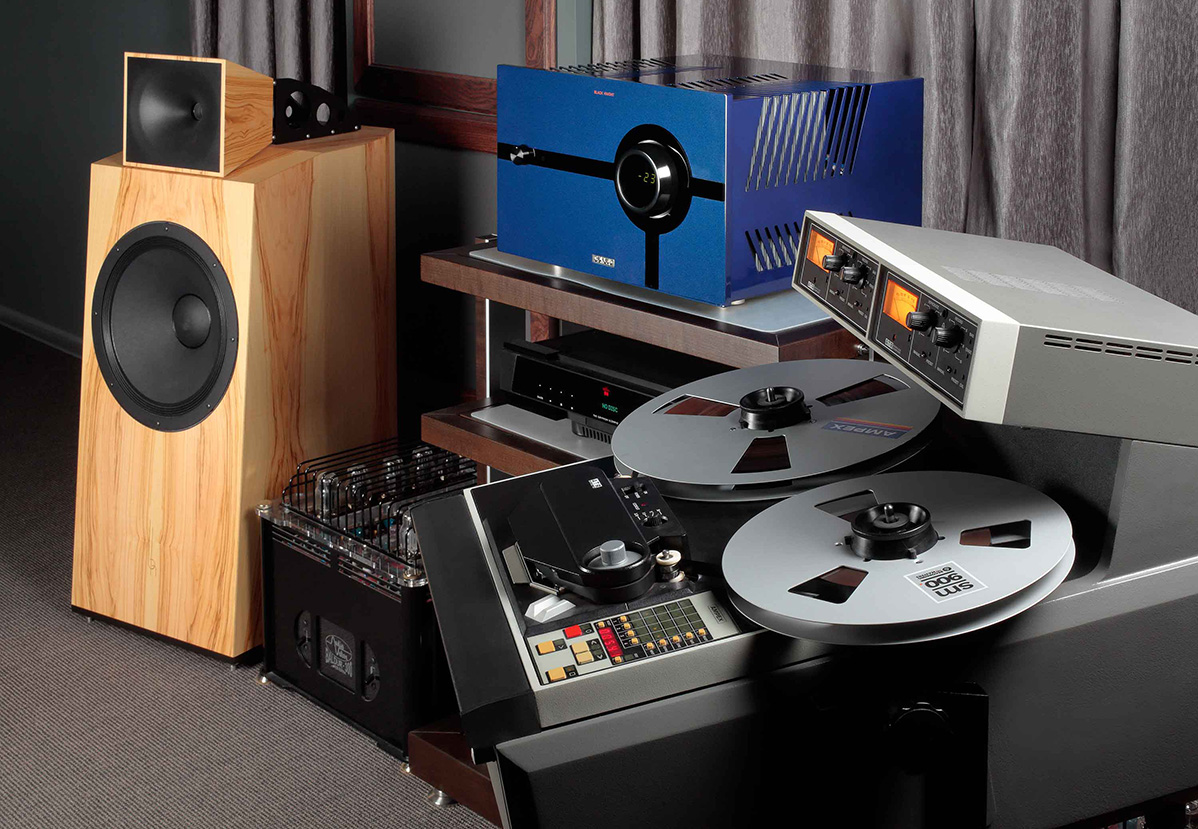
The mentioned features placed the Black Knight's sound in a personally ideal balance. Listening to piano, I experienced the depth and beauty of timbres, the spaciousness of images, the natural subtle detailing caused by the piano's mechanical parts whilst I was imbued by the essence of music and its interpretation. With comprehensive clarity, I understood the musical structure, timbre varieties and dynamic relief of complex orchestral scores like Stravinsky's Le sacre du printemps or Boulez' Pli selon pli. Whilst its modest power rating won't fire up one's imagination, the amp demonstrated absolute dynamic freedom in a 40sqm room on 96dB speakers. Here it never occurred to me that I might hit actual dynamic limits. Nabokov once wrote "does there not exist a high ridge where the mountain side of scientific knowledge joins the opposite slope of artistic imagination?" It's this slope of artistic imagination or reality that I used to glide along when enjoying music played back on the S.A.Lab Black Knight. Working with the spatial aspects of a particular track, the Black Knight adequately restored the size of a grand piano to more modestly occupy the center of the soundstage, a fiddle or sax never exceeded their sizes whilst a pipe organ seemed to take up all available space and still more just as it should be.
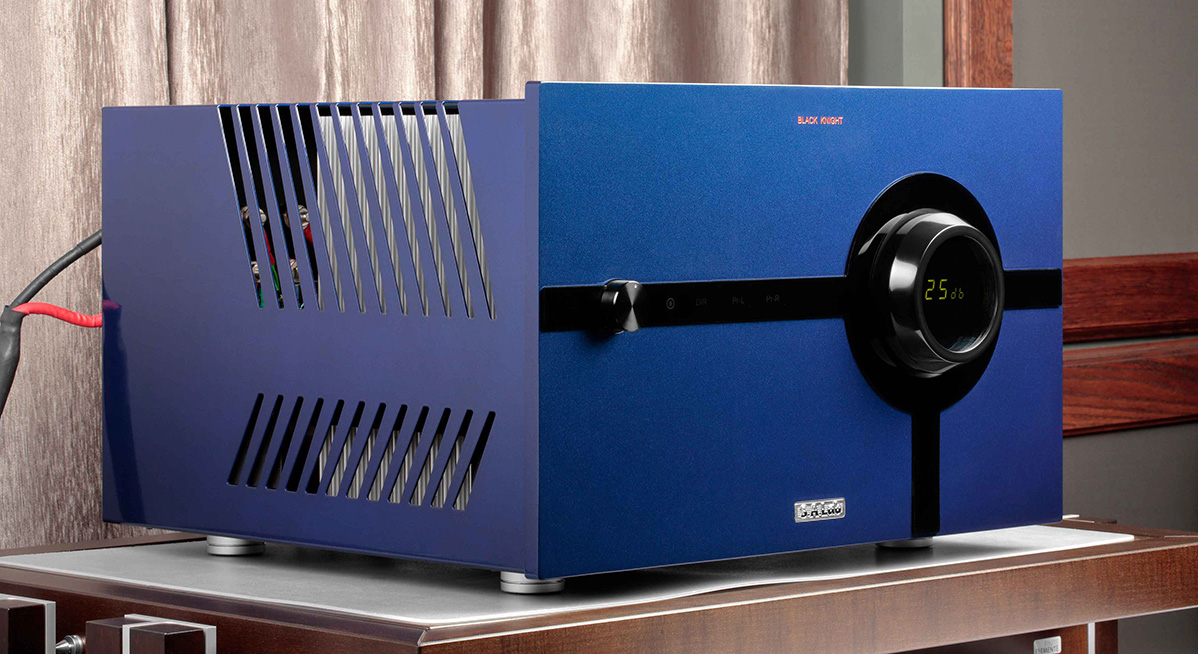










Control of the lower registers left nothing to criticize. This was proven by the bass section of a big symphonic orchestra, cannon shots of large drums and brass, the almost tectonic rumble of 32-metre organ pipes. However, I never perceived this bass as a separate quality. It was an organic part of a complex musical organism. After listening to many diverse tracks, I will summarize the most important feature of the Black Knight as being its ability to extract and sustain from any record its encoded artistic energy at a high level. This helps our natural concentration not on audiophile but musical qualities. Our emotions are excited, we can't help but think about the person who created the music we're listening to, its unique interpretation, its style and milieu. The sound convincingly combines premium features of tubes and transistors. It delivered the exquisite plasticity of music lines, shone a warm light from within and gave precedence to the horizontal dimension of melodious unfolding as a signature trait of S.A.Lab. But it also delivered speed, detail and substantial perfectly controlled bass impact.
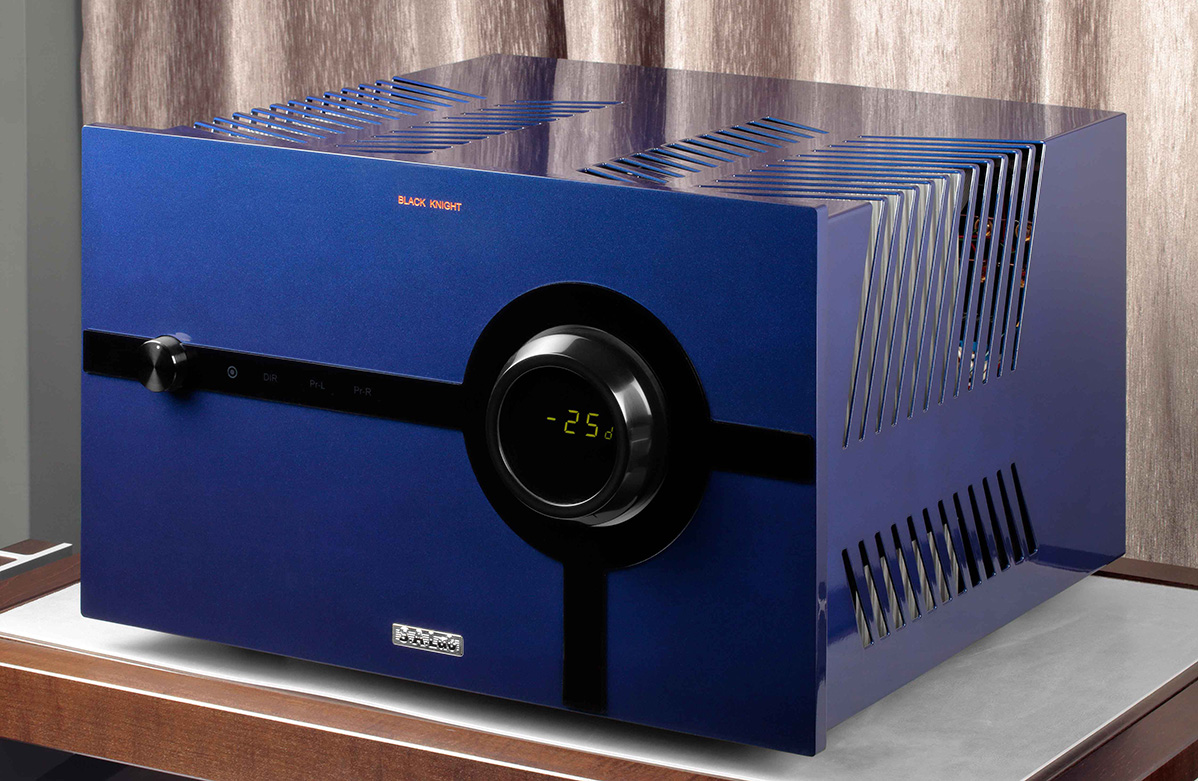
I thus conclude that Alexey Syomin's three years in the virtual wood shed of his lab helped him master the unique potential of Germanium transistors. Here they are elevated to perform on an ultimate high-end plateau to seemingly exercise their voice to the fullest. One might call the Black Knight sensational but that would smack of hype. I prefer to say that I perceived it as less an electronic means of sound amplification and more like a musical instrument like those crafted in the Leipzig or Cremona workshops of yore.