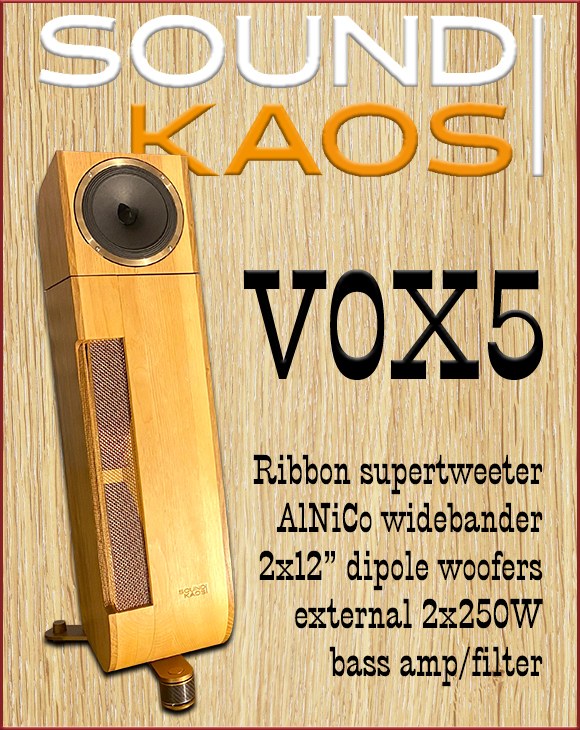
Perspective. It's everything. As soon as Don drove the Polish IQ, its own speaker-drive IQ went through the roof. I knew right off that easing its load to no xover and high sensitivity to cater to perceived spec limitations via the Soul VI would be an insult. And whilst a minute ago I chirped about lack of remote and connector cachet, my ears now couldn't care less. The only areas where Don quite predictably conceded things to the 10 x beefier monos were macrodynamic swings; and grip of the 9½" Satori woofers. Their consistency grew slightly more loose and bloomy. Were I to reinsert the 2×15" cardioid sub with the outboard crossover at 100Hz/4th-order as usual, that wouldn't even show. For this review, I obviously ran the speakers full range so bypassed the hi/lo-pass labour division of the external analog precision filter. On voltage-swing potential which the doubled-up surface area of Qualio's dipole drivers multiplies—we're not killing off their rear waves but radiate them into the room freely—Don played it less vigorous. Everywhere else it was on par with the monos albeit its own man. The core difference to the direct-coupled wide-bandwidth Kinki sound was textural. Should that set your internal BS detector abuzz because you expect the usual tube-reference tripe, I wouldn't even have gone there. Yet now that your buzzer is busy, let's. Even Dragan used the t-word. It can be a doubled-edged sword. People who never heard a tube amp only have assumptions and popular myths to go by. Folks with valve electronics who heard Don could refute any connection whatsoever contingent on where on the spectrum of no-feedback Ancient Audio 300B SET to high-feedback high-power push/pull KT150 Octave they live. From that perspective, referencing valves is bound to miss. It's only when we get rather more specific to call out 6922 not 6SN7-type preamplifiers would cognoscenti draw the right conclusion. But we'd still leave tube virgins in the dark. How to crack that egg and make an omelette not mess?

We do it by generalizing. We say that transistors have an edge on the leading edge so tonal beginnings; and tubes the dominance on decays so their endings. A focus on transients aids separation and rhythmic precision. Shifting onto the trailing edges enriches tone and textures exactly as does subtle reverb injected into dry thin vocals. With that set, we move away from tube amps with their signature output iron and low S/NR to look at capacitor-coupled small triodes in preamps. Our amplifier remains transistorized to harvest solid-state virtues of exactitude, low noise and control. The small-signal valves in the preceding preamp are 12AU7, 5687 or 6922. This far reduces the dosage of decay weighting we might tap from transformer-coupled high-level tubes.
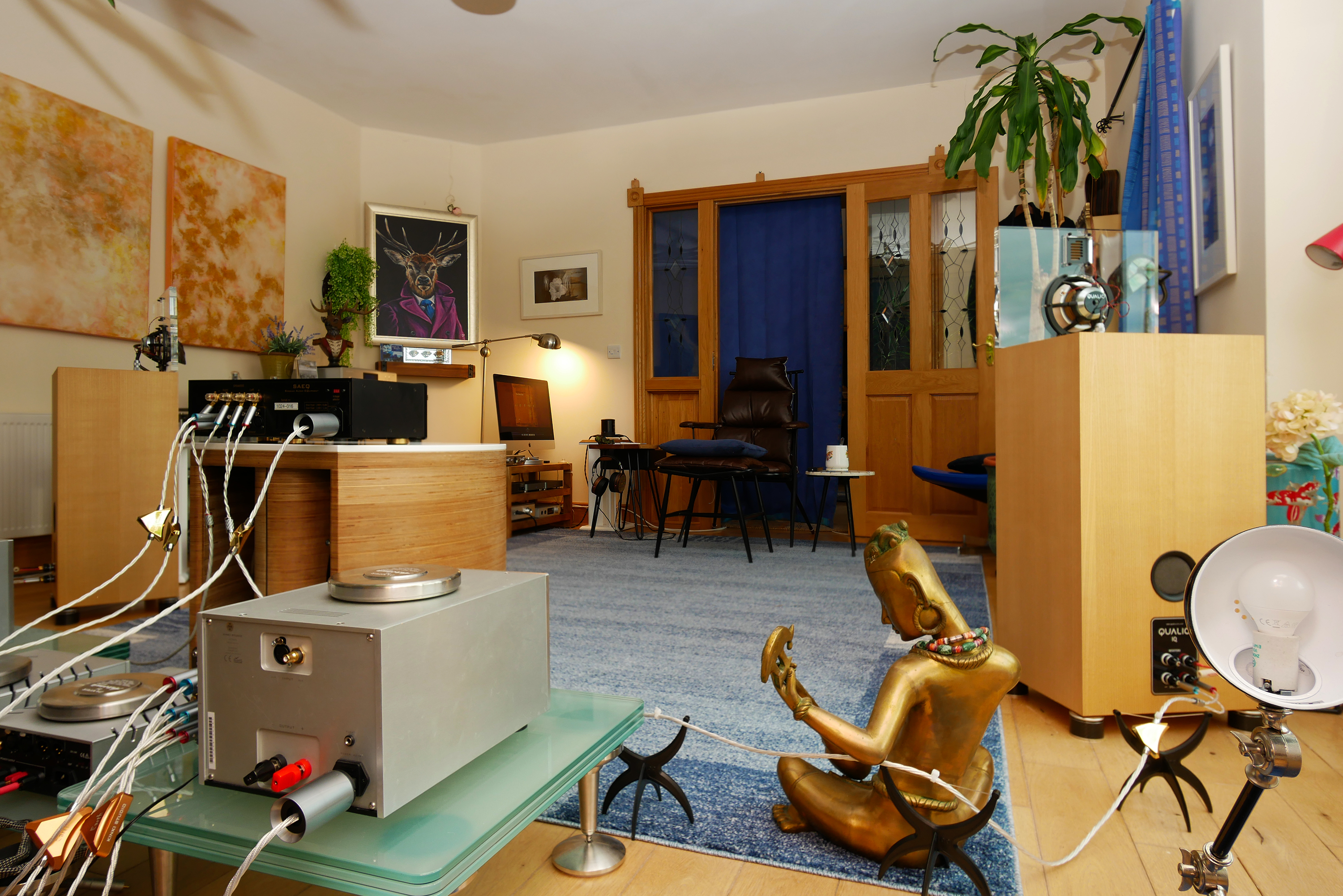
Just so, some of it still bleeds through our power transistors. With Don that contributes a certain elegance. It's about a subtle elasticity in the musical momentum; and just a bit more light on recorded ambiance for a slightly bigger grab of embedded reflections. We're back at Dragan's game of millimetres not miles. We still play solidly in the solid-state sandbox. We just sprinkle in that certain ne sais quoi of a bit more temporal laissez faire to fumble two French terms into one English sentence. What will Dragan's software translator make of it in Serbian?









Meanwhile what are we to make of Don on being foremost a headphone or speaker amp? Speaker drive certainly looks secondary on paper. In person meanwhile I'm not so sure. In that discipline it's certainly no drive-anything dreadnaught as it is for headfi. Yet saying so virtually guarantees undervaluing true equivalency where rooms and speakers of reasonable specs go. In our bigger room I had voltage gain to call the police. On the desktop where this chassis was oversized to fit properly, 85dB elite monitors didn't eclipse eight clicks; in low gain. Sonics were even more robust, dense and black-drop intense than with the resident Enleum. Once more the designer's own words proved out. He doesn't just understand electronic circuits. He has the ears and vocabulary to describe their sonics objectively. Like his amp, he's a multi-disciplinarian. Time to count the evidence and revert back to the proper call sign of Armageddon.
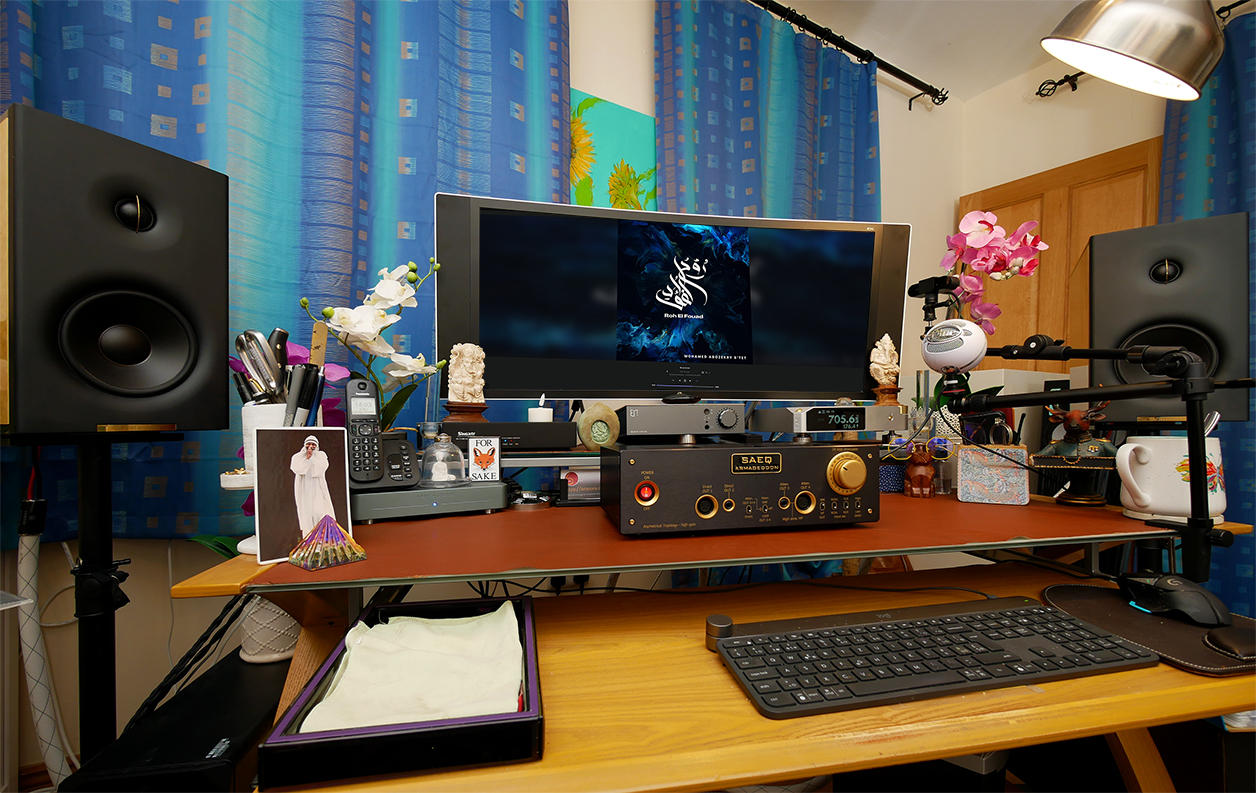
Arma gedds it on. For owners of appropriate speakers, this could be an end-of-life purchase. Ditto for headphreaks at the very top. It's probably the still rarer 'phile who takes both transducer types equally serious to fully exploit and appreciate Armageddon's double-whammy proposal. Like Enleum's AMP-23R, that makes it a more specialized or harder sell. It's simply not prevented the Seoul/So-Cal compact from moving like hotcakes. And yes, that includes remote control. Aside from that creature feature for speaker use, I don't see anything preventing SAEQ's Armageddon from also selling like happy hotcakes. Whilst industrial design and finish aren't in Enleum's league, headphone featurization is more comprehensive, performance at least on par but most tastes could find its tonal elegance still a click or two above. With the Trafomatic Primavera and Auris Headonia of the intro also from Serbia and the Raal 1995 Immanis & Magna, too, this small county, surrounded as it is by the EU via Slovenia, Hungary, Romania, Bulgaria and Greece but not yet part of the European Union itself, has become quite the hotbed for upscale hifi. Now you know to count SAEQ amongst its solid-state royalty. You know to mention Armageddon in any chat that involves alternatives to Enleum's AMP-23. You know to include it in any thread that talks pure HeadFi at the level of Cen.Grand's Silver Fox.
Choices and options. The more the merrier…