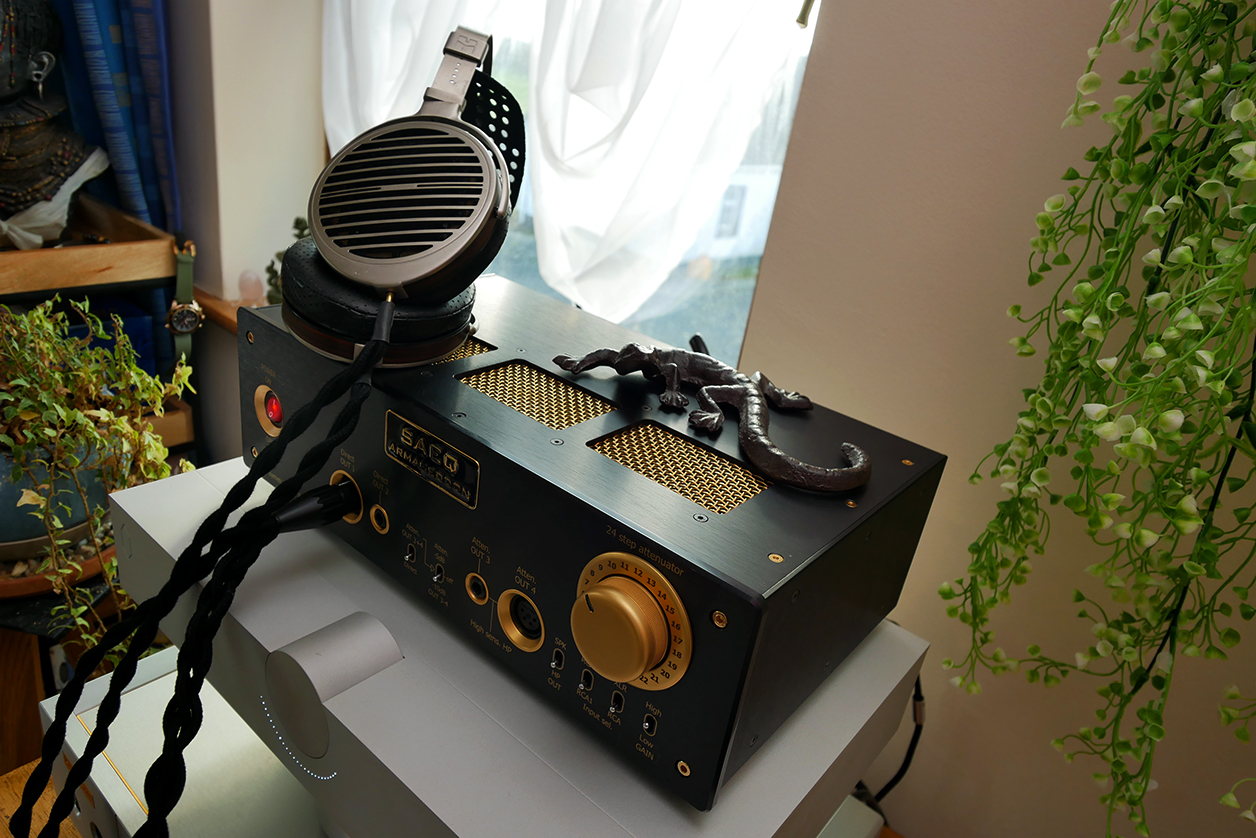
Don Perignon? To test our Serbian challenger for bubbles, smoothness and finish, it stacked atop my bedroom system of Cen.Grand Silver Fox topped by a COS D1 DAC with remote-controlled analog volume. The source which also serves my secondary speaker system through the shared Soundaware D300Ref USB bridge is a FiiO R7 loaded with a 1TB microSD card of Redbook or higher .flac/aiff files. Its digits forward to the bridge with the white Exact Express USB-C link shown. My transducers are Raal 1995's twin-ribbon Magna and HifiMan's notorious Susvara with gold traces. Because this stack is slightly out of reach of my chair, I use the COS remote for volume trim. A set of bronze-anodized Swiss sound|kaos Vibra 30 isolators raised Don above the DAC's rotary. With memories of Hyperion Ge's very recent departure still firm in mind, I felt quite confident that I could attempt a rough A/B. For anything more, one needs actual hardware. Incidentally, during break-in Don drove Magna and Susvara simultaneously and very loud whilst sitting well below zero attenuation to pack shocking twin-banger reserves. The 'high gain' on the faceplate tells it as it is. To quantify this, I next bypassed the COS attenuator to see where Don's would sit for my SPL on both Susvara and Magna versus the Silver Fox's BTL mode. Don saw 2Vrms signal from the D1's RCA, the Cen.Grand 4Vrms off its XLR. I selected that hookup to avoid Dragan's de-symmetrizing opamps.

In high gain Don had Magna or Suvara at step 7 of 24 whilst the Silver Fox sat at -14dB down a max +4dB. In low gain Don still sat below half mast to leave beaucoup blast power in the furnace. I can't imagine a headphone that couldn't clip your ears if you were stupid enough to try. Unlike Laiv's HP²A in at the same time, the SAEQ doesn't need a rare high-output source like my ~12V iFi to handle unusually inefficient headphones with headroom galore. Dragan's no-matter-what gain is calibrated against bog-standard 2V sources. It's why it simply laughs at driving Magna + Susvara to unhealthy levels, together, with gain to spare. One could probably add another Susvara for a 3-strong madness mix. Having established where the Cen.Grand and SAEQ volumes needed to sit for parity, I now used the DAC's remote to trim SPL from track to track and A/B on the fly just swapping XLR4 ports.







First some words from Dragan when Hyperion Ge had already departed: "Certain topological details in combination with relatively high gain give Armageddon very good impulsive reverberation clearly noticeable at medium and higher volume levels in complex orchestral presentations. When you compare Hyperion Ge and Armageddon directly with a piano captured well in an ambient milieu, the difference is very clear. The piano requires good impulse response with accompanying micro detail of the direct and reflected aspects of each tone where losses of authenticity are easily recognized. Armageddon portrays instruments with a thicker character and higher image density than Hyperion and Morpheus, then gives extra power, clarity and scale on speakers. In my opinion these are the audible differences. The piano's upper registers clearly lose some explicitness when you reference Armageddon against the others. That's just one aspect which careful listeners will notice. Of course personal sensitivity is the determinant of hearing and valuing those differences. That's simply down to an individual's level of listening education even if saying so isn't always appreciated."
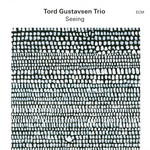
 Using Silver Fox as contrast agent vs my memory of comparing Hyperion Ge to it a few weeks prior, I very quickly concurred with the designer. Suitably enough I kicked off with the elegiac 24/88.2 ECM album Seeing, the latest by the Tord Gustavsen Trio. Having heard them live in Norway's Bergen, they are my favourite lyrical piano trio. As a composer and arranger with a great gift for re-imagined church music, Tord's mastery of expressive minimalism keeps refining as he ages like an unhurried Irish whiskey. Don played this far closer to Silver Fox now. The Cen.Grand had a bit more fluffy 'DSD' ambiance—its maker also builds pure DSD DACs which resample all PCM up to DSD 1'024—while Don strutted more stacked dynamics. Before you guffaw over dynamic range from a piano trio, consider the plaintive "Christ lag in Todesbanden" or "Christ in Death's chains" as captured by Audirvana's DR meter. That's more range than most all Rock recordings. As is proper ECM tradition, peaks stop at ~10dB below clipping. For the full weight of a piano's longest strings, hear this over speakers. No headphone transducer can move enough air to equal what a 15" woofer does. That said, what over the Serbian twin ribbons Don milked in low-hanging piano and double-bass fruit was rather spectacular HeadFi. Exactly as Dragan predicted, Don's gravitas felt weightier, its top end softer where cymbals and a pianist's far-right-handed excursions live. The tuning of the Germanium-enhanced Hyperion had more transient emphasis.


Let's revisit my extro of the Hyperion Ge review whilst italicizing today's key observation: "Using basic triangulations, I heard what must have been the Ge.ez effect in the circuit's rapidly tapped dynamic cauldron; in its refusal to default into electronic edge or glare whilst daring to bare more recorded heat than most sophisticated solid-state designers allow themselves." That leaning bit of text encompasses Hyperion's brilliant microdynamic startle factor, its lockjaw tracking of HF energies and ultra low-level upper harmonics. Bigger brother Don's greater mass slightly decelerates. Instead it hits macrodynamic swing and the decay portion of sounds a bit harder. The sound thus grows a bit warmer and bloomier. It's back at calling the Silver Fox's ambient feel more DSD than PCM. Extend that sentiment to Don. Regular readers appreciate how my allegiances remain with the more energetic Hyperion Ge. Meanwhile Dragan believes that Simone would still pass on Don to instead romance forthcoming Astræus. Flavours. Home audio has more than Baskin-Robbins. Recording engineers apply a far narrower notion of sonic correctness. They make their living listening to live sound not the unknown hence moving target of canned sound. Having had this conversation with Dragan, he agrees 100%. Just so, he's a purveyor to consumers with relatively deep pockets. As such he must simultaneously cater to their expectations and stay true to his own aural ethos. That rather narrows the allowable playing field. His is a game of inches not feet or yards.
As we know, Don costs more than Hyperion Ge. Astræus will presumably exceed Don. If we equate more money with more age—many people make and save more as their careers advance and kids move out—these models aim at ever more mature buyers. If we now correlate age with physicality, years tend to pile on weight and soften the flesh. Et voilà, Hyperion Ge's spunkier younger demeanour, Don's slightly more settled gait and girth. If we view things this way, cost and the subjective age of sound and target audience all 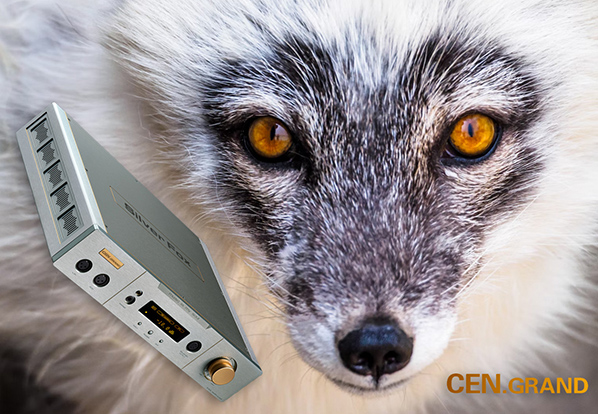 correlate very neatly. Should you now care to point out my 1962 model year, go ahead. Call my love of Hyperion a form of midlife crisis whereby 60-old men attempt to 'youthify' themselves with a red Corvette or 23-year old arm candy. Unlike the car or girlfriend alas, nobody gets to see my hifi except readers. Should a local visit, they'd recognize none of it. Rural Ireland is a hifi wasteland. Owning upscale audio nets me no name recognition, brand cachet or street cred. Sniff.
Back on track. We've already seen that Don is a very powerful headphone amp. Exactly as we'd expect for speakers, more headfi power increases sonic substance and robustness. At risk of stating the obvious, Don isn't just a headphone amp. It's a headphone power amp with all that suggests so gravitas and scale writ large. In speakerland meanwhile, it's just an amplifier when today's market has more kilowatt hulks than ever. In fact it's a decidedly low-powered sort. So let's feed Don to the Zu and see what happens vs. our usual 250-watt direct-coupled Kinki monos.
First, a brief outro vs the Silver Fox aka 9i-906, with a dedicated photo from its review. It retailed for €4'500 two years ago when I awarded it, does 20wpc/30Ω, includes normal, bridge-tied load, active ground and parallel drive options, four Ω settings and XLR4, dual XLR3, 6.3mm and 4.4mm outputs. Unlike Don, its unbalanced inputs symmetrize for balanced processing in a push/pull output stage of four lateral Exicon Mosfets per side. On rear-panel socketry, the Silver Fox does two each RCA and XLR inputs. Again unlike Don, it can't drive loudspeakers. When we factor in the price offset where Chinese manufacture wins over Serbia then add speaker drive to the costlier side of the scale, we might arrive at relative parity?
Of course if we don't mean to drive speakers or don't own any which are suitable to Don's power rating, the Silver Fox wins by default. Purely on sound and despite very different circuitry, these two are far more alike than not. Between them, a buyer should be more likely to shop on features, looks and intangibles such as brand loyalty, resale value and availability/support than raw performance. If we do want to add speakers to the equation where Don wins by default, what can it actually do in a 6x8m room? To potentially play hard to get, let's first wire up our Qualio IQ 3-way regulars already set up before the Zu Soul VI moves in from our video system. With Hyperion Ge out of the picture, a bigger speaker felt appropriate to test the bigger amp.

As a now integrated of +€9K with VAT, not only should most potential buyers balk at lack of remote volume and input switching. They could also criticize the speaker terminals and RCA sockets for being too low rent when competitors use classy Furutech, Viborg or WBT. To level up to current benchmarks even if socketry snazz could arguably be more about perception than sonic quality, SAEQ still have work to do. To circumvent the lack of remote control, I opened Dragan's pot to max, set my DAC to variable mode then used its wand instead.